- Company Articles
- Products and Technology
- Installation And Maintenance
- 85 Staggered Roller Track Common Problems & Troubleshooting

85 Staggered Roller Track Common Problems & Troubleshooting
Related Product
85 Staggered Roller Track
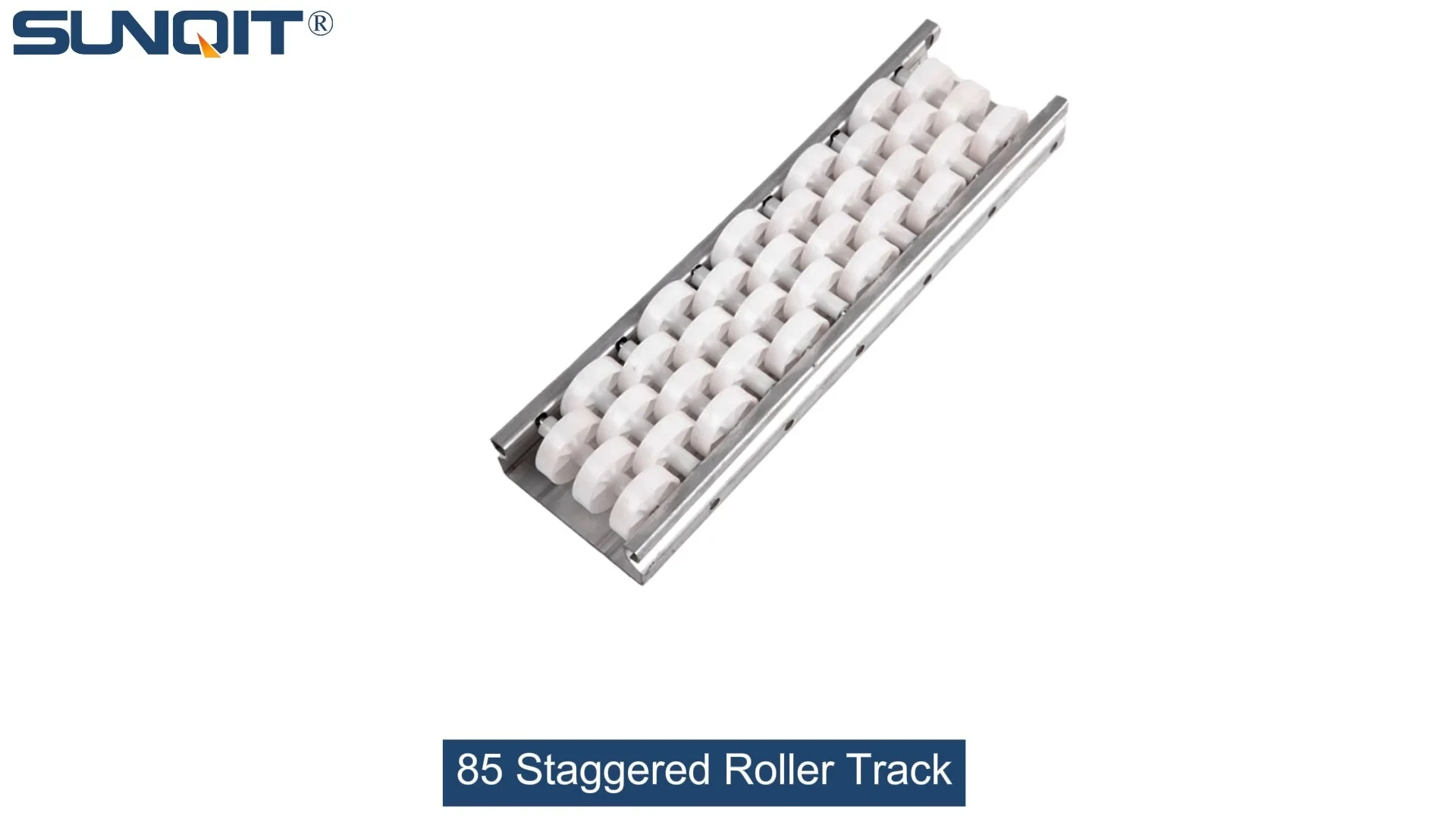
Triple staggered roller track is designed to enhance carton flow in various applications, such as flow racks and carton flow systems. This triple-staggered roller track is ideal for bins, boxes, or products that require smoother, more efficient rolling.
In the bustling heart of manufacturing plants, where every second counts, the smooth flow of materials can make or break production efficiency. Among the unsung heroes of this process is the 85 Staggered Roller Track —a workhorse in lean production (lean solution) systems that keeps components moving seamlessly from assembly lines to warehouses. Whether you're managing a 3C electronics workshop or a medical device manufacturing floor, this roller track plays a pivotal role in bridging gaps between workstations, flow racks, and conveyors. But like any hardworking equipment, it's not immune to hiccups. Let's dive into the common headaches operators face with 85 Staggered Roller Tracks, why they happen, and how to fix them—because a little troubleshooting today can save hours of downtime tomorrow.
What Makes 85 Staggered Roller Track Unique?
Before we jump into problems, let's get familiar with the star of the show. The 85 Staggered Roller Track is designed with precision: its rollers are arranged in a staggered pattern (hence the name), allowing for stable, low-friction movement of small to medium-sized loads. Unlike straight roller tracks, this staggered design reduces the risk of materials tipping or getting stuck, making it ideal for items like circuit boards, small parts bins, and medical device components.
Crafted from durable materials—often aluminum extrusion profiles or high-grade steel—it integrates seamlessly with lean pipe systems, workbenches, and material racks (think Material Rack B from our product lineup). Its versatility shines in custom solutions, where it adapts to tight spaces and unique workflow needs, embodying the "reusable, continuously improvable" lean philosophy that drives modern manufacturing.
Common Problems & How to Solve Them
Even the most reliable equipment hits snags. Below are the top issues operators encounter with 85 Staggered Roller Tracks, along with step-by-step fixes to get your line moving again.
| Problem | Root Causes | Troubleshooting Steps |
|---|---|---|
|
Material Jamming
(Items getting stuck mid-track) |
• Foreign debris (dust, metal shavings) between rollers
• Roller height misalignment (some rollers sit higher/lower than others) • Material exceeding track weight/size limits • Worn or broken roller bearings |
1.
Stop the line safely
and remove the jammed material.
2. Inspect for debris : Use compressed air or a soft brush to clean gaps between rollers. 3. Check roller height : Place a straightedge across the track—adjust uneven rollers using a hex key on their mounting brackets. 4. Verify load specs : Ensure materials match the track's capacity (typically 5-15kg per linear meter for standard models). 5. Test roller spin : Spin each roller by hand; replace any that feel stiff or don't rotate freely. |
|
Unusual Noise
(Grinding, squeaking, or rattling sounds) |
• Lack of lubrication on roller axles
• Loose roller brackets or connectors (e.g., Roller Track Placon Mount Joints) • Damaged roller surfaces (scratches, dents) • Track misalignment with adjacent equipment (e.g., conveyor or flow rack) |
1.
Identify the noise source
: Walk along the track while it's running (safely!) to pinpoint where the sound originates.
2. Lubricate axles : Apply a light machine oil or silicone spray to roller axles—avoid heavy greases that attract dust. 3. Tighten connections : Check all brackets, including Roller Track Placon Mount for Aluminum Profile Flat/High, and secure loose screws with a torque wrench. 4. Smooth damaged rollers : Sand minor scratches with fine-grit sandpaper; replace severely dented or cracked rollers. 5. Align with adjacent equipment : Use a level to ensure the track sits flush with connected conveyors or racks—even a 1° tilt can cause noise. |
|
Slow or Uneven Material Flow
(Items move sluggishly or speed up/slow down randomly) |
• Buildup of sticky residue (oil, adhesive) on rollers
• Inconsistent track slope (too steep in some sections, too flat in others) • Worn caster wheels on mobile track setups • Roller spacing issues (gaps too wide/narrow for material size) |
1.
Clean rollers thoroughly
: Wipe with a degreaser (avoid harsh chemicals on plastic rollers) to remove residue.
2. Adjust track slope : Most tracks work best with a 1-3° incline. Use adjustable leveling feet to fine-tune—measure with a protractor for precision. 3. Inspect casters : If the track is mobile (e.g., part of a turnover trolley), check caster wheels for debris or flat spots; replace worn casters with new ones from our caster accessories line. 4. Check roller spacing : For small parts, ensure gaps between rollers are ≤ half the material's width to prevent tipping. Add spacer brackets if needed. |
|
Excessive Wear on Rollers or Track Frame
(Visible dents, rust, or thinning metal) |
• Overloading beyond track capacity
• Poor maintenance (infrequent cleaning/lubrication) • Exposure to corrosive environments (e.g., unprotected in humid warehouses) • Using incompatible cleaning agents (abrasive scrubbers) |
1.
Assess damage
: Minor wear (surface scratches) can be sanded; deep dents or rust holes mean replacing the affected section.
2. Review load limits : Post clear weight guidelines near the track—invest in a heavier-duty model (like our 85 Steel Roller Track) if loads consistently exceed specs. 3. Upgrade to corrosion-resistant options : For humid or chemical-exposed areas, switch to stainless steel swivel roller balls or aluminum guide rails with protective coatings. 4. Train staff on proper care : Use soft cloths and mild cleaners; avoid steel wool or wire brushes. |
|
Track Misalignment
(Track curves, sags, or pulls away from mounts) |
• Loose or missing mounting brackets (e.g., End Support for Roller Track Placon Mount)
• Uneven floor or mounting surface • Thermal expansion/contraction (common in un climate-controlled facilities) • Over-tightening of connectors (warps the frame) |
1.
Secure loose brackets
: Tighten all Placon Mount Connectors and Center Support Brackets—replace any stripped screws with higher-grade alternatives.
2. Level the mounting surface : Use shims under low spots or adjust floor bolts to stabilize the base. 3. Allow for expansion : In extreme temperature areas, leave 1-2mm gaps between track sections to prevent warping. 4. Realign with adjacent systems : Use a laser level to ensure the track aligns perfectly with conveyors or workbenches (e.g., Workbench E)—misalignment here causes material "bottlenecks." |

Preventive Maintenance: Keep It Running Smoothly
They say an ounce of prevention is worth a pound of cure—and that's doubly true for roller tracks. A simple maintenance routine can extend your track's lifespan and cut down on repairs. Here's how to build one:
Daily Checks (5-Minute Routine)
- Visually inspect for debris, loose parts, or obvious damage.
- Test roller spin by hand—any stiff rollers get a quick shot of lubricant.
- Ensure materials are loaded correctly (centered, within weight limits).
Weekly Deep Clean
- Blow out dust and shavings with compressed air (focus on roller gaps).
- Wipe rollers with a lint-free cloth and mild detergent.
- Tighten all brackets and connectors—pay extra attention to high-traffic areas.
Monthly Tune-Up
- Lubricate roller axles with food-grade oil (safe for medical/3C environments).
- Check track alignment with a level—adjust as needed.
- replace worn parts (e.g., cracked end caps, bent brackets) before they fail.
Pro tip: Log maintenance in a digital checklist—over time, you'll spot patterns (e.g., "Section A jams every Tuesday") and address root causes, turning reactive fixes into proactive improvements. That's lean thinking in action!

Real-World Impact: A 3C Assembly Success Story
Let's put this into context with a real example. A leading 3C manufacturer (think smartphones and tablets) approached us with a problem: their 85 Staggered Roller Track, part of a custom lean solution, was jamming daily, causing 2-hour delays. Their line produced small circuit boards, and the track was critical for moving boards from soldering to testing stations.
Our team diagnosed the issue: dust from soldering was clogging roller gaps, and the track's original plastic roller track guide rails (grey) were wearing unevenly. We recommended:
- Switching to yellow plastic roller track guide rails (more durable, easier to spot debris).
- Adding a weekly compressed air cleaning step to the night shift routine.
- Upgrading to aluminum guide rail B for better weight distribution.
Result? Jams dropped to zero. The line now runs 2 hours longer daily, and the track has lasted 18 months (up from 8 months previously). That's the power of targeted troubleshooting and aligning equipment with workflow needs—pure lean solution in action.

When to Call in the Pros
Not every problem is a DIY fix. If you encounter any of these scenarios, reach out to your lean pipe supplier (that's us!) for support:
- Track sections are bent or warped beyond repair.
- Multiple rollers fail simultaneously (could indicate a design flaw).
- Upgrades are needed (e.g., integrating ESD workbench compatibility for static-sensitive parts).
- You're scaling production and need a custom track layout.
Our team of engineers specializes in turning headaches into solutions—whether it's a quick part replacement or a full system redesign. After all, your success is our success.
Wrapping Up: Keep the Momentum Going
The 85 Staggered Roller Track might not grab headlines, but it's the backbone of efficient material flow in countless factories. By knowing its quirks, investing in regular maintenance, and tackling problems head-on, you're not just fixing a track—you're protecting your team's productivity, reducing waste, and staying true to the lean principles that drive innovation.
Remember: Every minute your track runs smoothly is a minute your team can focus on what they do best—building quality products. So grab that hex key, schedule that maintenance check, and keep your line moving forward. And if you ever need a hand? We're here—because in manufacturing, we're all in this together.