- Company Articles
- Products and Technology
- Procurement Guidelines
- 85 Staggered Roller Track Cost-Saving Strategies for Small Businesses

85 Staggered Roller Track Cost-Saving Strategies for Small Businesses
Related Product
85 Staggered Roller Track
Triple staggered roller track is designed to enhance carton flow in various applications, such as flow racks and carton flow systems. This triple-staggered roller track is ideal for bins, boxes, or products that require smoother, more efficient rolling.
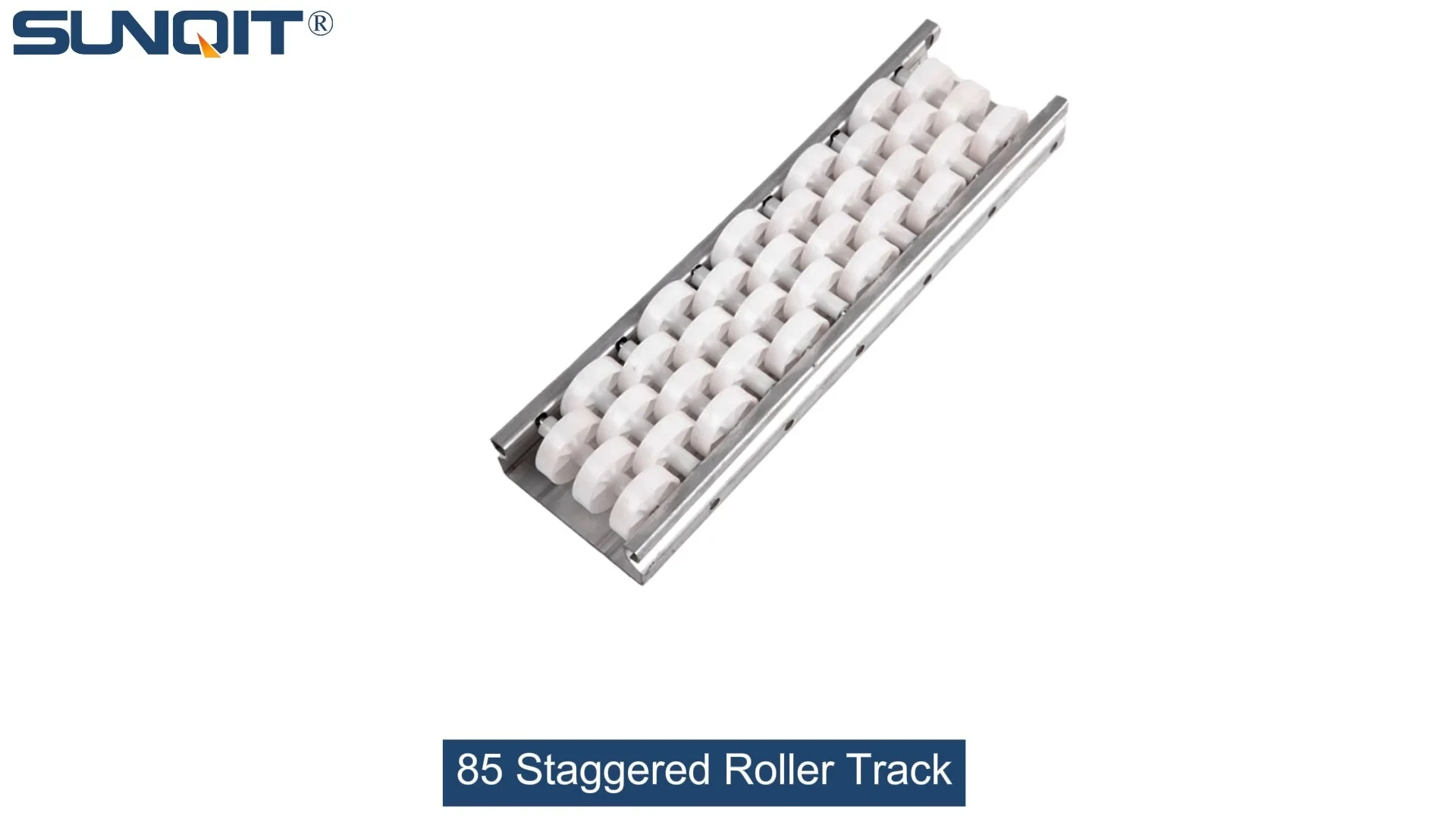
Running a small manufacturing business often feels like balancing on a tightrope—every penny counts, every minute of downtime stings, and every square foot of floor space has to pull its weight. You've probably stared at your production line or warehouse, wondering why (material handling) takes twice as long as it should, or why your storage shelves feel like they're swallowing up inventory instead of organizing it. What if there was a tool that didn't just fix one problem, but quietly optimized your entire workflow, cutting costs in ways you hadn't even considered? Enter the 85 Staggered Roller Track—a humble yet powerful component that's been a game-changer for small businesses in 3C assembly, medical device production, and (warehousing logistics). Let's dive into how this unassuming piece of equipment can transform your operations and boost your bottom line.
1. Slash Labor Costs by Speeding Up Material Flow
Labor is often the biggest expense for small manufacturers, and nothing drains productivity like manual (material handling). The 85 Staggered Roller Track is designed to let gravity do the work, so your team spends less time pushing carts and more time on value-adding tasks. Here's how:
- Eliminate backtracking: Staggered rollers create a smooth, one-way path for materials—no more workers shuttling between stations. In a small electronics assembly line, this alone can cut (material handling time) by 30%.
- Reduce lifting strain: By aligning with workbench heights, the track lets operators slide components into place without bending or reaching. A mid-sized workshop reported a 25% drop in worker fatigue-related slowdowns after installing these tracks.
- Enable continuous flow: Unlike fixed conveyor belts, the track's modular design fits into tight spaces, turning isolated workstations into a seamless line. A medical device startup saw assembly time per unit drop by 18 minutes after integrating the track into their production line.
Real-World Win: A small 3C (3C accessories) manufacturer in Guangdong was struggling with a bottleneck in their packaging stage. Workers were carrying boxes from the assembly line to the packing table—back and forth, up to 50 times a day. After installing an 85 Staggered Roller Track between the two stations, they reallocated two full-time workers to quality control, increasing output by 20% without hiring new staff.
2. Cut Waste with Precision Inventory Management
Waste isn't just about scrap materials—it's about overstocked shelves, expired components, and lost inventory. The 85 Staggered Roller Track, often paired with flow racks, turns disorganized storage into a self-managing system that keeps inventory visible and accessible.
How It Works:
The track's inclined design ensures that the oldest inventory moves to the front first (FIFO—First In, First Out). This is a lifesaver for businesses dealing with perishable parts or time-sensitive components, like small-batch medical device manufacturers. Plus, the open design means you'll never lose track of stock hidden in the back of a shelf.
| Before 85 Staggered Roller Track | After Installation |
|---|---|
| Inventory checks took 4 hours/week | Checks now take 1 hour (thanks to visible stock levels) |
| 12% of components expired due to FIFO mismanagement | Expiry rate dropped to 2% |
| Stockouts caused 5 production delays/month | Zero stockouts in 6 months |

3. Maximize Floor Space Without Expanding Your Facility
Small businesses rarely have the luxury of extra square footage. The 85 Staggered Roller Track's compact, vertical-friendly design lets you use space you didn't even know you had. Here's how:
- Double-deck storage: Mount tracks on vertical frames to create two-tiered flow racks. A 200 sq.m workshop in Zhejiang added 150+ storage slots this way, avoiding a costly warehouse expansion.
- Tight-space navigation: The track's narrow profile (just 85mm wide) fits between workstations, turning dead zones into functional (material channels). One furniture manufacturer squeezed in an extra assembly station by replacing bulky carts with under-counter roller tracks.
- Mobile flexibility: Pair tracks with lockable casters, and you've got a storage system that moves when you need it. A small automotive parts shop uses this to reconfigure their layout seasonally, increasing holiday production capacity by 35%.

4. Lower Long-Term Costs with Durable, Reusable Design
Cheap equipment might save money upfront, but it costs more in replacements and repairs. The 85 Staggered Roller Track is built with aluminum profile—lightweight, rust-resistant, and tough enough to handle daily use for years. This durability translates to long-term savings:
Why Aluminum Profile Matters:
Unlike plastic or steel, aluminum doesn't corrode in humid workshops or warehouses, so you won't be replacing rusted rollers every 6 months. Plus, the track's modular joints let you reconfigure it as your business grows. A startup that began with a 5-meter track expanded to a 20-meter system by simply adding more sections—no need to buy a whole new setup.
And when you do need to adjust, the track's components are reusable. A small toy manufacturer repurposed 80% of their original track when shifting from plastic to wooden toy production, saving $2,000 in new equipment costs.

5. Adapt to Changing Needs with Lean Customization
Small businesses thrive on agility—your equipment should too. The 85 Staggered Roller Track isn't a one-size-fits-all solution; it's part of a lean system that adapts to your unique workflow. Whether you're ramping up production for a big order or shifting to a new product line, these tracks adjust in hours, not weeks.
- Mix and match components: Combine with lean pipe workbenches or ESD stations for a fully integrated line. A phone repair kit manufacturer added anti-static rollers to their track, making it safe for sensitive circuit boards without replacing the entire system.
- Scale up or down quickly: Need to add a new station? Just snap on extra track sections. Slow season? Disassemble and store unused parts. A seasonal giftware company cuts storage costs by 40% in off-months by collapsing their track system.
- Solve unique pain points: Custom brackets let you angle the track for steep slopes (for heavy parts) or gentle inclines (for fragile items). A small glassware producer used this to safely transport delicate components, reducing breakage from 8% to 1%.
From Startup to Scaler: A first-time founder in the medical device industry started with a single 85 Staggered Roller Track in her garage workshop. As her business grew, she added aluminum profile shelves, flow racks, and a mini conveyor—all compatible with the original track. Today, her 500 sq.m facility runs 3 shifts a day, and she still uses 70% of the initial track components. "It's like building with Lego," she says. "I never feel locked into a layout."
6. Reduce Downtime with Low-Maintenance Reliability
For small businesses, downtime isn't just lost production—it's missed deadlines and unhappy clients. The 85 Staggered Roller Track is designed to keep rolling with minimal upkeep, so you spend less time fixing equipment and more time making money.
Aluminum rollers resist jamming, and the track's simple design means there are no complicated motors or belts to break. A quick weekly wipe-down with a dry cloth is usually all it takes. Even when parts do wear out—like a worn caster or loose joint—replacement components are affordable and easy to install. A small metal fabrication shop reported just 2 hours of downtime over 12 months due to track maintenance, compared to 16 hours with their old steel conveyor.
7. Boost Profit Margins with Competitive Pricing Power
At the end of the day, cost savings mean nothing if you can't pass them on to customers—or keep them as profit. By streamlining operations with the 85 Staggered Roller Track, you'll have the flexibility to offer better prices than competitors stuck with outdated systems, or reinvest savings into product innovation.
Imagine quoting a project with 10% lower labor costs, or fulfilling rush orders without overtime fees. A small electronics assembler used these savings to undercut larger competitors by 15% on a government contract, winning a deal that tripled their annual revenue.
The 85 Staggered Roller Track isn't just a piece of equipment—it's a lean solution that grows with your business. It turns inefficiencies into opportunities, wasted space into productivity, and high costs into higher profits. For small manufacturers ready to stop surviving and start thriving, this track is more than an investment; it's a partner in your success story. So take a look at your workflow today—where could a little gravity and a lot of smart design make all the difference?