- Company Articles
- Products and Technology
- Installation And Maintenance
- 85 Staggered Roller Track DIY Installation: Pros & Cons

85 Staggered Roller Track DIY Installation: Pros & Cons
Related Product
85 Staggered Roller Track
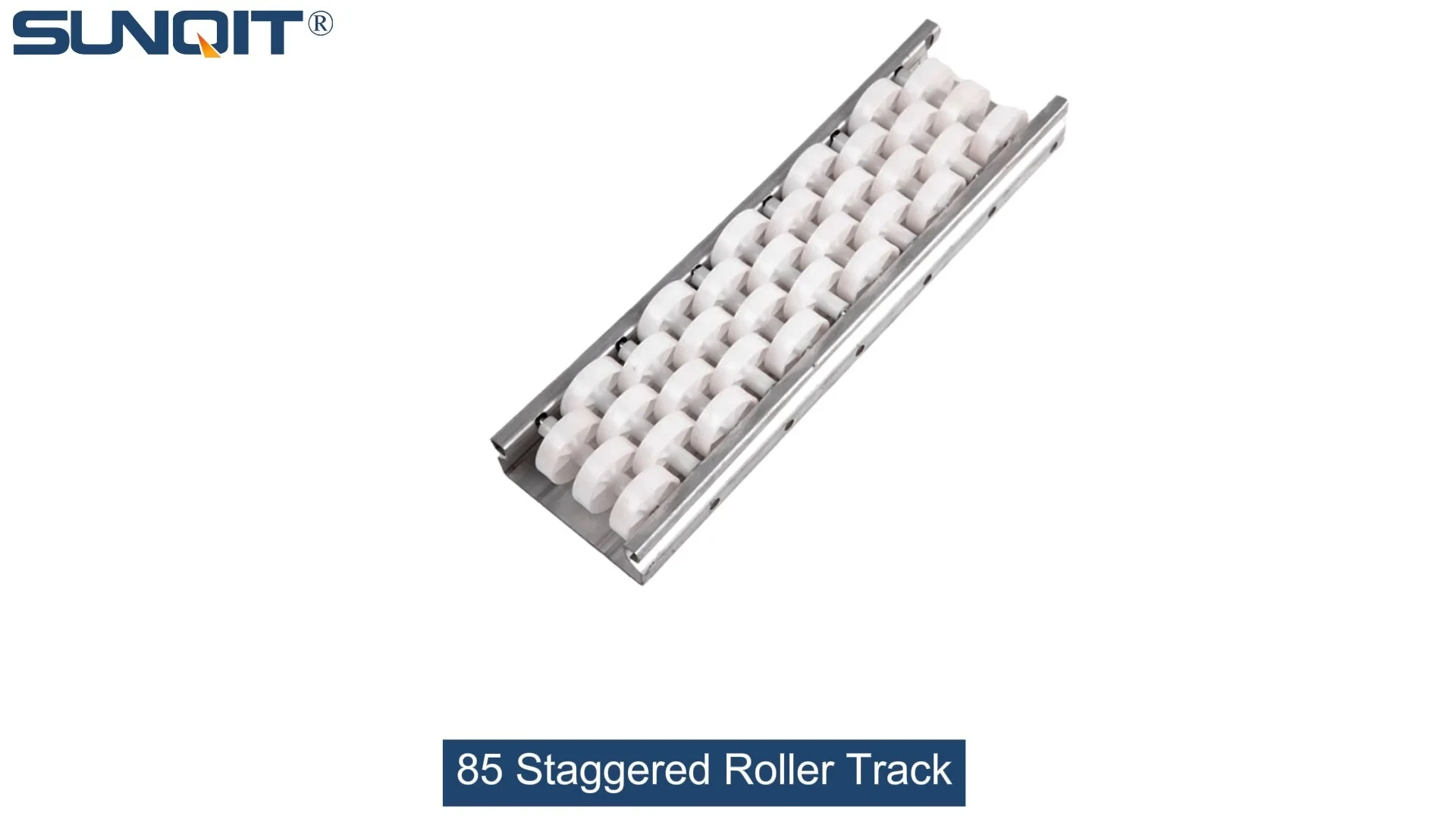
Triple staggered roller track is designed to enhance carton flow in various applications, such as flow racks and carton flow systems. This triple-staggered roller track is ideal for bins, boxes, or products that require smoother, more efficient rolling.
If you've ever walked through a busy production floor, you've probably seen them—those smooth, gliding tracks that move parts from one workstation to the next, keeping assembly lines humming. One of the unsung heroes of this workflow is the 85 Staggered Roller Track. Designed with alternating rollers to ensure steady, controlled material flow, it's a staple in flow racks, conveyor systems, and lean production setups. But here's the question many small manufacturers and workshop owners ask: Can I install it myself? Let's break down the ins and outs of DIY installation for 85 Staggered Roller Tracks—what works, what doesn't, and whether it's the right move for your team.
First Things First: What Exactly Is an 85 Staggered Roller Track?
Before diving into installation, let's make sure we're on the same page. An 85 Staggered Roller Track is a material handling component built for efficiency. The "85" refers to its width (typically 85mm), and "staggered" means the rollers are offset—like two rows of wheels alternating to cradle items as they slide. Think of it as a mini highway for your parts: whether you're moving circuit boards in a 3C assembly line or medical device components, these tracks keep things moving without jams or delays.
Most often, you'll find these tracks in flow racks (that's right, the flow rack systems you rely on for picking and sorting) or integrated into conveyor setups. They're usually made from durable materials like steel or aluminum profile—lightweight enough for easy handling but tough enough to withstand daily use. And because they're part of lean systems, they're all about reducing waste: less manual lifting, faster transfer times, and a setup that adapts as your needs change.
DIY Installation: A Step-by-Step Walkthrough
So you've decided to give DIY a go. Great! Here's a rough guide to how the process might look. Keep in mind, every setup is different—your track might attach to a workbench, a standalone frame, or even a custom lean solution structure. But these basics should apply:
1. Gather Your Tools & Parts
Start by laying out all the components. You'll need the roller track sections themselves, mounting brackets, screws, nuts, and maybe end stops to prevent items from sliding off. Tools? A tape measure, level, drill, screwdriver, and adjustable wrench should cover it. Pro tip: Check the packaging for a parts list—missing a roller track connector now could derail the whole project later.
2. Plan Your Layout
Where will the track go? Measure the space twice—you don't want to drill holes in the wrong spot. If it's part of a flow rack, mark where the track will sit relative to shelves. For conveyor integration, ensure it lines up with other rollers or belts. A quick sketch on paper (or even a photo with notes on your phone) can save you from headaches later.
3. Build the Support Frame (If Needed)
If your track isn't attaching to an existing structure, you'll need a frame. Many people use aluminum profile for this—it's lightweight, easy to cut, and connects with simple brackets. Screw the profile into place, making sure it's level (a wonky frame means wonky roller movement).
4. Mount the Roller Track
Line up the track with your marks and attach it to the frame or workbench using the mounting brackets. Tighten the screws just enough to hold it steady—over-tightening can warp the track. Then, snap in the rollers (if they're not pre-installed). They should spin freely but not wobble.
5. Test It Out
Grab a test part—something similar to what you'll be moving regularly—and slide it down the track. Does it glide smoothly? Are there any stuck spots? If it catches, check for misaligned rollers or loose brackets. Adjust, retighten, and test again until it feels right.

The Good & The Not-So-Good: Pros & Cons of DIY
DIY sounds appealing, but it's not all sunshine and smooth-rolling parts. Let's weigh the upsides and downsides.
| Pros of DIY Installation | Cons of DIY Installation |
|---|---|
| Cost Savings – Professional installers charge by the hour, and those costs add up. DIY lets you skip the labor fee entirely. | Skill Gap Risk – If you're new to assembling roller tracks, small mistakes (like uneven mounting) can lead to jams or even damaged parts later. |
| Flexibility – Need to tweak the angle mid-project? With DIY, you're in control. No waiting for a technician to adjust things. | Time Investment – What a pro might finish in an hour could take you 3-4, especially if you hit snags. Time is money, too! |
| Learning Opportunity – Figuring out how the track works from the ground up means you'll know how to fix minor issues yourself later. | Warranty Worries – Some suppliers void warranties if installation isn't done by certified techs. Always check the fine print! |
| Quick Turnaround – No scheduling delays. Order the parts, grab your tools, and start immediately. | Safety Risks – A poorly installed track could come loose, causing parts to fall or workers to trip. Safety first! |

DIY vs. Professional Installation: When to Call in the Experts
Still on the fence? Here's a quick guide to help you decide:
Go DIY If…
- You're installing a single track or small setup (not a whole production line).
- You've got basic handyman skills (you've assembled furniture without leftover parts, for example).
- Your timeline is flexible—you can afford a few extra hours if things take longer.
- Cost is your top priority, and you're comfortable troubleshooting small issues.
Call a Pro If…
- You're setting up multiple tracks as part of a large conveyor system or complex flow rack.
- Precision is critical (e.g., medical device production where even small jolts could damage parts).
- You're short on time—you need the track up and running yesterday.
- The warranty requires professional installation (don't risk voiding it!).

Why Material Matters: Aluminum Profile & Beyond
One thing that makes DIY installation feasible? The materials used in modern roller tracks. Many 85 Staggered Roller Tracks (and their frames) are built with aluminum profile—lightweight, corrosion-resistant, and surprisingly strong. Unlike heavy steel, aluminum is easy to lift and drill, even for beginners. Plus, aluminum profile accessories (like brackets and connectors) are designed to snap or screw into place without special tools. It's like building with advanced Legos for adults!
Steel tracks are sturdier for heavy loads, but they're heavier to handle—something to keep in mind if you're working alone. Whichever material you choose, check the weight capacity. You don't want to install a track rated for 50 lbs only to find out your parts weigh 75 lbs.
Fitting It Into Your Lean Solution
At the end of the day, 85 Staggered Roller Tracks are more than just moving parts—they're part of your lean system. Lean manufacturing is all about reducing waste, and a well-installed track does exactly that: less time spent carrying parts, fewer errors from manual handling, and a setup that can evolve as your needs change. Even with DIY, you're embracing that spirit of self-reliance and continuous improvement.
And if DIY feels too daunting? Remember, lean solution providers (like the ones who supply these tracks) often offer hybrid options—they can ship pre-cut parts with detailed guides, or send a technician for a quick consult while you handle the assembly. It's the best of both worlds: control over the process, with expert backup when you need it.
Final Thoughts: Is DIY Right for You?
DIY installation for 85 Staggered Roller Tracks can be a rewarding, cost-effective project—if you go into it with realistic expectations. It's a great way to save money, learn about your equipment, and build something that fits your space perfectly. But it's not for everyone. If precision, speed, or warranty coverage are non-negotiable, professional installation is worth the investment.
No matter which route you choose, the goal is the same: a smoother, more efficient workflow. And with the right setup—whether you built it yourself or had help—those 85 Staggered Roller Tracks will be quietly keeping your production line moving for years to come.