- Company Articles
- Products and Technology
- Installation And Maintenance
- 85 Staggered Roller Track for Automated Production Lines: Integration Guide

85 Staggered Roller Track for Automated Production Lines: Integration Guide
Related Product
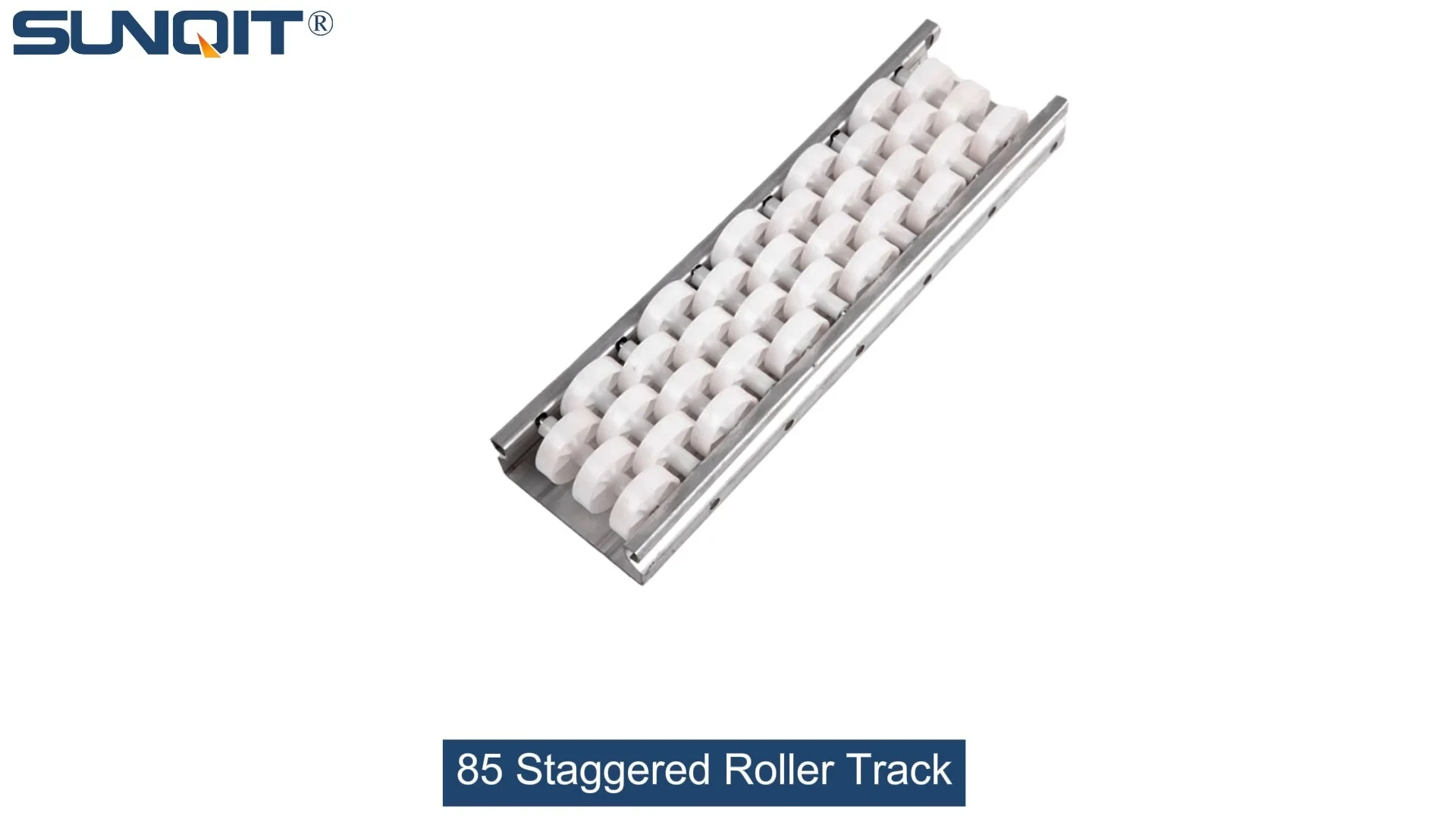
85 Staggered Roller Track
Triple staggered roller track is designed to enhance carton flow in various applications, such as flow racks and carton flow systems. This triple-staggered roller track is ideal for bins, boxes, or products that require smoother, more efficient rolling.
In the fast-paced world of modern manufacturing, where every second counts and efficiency is the backbone of success, the components often make the biggest difference. Imagine walking through a 3C assembly plant where smartphones glide from station to station, or a medical device factory where precision parts move with pinpoint accuracy—behind these seamless operations lies a critical element: the roller track. Today, we're diving deep into one such game-changer: the 85 Staggered Roller Track. More than just a metal structure, it's a bridge between chaos and order, a silent partner in turning production lines from good to great. Let's explore how this unassuming tool can transform your automated production, why it's become a staple for manufacturers worldwide, and how to integrate it into your operations for maximum impact.
The Core Problem: Why Material Flow Matters in Automated Lines
Before we jump into the specifics of the 85 Staggered Roller Track, let's take a step back. What happens when material flow breaks down? In an automotive plant, a jammed track might delay an entire shift. In a 3C factory, uneven movement could scratch delicate circuit boards. In medical device production, inconsistent speed might compromise sterile conditions. These aren't just minor hiccups—they're costly, disruptive, and a threat to meeting tight deadlines.
Traditional roller tracks often fall short here. Some struggle with heavy loads, bending under pressure. Others create that adds to factory stress. Many lack the flexibility to adapt when production needs change—forcing manufacturers into expensive overhauls. It's not enough to move materials; they need to move smartly : smoothly, quietly, and reliably, even as products, volumes, and workflows evolve. That's where the 85 Staggered Roller Track steps in, designed not just to solve these problems, but to anticipate them.
What Makes the 85 Staggered Roller Track Stand Out?
At first glance, you might mistake it for any other roller track. But look closer, and the differences become clear. The "85" refers to its width—85mm—making it wider than standard tracks like the 40 Steel Roller Track, giving it a unique edge in stability. The "staggered" design, where rollers are offset in alternating rows, is where the magic happens. This isn't just about aesthetics; it's engineering brilliance that addresses three critical pain points in material handling:
Smoothness: Staggered rollers reduce friction by distributing weight evenly, so even irregularly shaped items (like curved automotive parts or bulky 3C packaging) glide without catching. No more sudden stops or jerky movements—just a steady flow that protects products and keeps lines moving.
Load Capacity: Built with high-grade aluminum extrusion profiles, this track isn't just lightweight; it's tough. With a load capacity of up to 300kg per meter, it handles everything from small electronic components to heavy metal parts, eliminating the need for multiple track types in one line.
Quiet Operation: Unlike steel tracks that clang with every movement, the 85 Staggered Roller Track's aluminum frame and precision-engineered plastic wheels cut noise significantly. Imagine a factory floor where workers can communicate without shouting—a small change that boosts morale and focus.

Key Features: Beyond the Basics
What truly sets this roller track apart is its attention to real-world manufacturing needs. Let's break down the features that make it a favorite among lean production experts:
1. Aluminum Profile: The Foundation of Durability
At its core is high-quality aluminum extrusion profile—lightweight yet incredibly strong. Unlike stainless steel, it resists rust in humid environments (critical for medical or coastal factories) and won't add unnecessary weight to overhead systems. Its smooth surface also minimizes dust buildup, a must for cleanrooms in the semiconductor industry. And here's the lean manufacturing win: aluminum is 100% recyclable, aligning with sustainability goals and reducing your carbon footprint.
2. Staggered Roller Design: Precision in Every Roll
The staggered layout isn't random. Each roller is spaced to ensure constant contact with materials, even those with uneven bases. For example, a plastic mold with a raised edge might get stuck on a standard track, but the 85 Staggered Roller Track's alternating rollers cradle it, guiding it forward without resistance. This design also reduces wear and tear—fewer jams mean less maintenance, fewer replacements, and lower long-term costs.
3. Compatibility with Lean Pipe Systems
No production tool exists in isolation, and the 85 Staggered Roller Track plays well with others—especially lean pipe systems. Whether you're building a custom workstation with Workbench E or a flexible line using basic aluminum tubes and internal rotary aluminum joints, this track integrates seamlessly. Attach it to aluminum guide rails, connect it to flow racks, or pair it with conveyors—the possibilities are endless. This flexibility is why manufacturers love it: it grows with your needs, not against them.
4. ESD-Ready for Sensitive Industries
In electronics manufacturing, static electricity is the enemy. A single spark can ruin a $1,000 circuit board. That's why the 85 Staggered Roller Track is available with ESD-safe wheels and aluminum components, grounding static charges before they reach sensitive products. For 3C and semiconductor plants, this isn't just a feature—it's a necessity.

Integration Guide: Bringing the 85 Staggered Roller Track to Your Line
Ready to upgrade your material flow? Integrating the 85 Staggered Roller Track isn't just about bolting it to the floor—it's about designing a system that works for your team. Follow these steps to ensure a smooth transition:
| Step | Action | Key Considerations |
|---|---|---|
| 1. Assess Your Needs | Map your current production flow. Where are the bottlenecks? What weights/sizes are you moving? Do you need ESD protection? | Example: A medical device line might prioritize quiet operation and ESD safety, while an automotive plant focuses on heavy load capacity. |
| 2. Design the Layout | Sketch how the track will connect workstations, flow racks, and conveyors. Use aluminum profile accessories like roller track placon mounts to adjust height and angle. | Tip: Leave space for future expansion—lean manufacturing thrives on adaptability. |
| 3. Install with Precision | Secure the track to stable bases (use heavy-duty split foot seats for uneven floors). Calibrate rollers to ensure level movement—even a 1° tilt can cause jams. | Pro Trick: Use a laser level to align tracks; it saves hours of trial and error. |
| 4. Test Under Real Conditions | Run sample products through the track at full speed. Check for noise, vibration, and smoothness. Gather feedback from operators—they'll notice issues you might miss. | Example: A 3C manufacturer found that adding plastic roller track guide rails (yellow) reduced product sliding during turns. |
| 5. Train Your Team | Teach operators how to clean the track, adjust rollers, and spot early signs of wear. Empower them to suggest improvements—they're the ones using it daily. | Lean Principle: The best optimizations come from those on the front lines. |
Pro Tip: Don't overlook maintenance! A quick weekly wipe-down of rollers and monthly lubrication (use food-grade oil for medical/pharmaceutical lines) will extend the track's life by years. Think of it like changing the oil in your car—small effort, big payoff.

Real-World Impact: Case Studies from the Factory Floor
Numbers tell a story, but real-world examples bring it to life. Let's look at how three manufacturers transformed their operations with the 85 Staggered Roller Track:
Case Study 1: 3C Assembly Plant in Shenzhen
A major smartphone manufacturer was struggling with scratched screens during assembly. Their old steel track had uneven rollers, causing phones to shift and rub against edges. After switching to the 85 Staggered Roller Track with ESD-safe wheels, screen defects dropped by 42%. Operators also reported less eye strain from reduced noise, leading to a 15% boost in daily output.
Case Study 2: Automotive Parts Supplier in Shanghai
This factory produced heavy engine brackets, and their previous track bent under the weight, requiring weekly repairs. The 85 Staggered Roller Track's aluminum profile frame handled the 250kg brackets effortlessly. Maintenance costs plummeted by 60%, and downtime due to track issues disappeared entirely. "It's like upgrading from a bicycle to a truck," said the plant manager.
Case Study 3: Medical Device Manufacturer in Suzhou
Cleanroom conditions meant strict noise and contamination rules. The 85 Staggered Roller Track's quiet operation and rust-resistant aluminum made it the perfect fit. Paired with a custom flow rack and lean pipe workstation, it reduced material handling time by 30%, allowing the factory to meet a sudden 50% increase in without adding staff.
Beyond the Track: Building a Lean Ecosystem
The 85 Staggered Roller Track is powerful on its own, but its true potential shines when part of a complete lean solution. Here's how to build around it:
Pair with Flow Racks for Intuitive Storage
Flow racks (like Material Rack B) feed components directly onto the track, reducing pick-and-place time. Imagine a workstation where parts roll down to the operator, eliminating the need to bend or reach—ergonomics meet efficiency.
Connect to Conveyors for Long-Distance Transport
For lines spanning multiple rooms, link the 85 Staggered Roller Track to belt or chain conveyors. In an appliance factory, this setup moved refrigerators from assembly to packaging without manual pushing, cutting labor costs by 25%.
Design Custom Workstations with Lean Pipe Systems
Use basic aluminum tubes and internal rotary aluminum joints to build workstations around the track. Workbench E, for example, can be positioned right next to the track, creating a seamless "pick, assemble, place" cycle. It's lean manufacturing at its best: minimal waste, maximum value.
Why Choose Aluminum? The Sustainability Edge
In today's world, sustainability isn't just a buzzword—it's a business imperative. The 85 Staggered Roller Track's aluminum profile isn't just about durability; it's about responsibility. Aluminum is infinitely recyclable, meaning when your production line evolves (and it will), you can repurpose the track instead of sending it to a landfill. This aligns with the "reusable, sustainable" lean that forward-thinking manufacturers swear by. Plus, aluminum's lightweight nature reduces energy use during shipping and installation—another win for your green goals.
Lean Insight: Sustainable practices and efficiency go hand in hand. By reusing components, you cut waste and save on replacement costs. It's a double win for your bottom line and the planet.
Conclusion: The Track That Transforms
The 85 Staggered Roller Track isn't just a tool—it's a mindset. It's about seeing the potential in the details, about investing in components that work as hard as your team. Whether you're in 3C, automotive, medical, or any manufacturing field, it's the quiet force that turns "we can't" into "we did."
So, what's next? Take a walk through your production line. Where do you see friction? Where could smoother flow make a difference? That's where the 85 Staggered Roller Track belongs. It's not just about moving materials—it's about moving your business forward. Ready to start the journey? Your more efficient, more sustainable, more successful production line is just a track away.