- Company Articles
- Products and Technology
- Application Cases
- 85 Staggered Roller Track in Automotive Manufacturing: Case Study

85 Staggered Roller Track in Automotive Manufacturing: Case Study
Related Product
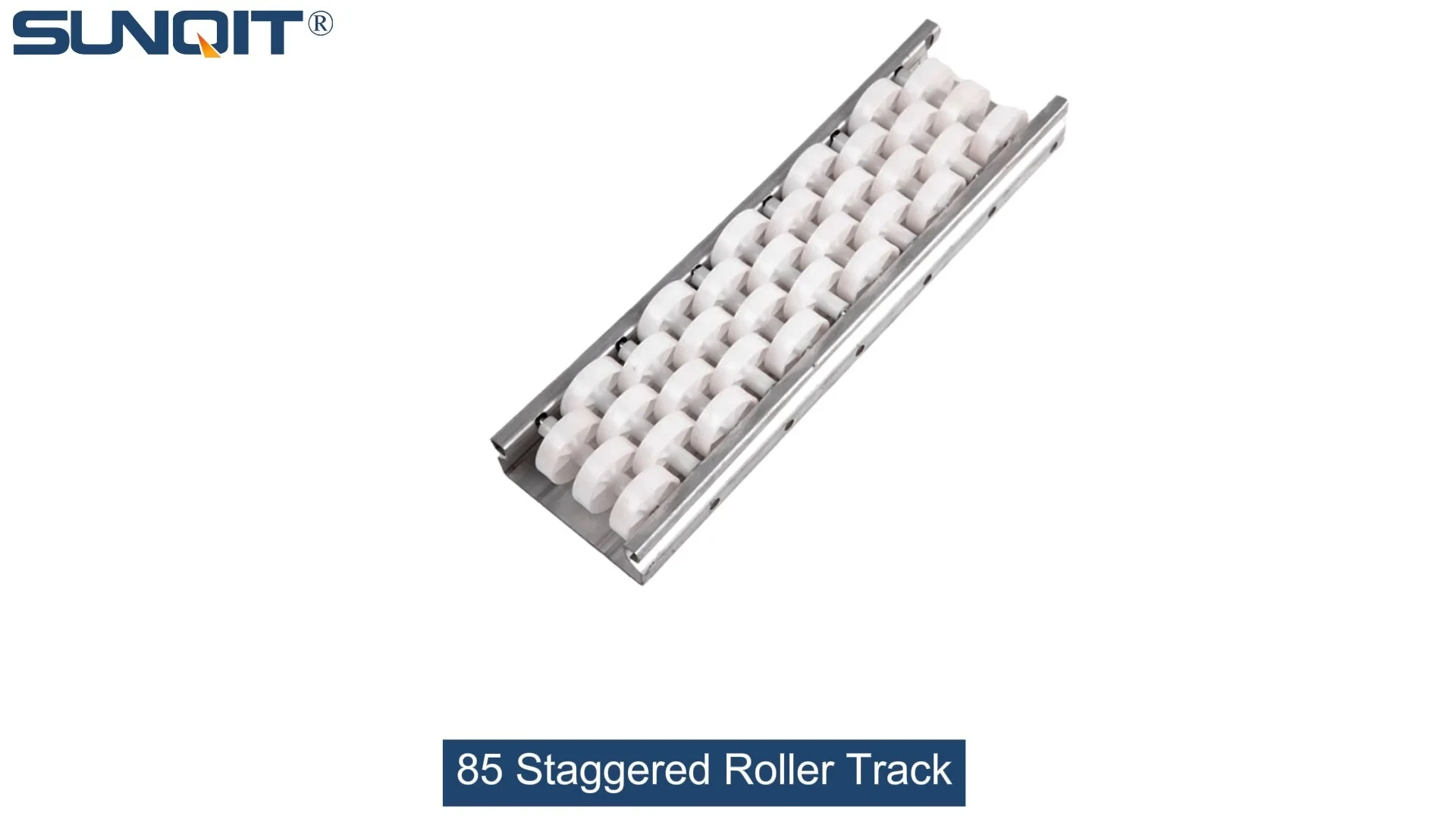
85 Staggered Roller Track
Triple staggered roller track is designed to enhance carton flow in various applications, such as flow racks and carton flow systems. This triple-staggered roller track is ideal for bins, boxes, or products that require smoother, more efficient rolling.
Introduction: The Heartbeat of Automotive Production Lines
In the fast-paced world of automotive manufacturing, every second counts. Picture this: a bustling production floor where hundreds of parts—from engine components to dashboard assemblies—need to glide seamlessly from one workstation to the next. A single hiccup in material flow can throw off timelines, delay shipments, and eat into profits. That's where smart, flexible equipment becomes the unsung hero. Today, we're diving into a real-world case study that shows how the 85 Staggered Roller Track transformed material handling for a mid-sized automotive parts manufacturer, turning bottlenecks into smooth-sailing efficiency.
Case Background: A Manufacturer Stuck in the Slow Lane
Let's meet "AutoParts Co." (a pseudonym for a real client), a company specializing in producing precision metal components for luxury car brands. With a production facility spanning 50,000 sq. ft., their workshop was humming with activity—but not always in the right way. Their biggest headache? The material transfer system between the stamping department and assembly line.
For years, AutoParts Co. relied on a mix of manual carts and old-fashioned rigid conveyors. Here's why that wasn't working:
- Bumpy Transfers: Heavy metal parts often got stuck on uneven conveyor belts, requiring workers to stop and push—wasting 10-15 minutes per hour per line.
- Rigid Layouts: When the client introduced a new part model (think: electric vehicle components), reconfiguring the conveyors took days of downtime and extra labor costs.
- Worker Fatigue: Pushing carts loaded with 50+ kg parts led to increased ergonomic complaints and even minor injuries.
By 2023, their production manager, Maria, was under pressure: "We needed a solution that could keep up with our 24/7 operation, adapt quickly to new part sizes, and lighten the load on our team. That's when we started looking for a lean system upgrade."

The Challenge: More Than Just Moving Parts
AutoParts Co.'s needs weren't just about "faster transfer." Maria and her team had a wishlist that reflected the realities of modern automotive manufacturing:
1. Heavy-Duty Reliability: Their parts weighed up to 80 kg—so the system needed to handle constant, heavy loads without bending or jamming.
2. Flexibility for Change: With 3 new part lines launching in 6 months, they couldn't afford downtime for reconfigurations.
3. Seamless Integration: The new system had to work with existing workbenches and assembly stations, not replace them.
4. Durability in Harsh Environments: Oil, metal shavings, and daily wear-and-tear meant flimsy plastic components were out of the question.
After testing two generic roller tracks (and watching both fail under stress), Maria's team reached out to a lean solution provider specializing in automotive-grade equipment. That's when the 85 Staggered Roller Track entered the picture.

The Solution: Why 85 Staggered Roller Track Stood Out
At first glance, roller tracks might seem like simple tools—but the 85 Staggered Roller Track is designed with automotive chaos in mind. Let's break down why it was the perfect fit for AutoParts Co.:
1. Staggered Design: No More Stuck Parts
Unlike traditional straight roller tracks, the 85 model features rollers arranged in a zig-zag (staggered) pattern. Why does that matter? Imagine a heavy metal bracket with uneven weight distribution. On a straight track, it might tilt and catch on a roller gap. But with staggered rollers, there's always contact—so the part glides smoothly, even with off-center loads. "It's like walking on a path with stepping stones that never leave a gap," explains the lead engineer on the project.
2. Aluminum Build: Strong Yet Lightweight
Made from high-grade aluminum extrusion profiles, the track strikes that sweet spot between strength and portability. It can handle up to 150 kg per linear meter (way more than AutoParts Co.'s 80 kg parts) but is light enough for two workers to reposition in minutes—no heavy machinery needed. "We used to need a forklift and a 4-person crew to adjust our old steel conveyors," Maria recalls. "Now, two technicians can reconfigure a 10-meter track in under an hour."
3. Modular & Reusable: Lean Principles in Action
True to lean system ideals, the 85 Staggered Roller Track is built for "reuse and continuous improvement." Its modular sections connect with simple bolts, and accessories like side guides or end stops can be added or removed as needed. When AutoParts Co. launched their EV component line, they simply extended the track by 5 meters and swapped out plastic guides for metal ones—no custom fabrication required. "It felt like playing with giant Legos," jokes one of their maintenance technicians.
4. Compatibility with Existing Workbenches
The track didn't just solve material flow—it integrated with their existing workflow. At the end of the roller track, parts land directly on a custom workbench E (single deck, no casters), where assembly workers pick them up without bending or reaching. "Before, parts would pile up on the floor next to the bench," says assembly line worker Jake. "Now, they roll right to my hands. It's like having a helper who never takes a break."

Implementation: From Blueprint to "Wow, That's Smooth"
Installing the 85 Staggered Roller Track wasn't just about bolting metal to the floor. Here's how the process unfolded:
Step 1: On-Site Assessment (No Guesswork)
The supplier's team visited AutoParts Co.'s facility to map the current workflow. They measured part sizes, noted floor slopes (yes, even small inclines matter!), and interviewed workers about pain points. "They didn't just sell us a product—they listened," Maria says. "For example, they noticed our night shift uses dimmer lighting, so they recommended adding reflective strips to the track edges. Little touches like that made a big difference."
Step 2: Customization (Without the Wait)
Based on the assessment, the team adjusted the track's roller spacing (85 mm between rollers, hence the "85" in the name) and added adjustable height feet to level the track on AutoParts Co.'s slightly uneven concrete floor. They also included roller track placon mount connectors to attach the track securely to the workbench legs, preventing wobble during transfers.
Step 3: Installation & Training (Minimal Downtime)
The installation was scheduled during a weekend shutdown, taking just 12 hours from start to finish. On Monday morning, workers arrived to a shiny new track—and a quick 30-minute training session. "The supplier walked us through basic maintenance: how to clean rollers, tighten bolts, and replace a worn wheel," Jake explains. "Even our newest hires picked it up in 10 minutes."
Results: Numbers That Speak for Themselves
Three months after installation, AutoParts Co. tracked the impact—and the results were clear. Here's how the 85 Staggered Roller Track moved the needle:
| Metric | Before | After | Improvement |
|---|---|---|---|
| Material Transfer Time (per batch) | 22 minutes | 8 minutes | ↓ 64% |
| Worker Complaints (ergonomic) | 12 per month | 0 | ↓ 100% |
| Downtime for Line Reconfigurations | 8 hours | 1 hour | ↓ 87.5% |
| Stuck/ Damaged Parts | 5 per week | 0.5 per week | ↓ 90% |
"The best part? We're saving around $40,000 per year in labor and downtime costs. That's not just a win for the balance sheet—it's a win for our team's morale. They no longer dread the 'stuck part shuffle' every morning." — Maria, Production Manager
Beyond the Track: Building a Lean Ecosystem
The 85 Staggered Roller Track didn't work in isolation. AutoParts Co. took it a step further by integrating it with other lean tools from their supplier, including:
- Workbench E: As mentioned, parts roll directly onto the assembly bench, reducing lifting.
- Turnover Trolleys: Empty bins glide back on a return track, creating a closed-loop system.
- Flow Racks: Raw materials feed into the track from gravity-fed flow racks, minimizing manual handling.
"It's not just about one piece of equipment," Maria says. "It's about creating a workflow where everything connects. The roller track is the backbone, but the workbenches and trolleys are the muscles that make it all move."
Conclusion: Small Changes, Big Impact
AutoParts Co.'s story shows that in manufacturing, sometimes the most powerful solutions are the ones that make the daily grind a little easier. The 85 Staggered Roller Track didn't revolutionize their industry overnight, but it eliminated friction—literally and figuratively—turning a frustrating bottleneck into a competitive advantage.
For manufacturers facing similar material flow challenges, the takeaway is clear: flexibility, durability, and a focus on worker needs aren't just "nice-to-haves"—they're essential. And when you pair that with a lean solution built for real-world chaos, you're not just buying equipment—you're investing in a production line that can grow, adapt, and thrive.
As Jake puts it: "At the end of the day, I go home less tired, and the parts get where they need to be. That's a win-win."