- Company Articles
- Products and Technology
- Application Cases
- 85 Staggered Roller Track in Automotive Parts Handling: Case Study

85 Staggered Roller Track in Automotive Parts Handling: Case Study
Related Product
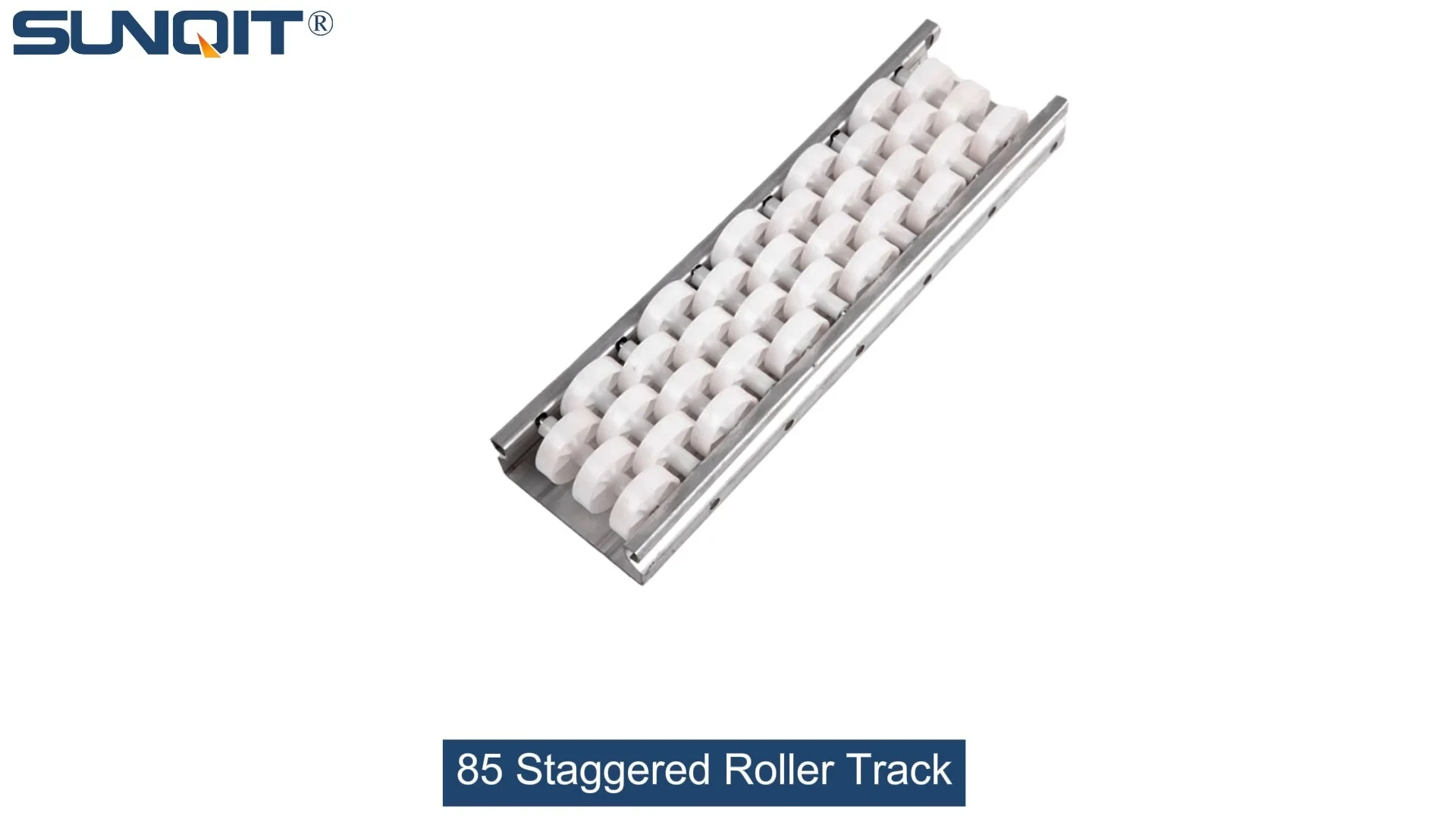
85 Staggered Roller Track
Triple staggered roller track is designed to enhance carton flow in various applications, such as flow racks and carton flow systems. This triple-staggered roller track is ideal for bins, boxes, or products that require smoother, more efficient rolling.
In the fast-paced world of automotive manufacturing, where every second counts and precision is non-negotiable, the efficiency of parts handling can make or break production targets. Imagine a (workshop) where heavy engine components glide smoothly from one station to the next, where delicate electronic parts reach assembly lines without a single scratch, and where workers no longer waste energy on manual lifting—this isn't just a dream scenario. It's the reality for a leading automotive parts manufacturer after integrating the 85 Staggered Roller Track into their lean system. Let's dive into how this unassuming yet innovative piece of equipment transformed their operations, one smooth roll at a time.
The Challenge: Bottlenecks in Automotive Parts Handling
Our case study focuses on a mid-sized automotive components supplier specializing in engine brackets and transmission parts. With a production line churning out over 5,000 parts daily, their workshop faced three critical pain points that were holding back growth:
1. Slow and Unreliable Material Flow – The existing conveyor system, a mix of old steel rollers and manual carts, struggled with the weight (15-30kg per part) and irregular shapes of their components. Parts often got stuck between rollers, causing frequent line stoppages. Workers estimated spending 15-20% of their shift just troubleshooting jams or manually moving stuck parts.
2. High Rate of Part Damage – Rough handling and uneven conveyor surfaces led to scratches and dents on 3-5% of parts, requiring rework or scrap. For a component with a $50 production cost, this translated to over $75,000 in annual losses—a significant hit to their bottom line.
3. Wasted Floor Space – The rigid, fixed layout of their old flow racks and conveyors left little room for expansion. As they prepared to add a new product line, the workshop was already at 90% capacity, with no obvious way to optimize space without costly renovations.
Key Pain Points Summary:
- 15-20% productivity loss due to material flow disruptions
- 3-5% part damage rate causing $75,000+ annual losses
- 90% workshop capacity utilization limiting growth
The Solution: 85 Staggered Roller Track Meets Lean Principles
After a thorough analysis of their workflow, the manufacturer turned to a lean solution provider specializing in aluminum profile systems. The goal? To design a flexible, durable material handling system that aligned with their core values of continuous improvement and waste reduction . The star of the proposed solution? The 85 Staggered Roller Track, paired with custom aluminum workbenches and flow racks.
Why 85 Staggered Roller Track? Unlike traditional straight roller tracks, the 85mm staggered design features rollers arranged in an alternating pattern, creating a "grippier" surface that prevents parts from sliding or tilting during transport. Made from high-strength aluminum extrusion profile, it's both lightweight (30% lighter than steel alternatives) and rugged enough to handle the daily wear of heavy parts. Its modular design also meant it could be tailored to fit their existing workshop layout without major renovations.
The solution wasn't just about the roller track, though. It was a holistic lean system integration: the 85 Staggered Roller Track was connected to height-adjustable aluminum workbenches at assembly stations, linked with flow racks for temporary storage, and paired with a short conveyor section to bridge longer distances. Every component was designed to be reconfigurable—if they needed to shift production lines for a new part model, the system could be disassembled and reassembled in hours, not days.

Implementation: From Blueprint to Workshop Floor
The implementation process began with a 3D layout simulation, where the supplier's engineers worked alongside the manufacturer's production team to map out the optimal path for material flow. They identified key "chokepoints"—areas where parts often accumulated—and redesigned those sections with the 85 Staggered Roller Track to ensure smoother transitions. For example, a problematic 90-degree turn where parts frequently jammed was replaced with a curved roller track segment, reducing friction and improving flow.
Installation took just five days, with minimal disruption to ongoing production. The aluminum profile structure was lightweight enough to be assembled by a small team, and the pre-drilled T-slots in the aluminum pipe made attaching rollers and brackets a breeze. By the end of the first week, the new system was fully operational, and workers began training on the updated workflow.

Results: By the Numbers (and the Smiles)
Six months after implementation, the results spoke for themselves. Let's break down the impact using hard data and on-the-ground observations:
| Metric | Before Implementation | After Implementation | Improvement |
|---|---|---|---|
| Material Flow Speed | 1.2 parts per minute | 2.5 parts per minute | +108% |
| Part Damage Rate | 3-5% | 0.5% | -80% to -90% |
| Workshop Space Utilization | 90% (overcrowded) | 75% (with room for expansion) | +15% free space |
| Worker Overtime Costs | $12,000/month | $5,000/month | -58% |
But numbers only tell part of the story. Walk through the workshop today, and you'll notice the difference in atmosphere: the clanging of metal-on-metal has softened to a gentle hum of rolling parts; workers no longer huddle around stuck conveyors, but instead focus on precision assembly; and the once-cramped aisles now have space for a small team to perform routine maintenance without blocking traffic.
One assembly line worker, Maria, summed it up best: "Before, moving those heavy brackets felt like a workout—by lunch, my back would ache. Now, I just set the part on the track and guide it gently. It's like the track does the heavy lifting for me. I even have energy left to double-check my work for quality!"

The Lean Advantage: More Than Just Equipment
What made this transformation possible wasn't just the 85 Staggered Roller Track itself, but how it embodied lean principles: flexibility , waste reduction , and employee empowerment . The aluminum profile construction meant the system could evolve with the business—when the manufacturer added a new, larger part to their lineup six months later, they simply adjusted the roller spacing and added a few extra aluminum guide rails, no need for a complete overhaul.
The reduced part damage also aligned with lean's focus on quality at the source . By preventing defects early in the process, the team cut down on rework, freeing up time to focus on innovation rather than fixing mistakes. And by involving workers in the design process (asking for feedback on pain points), the solution fostered a sense of ownership that made adoption smoother and more enthusiastic.
"We didn't just buy a roller track—we invested in a system that grows with us. The 85 Staggered Roller Track was the missing piece in our lean journey, proving that even small changes in material handling can lead to big wins in productivity and morale." — Juan Martinez, Production Manager at the automotive parts manufacturer
Conclusion: Rolling Toward a Leaner Future
The story of this automotive parts manufacturer isn't unique. Across industries—from 3C assembly to medical device production—businesses are discovering that the right material handling tools can transform their operations. The 85 Staggered Roller Track, with its rugged aluminum build, flexible design, and focus on smooth, damage-free flow, isn't just a piece of equipment; it's a testament to how lean thinking, paired with innovative engineering, can turn inefficiencies into opportunities.
As manufacturing continues to evolve, one thing remains clear: the future belongs to those who prioritize adaptability, quality, and the well-being of their teams. And sometimes, that future starts with something as simple as a better way to roll.