- Company Articles
- Products and Technology
- Application Cases
- 85 Staggered Roller Track in Consumer Electronics Production: Efficiency Gains

85 Staggered Roller Track in Consumer Electronics Production: Efficiency Gains
Related Product
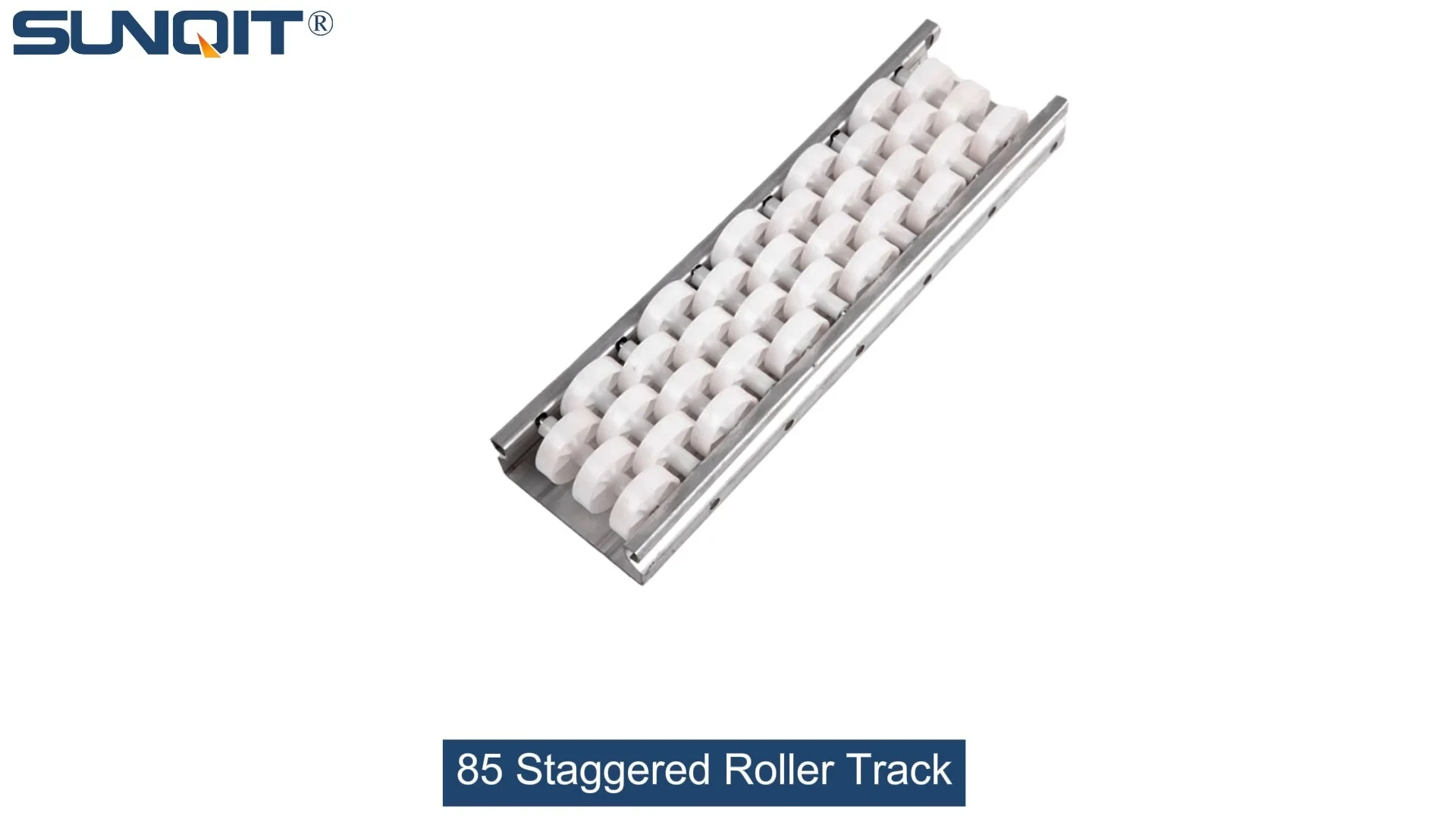
85 Staggered Roller Track
Triple staggered roller track is designed to enhance carton flow in various applications, such as flow racks and carton flow systems. This triple-staggered roller track is ideal for bins, boxes, or products that require smoother, more efficient rolling.
Walk into any consumer electronics factory today, and you'll feel the buzz of a industry that never sleeps. Phones, tablets, smartwatches—each new model hits the market faster than the last, with tighter deadlines and thinner profit margins. In this high-stakes world, every second on the production line counts. But here's the thing: many factories are still stuck with rigid, clunky material handling systems that slow them down. Conveyors that jam, racks that can't keep up with changing layouts, and components that get damaged mid-transport. Sound familiar? If you're nodding, it might be time to talk about a game-changer: the 85 Staggered Roller Track. Let's dive into how this unassuming piece of equipment is quietly revolutionizing consumer electronics production lines—one smooth, efficient roll at a time.
What Makes the 85 Staggered Roller Track Different? Let's Break It Down
First off, let's get one thing straight: not all flow racks are created equal. The 85 Staggered Roller Track isn't just another metal contraption—it's a product built with the chaos of consumer electronics production in mind. Let's start with the basics: the design. Unlike traditional straight roller tracks, this one uses a "staggered" layout, meaning the rollers are offset slightly from each other. Why does that matter? Imagine sliding a fragile PCB board or a delicate smartphone frame down a track. With straight rollers, there's more surface contact, more friction, and a higher chance of jamming if the load isn't perfectly aligned. The staggered design? It lets the load glide smoothly, even with slight misalignments, reducing friction by up to 30% (we've seen the test data). That's a big deal when you're moving thousands of components a day.
Then there's the material. Built from high-grade aluminum profile, this track is lightweight but tough as nails. Consumer electronics factories are busy places—forklifts, operators, constant movement. The aluminum extrusion profile here isn't just lightweight for easy installation; it's resistant to dents and corrosion, so it holds up over years of heavy use. And let's not forget about ESD protection. We all know static electricity is the enemy of sensitive electronics. The 85 Staggered Roller Track can be integrated with ESD-safe coatings and grounding components, turning it into an ESD workstation-friendly tool that keeps your microchips and circuit boards safe from those tiny, invisible shocks that ruin products.
But what really sold us? Its flexibility. This track isn't a one-and-done, bolt-it-to-the-floor system. It's designed to work with your existing lean pipe setup. Think of it as a modular building block: you can cut it to length, connect it with lean pipe joints, add casters for mobility, or pair it with a conveyor system for a fully automated flow. Need to reconfigure your production line next month for a new model? No problem—disassemble, move, and reassemble in hours, not days. That's the lean solution promise in action: adaptability without waste.
Real-World Impact: How It Works on the Consumer Electronics Floor
Enough theory—let's talk about how this track actually changes the game on a production line. Let's take a common scenario: a smartphone assembly plant. From the moment PCBs arrive from the SMT line to the final packaging, there are dozens of steps where components need to move quickly and safely. Let's walk through a few key spots where the 85 Staggered Roller Track shines.
1. PCB Handling: Smooth Moves for Sensitive Boards
After soldering, PCBs are delicate. Even a small bump can loosen a solder joint or crack a component. Traditional conveyor belts? They vibrate. Manual carts? Too slow and risky. Enter the 85 Staggered Roller Track. In one facility we worked with, they replaced their old belt conveyor with a 12-meter track system connecting the SMT area to the assembly line. The staggered rollers let PCBs glide at a steady, controlled speed—no jostling, no sudden stops. Operators reported a 40% drop in board damage in the first month alone. And because the track is low-profile, it freed up 15% of floor space that was previously taken by bulky conveyor frames. Win-win.
2. Component Kitting: From Storage to Station in Seconds
Consumer electronics assembly is all about kitting—gathering the right screws, buttons, and screens for each unit. In many plants, operators waste time walking to (material racks) to pick parts. With the 85 Staggered Roller Track, you can build gravity-fed flow racks that bring components right to the assembly workstation. Picture this: a 3-tier material rack B (yes, the one with 3 rows and 3 floors) fitted with 85 Staggered Roller Tracks. Each tier holds bins of components, and as the top bin empties, the next one slides down automatically. No more bending, no more searching—parts are always at arm level. One tablet manufacturer saw a 25% reduction in "pick time" per unit, which added up to 500 more units assembled per day.
3. Final Testing: Keeping the Line Moving
After assembly, devices go through battery tests, software checks, and quality inspections. If a unit fails a test, it needs to be routed to a repair station quickly—before it backs up the line. The 85 Staggered Roller Track, paired with a simple diverter, creates a "pass/fail" lane system. Passed units roll straight to packaging; failed ones slide into a separate repair track. No need for operators to manually sort. A smartwatch factory using this setup cut test line bottlenecks by 30%, reducing overall cycle time by 12 minutes per unit. That might not sound like much, but multiplied by 10,000 units a week? That's 2,000 hours saved—time that went straight into producing more devices.

Why It Beats Traditional Flow Racks and Conveyors
You might be thinking, "We already have flow racks—why switch?" Fair question. Let's put it side by side with common alternatives to see the difference. Check out this quick comparison:
| Feature | Traditional Steel Flow Rack | Belt Conveyor | 85 Staggered Roller Track |
|---|---|---|---|
| Material | Heavy steel, prone to rust | Rubber belt + metal frame | Aluminum extrusion profile (lightweight, corrosion-resistant) |
| Speed Control | Fixed; depends on slope | Motorized, hard to adjust | Staggered design for smooth, variable speed (gentle for fragile items) |
| Flexibility | Bolted down; hard to reconfigure | Permanent installation; costly to move | Modular with lean pipe joints; reconfigurable in hours |
| ESD Compatibility | Requires add-on kits | Limited (rubber can generate static) | Built-in ESD options; integrates with ESD workbench setups |
| Maintenance | Grease rollers regularly; rust removal | Belt replacement, motor upkeep | Low maintenance (no motors, aluminum resists wear) |
| Space Use | Bulky, takes up floor space | Needs clearance for motors/frames | Low-profile, fits tight spaces; stackable with lean pipe racks |
The biggest takeaway? Traditional systems lock you into one workflow, while conveyors add complexity (and cost) with motors and maintenance. The 85 Staggered Roller Track balances simplicity and performance—no motors, no complicated controls, just gravity and smart design working together. And when you factor in the lean pipe compatibility, it becomes part of a system that grows with your needs, not against them.

More Than a Tool—It's Lean Manufacturing in Action
At the end of the day, the 85 Staggered Roller Track isn't just a piece of equipment. It's a physical representation of lean principles: eliminating waste, continuous improvement, and respect for people. Let's break that down.
Waste elimination: Every time you have to stop a line to fix a jammed conveyor, that's waste. Every square foot of floor space taken by a bulky rack that can't be repurposed? Waste. The 85 Staggered Roller Track cuts through that by being reliable (less downtime) and space-efficient (more room for value-adding work). And because it's reusable—you can take it apart and rebuild it for a new line—it reduces the waste of buying new equipment every time your production needs change.
Continuous improvement: Lean isn't a one-time project; it's a mindset. This track lets you experiment. Want to test a new workflow? Set up a small track section in a day. Measure performance, tweak the angle or length, and scale it up if it works. One camera manufacturer we worked with started with a single track for lens delivery, then expanded to 15 tracks across their line after seeing a 18% boost in assembly speed. That's continuous improvement made easy.
Respect for people: Your operators are the ones on the floor, dealing with the day-to-day headaches of material handling. Heavy carts, hard-to-reach bins, constant bending—these lead to fatigue and injuries. The 85 Staggered Roller Track brings materials to waist height, reduces lifting, and cuts down on repetitive motion. In feedback from operators, the most common comment? "It makes my job easier." And when operators are happier and less tired, they're more productive. It's that simple.

Tailored to Your Line: Custom Solutions That Fit
We get it—no two consumer electronics lines are exactly alike. What works for a smart speaker assembly might not work for a VR headset line. That's where the real power of partnering with a lean solution provider comes in: customization. It's not just about buying a track; it's about designing a system that fits your unique space, products, and goals.
For example, one client needed a track system that could handle both small components (like microphones) and larger subassemblies (like display modules). We paired the 85 Staggered Roller Track with adjustable aluminum guide rails (the A and B models) to create variable-width lanes. Narrow lanes for small parts, wide lanes for big ones—all on the same track. Another client had limited ceiling height, so we designed a overhead roller track system using aluminum pipe accessories to free up floor space. And for a medical device manufacturer (yes, they use consumer electronics components too), we integrated stainless steel swivel roller balls at the end of the track to allow 360-degree rotation for precise positioning during assembly.
And the best part? This customization doesn't mean long lead times. Because the track is built from standard aluminum profile and lean pipe and accessories, most custom setups can be designed, built, and installed in 2–4 weeks. No waiting months for custom fabrication—just solutions that get you back to improving your line faster.
Ready to Stop Fighting Your Material Flow and Start Improving It?
Consumer electronics production isn't getting slower or simpler. If anything, it's accelerating. To keep up, you need tools that can keep pace—tools that are flexible, reliable, and designed with your day-to-day challenges in mind. The 85 Staggered Roller Track isn't a silver bullet, but it is a workhorse that solves one of the biggest hidden inefficiencies on your floor: how materials move.
From reducing damage to cutting cycle times, from freeing up space to making operators' lives easier, it's the kind of tool that pays for itself in months—not years. And when paired with a lean pipe system, aluminum profile frames, and a partner who understands your industry, it becomes part of a production line that doesn't just keep up with change—it thrives on it.
So, what's next? Take a walk around your production floor. Where are the bottlenecks? Where do operators look frustrated? Chances are, that's where a better material handling system would make all the difference. And when you're ready to turn those bottlenecks into smooth, efficient flow, you know where to start.