- Company Articles
- Products and Technology
- Technology Sharing
- 85 Staggered Roller Track in Mechanical Assembly: Process Improvement

85 Staggered Roller Track in Mechanical Assembly: Process Improvement
Related Product
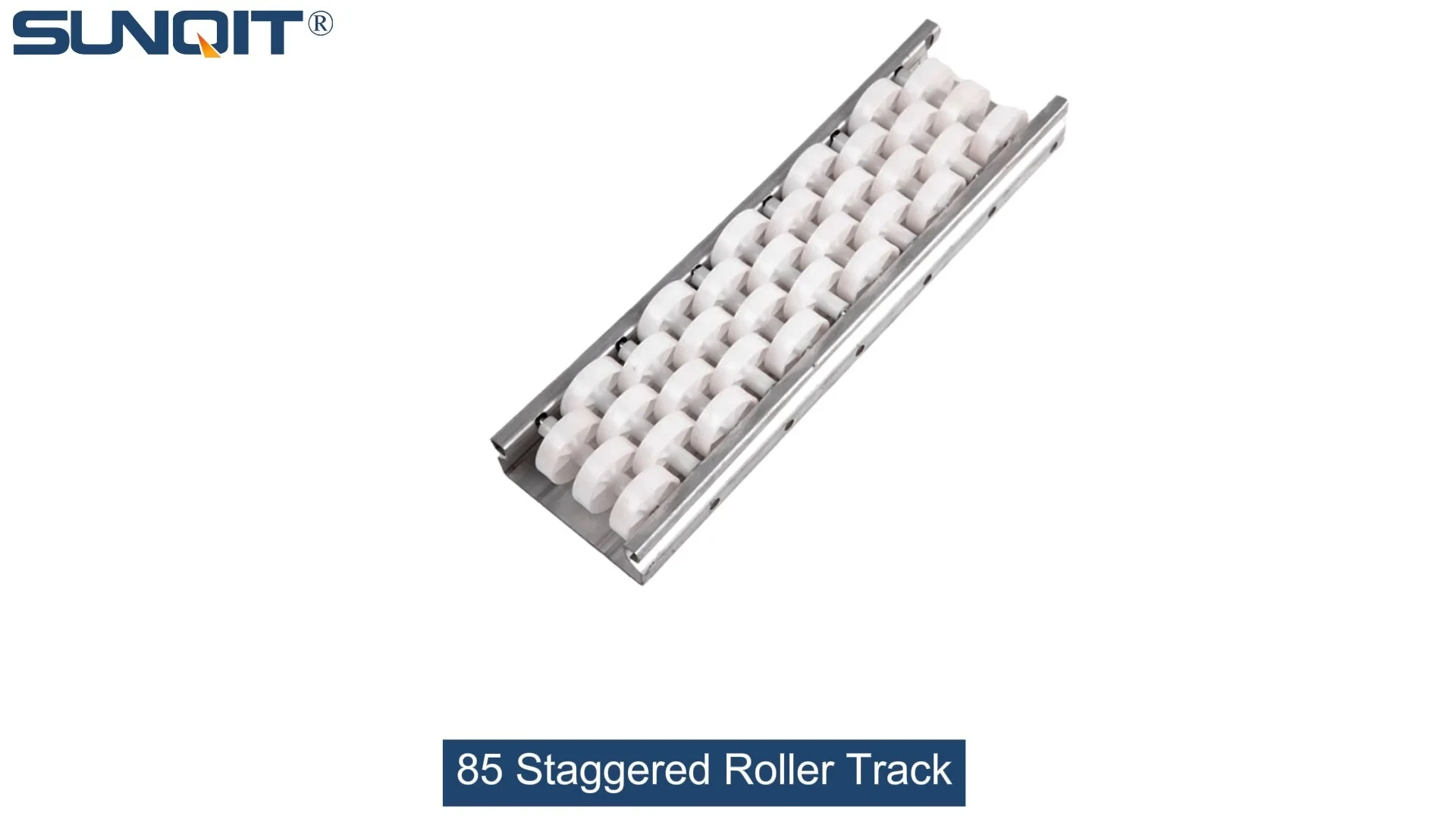
85 Staggered Roller Track
Triple staggered roller track is designed to enhance carton flow in various applications, such as flow racks and carton flow systems. This triple-staggered roller track is ideal for bins, boxes, or products that require smoother, more efficient rolling.
Mechanical assembly is the heartbeat of manufacturing. It's where individual parts transform into functional products—from the engine in a car to the circuit board in a smartphone. Yet, for all its importance, one aspect often determines whether an assembly line thrives or struggles: material flow . Imagine parts getting stuck on a conveyor, workers wasting minutes retrieving components from cluttered racks, or a sudden bottleneck bringing an entire line to a near-halt. These aren't just minor inconveniences; they eat into productivity, inflate costs, and erode competitiveness. In today's fast-paced manufacturing landscape, where every second counts, the right material handling tools aren't just helpful—they're essential. Enter the 85 Staggered Roller Track, a humble yet powerful solution that's quietly revolutionizing how factories move materials. Let's dive into how this innovative flow rack component is solving real-world assembly challenges, one smooth roll at a time.
The Hidden Costs of Poor Material Flow in Assembly Lines
Before we explore the solution, let's first understand the problem. In mechanical assembly, material flow isn't just about moving parts from Point A to Point B—it's about ensuring the right part arrives at the right workstation, at the right time, with zero hassle. When this flow breaks down, the consequences ripple across the entire operation. Consider a typical scenario: In an automotive parts plant, a worker on the brake assembly line waits 2 minutes for a batch of calipers to arrive from the storage area. Multiply that by 50 workers across three shifts, and suddenly you're looking at 500 minutes of lost productivity daily—over 8 hours of wasted time. That's not just time; it's lost output, delayed shipments, and frustrated employees.
Then there's the issue of space. Many factories operate in tight quarters, where every square foot matters. Traditional material racks often take up excessive space, with fixed shelves that can't adapt to changing part sizes or production needs. A medical device manufacturer, for example, might switch from assembling small syringes to larger monitors, only to find their old racks are too shallow or too narrow. The result? Parts stacked haphazardly, increasing the risk of damage or errors.
Flexibility is another pain point. Manufacturing isn't static—product designs change, production volumes fluctuate, and new regulations emerge. A rigid material handling system that worked last year might be obsolete today. For instance, a 3C electronics factory producing smartwatches might suddenly scale up to tablets, requiring longer, wider pathways for components. If their roller tracks can't adjust, they're stuck investing in entirely new equipment, draining budgets that could go toward innovation.
Safety, too, often takes a backseat when material flow is disorganized. Workers bending awkwardly to reach parts on low racks, tripping over loose cables from poorly placed conveyors, or struggling to maneuver heavy bins—these scenarios aren't just inefficient; they're accidents waiting to happen. In an industry where workplace safety directly impacts morale and compliance, these risks are non-negotiable.
What Is 85 Staggered Roller Track, and How Does It Fix These Issues?
At first glance, the 85 Staggered Roller Track might look like just another piece of industrial equipment—a metal frame with rollers, after all. But its genius lies in its design. Unlike standard flow racks with rollers aligned in a straight line, the 85 Staggered Roller Track features rollers arranged in an alternating, staggered pattern. This seemingly simple tweak changes everything. Let's break down its key components and how they address the challenges we've outlined.
Core Design: Staggered Rollers for Uninterrupted Flow
The "85" in its name refers to the track width—85mm—making it ideal for medium to large-sized parts common in mechanical assembly, such as automotive brackets, appliance panels, or industrial gears. The staggered rollers (typically made of high-quality steel or aluminum) are spaced to ensure that even irregularly shaped parts don't get caught. Imagine a plastic housing for a washing machine: with straight rollers, its curved edges might hit a gap between rollers and jam. With staggered rollers, there's always a roller in contact with the part, guiding it smoothly forward. This design eliminates the "stutter" effect that plagues traditional tracks, keeping material moving at a consistent pace.
Aluminum Frame: Lightweight, Strong, and Adaptable
Underpinning those rollers is a frame built from aluminum extrusion profiles—lightweight yet surprisingly durable. Aluminum offers a winning combination: it's rust-resistant (critical in factories with moisture or coolants), easy to clean (essential for medical or food-grade environments), and compatible with a range of accessories. Unlike heavy steel racks that require forklifts to reposition, aluminum frames can be adjusted or moved by a small team, making it easy to reconfigure the assembly line when needs change. For example, a computer peripheral manufacturer shifting from desktop to laptop production can quickly shorten or widen their 85 Staggered Roller Track sections without hiring external contractors.
Modular Connectors: Build It Your Way
What truly sets the 85 Staggered Roller Track apart is its modularity. It's not a one-size-fits-all solution but a system of components that can be mixed and matched: adjustable legs to level the track on uneven floors, side guides to prevent parts from slipping off, and end stops to control where parts halt. Need to connect two tracks at a 45-degree angle? Use a corner connector. Want to integrate it with a conveyor system? Add a transition plate. This flexibility means it can grow with your business, whether you're scaling up production or diversifying product lines. A warehouse logistics provider, for instance, might start with a single track for small parcels and later expand to a network of interconnected tracks feeding multiple packing stations—all using the same base components.

5 Key Benefits of 85 Staggered Roller Track in Mechanical Assembly
Now that we understand how it's built, let's explore the tangible benefits 85 Staggered Roller Track brings to assembly lines. These aren't just theoretical advantages—they're real improvements that translate to bottom-line results.
1. Faster Material Flow, Higher Productivity
The most immediate impact? Speed. By eliminating jams and ensuring consistent part movement, 85 Staggered Roller Track reduces the time parts spend in transit. In a case study with a consumer electronics manufacturer assembling smart speakers, the introduction of staggered roller tracks cut material delivery time to workstations by 28%. Workers no longer waited for parts; instead, components arrived just as they were needed, turning "wait time" into "work time." Over a month, this translated to a 12% increase in daily output—all without adding extra shifts or workers.
But speed isn't just about moving parts faster; it's about predictability. With traditional tracks, parts might roll quickly at first, then slow down or stop, creating uneven workflow. Staggered rollers maintain a steady velocity, allowing assembly line managers to better schedule tasks and reduce idle time. For example, in a mechanical manufacturing plant producing gearboxes, the production team could finally predict exactly when a batch of gears would arrive at the testing station, aligning inspections with assembly to eliminate bottlenecks.
2. Space Savings: Do More with Less Floor Area
Factories are expensive to operate, so every square meter counts. 85 Staggered Roller Track's compact design and vertical scalability help maximize space. Unlike traditional racks that require wide aisles for access, these tracks can be installed in tight spaces, with parts flowing directly to workstations via overhead or under-counter setups. A car parts supplier in Germany, for example, replaced three bulky static racks with two tiers of staggered roller tracks, freeing up 15% of their floor space for a new robotic welding cell. The result? Increased capacity without expanding the facility.
Staggered rollers also allow for denser storage. Since parts glide smoothly, you can load more items onto a single track without worrying about jams. A medical device manufacturer storing surgical tool components reduced their rack count by 20% by switching to staggered tracks, as each track could hold 30% more parts than their old straight-track racks. Less rack space means more room for production equipment, employee work areas, or even future expansion.
3. Versatility: One Track, Thousands of Parts
Mechanical assembly lines handle a dizzying array of parts—from tiny screws to large metal panels. The 85 Staggered Roller Track adapts to this diversity with ease. Its adjustable side guides can be widened or narrowed to fit parts of different widths, while variable roller spacing accommodates varying weights. A furniture manufacturer, for instance, uses the same track to move lightweight wooden slats (weighing 0.5kg) and heavy steel frames (up to 20kg). By adjusting the roller tension and adding rubberized roller covers for delicate slats, they avoid investing in separate tracks for each product line.
This versatility shines in industries with frequent product changes, like 3C assembly. A smartphone factory might switch from assembling a 6-inch screen model to a 7-inch model overnight. With 85 Staggered Roller Track, they simply adjust the side guides and end stops, and the track is ready for the new, larger screens. No need for costly retooling or downtime—just quick, easy adjustments that keep production on track.
4. Durability: Built to Last in Tough Environments
Manufacturing floors are harsh places: dust, vibrations, heavy loads, and constant use take a toll on equipment. The 85 Staggered Roller Track is built to withstand this abuse. Its aluminum frame resists corrosion, even in factories with high humidity or exposure to coolants (common in automotive or metalworking plants). The rollers themselves are made from hardened steel or high-density plastic, designed to handle millions of rotations without wearing down. A heavy machinery manufacturer in the U.S. reported their staggered tracks still performed like new after 5 years of 24/7 operation—no bent frames, no stuck rollers, just consistent performance.
Low maintenance is another perk. Unlike conveyors with complex motors or belts that need frequent replacement, staggered roller tracks have few moving parts. A quick weekly wipe-down to remove dust, and occasional lubrication of roller axles, is all it takes to keep them running. This translates to lower maintenance costs and less downtime—critical for assembly lines that can't afford unexpected repairs.
5. Safety: Protecting Workers, Protecting Products
A smooth-flowing track isn't just efficient—it's safer. By reducing the need for manual material handling, 85 Staggered Roller Track cuts down on the physical strain workers face. In a study by a manufacturing safety association, factories using staggered tracks reported a 35% decrease in musculoskeletal injuries, as workers no longer had to bend, reach, or lift heavy bins. Instead, parts roll directly to their workstation at waist height, minimizing awkward movements.
The track's design also reduces product damage. Parts glide gently on the staggered rollers, avoiding the jostling and impacts common with manual or rough conveyor belts. A medical device manufacturer producing precision surgical instruments saw a 40% drop in damaged parts after switching to staggered tracks—saving thousands of dollars in scrap and rework costs. Additionally, built-in end stops prevent parts from overshooting workstations, reducing tripping hazards and keeping floors clear of stray components.

Real-World Impact: 85 Staggered Roller Track in Action
Numbers and features tell part of the story, but real-world applications bring it to life. Let's look at how three different industries are using 85 Staggered Roller Track to transform their assembly processes.
Automotive Assembly: Speeding Up Brake Component Production
A leading automotive parts supplier in China specializes in brake calipers—a critical safety component with tight production deadlines. Before using 85 Staggered Roller Track, their assembly line relied on manual carts to transport caliper housings from machining to assembly. Workers pushed heavy carts (loaded with 20kg housings) across the factory floor, leading to delays, fatigue, and occasional drops (damaging 2-3 housings per week). The company needed a better way to move parts between the 10 workstations in their caliper line.
They installed a network of 85 Staggered Roller Tracks connecting each workstation. The tracks were integrated with a small conveyor at the machining station, so finished housings rolled directly onto the track and into a buffer area at the next workstation. Side guides were adjusted to fit the caliper housings' width, and end stops with sensors signaled when a new housing arrived, alerting the operator. The results were striking: Material transport time between stations dropped from 3 minutes to 30 seconds, and damaged parts fell to zero. Over six months, the company increased caliper output by 15% and reduced labor costs by reallocating workers from cart-pushing to value-added assembly tasks.
3C Electronics: Precision Handling for Delicate Components
A 3C manufacturer in Southeast Asia produces circuit boards for laptops, where even a tiny scratch can render a board useless. Their old material racks had fixed shelves, and workers often had to dig through bins to find the right resistor or capacitor, risking static damage or bending delicate pins. The company needed a way to deliver small, sensitive components to soldering workstations safely and efficiently.
They opted for 85 Staggered Roller Tracks with anti-static (ESD) roller covers and aluminum frames (which dissipate static electricity). Each track was divided into small, labeled lanes using adjustable dividers, with each lane holding a specific component type. The tracks were mounted at waist height, feeding directly into ESD workbenches where operators soldered components. Since parts rolled smoothly to the front of each lane, workers no longer had to reach into bins—they simply took the top part, and the next one rolled forward. Static damage dropped by 60%, and the time spent searching for components fell by 40%, allowing the soldering team to complete 25% more boards per shift.
Medical Device Manufacturing: Clean, Efficient Flow for Sterile Parts
A medical device company in Europe produces IV pumps, where cleanliness and precision are non-negotiable. Their assembly line required frequent cleaning to meet EU medical standards, and their old steel roller tracks were hard to sanitize, with crevices that trapped dust and bacteria. Additionally, the fixed tracks couldn't adapt to the varying sizes of pump components (from small dials to large pump casings).
They replaced the steel tracks with 85 Staggered Roller Tracks made from anodized aluminum (which resists bacterial growth) and smooth, sealed roller bearings. The modular design allowed them to disassemble sections for deep cleaning without tools, while adjustable guides adapted to different component sizes. The tracks were also sloped slightly to ensure parts moved forward without manual intervention, reducing human contact and contamination risk. Post-implementation, cleaning time dropped by 50%, and the company passed its next FDA inspection with zero observations related to material handling—a first in its 10-year history.

Beyond Standalone Use: Integrating 85 Staggered Roller Track into a Lean System
The 85 Staggered Roller Track is powerful on its own, but its true potential shines when integrated into a broader lean system. Lean manufacturing is all about eliminating waste—whether it's time, space, or resources—and the track plays a key role in this philosophy by enabling "just-in-time" material delivery, reducing inventory, and fostering continuous improvement.
Take, for example, its integration with conveyors. In a large appliance factory, 85 Staggered Roller Tracks act as "feeders" to main conveyors, ensuring parts like control panels or motor housings are staged at the right point for pickup. Sensors on the tracks detect when part levels are low and trigger a signal to the warehouse, which then replenishes stock—eliminating overstocking and reducing inventory costs by 20%. This "pull" system ensures parts arrive only when needed, keeping work-in-progress to a minimum.
Pairing the track with lean pipe workbenches creates even more value. A lean pipe workbench, built from lightweight aluminum lean pipe and modular connectors, can be customized to fit any workstation. By mounting 85 Staggered Roller Tracks directly to the bench, parts flow seamlessly from the track to the operator's hands, reducing reach time and improving ergonomics. A power tool manufacturer in the U.S. combined these two systems: their assembly workbenches feature integrated tracks that deliver batteries, motors, and casings right to the operator, who assembles the tool and places it on an outgoing conveyor. This setup cut workstation cycle time by 15% and reduced operator fatigue, as workers no longer twisted or reached for parts.
The track's modularity also aligns with the lean principle of continuous improvement. As production needs change, the system can be reconfigured without scrapping existing equipment. A furniture manufacturer, for instance, initially used their tracks for table legs but later added a second tier to handle table tops after expanding their product line. By reusing 80% of the original components, they avoided a $10,000 investment in new tracks—demonstrating the "reusable, continuously improvable" ethos at the heart of lean manufacturing.
Traditional vs. Staggered: A Head-to-Head Comparison
Still not convinced 85 Staggered Roller Track is right for your assembly line? Let's compare it directly to traditional straight roller tracks, the most common alternative, across key metrics:
| Metric | Traditional Straight Roller Track | 85 Staggered Roller Track | Key Advantage |
|---|---|---|---|
| Material Flow Speed | Inconsistent; prone to jams with irregular parts | Consistent; 20-30% faster for most parts | Staggered rollers eliminate gaps, ensuring smooth movement |
| Space Efficiency | Requires wider aisles; limited vertical scalability | Compact design; supports multi-tier setups | Frees up 10-15% floor space on average |
| Part Versatility | Works best with uniform, flat parts | Handles irregular shapes, varying weights (0.5kg-20kg) | Adjustable guides and roller spacing adapt to diverse parts |
| Maintenance Needs | Frequent roller jams; requires regular belt/chain adjustments | Minimal; aluminum frame resists corrosion, sealed bearings reduce wear | 50% less maintenance time and cost |
| Safety | Risk of parts jamming; manual intervention needed | End stops, anti-slip rollers, and smooth flow reduce accidents | 35% lower risk of workplace injuries |
| Long-Term Cost | Lower upfront cost, but higher operational expenses (downtime, labor) | Slightly higher upfront cost, but 2-3x ROI within 1-2 years | Total cost of ownership reduced by 25-30% over 5 years |
Customization: Tailoring the Track to Your Unique Needs
Every assembly line is different, and a one-size-fits-all solution rarely works. That's why leading suppliers offer custom 85 Staggered Roller Track configurations designed around your specific challenges. Whether you need ESD protection for electronics, high-temperature resistance for automotive welding areas, or food-grade materials for packaging lines, the track can be adapted to meet your industry's unique demands.
The customization process typically starts with a site assessment. A team of engineers visits your facility to analyze your current material flow, identify bottlenecks, and understand your production goals. For example, a beverage packaging plant might need tracks that can handle wet bottles without slipping, so the supplier would recommend rubberized rollers and drainage channels. A aerospace manufacturer working with lightweight but large composite panels might require reinforced aluminum frames and wider roller spacing to prevent flexing.
Once the needs are defined, the supplier designs a prototype track, often integrating it with existing systems like conveyors or lean pipe workbenches. This prototype is tested in your facility for a few weeks, with adjustments made based on real-world use. A medical device company, for instance, initially requested tracks with fixed end stops but found that parts sometimes bounced back, so the supplier added soft foam padding to the stops—solving the issue without redesigning the entire system.
This collaborative approach ensures the final track isn't just a tool, but a tailored solution that grows with your business. As your product mix changes, the track can be reconfigured with new guides, rollers, or lengths—no need to start from scratch. It's this focus on adaptability that makes 85 Staggered Roller Track a cornerstone of modern, lean assembly lines.
Conclusion: The Future of Material Flow Is Here
Mechanical assembly is evolving, and material handling is evolving with it. The 85 Staggered Roller Track might not grab headlines like robotics or AI, but it's the kind of workhorse innovation that drives real progress in factories worldwide. By solving the everyday challenges of speed, space, versatility, and safety, it empowers manufacturers to do more with less—produce faster, reduce costs, and keep workers happy and safe.
Whether you're assembling cars, smartphones, or medical devices, the question isn't whether you need better material flow—it's how to achieve it. The 85 Staggered Roller Track offers a simple, scalable answer. It's not just a track; it's a foundation for continuous improvement, a tool that adapts to your needs, and a partner in your factory's success. So, the next time you walk through your assembly line, take a look at how your parts move. If there's room for improvement, maybe it's time to let them roll—smoothly, efficiently, and staggeringly well.