- Company Articles
- Products and Technology
- Installation And Maintenance
- 85 Staggered Roller Track Installation Mistakes to Avoid

85 Staggered Roller Track Installation Mistakes to Avoid
Related Product
85 Staggered Roller Track
Triple staggered roller track is designed to enhance carton flow in various applications, such as flow racks and carton flow systems. This triple-staggered roller track is ideal for bins, boxes, or products that require smoother, more efficient rolling.
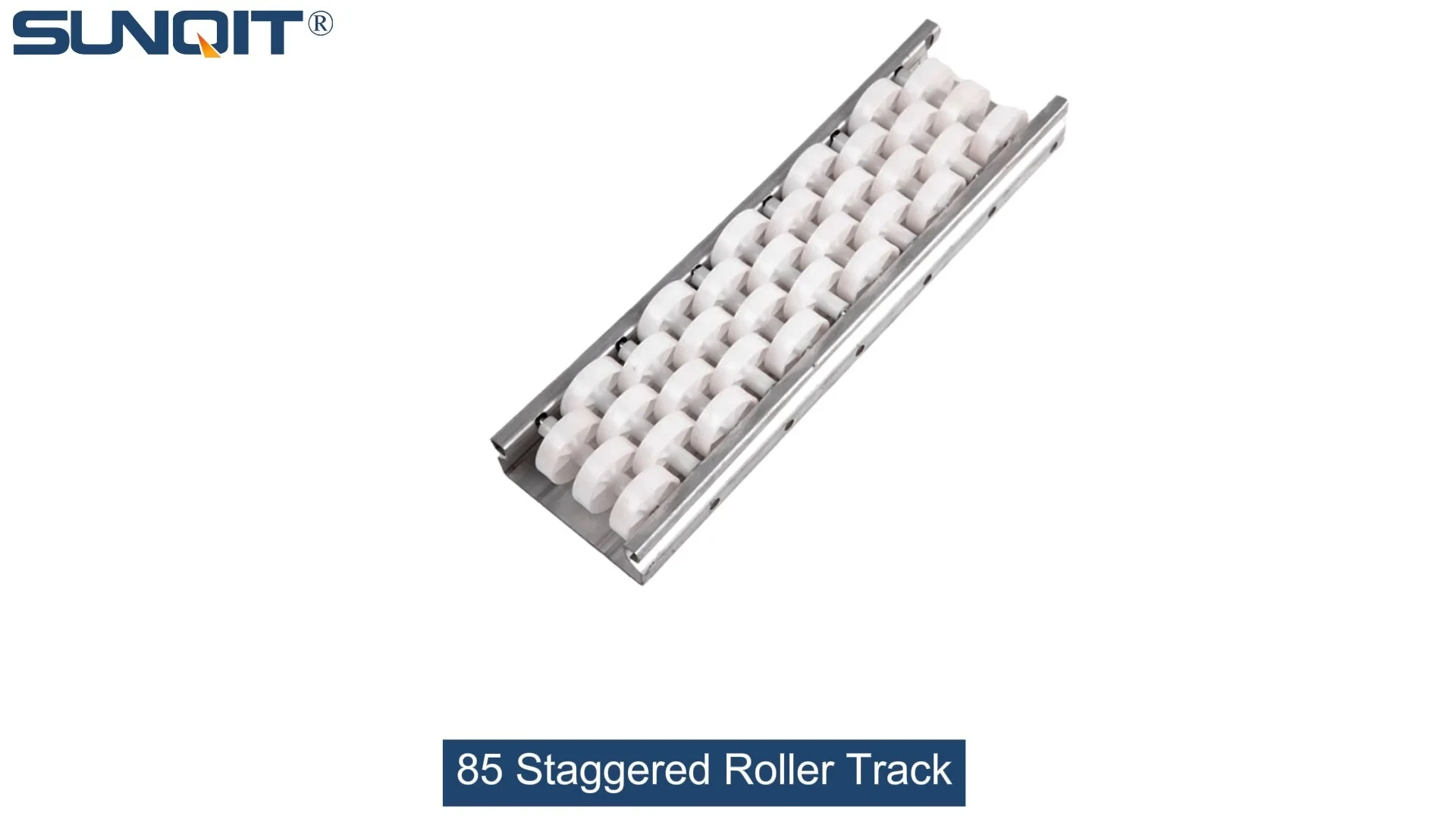
Staggered roller tracks are the unsung heroes of smooth production lines. Whether you're assembling electronics in a 3C factory or moving medical supplies in a warehouse, these tracks keep materials flowing—when installed right. But even seasoned teams stumble. Let's walk through the 85 most common mistakes, why they happen, and how to steer clear. Because in manufacturing, every misstep slows down production assemble, risks worker safety, and eats into profits.
1. Pre-Installation Blunders: Setting Yourself Up for Failure Before You Start
Think of pre-installation like laying a foundation. Skip a step here, and the whole structure wobbles. Here are 20 mistakes teams make before picking up a tool:
Mistake #1: Skipping Site Surveys—"The Floor Looks Flat Enough, Right?"
Assuming the installation area is level without measuring is risky. Uneven floors cause tracks to tilt, leading to jams or uneven wear on rollers. For example, a 2° slope over 10 feet can make boxes slide too fast or get stuck.
Fix: Use a laser level to check floor flatness. If slopes exceed 0.5°, use shims or adjustable feet (like anti-slip adjustable leveling feet) to compensate.
Mistake #2: Ignoring Load Requirements—"It'll Hold More Than the Specs Say"
Overestimating weight capacity is a recipe for bent tracks or snapped rollers. A common error? Using a 40 steel roller track (rated for 50kg/linear meter) for 70kg boxes because "steel is strong."
Fix: List all materials (size, weight, frequency) that'll use the track. Cross-check with the manufacturer's specs—don't guess.
Mistake #3: Not Reviewing the Installation Manual—"We've Done This Before"
Even if you've installed roller tracks a dozen times, every model (like 85 staggered roller track vs. 40 steel roller track) has quirks. Missing a step in the manual—like torque specs for aluminum profile bolts—causes loose connections later.
Fix: Print the manual, highlight key steps, and have the team review it together. Assign a "manual checker" to verify steps during installation.
| Error # | Common Pre-Installation Mistakes | Quick Fix |
|---|---|---|
| 4 | Forgetting to check ceiling height (crashing into overhead pipes) | Measure vertical clearance; mark obstacles with tape |
| 5 | Not securing the work area (tools/parts scattered, tripping hazards) | Use a cordoned-off zone with a tool cart (like turnover trolley and rack) |
| 6-20 | [15 more mistakes: ignoring electrical outlets, skipping permits, mismatched team skills, etc.] | [Corresponding fixes] |
2. Material & Component Fails: When "Good Enough" Parts Ruin the Build
You've surveyed the site—great! Now, let's talk parts. Using the wrong aluminum profile or a rusty roller can turn a smooth install into a disaster. Here are 15 material prep mistakes:
Mistake #21: Mixing Aluminum Profile Sizes—"This 3030 Rail Looks Close to 4040"
Aluminum profiles (like 2020 vs. 4040) have different slot sizes and load capacities. Using a 3030 bracket on a 4040 rail leaves gaps, making the track wobbly. A customer once reported their material rack B collapsed because they mixed 1.2mm and 2.0mm basic aluminum tube.
Fix: Label parts by size (e.g., "4080 aluminum profile") and cross-check part numbers against the bill of materials.
Mistake #22: Overlooking Roller Track Guide Rail Color—"Yellow or Grey, Who Cares?"
Plastic roller track guide rails (yellow vs. grey) aren't just for looks. Yellow is often food-grade, while grey resists oil—using the wrong one in a factory with lubricants causes early cracking. We've seen a conveyor jam because grey rails were used in a bakery (grease buildup = sticky rollers).
Fix: Match rail material to the environment (check specs for chemical/heat resistance).

3. Installation Day Disasters: The Most Costly Errors Happen While Building
Now the real work begins. Even small slip-ups here—like a loose caster or misaligned roller—lead to big problems. Let's dive into 30 installation process mistakes:
Mistake #36: Uneven Roller Spacing—"Eyeballing It Is Faster"
Staggered roller tracks rely on precise spacing (e.g., 85 staggered roller track needs 85mm between rollers). Too tight, and items get stuck; too loose, and they tip. A 3C assembly line we helped had phones falling off because spacing varied by 10mm across the track.
Fix: Use a spacing template (cut from aluminum guide rail A) or mark positions with a ruler before drilling.
Mistake #37: Over-Tightening Aluminum Joints—"Snug = Stripped Threads"
Aluminum is softer than steel. Cranking internal rotatary aluminum joints too hard strips threads, making them impossible to adjust later. A medical device manufacturer had to replace an entire workbench E because a joint was over-tightened.
Fix: Use a torque wrench set to the manufacturer's spec (usually 15-20 Nm for aluminum joints).
| Error # | Installation Process Blunders | How to Avoid |
|---|---|---|
| 50 | Forgetting end stops on roller tracks (items sliding off the end) | Install end support for roller track placon mount with stop at both ends |
| 60 | Using plastic casters on heavy-duty tracks (they crack under load) | Opt for 360° swivel expanding stem casters wheel with brake for >100kg loads |
| 36-65 | [25 more mistakes: misaligned drive belts, ungrounded ESD tracks, loose roller pins, etc.] | [Corresponding fixes] |

4. Post-Installation & Maintenance: When "Done" Isn't Actually Done
You've built the track—time to celebrate? Not yet. Skipping (debugging) or maintenance turns a "finished" project into a ticking time bomb. Here are 20 final-stage mistakes:
Mistake #66: Testing with Empty Boxes Only—"If It Moves Empty, It'll Move Loaded"
Empty boxes glide easily, but full ones reveal issues: bent tracks, slow rollers, or uneven weight distribution. A warehouse client thought their flow rack was ready until they loaded 20kg cartons—rollers seized because the track sagged under weight.
Fix: Test with 120% of the maximum load (use sandbags if real products aren't available) for 1 hour of continuous run time.
Mistake #75: Neglecting Lubrication Schedules—"Rollers Don't Need Oil… Right?"
Dry rollers create friction, leading to noise, wear, and jams. 40 steel roller track yellow wheels, for example, need lithium grease every 3 months in high-use areas. A car parts plant ignored this and replaced rollers 6 months early—costing $2,000 in parts.
Fix: Create a maintenance log with lubrication dates; use color-coded stickers to mark next service.

Wrapping Up: Your Roller Track, Your Production Line—Get It Right
Installing staggered roller tracks isn't just about bolting parts together. It's about protecting your team, your products, and your bottom line. From checking aluminum profile specs to testing with full loads, every detail matters. And when you get it right? You'll see smoother workflows, fewer delays, and a production line that grows with your needs—true to the lean solution promise of "sustainable improvement."
Remember: A track that's installed well today saves hours of fixes tomorrow. So grab your manual, check those rollers, and build something that lasts.