- Company Articles
- Products and Technology
- Installation And Maintenance
- 85 Staggered Roller Track Lubrication Guide: Keeping Rollers Smooth

85 Staggered Roller Track Lubrication Guide: Keeping Rollers Smooth
Related Product
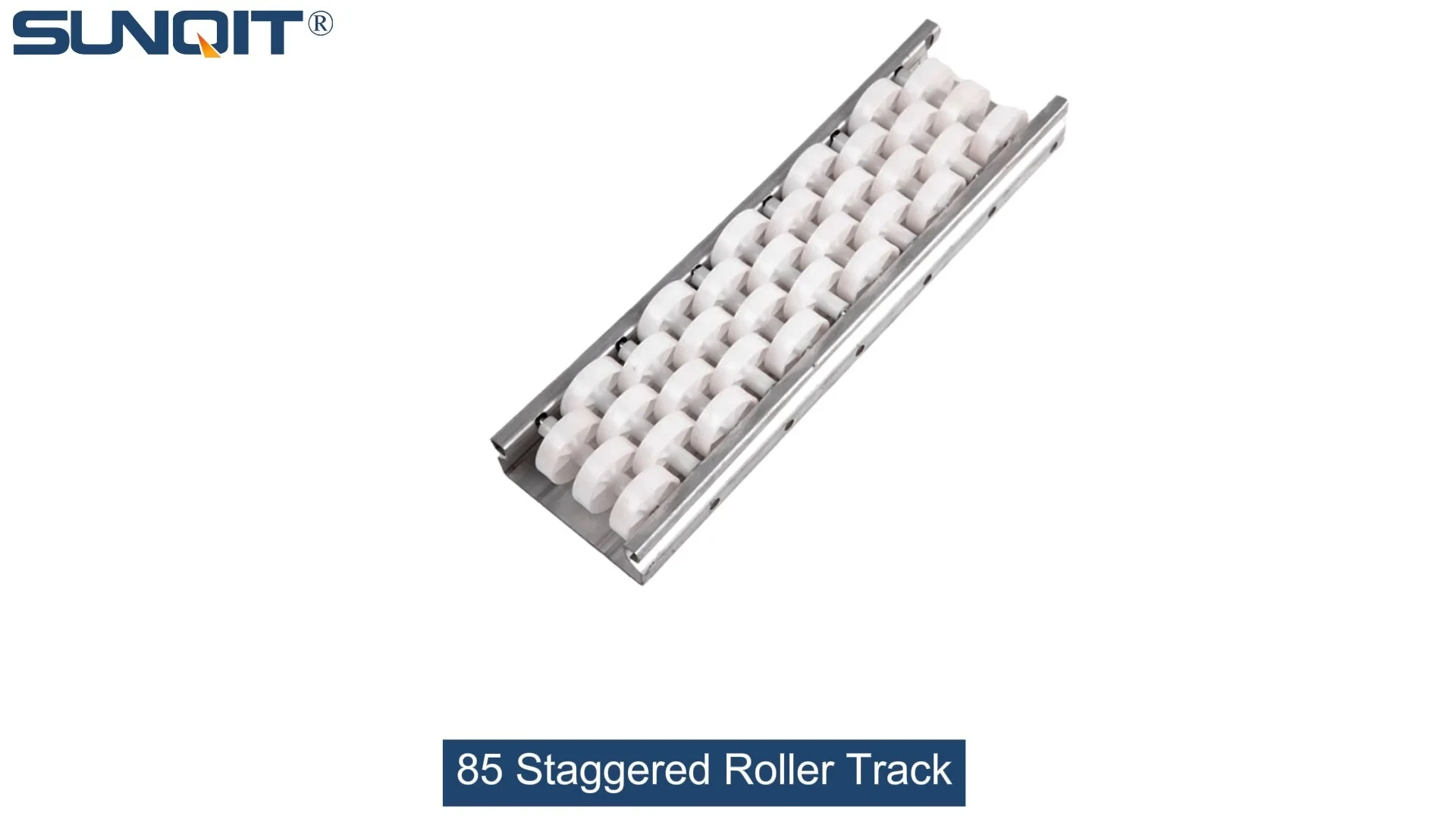
85 Staggered Roller Track
Triple staggered roller track is designed to enhance carton flow in various applications, such as flow racks and carton flow systems. This triple-staggered roller track is ideal for bins, boxes, or products that require smoother, more efficient rolling.
In the fast-paced world of manufacturing and logistics, every component of your production line plays a critical role in keeping operations running smoothly. Among these, the 85 staggered roller track stands out as a workhorse—quietly facilitating the seamless movement of materials, components, and products across assembly lines, warehouses, and distribution centers. But like any hardworking tool, it relies on proper care to maintain peak performance. Lubrication isn't just a maintenance task here; it's the key to preventing downtime, reducing wear and tear, and ensuring your roller track continues to support your team's efficiency day in and day out. In this guide, we'll walk through everything you need to know to keep your 85 staggered roller track gliding smoothly, from understanding why lubrication matters to mastering the step-by-step process.
Why Lubrication Matters for 85 Staggered Roller Tracks
At first glance, a roller track might seem simple—just a series of rollers mounted on a frame. But beneath that simplicity lies a system where even the smallest amount of friction can disrupt workflow. Here's why making lubrication a priority pays off:
Reduces Friction, Boosts Efficiency:
Rollers and their axles are in constant motion, and without proper lubrication, metal-on-metal contact creates friction. This friction slows down material movement, forcing your system to work harder and more energy. Over time, this can lead to bottlenecks in production—imagine a conveyor line where boxes start to slow or stick, causing delays downstream. Lubrication creates a protective barrier that lets rollers spin freely, keeping materials moving at the pace your team needs.
Prevents Wear and Extends Lifespan:
Friction doesn't just slow things down—it wears down components. Unlubricated rollers and axles can develop scratches, dents, or even deformation, especially under heavy loads. A well-lubricated track, on the other hand, distributes stress evenly, reducing the risk of premature failure. This means fewer replacements, lower maintenance costs, and a longer service life for your equipment.
Maintains Precision in Material Handling:
In industries like 3C assembly or medical device manufacturing, precision is non-negotiable. A sticky or uneven roller track can cause materials to shift, tilt, or even fall off, leading to damaged components or rework. Proper lubrication ensures consistent roller rotation, keeping materials aligned and stable as they move—critical for maintaining product quality and reducing waste.
Protects Against Corrosion and Contamination:
Manufacturing environments aren't always clean. Dust, moisture, and debris can find their way into roller axles and joints, leading to rust or buildup. Lubrication acts as a sealant, repelling moisture and preventing particles from settling into moving parts. This is especially important in warehouses or facilities with high humidity, where corrosion can quickly degrade equipment.
Signs Your Roller Track Needs Lubrication
Lubrication isn't a "set it and forget it" task—it requires attention to subtle (and sometimes not-so-subtle) signs that your roller track is crying out for care. Here's what to watch for:
Unusual Noises:
If you hear squeaking, grinding, or rattling as materials move along the track, it's a clear red flag. These sounds often mean rollers are rubbing against axles without enough lubrication, creating friction that's impossible to ignore. Don't brush it off—left unaddressed, this friction will only get worse.
Sluggish Movement:
Notice materials taking longer to reach their destination? Or maybe they're slowing down mid-track, even on a slight incline? This could be due to increased friction in the rollers. A properly lubricated track should let materials glide with minimal resistance—if you're pushing or prodding more than usual, it's time to check your lubrication.
Uneven or Jerky Motion:
Does your roller track start and stop unexpectedly, or do materials wobble as they move? This inconsistency often points to some rollers being more lubricated than others, or axles that are starting to seize up. Inconsistent motion is a recipe for misaligned materials and potential jams.
Visible Wear or Rust:
Take a close look at the rollers and axles. Are there signs of rust, pitting, or metal shavings? These are all indicators that friction is causing damage. Even small amounts of rust can spread quickly, so catching it early with lubrication is key.
Sticky Rollers:
Try spinning a few rollers by hand. They should rotate smoothly and freely. If a roller feels stiff or gets stuck partway through a spin, it's definitely time for lubrication. Sticky rollers are a common cause of jams, especially with smaller or lighter materials.

Choosing the Right Lubricant
Not all lubricants are created equal—and using the wrong one can do more harm than good. The right choice depends on your environment, load, and usage. Here's how to pick:
First, Lubricant Type: Grease vs. Oil
Grease is thicker and longer-lasting, making it ideal for most roller track applications. It stays in place, even on vertical or inclined tracks, and provides a protective barrier against dust and moisture. Oil, while thinner, works well for high-speed tracks where grease might slow things down, but it requires more frequent reapplication. For 85 staggered roller tracks, grease is usually the go-to choice—just make sure it's compatible with your roller materials (e.g., metal, plastic).
Key Factors to Consider
When selecting a grease, keep these in mind:
Operating Temperature:
If your track is in a hot environment (e.g., near ovens or furnaces), choose a high-temperature grease (rated for 200°F+). For cold environments, opt for a low-temperature formula that won't thicken and slow movement.
Load Capacity:
Heavy loads (e.g., metal components, large boxes) need a heavy-duty grease with additives to handle pressure. Light loads (e.g., small electronics) can use a lighter, general-purpose grease.
Environmental Conditions:
In dusty or dirty areas, a thicker grease will trap particles better than a thin one. For clean rooms or medical settings, use a food-grade or low-outgassing grease to avoid contamination. If moisture is an issue (e.g., outdoor loading docks), look for a water-resistant or waterproof formula.
Lubricant Comparison Chart
| Lubricant Type | Best For | Pros | Cons |
|---|---|---|---|
| Mineral-Based Grease | General-purpose, indoor, moderate temperatures | Affordable, widely available, works in 0°F to 250°F | Not ideal for extreme temps or heavy loads |
| Synthetic Grease | Extreme temps, heavy loads, wet environments | Resists heat (up to 500°F), water, and oxidation; long-lasting | More expensive than mineral-based |
| Silicone Grease | Plastic rollers, clean rooms, low friction | Non-reactive, won't damage plastic, good for sensitive environments | Not great for heavy loads; can attract dust in dirty areas |
| Dry Film Lubricant | Ultra-clean environments (e.g., electronics assembly) | Leaves no residue, won't attract particles | Short lifespan, requires frequent reapplication |

Step-by-Step Lubrication Process
Now that you've got the right lubricant, let's walk through the lubrication process. With a little patience, you'll have your track running like new:
1
Prepare the Area
Start by shutting down the track and ensuring it's powered off (safety first!). Clear any materials or debris from the track to avoid interference. Lay down a drop cloth or paper towels to catch excess lubricant and keep the area clean. Gather your tools: lubricant (in a grease gun or applicator), rags, a small brush (for hard-to-reach areas), and gloves to protect your hands.
Start by shutting down the track and ensuring it's powered off (safety first!). Clear any materials or debris from the track to avoid interference. Lay down a drop cloth or paper towels to catch excess lubricant and keep the area clean. Gather your tools: lubricant (in a grease gun or applicator), rags, a small brush (for hard-to-reach areas), and gloves to protect your hands.
2
Clean the Rollers and Axles
Before applying new lubricant, remove old grease, dirt, and debris. Use a rag to wipe down each roller and axle, paying extra attention to the gaps where the roller meets the frame. For stubborn grime, use a brush or a cloth dampened with mineral spirits (avoid harsh chemicals that might damage plastic components). Let everything dry completely—moisture mixed with grease creates a gritty paste that's worse than no lubrication at all.
Before applying new lubricant, remove old grease, dirt, and debris. Use a rag to wipe down each roller and axle, paying extra attention to the gaps where the roller meets the frame. For stubborn grime, use a brush or a cloth dampened with mineral spirits (avoid harsh chemicals that might damage plastic components). Let everything dry completely—moisture mixed with grease creates a gritty paste that's worse than no lubrication at all.
3
Disassemble (If Needed)
For most 85 staggered roller tracks, you won't need to fully disassemble the system. However, if rollers are particularly stuck or if you notice buildup in the roller track connector or joints, you may need to loosen a few bolts to access hard-to-reach areas. Just be sure to note how everything fits together so you can reassemble correctly!
For most 85 staggered roller tracks, you won't need to fully disassemble the system. However, if rollers are particularly stuck or if you notice buildup in the roller track connector or joints, you may need to loosen a few bolts to access hard-to-reach areas. Just be sure to note how everything fits together so you can reassemble correctly!
4
Apply Lubricant
Now for the main event: applying the grease. For each roller, apply a small amount of grease to the axle where the roller meets the frame. A little goes a long way—aim for a pea-sized dollop per roller. Use the applicator tip to get into tight spaces, like the inner edges of the roller. For roller track and accessories like side guides or supports, apply a thin layer of grease to any moving parts or contact points. Once applied, spin each roller by hand to distribute the lubricant evenly inside.
Now for the main event: applying the grease. For each roller, apply a small amount of grease to the axle where the roller meets the frame. A little goes a long way—aim for a pea-sized dollop per roller. Use the applicator tip to get into tight spaces, like the inner edges of the roller. For roller track and accessories like side guides or supports, apply a thin layer of grease to any moving parts or contact points. Once applied, spin each roller by hand to distribute the lubricant evenly inside.
5
Wipe Away Excess
After lubricating, use a clean rag to wipe off any excess grease from the rollers and track surface. Too much grease attracts dust and debris, which can turn into abrasive grit over time. You want a thin, consistent layer—not globs.
After lubricating, use a clean rag to wipe off any excess grease from the rollers and track surface. Too much grease attracts dust and debris, which can turn into abrasive grit over time. You want a thin, consistent layer—not globs.
6
Test Run
Power the track back on (or give it a manual push if it's unpowered) and let it run empty for a minute or two. Listen for smooth, quiet operation—no squeaks or grinding. Check that rollers spin freely and materials (if you test with a sample load) move evenly. If you notice any issues, stop and recheck the lubrication or adjust as needed.
Power the track back on (or give it a manual push if it's unpowered) and let it run empty for a minute or two. Listen for smooth, quiet operation—no squeaks or grinding. Check that rollers spin freely and materials (if you test with a sample load) move evenly. If you notice any issues, stop and recheck the lubrication or adjust as needed.
7
Reassemble and Document
If you disassembled any parts, put them back together and tighten bolts securely. Finally, make a note in your maintenance log: when you lubricated the track, what lubricant you used, and any issues you noticed. This helps you track when the next lubrication is due and spot patterns (e.g., a section that needs more frequent care).
If you disassembled any parts, put them back together and tighten bolts securely. Finally, make a note in your maintenance log: when you lubricated the track, what lubricant you used, and any issues you noticed. This helps you track when the next lubrication is due and spot patterns (e.g., a section that needs more frequent care).

Maintenance Tips for Long-Term Performance
Lubrication is just one part of keeping your 85 staggered roller track in top shape. Pair it with these habits to maximize efficiency and lifespan:
Stick to a Schedule
Create a lubrication calendar based on usage: high-traffic tracks (e.g., assembly lines running 24/7) may need lubrication every 2-4 weeks, while lower-traffic ones (e.g., warehouse storage tracks) can go 1-3 months. Mark dates on a calendar or set reminders—consistency beats waiting for problems to arise.
Create a lubrication calendar based on usage: high-traffic tracks (e.g., assembly lines running 24/7) may need lubrication every 2-4 weeks, while lower-traffic ones (e.g., warehouse storage tracks) can go 1-3 months. Mark dates on a calendar or set reminders—consistency beats waiting for problems to arise.
Inspect Regularly
Do a quick visual check daily: look for debris, loose rollers, or signs of wear. Every week, spin a few rollers by hand to test for smoothness. Catching issues early (like a loose roller track connector) prevents bigger breakdowns later.
Do a quick visual check daily: look for debris, loose rollers, or signs of wear. Every week, spin a few rollers by hand to test for smoothness. Catching issues early (like a loose roller track connector) prevents bigger breakdowns later.
Keep It Clean
Sweep or vacuum the track area regularly to prevent dust and debris from building up. Wipe down rollers with a dry rag monthly to remove surface grime. A clean track is a happy track!
Sweep or vacuum the track area regularly to prevent dust and debris from building up. Wipe down rollers with a dry rag monthly to remove surface grime. A clean track is a happy track!
Train Your Team
Teach operators to recognize signs of trouble—like strange noises or slow movement—and report them immediately. The people using the track daily are your first line of defense against downtime.
Teach operators to recognize signs of trouble—like strange noises or slow movement—and report them immediately. The people using the track daily are your first line of defense against downtime.
replace Worn Parts Promptly
Even with perfect lubrication, rollers and axles will wear out eventually. If you notice a roller that's cracked, bent, or won't spin despite lubrication, replace it right away. Using damaged parts puts stress on the entire track and leads to more frequent failures.
Even with perfect lubrication, rollers and axles will wear out eventually. If you notice a roller that's cracked, bent, or won't spin despite lubrication, replace it right away. Using damaged parts puts stress on the entire track and leads to more frequent failures.
Common Lubrication Mistakes to Avoid
Even well-intentioned maintenance can go wrong. Steer clear of these pitfalls:
Over-Lubricating:
More grease doesn't mean better lubrication. Excess grease oozes onto the track surface, attracts dirt, and can even slow down materials. Stick to the "less is more" rule—you can always add a little extra later.
Using the Wrong Lubricant:
Putting a heavy-duty grease in a clean room, or a water-based lubricant in a damp area, will cause problems. Always check the manufacturer's recommendations for your track and environment.
Ignoring Cleanliness:
Slapping new grease over old dirt is like putting a band-aid on a dirty wound—it traps grit and causes more friction. Take the time to clean first!
Forgetting Hard-to-Reach Areas:
Don't just lubricate the top rollers—check under the track, around roller track connectors, and in any joints where movement occurs. These spots are often the first to seize up.
Skipping the Test Run:
After lubricating, always test the track empty before resuming production. A quick spin can reveal missed spots or excess grease that needs wiping.
Troubleshooting After Lubrication
Even with careful work, you might run into issues post-lubrication. Here's how to fix them:
Track Still Squeaks:
If noises persist, you may have missed a roller or used too little lubricant. Go back and check each roller, adding a small amount of grease to any that feel stiff.
Materials Are Sticking:
Excess grease could be the culprit—wipe down the track surface with a clean rag. If that doesn't work, the lubricant might be too thick for your load; try a lighter formula.
Rollers Wobble:
This usually means a loose roller or roller track connector. Tighten bolts or replace any worn connectors to stabilize the system.
Lubricant Leaks:
If grease is dripping from the track, you applied too much. Wipe away excess and run the track empty to distribute the remaining lubricant.
Your 85 staggered roller track is more than just metal and rollers—it's the backbone of your material handling system. With the right lubrication, regular care, and attention to detail, you can keep it running smoothly for years, reducing downtime, boosting efficiency, and supporting your team's hard work. Remember: a little maintenance today saves a lot of headaches tomorrow. Now go give your roller track the care it deserves!