- Company Articles
- Products and Technology
- Installation And Maintenance
- 85 Staggered Roller Track Maintenance Schedule: Best Practices

85 Staggered Roller Track Maintenance Schedule: Best Practices
Related Product
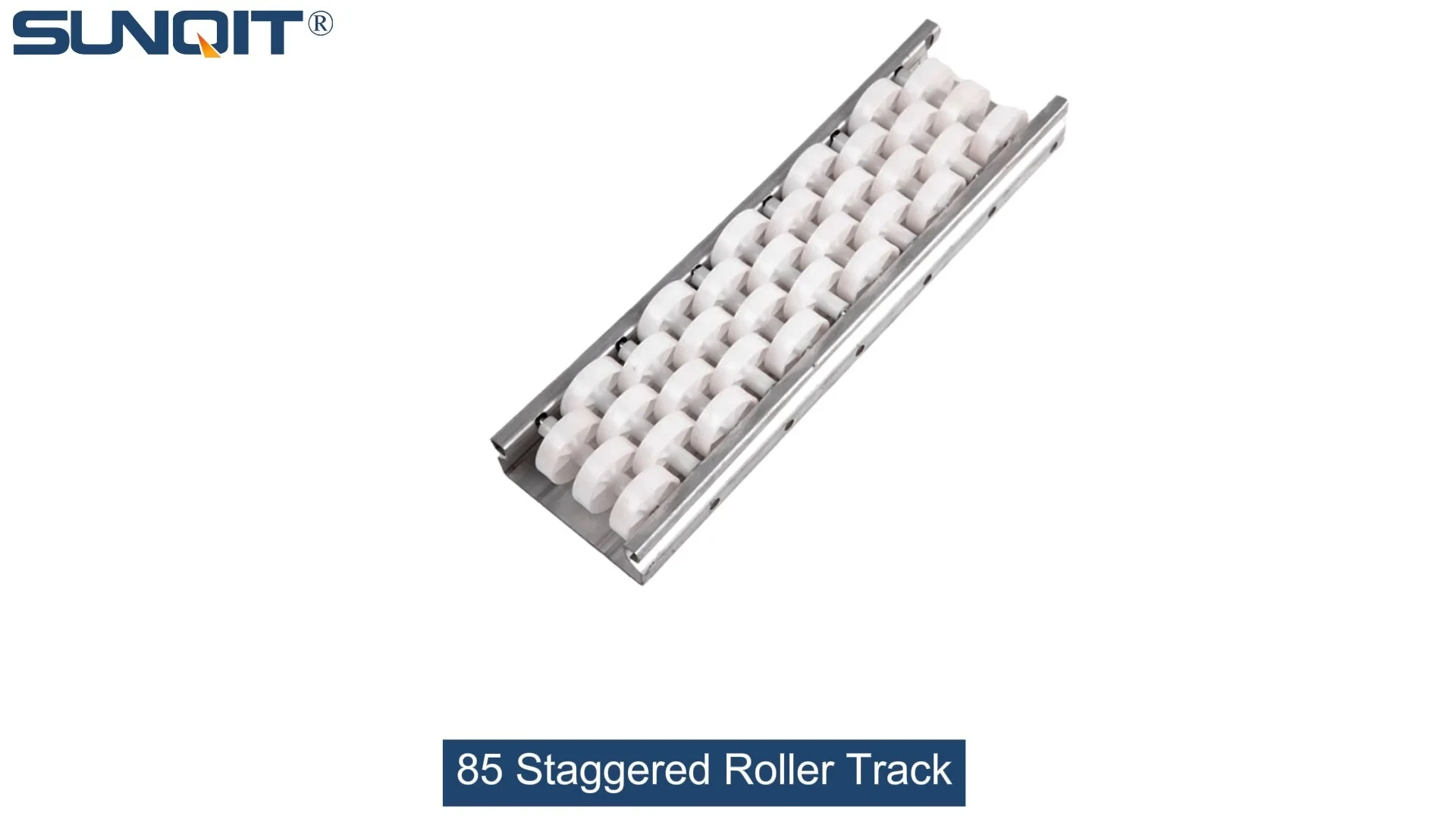
85 Staggered Roller Track
Triple staggered roller track is designed to enhance carton flow in various applications, such as flow racks and carton flow systems. This triple-staggered roller track is ideal for bins, boxes, or products that require smoother, more efficient rolling.
Walk through any bustling manufacturing plant or warehouse, and you'll notice the silent workhorses keeping operations flowing: roller track systems. Among these, the 85 staggered roller track stands out as a true workhorse—designed to glide materials smoothly through assembly lines, distribution centers, and production cells. But here's the truth: that "effortless" flow doesn't happen by magic. Without consistent care, even the sturdiest roller track can turn from a productivity booster into a bottleneck. Let's dive into creating a maintenance routine that keeps your 85 staggered roller track running like new, day after day.
What makes the 85 staggered roller track special? Its unique design—rollers offset in two parallel rows—provides unmatched stability for uneven loads, reduces friction, and ensures materials transition seamlessly between workstations. This engineering marvel is the backbone of modern flow rack systems, especially in high-precision industries like 3C assembly and medical device manufacturing. But precision demands care. Every component, from the aluminum guide rails to the smallest roller bearing, needs attention to maintain that critical edge in efficiency.
Why Maintenance Isn't Optional: The Hidden Costs of Neglect
Let's get real: skipping maintenance might save 10 minutes today, but it'll cost hours tomorrow. Here's why consistent care matters:
Safety First —A damaged roller track isn't just slow; it's dangerous. Imagine a heavy component jamming and tipping, or a worn roller breaking mid-operation. Regular checks catch loose lean pipe joints or cracked roller flanges before they become hazards.
Efficiency Kills Downtime —In lean manufacturing, every second counts. A sticky roller or misaligned track can bring an entire line to a halt, turning a smooth workflow into a frustrating game of catch-up. Studies show unplanned downtime costs manufacturers up to $50,000 per hour—maintenance is cheap by comparison.
Quality Protects Your Brand —In industries like automotive or electronics, uneven material flow causes misaligned parts and defects. Your roller track isn't just moving products; it's safeguarding your reputation for quality. A well-maintained track ensures components arrive at the workbench in perfect condition, ready for assembly.
The Maintenance Schedule: Your Roadmap to Reliability
Maintenance isn't a one-time task—it's a rhythm. Let's break down the schedule by frequency, from quick daily checks to deep annual overhauls.
Daily Checks: 5-Minute "Health Checks"
Start each shift with a quick walkdown—this prevents small issues from becoming big problems. Scan the track for debris: loose screws, packaging scraps, or product residue can jam rollers faster than you think. Keep a small brush handy to sweep away obstacles. Next, listen for odd sounds: a squeak or grind usually means a roller is misaligned or a bearing is failing. Finally, check transitions to conveyors or workbenches—do materials glide smoothly, or get stuck at the seams? Note anything unusual in your logbook.
Weekly Deep Clean & Function Test
Weekly maintenance tackles buildup that sneaks in over days. Start by wiping down aluminum guide rails and rollers with mild detergent—avoid harsh chemicals that damage ESD coatings (critical for ESD workstation setups). Then, spin each roller by hand—they should rotate freely, no wobbling or resistance. Stiff rollers get marked for monthly inspection. Finally, tighten all fasteners: roller track placon mount brackets, lean pipe clamps, and joint connectors. Vibration loosens these over time, and a quick wrench turn prevents costly shifts.
Monthly Precision Tune-Up
Monthly maintenance is where precision matters. Grab a torque wrench and hit every connection: lean pipe joints, roller axles, and frame brackets. Follow manufacturer specs—too loose, and parts shift; too tight, and you risk stripping aluminum profiles. Inspect roller flanges (the small lips keeping materials on track)—chipped or worn flanges cause slippage, so replace damaged rollers immediately. Finally, check track level with a bubble level—sagging sections slow material flow. Use adjustable leveling feet to correct dips; even 1/4-inch misalignment can cause jams.
Quarterly Lubrication & Wear Inspection
By quarter's end, moving parts need fresh lubrication. Use synthetic, high-speed bearing oil (avoid grease—it attracts dust). Apply 2-3 drops per bearing, then spin rollers to distribute evenly. Wipe excess oil to prevent gunk buildup. Next, inspect aluminum extrusion profiles for scratches or corrosion—sand minor scrapes smooth; replace sections with deep dents. Finally, test with a sample load: use a typical product box and watch its flow. Slow spots usually mean worn rollers or bent rails—mark these for repair.
Annual Overhaul: Future-Proofing Your Track
Once a year, go all-in. Remove rollers and inspect axles/bearings—if 10% or more show wear (pitting, cracks, or play), replace them all. Mixing old and new rollers causes uneven flow. Check rail straightness with a laser level—even slight bends disrupt material movement. Straighten minor bends with a rubber mallet; replace severely damaged rails. Finally, review maintenance logs: are certain sections always problematic? Maybe a high-traffic area needs heavier-duty 40 steel roller track wheels instead of aluminum. Use this data to upgrade weak points.

Maintenance Schedule At-A-Glance
| Maintenance Period | Key Tasks | Tools Needed | Why It Matters |
|---|---|---|---|
| Daily |
• Clear debris
• Listen for noises • Check transitions |
Brush, logbook | Prevents jams; catches early warnings |
| Weekly |
• Clean rails/rollers
• Test roller spin • Tighten fasteners |
Mild detergent, cloth, wrench | Stops dirt buildup; maintains tight connections |
| Monthly |
• Torque all connections
• Inspect roller flanges • Level track |
Torque wrench, bubble level | Ensures precision alignment; prevents slippage |
| Quarterly |
• Lubricate bearings
• Repair rail scratches • Load-test flow |
Synthetic oil, sandpaper, sample load | Reduces wear; verifies smooth material flow |
| Annual |
• replace worn rollers
• Straighten/bend rails • Review logs for upgrades |
Laser level, replacement parts, maintenance logs | Extends lifespan; targets recurring issues |

Troubleshooting: Fixing Common Roller Track Issues
Even with great maintenance, problems happen. Here's how to solve the most frustrating issues:
Problem: Rollers Keep Jamming
Start simple: clear debris from axles with compressed air. If that fails, check roller alignment—misaligned roller track placon mount connectors can tilt rollers. Realign the mount or replace bent axles. If the roller still sticks, the bearing is shot—swap it with a new one (always use OEM bearings for proper fit).
Problem: Excessive Noise
Squeaks usually mean dry bearings—lubricate per quarterly steps. Rattling suggests loose parts: retighten lean pipe joints and brackets. For persistent noise, check wheel condition—worn or uneven wheels create rumbling. replace any wheels with flat spots or cracks.
Problem: Materials Sliding Off Track
Worn flanges are the usual culprit—replace rollers with fresh flanges. If flanges are good, check track angle: too steep, and materials speed out of control; too flat, and they drag. Adjust end supports to set a 3-5° incline (ideal for most materials). For irregular loads, upgrade to 38 aluminum roller track with wheel flanges for extra grip.
Problem: ESD Failures (ESD Workstations)
If static is damaging components, test ESD resistance with a meter (target: 10^6–10^9 ohms). Clean track with ESD-safe detergent to remove conductive dirt. If readings are off, check ground connections—loose wires cause static buildup. replace any parts with damaged ESD coatings to keep sensitive electronics safe.

Pro Tips for Long-Term Performance
Elevate your maintenance with these expert strategies:
Use OEM Parts Only
Generic lean pipe accessories might save a few dollars, but they're often poorly sized. OEM parts—like our aluminum pipe accessories and lean pipe joints—are engineered for a perfect fit, ensuring alignment and longevity. A mismatched joint can throw off an entire track section, costing more in repairs than you saved on parts.
Train Your Team to Spot Issues
Your operators know the track best—teach them to recognize red flags: slow-moving rollers, unusual sounds, or materials that "hang" mid-flow. Create a simple reporting system (tablet app or logbook) so they can flag issues immediately. Empowering your team turns everyone into a maintenance partner.
Log Everything (Yes, Everything)
A detailed log tracks when parts were replaced, issues found, and adjustments made. Over time, you'll spot patterns: "Section C needs roller replacement every 6 months" or "Bearing lubrication lasts longer with Brand X oil." Use these insights to fine-tune your schedule and order parts in advance, avoiding downtime.
Integrate with Lean System Maintenance
Your roller track doesn't work alone—it's part of a larger lean system. Coordinate maintenance with conveyor and workbench upkeep. For example, when servicing a workbench E, inspect the connected roller track section too. This holistic approach ensures your entire workflow stays in sync, not just individual components.
Final Thoughts: Maintenance as an Investment
Your 85 staggered roller track is more than metal and rollers—it's the heartbeat of your operation. By following this schedule, you're not just maintaining equipment; you're protecting safety, ensuring quality, and keeping your lean system true to its promise of efficiency. Remember: every minute spent on maintenance saves hours of downtime later. Treat your track with care, and it'll keep your production line moving—smoothly, safely, and efficiently—for years to come.