- Company Articles
- Products and Technology
- Procurement Guidelines
- 85 Staggered Roller Track Sourcing Guide: Choosing Reliable Suppliers

85 Staggered Roller Track Sourcing Guide: Choosing Reliable Suppliers
Related Product
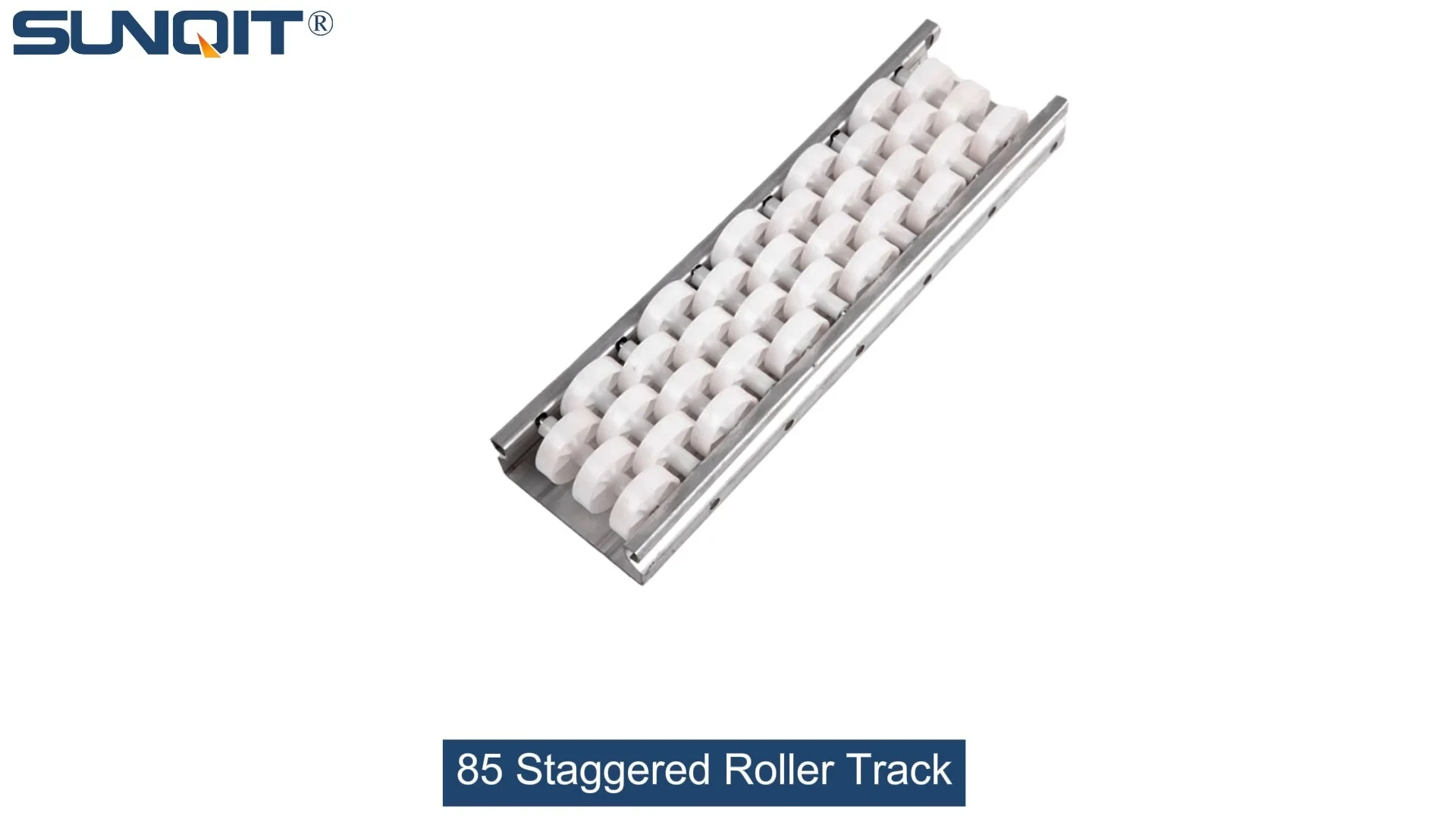
85 Staggered Roller Track
Triple staggered roller track is designed to enhance carton flow in various applications, such as flow racks and carton flow systems. This triple-staggered roller track is ideal for bins, boxes, or products that require smoother, more efficient rolling.
Picture this: It's a busy Monday morning on your production floor. Assembly lines are humming, workers are focused, and every second counts. Then, halfway through the shift, a bottleneck hits. A cart loaded with circuit boards gets stuck on a roller track, grinding your 3C assembly line to a halt. By the time maintenance fixes it, you've lost an hour of productivity—and that's not counting the ripple effect on downstream processes. Sound familiar? For manufacturers, efficient material flow isn't just a "nice-to-have"—it's the backbone of meeting deadlines, reducing waste, and keeping teams motivated.
This is where the 85 staggered roller track comes in. More than just a piece of hardware, it's the silent workhorse that keeps materials gliding smoothly from point A to point B, whether you're building smartphones, medical devices, or automotive parts. But not all roller tracks are created equal. And choosing the right supplier? That's the difference between a track that lasts 10 years and one that causes headaches every quarter. In this guide, we'll walk you through everything you need to know to source 85 staggered roller tracks that align with your lean goals, stand up to daily wear, and grow with your business.
What Is an 85 Staggered Roller Track, and Why Does It Matter?
Let's start with the basics. An 85 staggered roller track is a material handling solution designed for high-volume, low-friction transport of goods. The "85" refers to its width (85mm), while "staggered" describes how the rollers are arranged—offset from each other to ensure stable, continuous contact with even irregularly shaped items. Unlike standard straight roller tracks, this staggered design minimizes jams, reduces noise, and handles everything from small components to heavier assemblies.
The Hidden Benefits for Your Lean System
At its core, the 85 staggered roller track is a champion of lean manufacturing. Here's how it fits into your lean system :
- Waste Reduction: By ensuring smooth material flow, it cuts down on wait times and manual handling—two major sources of non-value-added work.
- Flexibility: It integrates seamlessly with flow racks , conveyors , and workstations, letting you reconfigure lines as production needs change.
- Scalability: Add or remove sections without overhauling your entire setup, making it easy to scale up (or down) during peak seasons.
Take a medical device manufacturer we worked with last year. They were struggling with fragile component transport—glass vials kept tipping on their old straight roller track. Switching to an 85 staggered model reduced breakage by 70% and cut material handling time by 25%. That's the kind of impact the right track can have.
Key Factors to Consider When Sourcing
Not all 85 staggered roller tracks are built to the same standard. To avoid buyer's remorse, focus on these critical areas:
1. Material: Aluminum Profile vs. Stainless Steel—Which Fits Your Floor?
The material of your roller track affects everything from durability to maintenance. Most suppliers offer two options: aluminum profile and stainless steel.
| Factor | Aluminum Profile Tracks | Stainless Steel Tracks |
|---|---|---|
| Weight | Lighter (easier to install/reconfigure) | Heavier (more stable for extreme loads) |
| Corrosion Resistance | Good (ideal for dry, indoor environments like electronics assembly) | Excellent (perfect for wet or chemical-exposed areas, like automotive paint shops) |
| Cost | More budget-friendly | Higher upfront cost, but longer lifespan in harsh conditions |
| ESD Compatibility | Easy to add ESD coatings (critical for 3C and medical workstations) | Conductive by nature (great for environments with static-sensitive parts) |
Pro tip: If you're in 3C assembly or medical device manufacturing, aluminum profile tracks with ESD coatings are usually the way to go. They're lightweight, cost-effective, and pair well with ESD workstations to protect sensitive components.
2. Load Capacity: Don't Guess—Calculate Your Needs
"How much weight can it handle?" is the first question many buyers ask. But here's the catch: Load capacity isn't just about the track itself—it depends on roller spacing, material thickness, and even the type of wheels (steel vs. plastic). A track rated for 50kg per meter might fail if you're loading 10kg boxes spaced 5cm apart (that's 200kg per meter in reality!).
Be specific with suppliers. Share details like: - Average weight of your materials (e.g., "5kg circuit board trays") - How they'll be placed (single heavy item vs. multiple small items) - Speed of transport (faster movement = more stress on rollers) A reliable supplier will help you calculate the right load rating—no guesswork involved.
3. Adaptability: Does It Play Well With Your Existing Lean System?
Your roller track shouldn't exist in a vacuum. It needs to work with your current setup: flow racks for storage, conveyors for long-distance transport, and workbenches for assembly. Ask suppliers:
- Can the track be integrated with your existing aluminum profile accessories (e.g., brackets, stops, side guides)?
- Does it support custom lengths or angles to fit odd-shaped production areas?
- Can it be modified later if you upgrade to a fully automated conveyor system?
Remember: Lean manufacturing thrives on adaptability. A track that locks you into a rigid setup today will hold back your lean solution tomorrow.

How to Vet Suppliers: Beyond the Sales Pitch
You've narrowed down the specs—now it's time to find a supplier you can trust. Here's how to separate the reliable partners from the one-hit wonders:
Supplier Evaluation Checklist
Case in point: A automotive parts manufacturer once shared a horror story with us. They bought roller tracks from a low-cost supplier who promised "24/7 support." When a track failed during a high-stakes production run, the supplier took 3 days to respond—by which time the manufacturer had lost $50,000 in orders. Don't let price be your only metric.

Real-World Applications: Where 85 Staggered Roller Tracks Shine
Wondering if this track is right for your industry? Let's break it down:
3C Assembly: Precision Meets Speed
In 3C manufacturing (computers, communications, consumer electronics), components are small, delicate, and often static-sensitive. 85 staggered tracks with ESD-safe rollers prevent static damage while ensuring tiny parts (like smartphone microchips) move smoothly between workstations. Pair them with aluminum profile workbenches for a fully integrated, static-free zone.
Medical Device Production: Compliance and Cleanliness
Medical device manufacturers face strict hygiene and traceability rules. Stainless steel 85 tracks are easy to sanitize (critical for FDA compliance), while staggered rollers reduce particle buildup—so you won't have to shut down lines for deep cleaning as often.
Warehouse Logistics: Streamlining Picking and Packing
In high-volume warehouses, 85 tracks integrated with flow racks turn static shelving into dynamic picking stations. Workers can load pallets from the back, and gravity moves items to the front—cutting down on walking time and errors.

FAQ: Answering Your Burning Questions
Q: How long does a typical 85 staggered roller track last?
A: With proper maintenance (regular cleaning, lubricating rollers), aluminum tracks last 7–10 years in standard environments. Stainless steel can hit 15+ years, even in harsh conditions. Avoid cheap plastic rollers—they wear out in 1–2 years and often void warranties.
Q: Can I install the track myself, or do I need a technician?
A: Most aluminum profile tracks are designed for DIY installation—they come with pre-drilled holes and easy-to-use brackets. For heavy-duty stainless steel tracks or custom configurations, though, it's worth paying for professional installation to avoid alignment issues.
Q: What's the lead time for a custom order?
A: It depends on complexity. Standard lengths ship in 3–5 days. Custom designs (e.g., special coatings, integrated sensors) take 2–4 weeks. Always ask for a detailed timeline upfront—and build in a buffer for unexpected delays.
Final Thoughts: Your Track, Your Success
Choosing an 85 staggered roller track isn't just about buying a product—it's about investing in your production line's future. The right track will quietly boost efficiency, reduce stress for your team, and keep your lean system running like a well-oiled machine. The wrong one? It'll be a constant source of frustration, eating into your profits and morale.
So take your time. Ask tough questions. And remember: A reliable supplier isn't just someone who sells you a track—they're a partner in your success. When you find one that listens to your pain points, offers honest advice, and stands behind their work, you've found more than a vendor. You've found a key ally in building a production floor that's ready for whatever tomorrow brings.
Here's to smoother flows, fewer bottlenecks, and a lot more productive Mondays.