- Company Articles
- Products and Technology
- Product knowledge
- 85 Staggered Roller Track vs 65 Series: Which Is Right for You?

85 Staggered Roller Track vs 65 Series: Which Is Right for You?
Related Product
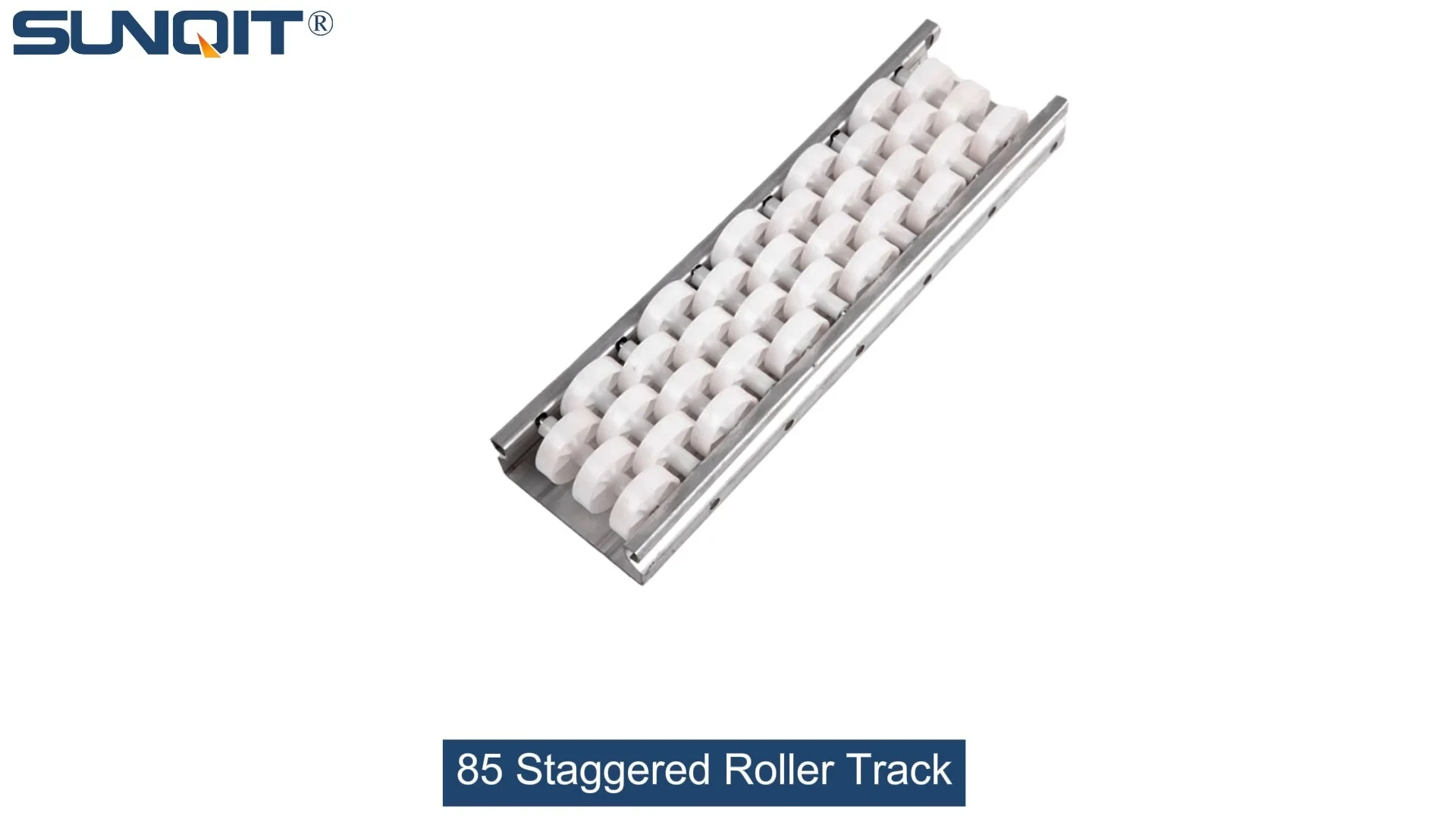
85 Staggered Roller Track
Triple staggered roller track is designed to enhance carton flow in various applications, such as flow racks and carton flow systems. This triple-staggered roller track is ideal for bins, boxes, or products that require smoother, more efficient rolling.
Ever walked through a bustling factory floor and watched as components glide from one workstation to the next? The unsung hero behind that seamless flow? Often, it's the roller track. But not all roller tracks are created equal. If you've found yourself stuck between choosing the 85 Staggered Roller Track and the 65 Series, you're not alone. These two workhorses dominate manufacturing and logistics spaces, each with its own superpowers. Let's dive in, break down their differences, and help you pick the one that'll make your production line sing.
First Things First: Why Roller Tracks Matter
Think of roller tracks as the circulatory system of your facility. They keep materials moving, reduce manual labor, and cut down on bottlenecks. A misfit roller track? It's like a clogged artery—slowing everything down, increasing errors, and even risking damage to your products. Whether you're assembling smartphones in a 3C factory, packaging medical devices, or moving heavy auto parts, the right roller track can turn chaos into clockwork.
That's where the 85 Staggered and 65 Series come in. Both are built to boost efficiency, but they're engineered for different jobs. Let's meet them up close.
Meet the 85 Staggered Roller Track: The Heavy-Duty Workhorse
Picture this: A car manufacturing plant where engine blocks, weighing 50kg or more, need to move steadily from welding to assembly. You need a roller track that doesn't flinch under pressure. Enter the 85 Staggered Roller Track.
What Makes It "Staggered"?
The "staggered" part refers to its roller arrangement—rollers are placed in a zig-zag pattern, not perfectly aligned. This design is genius for two reasons: first, it distributes weight evenly across the track, preventing any single roller from bearing too much load. Second, it grips materials more securely, even when they're bulky or irregularly shaped. No more slipping or tilting halfway through the line.
Built for the Big Leagues
Constructed with robust aluminum profile and high-grade steel rollers, the 85 Staggered Track means business. Its frame is thicker, its rollers are larger (typically 85mm in diameter), and it can handle loads up to 150kg per meter—sometimes more with reinforcements. That's why you'll find it in industries like:
- Automotive Manufacturing : Moving transmissions, chassis parts, and large body panels.
- Heavy Machinery : Shifting engine components or industrial equipment parts.
- Appliance Production : Transporting washing machine drums, refrigerator doors, and oven parts.
Speed? It's no slouch here, either. The staggered design reduces friction, letting materials glide at consistent speeds—perfect for keeping up with high-volume production lines where every second counts.

Introducing the 65 Series Roller Track: The Precision Specialist
Now, imagine a 3C assembly line where tiny circuit boards, delicate sensors, or small medical tools are being passed between workstations. You don't need brute strength—you need finesse. That's the 65 Series' playground.
Compact, Nimble, and Detail-Oriented
The 65 Series skips the zig-zag in favor of closely spaced, aligned rollers (usually 65mm in diameter). This tight arrangement is ideal for smaller, lighter items—think components weighing 10kg or less. Why? Because it offers pinpoint control. Materials move smoothly but slowly enough to prevent jostling, which is critical when you're dealing with fragile parts or items that need precise positioning, like smartphone screens or surgical instruments.
Space-Saving Superstar
Thanks to its slimmer frame and smaller rollers, the 65 Series is a space saver. It fits into tight corners, under workbenches, or as part of compact flow rack systems—perfect for facilities where every square meter counts. Its lightweight aluminum build also makes it easy to reconfigure if your layout changes (hello, lean system flexibility!).
Where does it thrive? Industries that prioritize precision over raw power:
- 3C Electronics : Moving microchips, camera modules, or battery components during assembly.
- Medical Device Manufacturing : Transporting syringes, pacemaker parts, or lab equipment components.
- Small-Part Logistics : Sorting and routing small packages in warehouses or distribution centers.

Side-by-Side: 85 Staggered vs 65 Series
Still on the fence? Let's put them head-to-head. This table breaks down their key features so you can see at a glance which one aligns with your needs:
| Feature | 85 Staggered Roller Track | 65 Series Roller Track |
|---|---|---|
| Roller Arrangement | Zig-zag (staggered) for even weight distribution | Aligned, closely spaced for precision control |
| Typical Load Capacity | Up to 150kg/m (higher with custom reinforcements) | Up to 50kg/m (ideal for light, small parts) |
| Speed | Faster (great for high-volume, heavy loads) | Slower, more controlled (perfect for fragile items) |
| Best For | Heavy parts (auto, machinery, appliances) | Small/fragile parts (3C, medical, electronics) |
| Space Requirement | Needs more room (wider frame, larger rollers) | Compact (fits tight spaces, under workbenches) |
| Maintenance | Sturdier build = less frequent upkeep, but heavier to repair | Lighter components = easier to replace parts, lower repair costs |
| Cost | Higher upfront (but worth it for heavy-duty needs) | More budget-friendly (great for startups or small-scale ops) |

When to Choose Which: Real-World Scenarios
Let's make this tangible with examples. Which would you pick in these situations?
Scenario 1: You run a 3C factory assembling smartwatches. Your line moves tiny batteries, microprocessors, and glass screens—nothing over 5kg. Space is tight, and you need to reconfigure the line every few months for new watch models.
Answer: 65 Series. Its light load capacity, compact size, and easy reconfiguration fit like a glove here. Plus, the controlled speed reduces the risk of damaging delicate screens.
Scenario 2: You're managing a warehouse for a major appliance brand, moving dishwasher tubs (25kg each) and oven doors (40kg each) from storage to the assembly line. Volume is high—you need to move 100+ units per hour.
Answer: 85 Staggered. The staggered rollers will handle the weight without slowing down, keeping up with your production targets.
Scenario 3: You're a medical device manufacturer producing insulin pumps. The parts are small (under 2kg) but extremely sensitive—even a small jolt could ruin a sensor. You also need to comply with strict cleanroom standards.
Answer: 65 Series (with optional ESD protection). Its gentle, controlled movement and easy-to-clean aluminum frame make it a no-brainer for clean, precision-focused environments.
Beyond the Basics: Customization Matters
Here's the thing: Manufacturing isn't one-size-fits-all. Maybe you need a roller track that can handle both heavy and light loads, or you want to integrate it with a lean system that grows with your business. That's where custom solutions come in.
Many suppliers (including those specializing in lean pipe and accessories ) can tweak these tracks to fit your unique needs. For example:
- ESD Protection : If you're in electronics, adding anti-static coatings to either series prevents static damage to sensitive components.
- Adjustable Speed : Motors or brakes can be added to the 85 Staggered for variable speed control, or to the 65 Series for extra precision.
- Modular Design : Both can be built with modular components, so you can add extensions or reconfigure layouts as your production needs change—no need to replace the entire system.
Remember the golden rule of lean manufacturing: "Sustainably improve, don't just replace." A good roller track should adapt as your business grows, not hold you back.
Final Verdict: Let Your Workflow Lead the Way
At the end of the day, choosing between the 85 Staggered and 65 Series boils down to three questions:
- What am I moving? Heavy, bulky items? Go 85 Staggered. Small, fragile parts? 65 Series.
- How much space do I have? Tight quarters? 65 Series. Room to spare and need speed? 85 Staggered.
- What's my long-term plan? If you anticipate scaling up or shifting product lines, look for customizable options that fit a lean system —both series can be adapted, but the 65 Series is often easier to start small with.
Still unsure? Talk to a supplier who specializes in lean solutions . They'll walk your floor, understand your pain points, and help you test both options before you commit. After all, the best roller track isn't just the one that works today—it's the one that grows with you tomorrow.
Wrapping Up
The 85 Staggered Roller Track and 65 Series are both champions in their own right. The 85 Staggered is your heavyweight boxer, built to take hits and keep moving. The 65 Series is your precision archer, hitting targets with accuracy and grace. Whichever you choose, remember: it's not just about moving parts—it's about moving your business forward.
So go ahead, evaluate your workflow, ask your team what slows them down, and pick the roller track that'll turn those bottlenecks into breakthroughs. Your production line (and your bottom line) will thank you.