- Company Articles
- Products and Technology
- Application Cases
- 85 Steel Roller Track Applications in 3C Assembly Factories

85 Steel Roller Track Applications in 3C Assembly Factories
Related Product
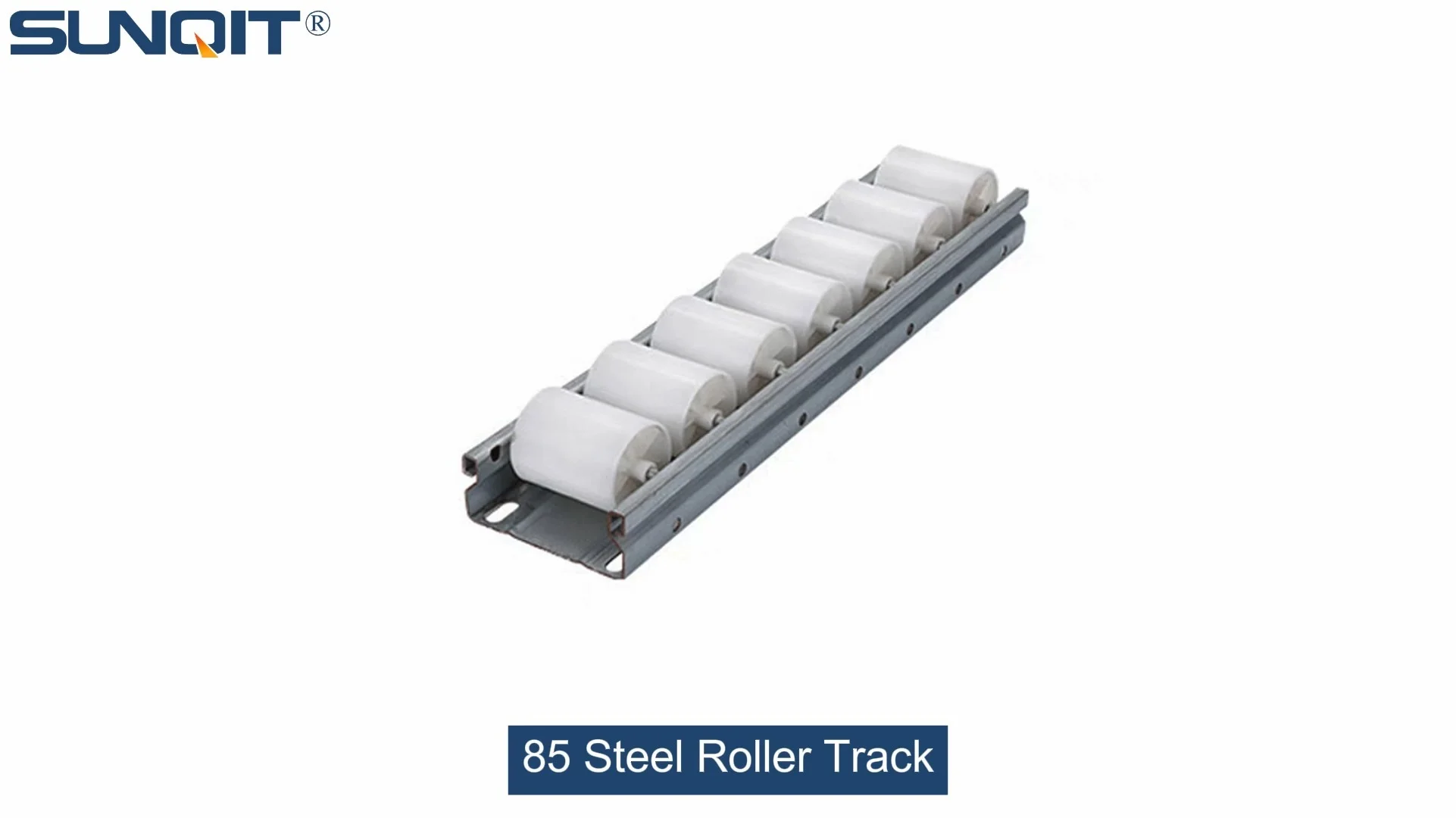
85 Steel Roller Track
85 heavy duty modular system roller track.Its use is focused on the transport of heavy products. Its implantation is carried out by creating a slope for the product to move under the force of gravity.
Step into a modern 3C assembly plant, and you'll quickly notice the heartbeat of production: the seamless flow of components. From tiny circuit boards to sleek smartphone casings, every part needs to move with precision—no delays, no jams, no wasted motion. In this fast-paced world, where milliseconds and millimeters matter, one piece of equipment stands out for its ability to keep the rhythm steady: the 85 Steel Roller Track. More than just a conveyor component, it's the unsung hero that bridges workstations, connects storage to assembly lines, and turns chaotic workflows into symphonies of efficiency. Let's explore how this unassuming yet powerful tool transforms 3C assembly factories, and why it's become a cornerstone of lean manufacturing in the industry.
Understanding 85 Steel Roller Track: Beyond the Basics
Before diving into its applications, let's get to know the 85 Steel Roller Track up close. What makes it different from other conveyor systems? First, the "85" in its name refers to its standard width—85mm—engineered to balance load capacity with flexibility, a sweet spot for 3C components that range from lightweight PCBs to heavier battery modules. Constructed from high-grade steel, it's built to withstand the daily grind of factory floors: constant vibration, varying temperatures, and the occasional bump from heavy bins. But what truly sets it apart is its design—often featuring staggered rollers (think of them as offset like piano keys) that cradle items gently, preventing slips even when moving at speed. Unlike smooth-surface conveyors, these rollers reduce friction, meaning less energy use and quieter operation—music to the ears of factory managers tired of noisy production lines.
Another key feature? Adaptability. The 85 Steel Roller Track isn't a one-size-fits-all solution. It comes with a range of accessories—adjustable guides, stop mechanisms, and connectors—that let factories tweak its length, angle, and speed to match their unique needs. Need to slow down for quality checks? Add a brake module. Moving parts around a corner? Attach a curved section. This flexibility isn't just convenient; it's the backbone of lean manufacturing, where "sustainable improvement" isn't just a buzzword, but a daily practice.
Why 3C Assembly Factories Can't Afford to Overlook It
3C assembly isn't like other manufacturing. It's a high-stakes dance with tiny, delicate parts—microchips the size of fingernails, glass screens that scratch at the lightest touch, and wiring harnesses that tangle at the drop of a hat. Traditional conveyors often struggle here: belt systems can generate static (risking damage to sensitive electronics), while plastic rollers wear down quickly under repeated use. The 85 Steel Roller Track, though? It's designed to tackle these pain points head-on.
Take static control, for example. Many 85 Steel Roller Track models come with ESD (Electrostatic Discharge) coatings, turning them into safe pathways for electrostatic-sensitive devices like motherboards. No more costly rejects because a stray spark fried a circuit. Then there's precision. When assembling a smartphone, every component must align to within fractions of a millimeter. The 85 Steel Roller Track's consistent speed and smooth motion ensure parts arrive at workstations exactly when and where they're needed—no more "hurry up and wait" for assembly line workers, and no more fumbling with misaligned components.
And let's talk volume. 3C factories crank out thousands of units daily, which means their conveyor systems need to keep pace without sacrificing accuracy. The 85 Steel Roller Track's robust steel construction handles high throughput effortlessly, whether it's shuttling 500 PCB boards an hour or moving fully assembled laptops to packaging stations. It's the reliability that keeps production schedules on track—and managers from losing sleep over unexpected downtime.

Real-World Applications: How 85 Steel Roller Track Powers the 3C Production Line
Enough theory—let's walk through a typical 3C assembly plant and see where the 85 Steel Roller Track shines. From the moment raw materials arrive to the second finished products ship out, it's hard at work in every corner.
1. PCB Board Handling: The Foundation of Every Device
Printed Circuit Boards (PCBs) are the brains of 3C products, and they're fragile. Dropping one or exposing it to too much pressure can render it useless. Enter the 85 Steel Roller Track. In PCB assembly areas, you'll find it moving bare boards from storage racks to soldering stations, then on to component mounting. The staggered rollers distribute weight evenly, preventing bending, while ESD-safe coatings keep static at bay. Pair this with a lean pipe workbench at each station—custom-built with aluminum frames and anti-static tops—and you've got a workflow that's both efficient and gentle on sensitive parts. Workers no longer waste time carrying boards by hand; instead, they focus on precision tasks, boosting throughput by up to 20% in some cases.
2. Component Sorting: From Bins to Assembly Lines
Imagine a warehouse area filled with bins of screws, connectors, and tiny sensors—all needed at different assembly stages. Without a system, workers spend hours hunting for parts, slowing down production. Here, 85 Steel Roller Tracks team up with flow racks to create a "superhighway" for components. Flow racks, with their inclined shelves, let bins slide forward as they're emptied (no more reaching to the back of deep shelves!), and the 85 Steel Roller Track connects these racks directly to workstations. A bin of charging ports, for example, glides down the flow rack, onto the roller track, and stops precisely at the lean pipe workbench where assemblers are building phone chargers. It's a seamless loop that cuts down on "walk time"—a hidden productivity killer in many factories—and ensures parts are always within arm's reach.
3. Finished Product Buffering: Keeping the Line Moving
Even the best assembly lines hit snags. Maybe a packaging machine breaks down, or a last-minute quality check flags an issue. When that happens, finished products can pile up, bringing the entire line to a halt. 85 Steel Roller Tracks solve this with "buffer zones"—long stretches of track where products wait temporarily, like cars in a traffic jam, until the next stage is ready. Because the rollers require minimal power, these zones don't guzzle energy, and the steel construction means they can hold hundreds of units without bending. For example, a smartphone factory might use a 20-meter buffer track after final assembly, ensuring that even if packaging is delayed for 30 minutes, the assembly line keeps humming. No more stopping and starting, no more frustrated workers—just smooth, continuous production.
4. Connecting Conveyor Systems: The Glue of the Factory Floor
Most 3C factories don't rely on a single conveyor type. They use a mix: belt conveyors for long distances, automated guided vehicles (AGVs) for heavy loads, and 85 Steel Roller Tracks for short, precise moves. The magic happens when these systems work together—and the 85 Steel Roller Track often acts as the "glue." Picture this: An AGV drops off a pallet of unassembled tablets at the warehouse. The pallet is unloaded onto a flow rack, where individual boxes slide onto an 85 Steel Roller Track. The track carries them to a belt conveyor, which zips them to the assembly area, where another roller track feeds them into lean pipe workstations. It's a symphony of movement, with the 85 Steel Roller Track playing the critical role of transitioning between systems smoothly. Without it, factories would need more manual labor to transfer items between conveyors—a costly, error-prone process.

85 Steel Roller Track vs. Other Conveyor Systems: A Clear Winner for 3C
Still not convinced? Let's put it head-to-head with two common alternatives: belt conveyors and plastic roller tracks. The table below breaks down how they stack up in key areas for 3C assembly:
| Feature | 85 Steel Roller Track | Belt Conveyor | Plastic Roller Track |
|---|---|---|---|
| ESD Safety | Yes (with coated rollers) | Risky (static buildup on belts) | Limited (plastic generates static) |
| Durability | High (steel resists wear/impact) | Medium (belts fray over time) | Low (plastic cracks under heavy loads) |
| Flexibility | High (easily extended/modified) | Low (fixed length, hard to reconfigure) | Medium (lightweight but limited by plastic strength) |
| Noise Level | Low (rollers reduce friction) | High (belt friction + motor noise) | Medium (plastic on plastic can squeak) |
| Cost Over Time | Low (minimal maintenance, long lifespan) | High (frequent belt replacements) | High (needs full replacement when cracked) |
As the table shows, the 85 Steel Roller Track isn't just better—it's built for the unique demands of 3C assembly. It's the kind of investment that pays off in lower costs, fewer headaches, and happier workers.

Lean Solutions in Action: How It Fits Into the Bigger Picture
At the end of the day, 85 Steel Roller Track isn't just a conveyor—it's part of a larger lean solution. Factories today don't just need equipment; they need systems that grow with them, adapt to new products, and eliminate waste. This is where the "lean" in lean manufacturing comes alive.
Take reusability, for example. When a factory switches from assembling smartphones to tablets, it can reconfigure the 85 Steel Roller Track—adding extensions, changing angles, or moving it to a new line—instead of buying a whole new system. That's a huge cost-saver, especially in 3C, where product cycles are shorter than ever (think 6-12 months for new phone models). Then there's continuous improvement. With modular components, managers can test small changes—like adding a new stop mechanism—and scale what works, without disrupting the entire line. It's lean thinking in action: small, incremental tweaks that add up to big results.
And let's not forget about space. 3C factories are often packed tight, with every square meter valuable. The 85 Steel Roller Track's compact design—low-profile and easy to mount overhead or under workbenches—frees up floor space for new equipment or additional workstations. Pair this with a lean pipe workbench, which can be disassembled and rebuilt in minutes, and you've got a factory that can retool overnight to meet sudden demand spikes.
The Bottom Line: More Than Metal and Rollers
When you strip away the technical specs, the 85 Steel Roller Track is about something simpler: empowering people to do their best work. It's the factory worker who no longer strains to lift heavy bins, because the track brings parts right to their bench. It's the quality inspector who can focus on checking details, not chasing down missing components. It's the plant manager who sleeps better knowing production will hit targets, even on a busy day.
In the fast-moving world of 3C assembly, where innovation never stops, having tools that keep up isn't a luxury—it's a necessity. The 85 Steel Roller Track isn't just keeping up; it's leading the way, proving that sometimes the most powerful solutions are the ones that work quietly in the background, making every part of the process a little smoother, a little faster, and a lot more human.
So, whether you're building the next generation of smartphones, laptops, or smartwatches, don't overlook the backbone of your production line. Invest in 85 Steel Roller Track, and watch your factory transform from a place of chaos into a well-oiled machine—one roller at a time.