- Company Articles
- Products and Technology
- Application Cases
- 85 Steel Roller Track Applications in Furniture Manufacturing

85 Steel Roller Track Applications in Furniture Manufacturing
Related Product
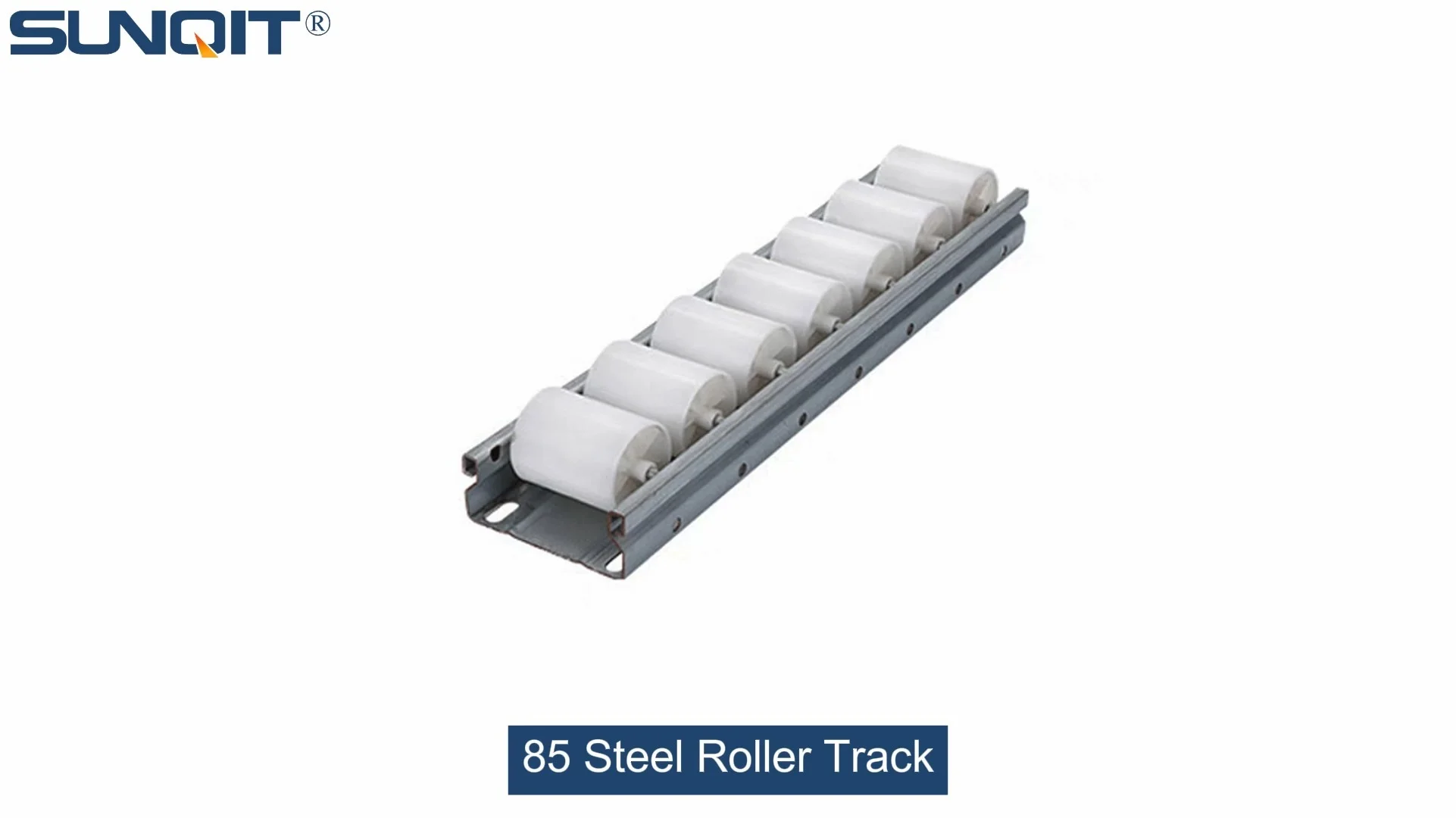
85 Steel Roller Track
85 heavy duty modular system roller track.Its use is focused on the transport of heavy products. Its implantation is carried out by creating a slope for the product to move under the force of gravity.
Walk into any modern furniture manufacturing plant, and you'll notice a common challenge: keeping materials moving smoothly from one stage to the next. From raw wood planks and metal frames to finished chair legs and table tops, every piece needs to flow through cutting, assembly, painting, and packaging without getting stuck, damaged, or delayed. That's where
85 steel roller track
comes in—a workhorse of material handling that's quietly transforming how furniture factories operate. Let's dive into how this unassuming yet powerful tool is making production lines faster, safer, and more adaptable than ever before.
What Makes 85 Steel Roller Track Stand Out?
First, let's get to know the star of the show. 85 steel roller track—sometimes called
85 staggered roller track
depending on its design—is a robust conveyor system built with durable steel rollers mounted on a sturdy frame. Unlike flimsy plastic alternatives or one-size-fits-all conveyor belts, this track is engineered for the tough conditions of furniture manufacturing. Its key strengths? Heavy-duty construction that handles the weight of solid wood panels and metal components, a smooth rolling action that prevents jams even with unevenly shaped items, and a modular design that lets you customize its length, angle, and layout to fit your factory's unique needs.
Think about it: furniture parts come in all shapes and sizes—from thin plywood sheets to thick oak beams. A roller track that can't handle varying weights or irregular edges would quickly become a bottleneck. But 85 steel roller track's steel rollers (often with yellow, black, or white wheels, as seen in many suppliers' catalogs) are designed to distribute weight evenly, while the track's frame resists bending or warping over time. This durability means less downtime for repairs and more consistent performance, even during long production runs.
3 Key Applications in Furniture Manufacturing
1. Raw Material Transport: From Warehouse to Workshop
Every furniture project starts with raw materials, and getting those materials from the warehouse to the cutting or machining area is often the first hurdle. Traditionally, workers might use forklifts or manual carts, which are slow, require extra labor, and risk damaging delicate materials like veneered panels or glass. With 85 steel roller track integrated into a
conveyor
system, this process becomes almost automated.
Imagine a furniture factory specializing in kitchen cabinets. Large sheets of particleboard need to move from the warehouse rack to the CNC cutting machine. Instead of two workers struggling to lift and cart each sheet, the warehouse team loads the boards onto a roller track connected to the cutting area. The track's smooth rollers carry the sheets gently but quickly, stopping precisely at the machine's feed table. No more back strain, no more delays waiting for a forklift, and no more dents from accidental drops. It's a simple shift, but one that can cut material transport time by 40% or more—time that workers can redirect to more skilled tasks, like programming the CNC machine or inspecting cuts.
2. Assembly Lines: Building Furniture with Lean Efficiency
Furniture assembly is where precision and speed collide. Whether you're putting together a simple bookshelf or a complex sofa with dozens of parts, every second counts. Here, 85 steel roller track shines as part of a
lean system
, working hand-in-hand with
lean pipe workbenches
to create flexible, worker-friendly stations.
Let's take a sofa manufacturer as an example. Each sofa frame needs to have springs, foam, and fabric added in sequence. Instead of workers standing at fixed workbenches and fetching parts from nearby bins, the factory installs 85 steel roller tracks along the assembly line. At each station, a
lean pipe workbench
—built with lightweight but strong lean pipes—holds tools and small components, while the roller track delivers the sofa frames from one station to the next. As a frame arrives, the worker adds springs, then pushes it along the track to the next bench where foam is attached, and so on.
The magic here is in the flow. The roller track ensures frames move at a steady pace, preventing bottlenecks when one worker finishes faster than another. And because the track is modular, the factory can easily reconfigure the assembly line if they switch from sofas to armchairs—no need to rebuild entire workstations. This flexibility is a cornerstone of
lean solution
principles, where adaptability and waste reduction are key. Workers stay focused, parts are always within reach, and the line keeps moving—all thanks to the roller track's reliable performance.
3. Finishing and Packaging: Protecting Quality Until the Last Step
After assembly comes finishing—painting, staining, or upholstering—and then packaging. These stages demand extra care to avoid damaging the almost-complete furniture. A scratch on a freshly painted table leg or a tear in a sofa's fabric can ruin hours of work. 85 steel roller track, paired with
flow racks
, ensures gentle handling here, too.
Consider a wooden table manufacturer. After the table tops are sanded and stained, they need to dry before being sealed. Instead of stacking them on a shelf (risking scratches) or leaving them on the floor (taking up space), the factory uses a sloped 85 steel roller track system. Each table top is placed on the track, and gravity slowly pulls it along a drying tunnel. The rollers spin smoothly, so the table top glides without friction, and the track's spacing keeps each piece separate. Once dry, the table tops move via another roller track to a packaging station, where they're paired with legs (delivered via a nearby flow rack) and boxed up.
Flow racks, often used alongside roller tracks, are perfect for storing smaller parts like table legs, screws, or upholstery fasteners. By tilting the rack slightly, parts slide forward as they're used, ensuring workers always take the oldest stock first (reducing waste) and never have to reach to the back of a bin. When combined with 85 steel roller track, flow racks create a seamless "pick-and-place" system that keeps the finishing and packaging line humming.

Why 85 Steel Roller Track Fits the Lean Manufacturing Mold
Furniture manufacturers today aren't just looking for tools—they're looking for
lean solutions
that align with the "do more with less" philosophy. 85 steel roller track checks all the boxes here:
- Modularity: Need to extend the track by 10 feet next month? Add a new section. Want to angle it 30 degrees to avoid a machine? Swap out a straight piece for a curved one. No need to buy an entirely new system.
- Reusability: If you rearrange your factory floor, the roller track can be disassembled and rebuilt elsewhere. Unlike fixed concrete conveyors or custom-built chutes, it doesn't become obsolete when your needs change.
- Low Maintenance: Steel rollers and frames are built to last, and when parts do wear out (like a wheel), they're easy to replace without stopping the entire line. This keeps maintenance costs low and uptime high.
It's no wonder that forward-thinking manufacturers are integrating 85 steel roller track into their broader
lean system
. By reducing waste—whether in time, labor, or materials—they're able to produce higher-quality furniture at a lower cost, giving them an edge in a competitive market.

Real-World Impact: A Furniture Factory Success Story
Let's put this in perspective with a hypothetical but realistic example. A mid-sized furniture factory in North Carolina was struggling with production delays. Their assembly line for dining chairs was bottlenecked by slow material transport: workers spent 20% of their day just moving chair frames from the cutting area to the upholstery station. They also had frequent damage to chair legs during transport, leading to 5% of products being scrapped or reworked.
The factory invested in 85 steel roller track, installing a 50-foot track from the cutting area to the assembly line, paired with lean pipe workbenches at each upholstery station and flow racks for storing fabric and padding. Within three months, the results spoke for themselves:
| Metric | Before Roller Track | After Roller Track | Improvement |
|---|---|---|---|
| Material Transport Time | 2 hours/day (per worker) | 30 minutes/day (per worker) | 75% reduction |
| Product Damage Rate | 5% of chair legs | 0.5% of chair legs | 90% reduction |
| Daily Chair Production | 80 chairs | 110 chairs | 37.5% increase |
The factory manager summed it up: "We didn't just buy a conveyor system—we bought a way to let our workers focus on what they do best: building great chairs. The roller track handles the moving, so our team can focus on quality and speed."

Choosing the Right 85 Steel Roller Track for Your Factory
Not all roller tracks are created equal, and picking the right one depends on your specific needs. Here are a few tips to keep in mind:
Consider your load:
If you're moving heavy oak tables, opt for a track with larger, heavier-duty steel wheels (like 85 steel roller track with 2-inch wheels). For lighter items like chair cushions, a standard 1-inch wheel track will work.
Think about layout:
Do you need straight sections, curves, or inclines? Look for a supplier that offers modular components, including
roller track connectors
and end supports, to customize your path.
Don't forget accessories:
Wheel color can matter—yellow wheels are easy to spot in busy factories, while black ESD wheels (though more common in electronics manufacturing) reduce static for sensitive materials. Also, consider adding stops or brakes to halt items at specific stations, or side guides to keep parts from sliding off the track.
Final Thoughts: More Than a Tool, a Catalyst for Growth
At the end of the day, 85 steel roller track isn't just about moving materials—it's about moving your furniture manufacturing business forward. By streamlining workflows, reducing waste, and empowering workers to focus on value-adding tasks, it becomes a catalyst for growth. Whether you're a small workshop making artisanal tables or a large plant churning out thousands of chairs, this humble roller track can help you build better furniture, faster, and with fewer headaches.
So the next time you walk through a furniture factory, take a closer look at the material handling systems. Chances are, you'll spot 85 steel roller track hard at work—quietly, reliably, and efficiently keeping the production line moving. And that, in the end, is what great manufacturing is all about: making the complex simple, and the simple effective.