- Company Articles
- Products and Technology
- Application Cases
- 85 Steel Roller Track Applications in Mechanical Manufacturing Plants

85 Steel Roller Track Applications in Mechanical Manufacturing Plants
Related Product
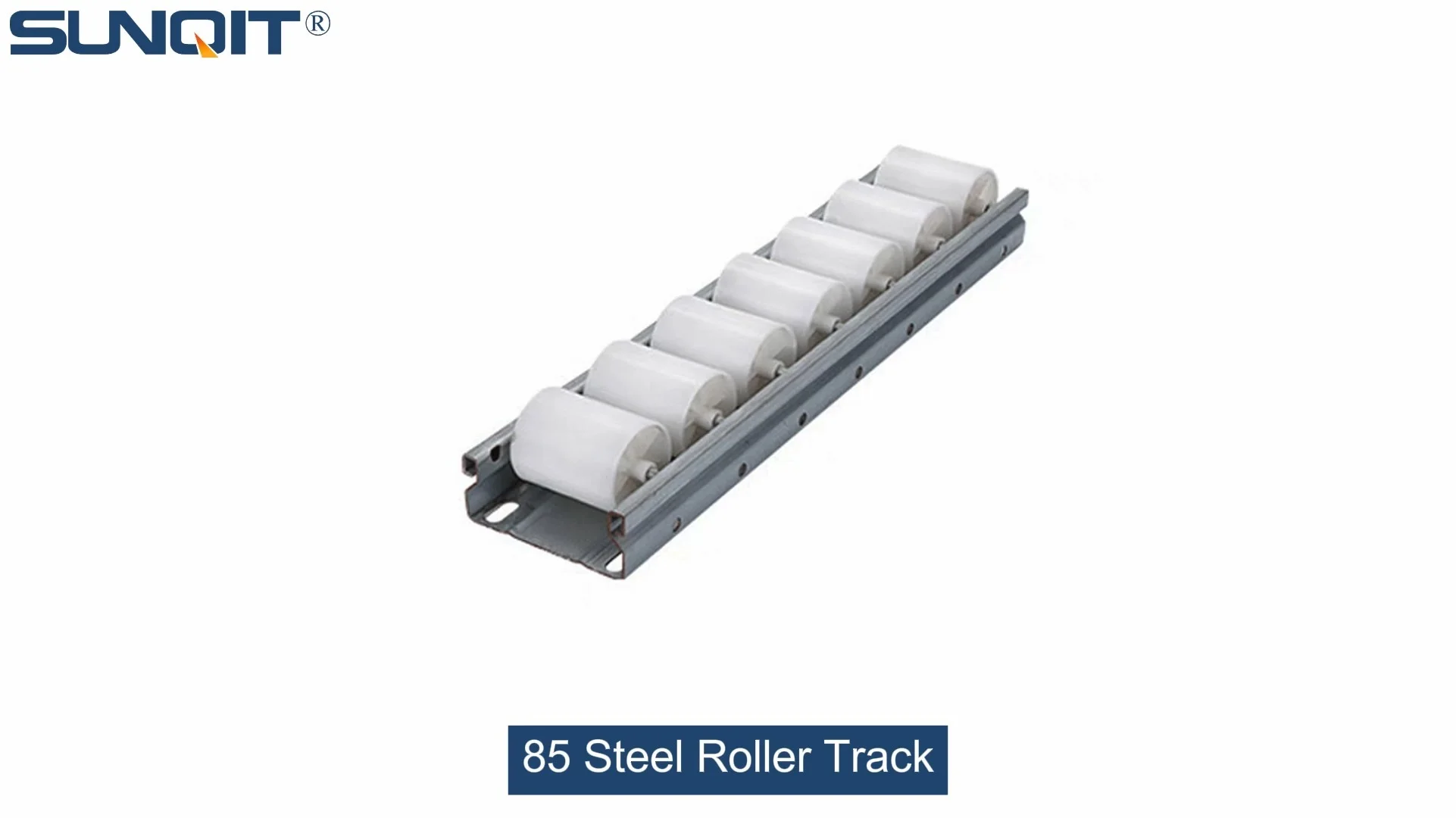
85 Steel Roller Track
85 heavy duty modular system roller track.Its use is focused on the transport of heavy products. Its implantation is carried out by creating a slope for the product to move under the force of gravity.
In the fast-paced world of mechanical manufacturing, where every second counts and efficiency directly impacts a plant's bottom line, the flow of materials and components can make or break daily operations. Imagine a scenario: on a busy automotive assembly line, workers wait idle because a cart of critical parts is stuck halfway down a clunky conveyor. In a 3C electronics workshop, delicate components get jostled on a rigid track, leading to costly rework. These are the invisible drains on productivity that plant managers lose sleep over. But what if there was a solution that turned these bottlenecks into smooth, almost effortless workflows? Enter the 85 Steel Roller Track—a unsung hero quietly revolutionizing how mechanical manufacturing plants move, assemble, and thrive.
What Makes 85 Steel Roller Track Stand Out?
Before diving into its real-world applications, let's get to know this workhorse. The 85 Steel Roller Track is a robust, precision-engineered conveying solution built with high-grade steel. Its defining feature? A series of evenly spaced, smooth-rolling steel wheels (typically 85mm in diameter, hence the name) mounted on a durable frame. Unlike rigid, one-size-fits-all conveyors, this track balances strength with flexibility: it handles heavy loads (often up to 500kg per meter) without bending, yet adapts to different layouts with modular connectors. Its surface-treated steel construction resists corrosion, even in dusty or oily factory environments, and those wheels? They're designed to minimize friction, letting materials glide with just a gentle push—no loud motors or complicated controls needed.
But its true magic lies in how it integrates with other lean manufacturing tools. Pair it with a lean pipe workbench , and you've got a workstation where parts flow directly to the assembly line. Combine it with a flow rack in the warehouse, and suddenly, stock rotation becomes a breeze. It's not just a track—it's a building block for smarter, more human-centric factories.
5 Game-Changing Applications in Mechanical Manufacturing Plants
1. Assembly Line Material Feeding: Keeping the Production Pulse Steady
Walk into any automotive parts manufacturing plant, and you'll see assembly lines stretching like mechanical arteries, each station dependent on the next. Here, the 85 Steel Roller Track shines as the "circulatory system" feeding these lines. Take a gearbox assembly station, for example: heavy castings need to move from the machining area to the assembly bench without manual lifting (a major ergonomic risk). By installing 85 Steel Roller Tracks at waist height, workers simply slide these castings along the smooth-rolling wheels—no straining, no delays.
In one case study from a mid-sized auto parts plant in Guangdong, replacing old wooden rollers with 85 Steel Roller Tracks reduced material transfer time between machining and assembly by 40%. "Our workers used to spend 2 hours a day just moving parts," said the plant foreman. "Now, they're focused on building—what they do best." This isn't just about speed; it's about respecting the workforce by eliminating unnecessary physical labor, boosting morale, and cutting down on workplace injuries.
And it's not limited to heavy industries. In 3C electronics manufacturing, where precision is key, the 85 Steel Roller Track's gentle rolling action protects delicate circuit boards and microchips. Paired with ESD (Electrostatic Discharge) workbenches—a critical lean solution for sensitive electronics—it creates a safe, efficient workflow where components arrive intact and ready for assembly.
2. Warehousing & Logistics: From Storage to Shipping, Seamlessly
A manufacturing plant's warehouse isn't just a storage space—it's a dynamic hub where raw materials become finished products, and timing is everything. Traditional static racks force workers to bend, reach, and search for items, turning simple stock checks into time-consuming hunts. The 85 Steel Roller Track transforms this with its integration into flow racks , creating what industry insiders call "first-in, first-out" (FIFO) heaven.
Imagine a medical device plant storing sterile components. Each package must be rotated to ensure expiration dates are respected, and contamination risks minimized. By installing 85 Steel Roller Tracks in flow racks, new stock is loaded from the back, and older stock automatically rolls forward to the picking front. Workers no longer dig through piles—they simply grab the first item in line, reducing errors and ensuring compliance with strict medical regulations. "We used to have monthly audits flagging expired parts," shared a logistics manager at a Shanghai-based medical equipment manufacturer. "Since switching to roller track flow racks, that number dropped to zero. It's like the track itself is our quality control assistant."
| Traditional Storage Methods | With 85 Steel Roller Track Flow Racks |
|---|---|
| Manual lifting and searching (avg. 15 mins per order) | FIFO automatic rotation (avg. 3 mins per order) |
| Higher risk of component damage from rough handling | Gentle rolling action reduces damage by 60% |
| Static layout, hard to reconfigure for new products | Modular design, reconfigurable in hours (no welding!) |
3. Custom Workstation Integration: Where Assembly Meets Comfort
Mechanical manufacturing isn't just about moving parts—it's about bringing people, tools, and materials together in a way that feels intuitive. This is where the 85 Steel Roller Track truly becomes a team player, integrating seamlessly with lean pipe workbenches to create custom workstations tailored to specific tasks.
Consider a heavy machinery plant assembling hydraulic pumps. Each pump requires over 20 components, from small seals to large metal casings. A standard workbench would leave workers stretching to reach tools or bending to grab parts from the floor. But with a custom workstation built around 85 Steel Roller Tracks, the track is embedded right into the bench's surface, with separate lanes for incoming components, tools, and finished subassemblies. As a worker finishes one step, they slide the subassembly along the track to the next station—no lifting, no walking, just focused, uninterrupted work.
What makes this even more powerful is adaptability. When the plant switches to a new pump model with different components, the roller track sections can be repositioned, extended, or paired with new accessories (like side guides or stop blocks) in minutes. "We used to have to rebuild workbenches entirely for new products—taking days and costing thousands," said a production engineer at a Zhejiang-based machinery firm. "Now, with the roller track and lean pipe system, we reconfigure on the fly. It's like having a workstation that grows with our needs."
4. Quality Control & Inspection: Protecting Precision, Every Step
In industries like aerospace or high-end automotive manufacturing, even a tiny scratch or misalignment can lead to catastrophic failures. That's why quality inspection stations demand absolute precision—and the 85 Steel Roller Track delivers here, too. Unlike conveyor belts that jostle items or require constant power, the track's smooth, controlled movement lets inspectors examine components at their own pace.
Take a turbine blade manufacturer, for example. Each blade must undergo rigorous checks for surface defects and dimensional accuracy. With 85 Steel Roller Tracks, blades glide onto the inspection table at a steady, slow pace, allowing inspectors to rotate and examine every angle without rushing. If a defect is found, the track's built-in stop blocks halt movement instantly, preventing the blade from reaching the next stage. "It's not just about catching flaws," explained a quality control supervisor. "It's about giving our inspectors the calm, focused environment they need to do their best work. When they're not fighting with a jerky conveyor, they catch more issues early—saving us from expensive recalls down the line."
5. Sustainable Production: Reducing Waste, Boosting Longevity
Today's manufacturing plants aren't just measured by productivity—they're judged by their commitment to sustainability. Here, the 85 Steel Roller Track aligns perfectly with the "reusable, continuously improvable" lean philosophy that forward-thinking plants embrace. Made from high-grade steel, it's built to last decades, outliving flimsy plastic alternatives that crack or warp under heavy use. When a plant reorganizes its layout, the track's modular components (like connectors and brackets) can be disassembled, moved, and reused—no waste, no new materials needed.
Consider a small appliance factory in Jiangsu that recently expanded its product line. Instead of buying new conveyors for the new assembly line, they repurposed 85 Steel Roller Tracks from their old washing machine line, adding a few new sections to fit the new layout. The result? They saved over 30% on equipment costs and kept tons of waste out of landfills. "Sustainability used to feel like an extra expense," said the plant's operations director. "Now, with solutions like the roller track, it's become a way to cut costs and do the right thing—win-win."

Bringing It All Together: The Human Impact
At the end of the day, manufacturing is about people—workers, engineers, managers—all striving to build better products, faster. The 85 Steel Roller Track doesn't just move materials; it moves people, too. It turns frustrating bottlenecks into moments of pride when a team hits a production target early. It turns back-breaking labor into smooth, satisfying workflows that workers look forward to. It turns static, rigid plants into dynamic, adaptable spaces that can take on new challenges with confidence.
So, whether you're running a sprawling automotive plant or a niche medical device workshop, the question isn't if 85 Steel Roller Track can transform your operations—it's how soon you'll wonder how you ever worked without it.