- Company Articles
- Products and Technology
- Application Cases
- 85 Steel Roller Track in Aerospace Manufacturing: Precision Material Transport

85 Steel Roller Track in Aerospace Manufacturing: Precision Material Transport
Related Product
85 Steel Roller Track
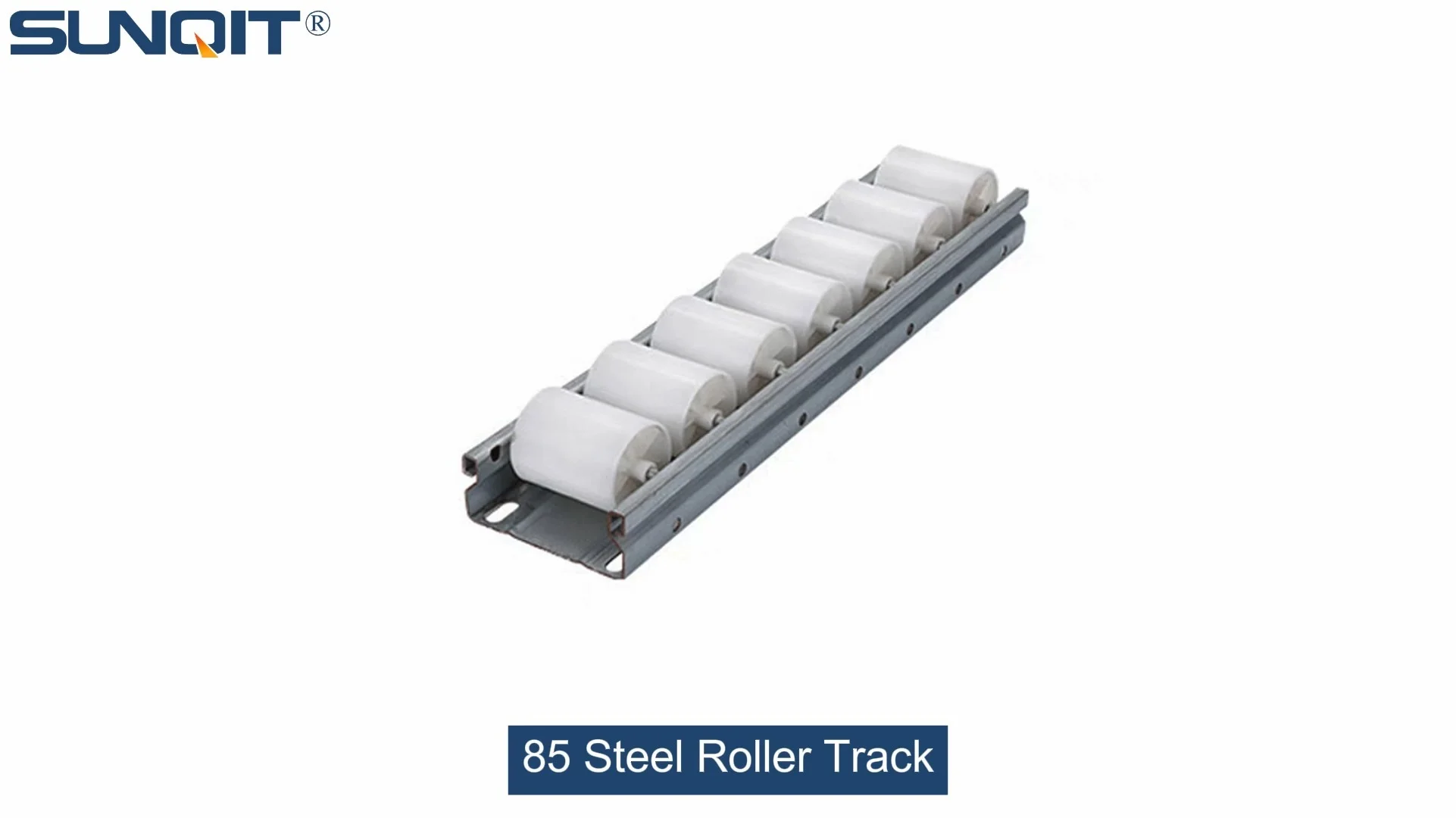
85 heavy duty modular system roller track.Its use is focused on the transport of heavy products. Its implantation is carried out by creating a slope for the product to move under the force of gravity.
Aerospace manufacturing is a world where precision isn't just a goal—it's the foundation of safety, reliability, and innovation. Every component, from a tiny avionic chip to a massive turbine blade, demands meticulous handling. But even the most advanced machines and skilled engineers can't perform at their best if materials aren't moving smoothly, accurately, and efficiently through the production line. This is where the 85 Steel Roller Track steps in—a quiet workhorse that transforms how aerospace facilities manage material transport, turning potential bottlenecks into streamlined pathways of productivity.
Why Aerospace Manufacturing Can't Compromise on Material Transport
Aerospace production lines are a complex dance of high-stakes tasks. Imagine assembling a jet engine: each part must align with micrometer-level precision, and delays in material delivery can throw off entire schedules. Traditional transport methods—like manual carts or rigid conveyor belts—often fall short here. Manual handling risks human error and physical strain; rigid conveyors lack the flexibility to adapt to changing production needs. Worse, uneven material flow can create "dead zones" where parts sit idle, wasting valuable time and resources.
This is where lean manufacturing principles become critical. Aerospace manufacturers need systems that minimize waste, maximize efficiency, and adapt to evolving demands—whether it's scaling up for a new aircraft model or adjusting for custom components. And at the heart of this adaptive ecosystem? Reliable, precise material transport tools like the 85 Steel Roller Track.
85 Steel Roller Track: Built for the Rigors of Aerospace
The 85 Steel Roller Track isn't just another conveyor component—it's engineered specifically for environments where failure isn't an option. Let's break down what makes it stand out:
1. Sturdy Steel Construction for Heavy-Duty Performance
Crafted from high-grade steel, this roller track is built to handle the weight of aerospace-grade materials. Whether it's transporting aluminum airframe sections, titanium fasteners, or dense avionic modules, its robust design ensures minimal flexing or warping. Unlike lighter aluminum tracks (common in industries like 3C electronics), the 85 Steel variant offers superior durability, making it ideal for the heavy, repetitive loads of aerospace manufacturing.
2. Precision Roller Design for Smooth, Controlled Movement
What truly sets the 85 Steel Roller Track apart is its roller configuration. Many models feature a staggered layout (think of it as rollers offset in a zig-zag pattern), which reduces friction and ensures even weight distribution. This design prevents jamming, even when moving irregularly shaped parts—like curved wing spars or asymmetrical engine casings. The result? Materials glide from station to station with consistent speed, eliminating sudden jolts that could damage sensitive components.
3. Compatibility with Lean Systems
Aerospace manufacturing thrives on flexibility, and the 85 Steel Roller Track plays well with other lean tools. Pair it with
lean pipe
frames, and you can build adjustable workstations that adapt to different part sizes. Integrate it with
flow racks
, and you create gravity-fed systems that keep parts within easy reach of assembly teams. This compatibility makes it a cornerstone of
lean solutions
, allowing facilities to reconfigure lines quickly for new projects without overhauls.

Real-World Impact: How 85 Steel Roller Track Transforms Aerospace Lines
To understand the difference the 85 Steel Roller Track makes, let's walk through a typical aerospace assembly scenario: the production of a commercial airliner's wing section. This process involves dozens of sub-components—ribs, spars, skin panels, and fasteners—each requiring precise alignment.
Before implementing the 85 Steel Roller Track, a facility might rely on fixed conveyors for large parts and manual carts for smaller ones. This setup often leads to bottlenecks: if a skin panel arrives late, the entire wing station stalls. With the 85 Steel Roller Track, however, the line becomes dynamic. The track's smooth, gravity-assisted flow ensures parts arrive exactly when needed. Its sturdy build handles the weight of aluminum skin panels (which can weigh hundreds of pounds), while the staggered rollers prevent shifting during transport—critical for maintaining alignment marks applied earlier in production.
For smaller, more delicate parts—like avionic circuit boards—the track's controlled movement reduces the risk of electrostatic discharge (ESD) damage, a common concern in electronics handling. While not inherently ESD-safe (unlike specialized ESD workstations ), when paired with anti-static mats or grounded frames, it becomes part of a comprehensive ESD protection system.

85 Steel Roller Track vs. Other Transport Solutions: A Practical Comparison
| Feature | 85 Steel Roller Track | 40 Steel Roller Track (Standard) | 60 Aluminum Roller Track |
|---|---|---|---|
| Typical Load Capacity | Up to 200 kg/m | Up to 100 kg/m | Up to 80 kg/m |
| Best For | Heavy aerospace components, high-volume lines | Light machinery parts, automotive sub-assemblies | Consumer electronics, 3C assembly (lightweight parts) |
| Durability | High (resists dents/scratches in industrial settings) | Moderate (suited for general manufacturing) | Moderate (lighter, prone to bending under heavy loads) |
| Flexibility | High (easily integrated with lean pipe/flow racks) | High (but limited by lower load capacity) | Very high (lightweight, easy to reconfigure) |
| Cost-Effectiveness | Long-term savings (low maintenance, high durability) | Budget-friendly for light applications | Initial cost lower, but may require replacement in heavy use |
The table above highlights why the 85 Steel Roller Track is the go-to for aerospace: its balance of load capacity, durability, and flexibility makes it uniquely suited to the industry's heavy, high-precision demands.

Beyond Transport: Supporting Lean Manufacturing Goals
Aerospace manufacturing isn't just about moving parts—it's about creating systems that reduce waste, improve quality, and empower teams. The 85 Steel Roller Track aligns with these goals in three key ways:
1. Minimizing Downtime
With its low-friction rollers and durable steel build, the track requires minimal maintenance. No frequent lubrication or part replacements mean less unplanned downtime—a critical advantage when production schedules are tight.
2. Enhancing Ergonomics
By bringing materials directly to assembly stations at waist height, the track reduces the need for bending, lifting, or reaching. This lowers the risk of workplace injuries and keeps teams focused on precision, not physical strain.
3. Enabling Continuous Improvement
Lean manufacturing thrives on iteration, and the 85 Steel Roller Track supports this. Its modular design lets facilities tweak layouts—adding curves, extending lengths, or integrating with new
conveyors
—as processes evolve. This adaptability ensures the track grows with the business, not against it.
The Future of Aerospace Material Transport: Why 85 Steel Roller Track Leads the Way
As aerospace manufacturing pushes toward more complex designs (think electric aircraft or hypersonic vehicles) and tighter tolerances, the need for reliable material transport will only grow. The 85 Steel Roller Track is more than ready to meet this challenge. Its combination of strength, precision, and flexibility makes it a long-term investment, not just a short-term fix.
For facilities looking to stay ahead, pairing the 85 Steel Roller Track with other lean tools—like adjustable lean pipe workstations, custom flow racks, and integrated conveyor systems—creates a fully optimized ecosystem. It's not just about moving materials; it's about building a production line that's as innovative as the aircraft it helps create.
In the end, aerospace manufacturing is about trust—trust that every component will perform when it matters most. The 85 Steel Roller Track may not be the most glamorous part of the process, but it's one of the most essential. It's the quiet promise that materials will arrive on time, in perfect condition, so the next generation of aerospace innovation can take flight.