- Company Articles
- Products and Technology
- Application Cases
- 85 Steel Roller Track in Automotive Manufacturing: Streamlining Production Lines

85 Steel Roller Track in Automotive Manufacturing: Streamlining Production Lines
Related Product
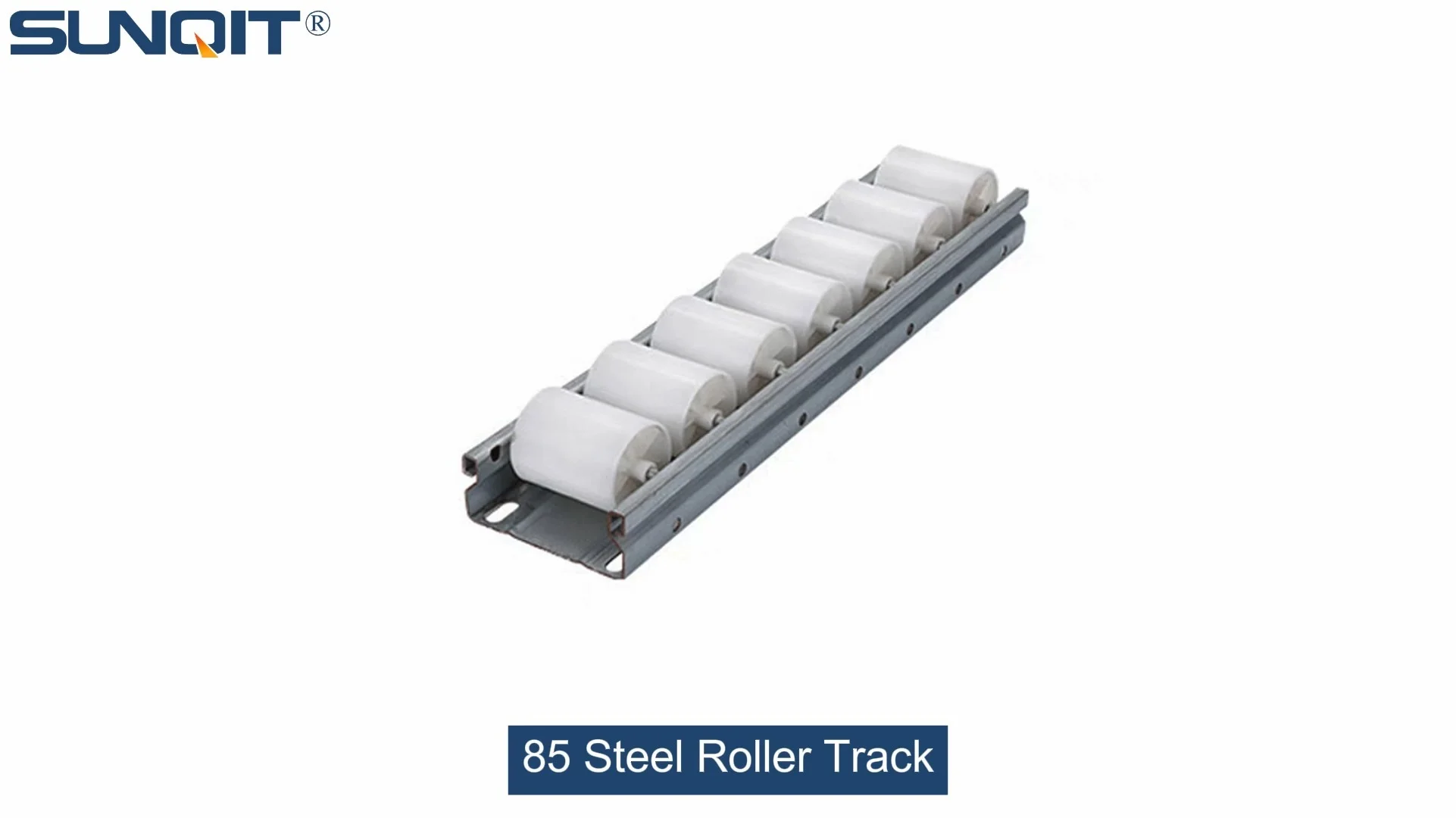
85 Steel Roller Track
85 heavy duty modular system roller track.Its use is focused on the transport of heavy products. Its implantation is carried out by creating a slope for the product to move under the force of gravity.
How a Single Component is Transforming Efficiency, Precision, and Lean Operations in Car Factories Worldwide
The Pressure of Modern Automotive Production: Why Every Second Counts
Walk into any automotive manufacturing plant today, and you'll feel the hum of a system where precision and speed aren't just goals—they're survival. With consumer demands for new models, stricter quality standards, and the race to integrate electric and autonomous technologies, carmakers are under constant pressure to do more with less. Every bottleneck in the production line, every delay in material delivery, or every glitch in component handling can ripple into missed deadlines and lost revenue.
Nowhere is this pressure more tangible than on the assembly floor, where thousands of parts—from tiny screws to heavy engine blocks—need to move seamlessly from storage to stations, and finally to the finished vehicle. Traditional conveyor belts and basic roller tracks often struggle here: they're rigid, hard to adapt to changing production needs, and prone to jams when handling uneven loads. That's where the 85 steel roller track steps in—a deceptively simple component that's quietly becoming the backbone of modern automotive lean systems.
What Makes 85 Steel Roller Track Stand Out? The Engineering Behind the Design
At first glance, a roller track might seem like a straightforward piece of equipment. But the 85 steel roller track is a masterclass in industrial design, built specifically to tackle the unique challenges of automotive production. Let's break down its key features:
Staggered Steel Construction:
Unlike standard inline roller tracks, the 85mm variant often uses a staggered layout (think of a zig-zag pattern of rollers) that ensures even weight distribution. This is critical when moving unevenly shaped automotive parts—like door panels or chassis components—that might tip or jam on traditional tracks.
High-Strength Steel Rollers:
Made from cold-rolled steel, each roller is heat-treated for durability, capable of handling loads up to 300kg per linear meter. In automotive plants, where engine blocks can weigh over 200kg, this robustness isn't just a bonus—it's a necessity.
Precision Bearings:
Sealed ball bearings inside each roller reduce friction, allowing parts to glide smoothly even at high speeds (up to 1.5 meters per second). This minimizes wear and tear, cutting down on maintenance stops.
Modular Design:
Sections of 85 steel roller track can be easily connected or reconfigured using simple brackets and connectors. Need to extend a line for a new model? Or redirect a track to accommodate a robot arm? It takes hours, not days.
Real-World Impact: A European car manufacturer recently reported a 22% reduction in material handling time after switching to 85 steel roller tracks on their dashboard assembly line. Why? The staggered rollers eliminated 90% of the jams that used to occur when feeding curved plastic components—saving an average of 45 minutes per shift.

From the Warehouse to the Assembly Line: Where 85 Steel Roller Track Shines
Automotive production isn't a single process—it's a symphony of interconnected steps, each with its own demands. The 85 steel roller track isn't just versatile; it's designed to excel in the most critical of these stages:
1. Body-in-White (BIW) Assembly: Handling Heavy Metal with Care
The BIW stage, where the car's metal frame takes shape, is a high-stakes environment. Workers lift and position heavy steel panels, and any delay in moving these parts can slow the entire line. Here, 85 steel roller tracks are often integrated into conveyor systems that transport partially assembled frames between welding and painting stations.
Example: A Japanese automaker uses 85 steel roller tracks with adjustable height brackets to align with robotic welding arms. The tracks' precision ensures the frame stays within 0.5mm of its target position—critical for weld quality—while the steel rollers withstand the heat and spatter from welding torches.
2. Parts Storage and Kitting: Feeding the Line Without Waste
Before parts reach the assembly line, they're stored in warehouses or "kitting" areas, where workers gather components (e.g., nuts, bolts, wiring harnesses) into kits for each vehicle. Here, 85 steel roller tracks pair seamlessly with flow racks to create "first-in, first-out" (FIFO) systems that keep parts organized and accessible.
Imagine a flow rack loaded with brake calipers. As the front caliper is taken, the next one slides forward on the 85 steel roller track—no need for workers to bend, reach, or search. This not only speeds up kitting but also reduces ergonomic strain, cutting down on worker fatigue and injuries.
3. Final Assembly: The Last Lap Before the Finish Line
The final assembly line is where the car truly comes together: seats, engines, wheels, and electronics are added. Here, precision and timing are everything. A delay in delivering a steering wheel to Station 12 can hold up the entire line.
85 steel roller tracks here are often part of a larger lean system , linked to overhead conveyors and AGVs (automated guided vehicles). For example, at a U.S. truck plant, 85 steel roller tracks feed axles onto the main assembly line. The tracks are angled at 3 degrees to use gravity for movement, reducing the need for motorized conveyors and cutting energy costs by 15%.

Beyond the Track: How 85 Steel Roller Track Powers Lean Manufacturing
Lean manufacturing is all about eliminating waste—whether it's time, materials, or effort. The 85 steel roller track isn't just a tool for moving parts; it's a cornerstone of lean solutions that transform how plants operate. Here's how:
| Lean Principle | How 85 Steel Roller Track Delivers | Example Benefit |
|---|---|---|
| Reduce Motion Waste | Brings parts directly to workers (instead of workers fetching parts) | Workers on a door assembly line now take 12 fewer steps per hour |
| Minimize Inventory Waste | Works with flow racks to maintain "just-in-time" (JIT) stock levels | A German plant cut on-hand inventory of suspension parts by 35% |
| Improve Quality Control | Smooth movement reduces part damage from jostling or drops | Scrap rates for glass components fell from 4.2% to 1.8% |
| Flexibility for Change | Modular design allows quick reconfiguration for new models | Launching a new SUV variant took 3 days instead of 2 weeks |
Perhaps the most powerful example of this is at a South Korean automotive plant that adopted a full lean solution centered on 85 steel roller tracks. They reorganized their entire rear axle assembly line, integrating the tracks with gravity-fed flow racks and automated guided carts (AGCs). The result? A 30% increase in units produced per shift, and a 50% drop in the number of workers needed for material handling—freeing staff to focus on higher-skill tasks like quality inspection.

Customization: Because No Two Car Factories Are the Same
Every automotive plant has unique needs. A luxury carmaker assembling 500 vehicles per day has different requirements than a commercial truck plant producing 50. That's where lean solution providers step in, tailoring 85 steel roller track systems to fit specific workflows.
Case Study: Electric Vehicle (EV) Battery Assembly
EV batteries are bulky, delicate, and extremely heavy (some weigh over 500kg). A U.S.-based EV manufacturer needed a way to move battery packs from testing stations to the final assembly line without damaging sensitive electronics. The solution? A custom 85 steel roller track system with:
Rubber-coated steel rollers to absorb vibrations and prevent static buildup
Variable speed controls (0.5–1m/s) to match the pace of human workers
Integrated sensors that automatically stop the track if a battery shifts off-center
Since installation, the line has seen zero battery damage incidents, and throughput increased by 18%.
Case Study: Small-Part Kitting for Hybrid Engines
A Japanese hybrid engine plant struggled with lost time when workers had to search through bins for small parts like gaskets and bolts. Their custom 85 steel roller track system included:
Miniature 85mm tracks (narrower than standard) mounted on workbenches
Color-coded dividers to separate parts for different engine models
Spring-loaded stops that hold bins in place until a worker pulls them forward
Workers now spend 70% less time searching for parts, and error rates (e.g., using the wrong bolt) dropped by 65%.
Sustainability and Cost: The Long-Term Payoff of 85 Steel Roller Track
In today's manufacturing landscape, sustainability isn't just a buzzword—it's a business imperative. Automotive plants are under pressure to reduce their carbon footprint, and 85 steel roller tracks deliver here too:
Energy Efficiency:
Many 85 steel roller track systems use gravity instead of motors, cutting electricity use. A mid-sized plant using 1km of gravity-fed tracks saves approximately 12,000 kWh per year—enough to power 10 average homes.
Reusability:
The modular design means tracks can be disassembled and reused when lines are reconfigured. A European plant repurposed 80% of its 85 steel roller tracks when switching from gasoline to EV production, saving €150,000 in new equipment costs.
Low Maintenance:
Sealed bearings and durable steel construction mean the tracks need minimal upkeep. A U.S. plant reports spending just $200 per year on lubrication and roller replacements for a 500-meter track—compared to $2,500 for their old plastic roller system.
ROI Spotlight: On average, automotive plants see a return on investment (ROI) for 85 steel roller track systems in 12–18 months. For high-volume plants, this can drop to as little as 6 months, thanks to labor and efficiency savings.
The Future: 85 Steel Roller Track Meets Industry 4.0
As automotive manufacturing moves toward Industry 4.0—smart factories with interconnected machines and AI-driven analytics—the 85 steel roller track is evolving too. Here's what's next:
IoT-Enabled Tracking:
Rollers embedded with sensors will monitor wear, temperature, and load in real time, alerting maintenance teams before failures occur.
AI-Optimized Routes:
Machine learning algorithms will analyze production data to suggest track reconfigurations that further reduce waste—e.g., shifting a track by 2 meters to shorten the path between two stations.
Integration with Cobots:
Collaborative robots (cobots) will work alongside 85 steel roller tracks, using the tracks to feed parts directly into their work zones, creating fully automated "cells" that run 24/7.
Why 85 Steel Roller Track Isn't Just Equipment—It's a Competitive Edge
At the end of the day, automotive manufacturing is a race. A race to build better cars, faster, with fewer resources. The 85 steel roller track might not be the most glamorous piece of equipment on the factory floor, but it's a quiet champion of this race.
By streamlining material flow, reducing waste, and adapting to changing needs, it's helping carmakers not just keep up—but get ahead. And in an industry where innovation is the key to survival, that's more than just efficiency. It's the difference between leading the pack and falling behind.
So the next time you see a car roll off the lot, remember: behind that sleek exterior is a network of systems working in harmony. And at the heart of that network? Chances are, there's an 85 steel roller track keeping the rhythm—one smooth, precise roll at a time.