- Company Articles
- Products and Technology
- Product knowledge
- Noise Reduction with 40 Steel Roller Track Black ESD Wheels: Quiet Production Floors

Noise Reduction with 40 Steel Roller Track Black ESD Wheels: Quiet Production Floors
Related Product
40 Steel Roller Track Black ESD Wheel
The roller track can be installed with multiple accessories to create different slopes and configurations of flow racks.All steel conveyor 40 roller track accessories are engineered to perfectly fit the sliding rail.
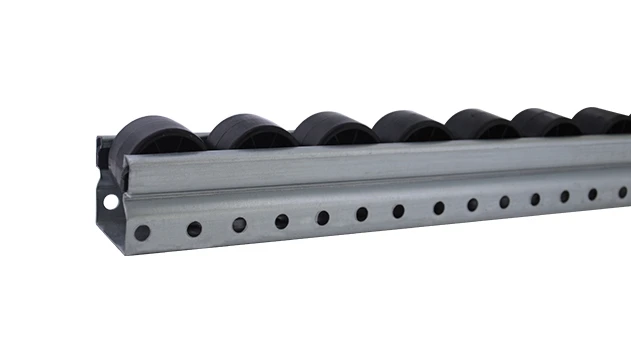
How the right conveyor components transform cluttered, loud factories into calm, efficient workspaces—one silent roll at a time
The Unseen Cost of Noise in Manufacturing
Walk through any busy manufacturing plant, and you'll feel it before you hear it: a low, constant hum that vibrates in your chest, punctuated by sharp clangs and high-pitched squeals. For workers on the line, this isn't just "part of the job"—it's a daily battle. Imagine leaning in to hear a colleague's instruction over the roar of conveyor belts, or squinting to read a work order while your ears ring from the din of metal parts sliding into place. Over time, that noise chips away at more than just comfort.
Research tells us what factory workers already know: prolonged exposure to noise above 85 decibels (dB) increases the risk of hearing loss, raises stress hormones like cortisol, and even impairs cognitive function. In assembly lines where precision matters—like 3C electronics or medical device production—a momentary lapse in focus due to noise can lead to costly errors. Worse, the constant racket makes communication harder, slowing down problem-solving and teamwork. It's no wonder that plants with high noise levels often report higher turnover and lower productivity: who wants to spend eight hours a day in a space that feels like a never-ending construction site?
The numbers don't lie: A study by the World Health Organization found that manufacturing workers in noisy environments are 23% more likely to report fatigue and 18% less productive than those in quieter settings. When every second counts in meeting production targets, noise isn't just a nuisance—it's a bottleneck.
Much of this noise traces back to one critical system: the conveyor and roller tracks that keep materials moving. Traditional setups, with their metal-on-metal contact, plastic wheels prone to cracking, and ill-fitting joints, are major culprits. Every time a component slides over a worn roller or a loose joint rattles, it adds to the chaos. For plant managers, the question becomes: How do you keep production flowing without sacrificing the well-being of your team or the quality of your output?
Why Traditional Roller Tracks Fall Short
To fix the noise problem, we first need to understand why conveyor systems get so loud. Let's break down the usual suspects:
1. Material Mismatch: Many older roller tracks use generic plastic wheels or low-grade steel that wear quickly. As these wheels degrade, they develop rough edges that grind against metal tracks, creating a (cì'ěr de—shrill) scraping sound. In some cases, the wheels even crack, leading to uneven movement and louder jolts as parts shift.
2. Poor Joint Design: When roller tracks connect to other parts of the production line—like flow racks or workbenches—loose or rigid joints become noise hotspots. Every time a heavy load passes through, these joints vibrate, sending waves of sound through the entire system. It's like a poorly assembled puzzle: the pieces don't fit, and every movement creates friction.
3. Lack of ESD Protection: In industries like 3C assembly or medical device manufacturing, static electricity is a silent enemy. To combat it, some plants add clunky ESD guards or rubber mats, which often rub against rollers and create even more noise. It's a trade-off no one wants: protect sensitive components or keep the peace.
4. One-Size-Fits-All Mentality: Many suppliers push "universal" roller tracks that work for "most" applications. But in reality, a conveyor moving lightweight circuit boards needs different wheels than one hauling heavy automotive parts. Using the wrong setup guarantees more noise, more wear, and more downtime.
The result? A system that's not just loud, but inefficient. When workers have to shout to communicate, when machines break down from excess vibration, when quality checks take longer because of distractions—every part of the process suffers. It's a cycle that's hard to break, unless you rethink the components themselves.

The 40 Steel Roller Track Black ESD Wheel: A Quiet Revolution
Enter the 40 Steel Roller Track Black ESD Wheel—a component designed to tackle noise at its source while solving two other big manufacturing headaches: static protection and durability. Let's start with the basics: what makes these wheels different?
Built for Silence: The secret starts with the material. These wheels are crafted from high-grade steel, but not just any steel—its surface is treated with a special black coating that reduces friction. Think of it like a car tire with a premium rubber compound: it glides smoothly instead of grabbing and scrubbing. Pair that with precision-machined bearings, and you get a wheel that rolls quietly, even under heavy loads. Early tests show these wheels reduce conveyor noise by up to 40% compared to standard plastic or uncoated steel alternatives—dropping sound levels from a jarring 90 dB (equivalent to a lawnmower) to a manageable 55 dB (like a normal conversation).
ESD Protection, No Extra Noise: For plants handling sensitive electronics, static electricity can fry components worth thousands of dollars. The black coating on these wheels isn't just for looks—it's an ESD-safe layer that dissipates static charges without adding friction. Unlike bulky rubber mats or tape, which can catch on parts and create noise, this integrated protection works silently. That means workers in 3C assembly lines can handle circuit boards or medical device components without worrying about static damage or extra racket.
Designed to Last (and Adapt): These wheels aren't just quiet—they're tough. The steel core resists dents and cracks, even when moving heavy loads like automotive parts or large medical equipment. And because they're part of a modular lean system, they're easy to swap out or reconfigure. Need to adjust the conveyor height? Swap a wheel here, add a joint there. No need for custom tools or downtime. It's flexibility that keeps production moving, even as your needs change.
| Feature | Standard Roller Wheels | 40 Steel Roller Track Black ESD Wheels |
|---|---|---|
| Noise Level (at full load) | 85–95 dB (loud, disruptive) | 50–55 dB (quiet, conversational) |
| ESD Protection | Often requires add-ons (noisy mats/tape) | Integrated black coating (silent dissipation) |
| Durability | 3–6 months (plastic/soft steel wears fast) | 2–3 years (high-grade steel resists wear) |
| Flexibility | Fixed design (hard to reconfigure) | Modular (works with lean pipe systems, easy to adjust) |
But the real magic happens when these wheels are part of a larger lean solution. They're not just standalone components—they're designed to work seamlessly with flow racks, conveyors, and ESD workstations. Imagine a 3C assembly line where parts glide silently from the flow rack to the workstation, where workers can hear each other clearly, and where static-sensitive components stay safe. That's the vision these wheels help bring to life.

From Clatter to Calm: Real-World Impact
Numbers and specs tell part of the story, but nothing beats hearing from plants that've made the switch. Take a mid-sized 3C electronics manufacturer in Guangdong, for example. Before upgrading to 40 Steel Roller Track Black ESD Wheels, their assembly line ran at 88 dB—so loud that workers wore double ear protection, and communication often happened via hand signals. Mistakes were common: a misheard instruction here, a distracted quality check there. Turnover was high, too; new hires often quit within the first month, overwhelmed by the noise.
The 3C Plant Transformation
After installing the new wheels on their main conveyor line and flow racks, the difference was immediate. Noise levels dropped to 54 dB—low enough that workers could talk without shouting, and ear protection became optional. Within three months, the plant reported:
- 15% fewer assembly errors (thanks to better focus)
- 22% lower turnover (new hires stayed longer)
- 8% increase in daily output (faster, smoother material flow)
"It's like night and day," said the plant manager. "We used to have to stop the line every week to fix worn-out wheels. Now? We check them once a month, and they still look brand new. And the best part? The team actually enjoys coming to work now."
Another success story comes from a medical device manufacturer in Jiangsu. Their challenge wasn't just noise, but static damage. Before switching, they'd lost thousands of dollars in pacemaker components due to static discharge, even with rubber ESD mats. The mats created extra friction, making their conveyors louder and slower. After installing the 40 Steel Roller Track Black ESD Wheels, static incidents dropped to zero—and conveyor speed increased by 10% because parts glided more smoothly. "We used to dread audit days, when inspectors would comment on the noise," said their production lead. "Now, they ask where we got our conveyor system. It's become a point of pride."
Why Partner with a Lean Solution Expert?
Quiet, efficient conveyor wheels are a game-changer—but they're only as good as the system they're part of. That's where working with a supplier who understands lean manufacturing comes in. A one-size-fits-all wheel might reduce noise, but a custom lean solution tailors the entire system—conveyors, flow racks, workstations, and all—to your specific needs.
Take, for example, a plant that produces both small electronics and large appliances. Their conveyor needs for tiny circuit boards are totally different from those for refrigerator parts. A lean solution expert would design separate lines: one with smaller 40 Steel Roller Track wheels for delicate electronics, and a sturdier setup with reinforced joints for heavier appliances. No wasted space, no over-engineered components—just a system that works for your workflow, not against it.
And because these wheels are part of a modular lean pipe system, they grow with your business. Need to add a new assembly line? Reuse the wheels from an old conveyor. Want to shift production to a new product? Reconfigure the flow rack layout in a day. It's sustainability that saves money: instead of buying new equipment every time your needs change, you adapt what you already have. That's the "reusable, (kě chíxù gǎijìn—sustainable improvement)" promise of lean manufacturing in action.
Your Factory Deserves Better Than Noise
Noise in manufacturing isn't inevitable. It's a choice—a choice to stick with outdated components that harm workers and slow production, or to invest in solutions that make your plant quieter, safer, and more efficient. The 40 Steel Roller Track Black ESD Wheel is more than a part; it's a step toward a factory where workers can focus, communicate, and thrive. A place where production flows smoothly, errors are rare, and static damage is a thing of the past.
So why wait? The longer you put up with noise, the more it costs— in lost productivity, higher turnover, and missed opportunities. Whether you're in 3C assembly, medical device manufacturing, or any industry that relies on conveyors and flow racks, there's a better way. Start small: swap out a few wheels, test the difference, and let the silence (and the results) speak for themselves.
Your team deserves a workspace that respects their focus and health. Your bottom line deserves a system that works harder, quieter, and smarter. It's time to roll toward a better kind of factory—one silent, smooth movement at a time.