- Company Articles
- Products and Technology
- Product knowledge
- Non-Chrome vs. Chrome Vertical Lean Pipe Joints: Durability Comparison

Non-Chrome vs. Chrome Vertical Lean Pipe Joints: Durability Comparison
Related Product
Vertical Lean Pipe Joint
Vertical lean pipe joint is used for 28mm lean pipe fixed on ground and keep it stable.
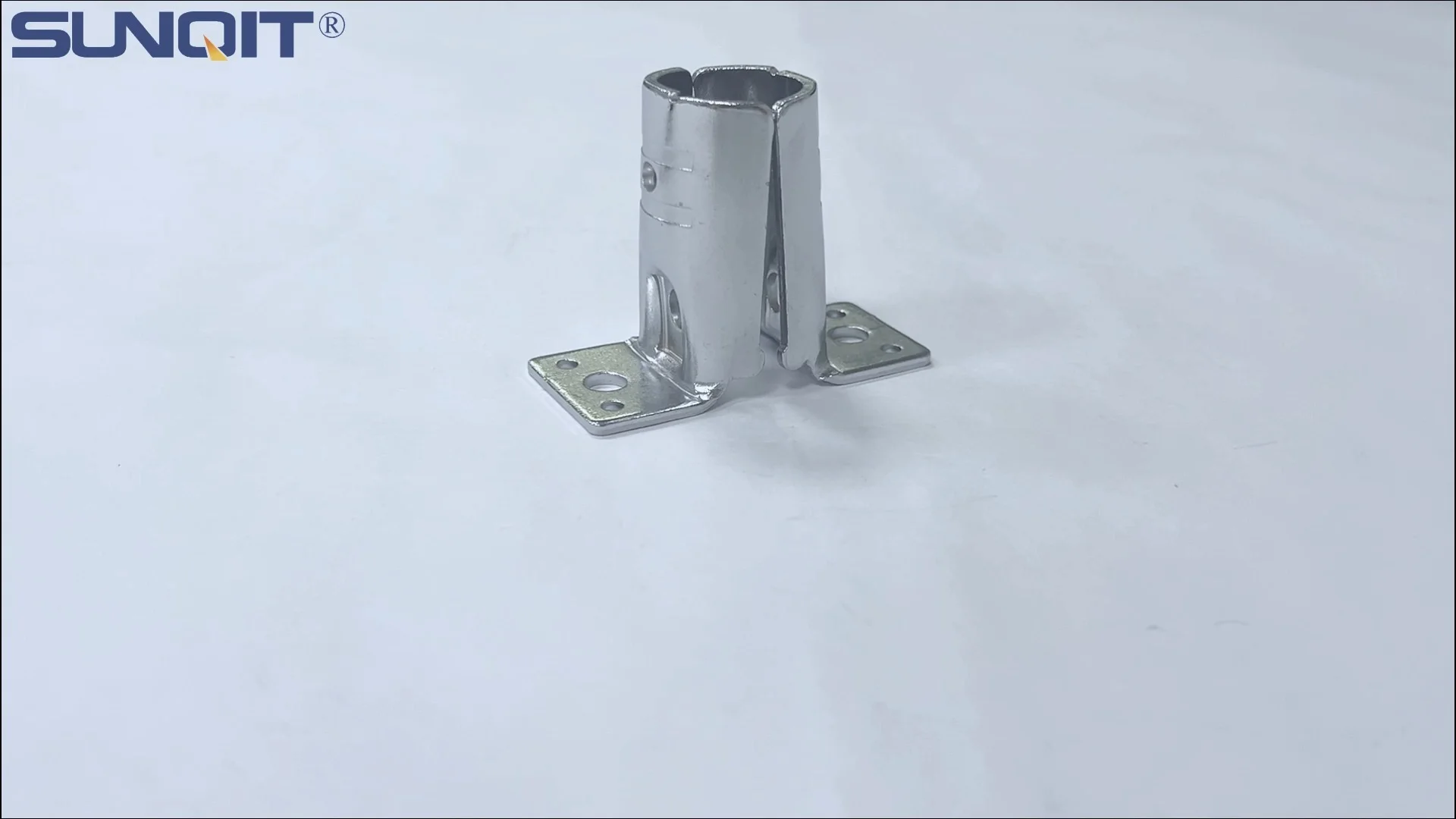
In the world of lean manufacturing, where efficiency and adaptability are the cornerstones of success, every component in your workspace matters. From the workbenches where products take shape to the flow racks that keep materials moving, the unseen heroes holding these systems together are lean pipe joints. Among the most critical of these are vertical lean pipe joints—small but mighty connectors that bear the weight of your operations, literally and figuratively. Today, we're diving into a topic that might not make headlines but can make or break your production line: the durability showdown between non-chrome and chrome vertical lean pipe joints. Whether you're a seasoned facility manager, a production supervisor, or someone just starting to build their lean system, understanding how these two options stack up can save you time, money, and countless headaches down the line.
Understanding the Basics: What Are Vertical Lean Pipe Joints?
Before we jump into the comparison, let's make sure we're all on the same page. Lean pipe joints are the connective tissue of lean systems—they link lean pipes (often aluminum lean pipe, stainless steel pipe, or coated steel tubes) to form structures like workbenches, material racks, turnover trolleys, and conveyor systems. Vertical joints, specifically, are designed to connect pipes at 90-degree angles, providing vertical support for overhead structures or stabilizing horizontal beams. Think of them as the "elbows" and "knees" of your lean setup—without strong, reliable ones, the entire structure can wobble, bend, or even collapse.
Now, when we talk about "chrome" vs. "non-chrome" joints, we're referring to their surface treatment or base material. Chrome vertical lean pipe joints are typically made from carbon steel with a thin layer of chromium plating applied to the surface. This plating is meant to enhance appearance and protect the underlying steel. Non-chrome joints, on the other hand, skip the chrome plating altogether. Instead, they might be crafted from materials like stainless steel (part of the stainless steel pipe series), aluminum, or carbon steel coated with alternatives like zinc, powder coating, or anodization. Some non-chrome options even use advanced alloys to boost strength without relying on chrome.
Material Composition: The Foundation of Durability
Durability starts with what something is made of. Let's break down the materials behind both joint types to see how they measure up.
Chrome Vertical Lean Pipe Joints: Steel at the Core, Chrome on the Surface
Most chrome vertical lean pipe joints begin as carbon steel—a strong, affordable material that's been used in manufacturing for decades. The steel is then dipped in a chromium solution and electroplated, creating a shiny, silver finish. On paper, this seems like a solid combo: steel provides tensile strength, while chrome adds a protective layer against rust and scratches. But here's the catch: the chrome plating is just that—a layer. It's thin, often only a few micrometers thick, and it's bonded to the steel core. If that bond weakens or the plating gets damaged, the steel underneath is left exposed.
In production environments where joints are frequently adjusted (think of a facility that reconfigures workbenches for new product lines), the chrome plating can chip, peel, or wear off from repeated friction. Once that happens, the unprotected steel is vulnerable to moisture, chemicals, and oxidation. Over time, this can lead to rust, which doesn't just look bad—it weakens the joint's structural integrity. A rusted joint is a ticking time bomb in a lean system, where even a small wobble can disrupt workflow or compromise worker safety.
Non-Chrome Vertical Lean Pipe Joints: Strength in Simplicity (and Superior Materials)
Non-chrome joints take a different approach. Instead of relying on a thin plating, they use materials that are inherently durable. Let's look at the most common options:
- Stainless Steel (Stainless Steel Pipe Series): Stainless steel joints are made from alloys containing chromium (yes, chromium, but in a different form!) and nickel, which form a passive oxide layer on the surface. This layer isn't a plating—it's part of the metal itself. If the surface gets scratched, the oxide layer regenerates, preventing rust. Stainless steel is also resistant to chemicals, making it ideal for factories that use coolants, lubricants, or cleaning agents.
- Aluminum Lean Pipe Joints: Aluminum is lightweight but surprisingly strong, especially when alloyed with elements like magnesium or silicon. Aluminum joints often have an anodized finish, which thickens the natural oxide layer, boosting corrosion resistance. They're also non-magnetic and won't spark, making them safe for environments with flammable materials.
- Zinc-Coated or Powder-Coated Steel: For facilities that want the affordability of steel without chrome, zinc coating (galvanization) or powder coating is a popular middle ground. Zinc acts as a sacrificial layer—if it gets scratched, the zinc corrodes first, protecting the steel. Powder coating, a dry paint applied electrostatically, creates a thick, chip-resistant barrier against scratches and moisture.
The key advantage here? Non-chrome joints don't depend on a fragile outer layer for protection. Their durability is built into the material itself, which means they're better equipped to handle the rough-and-tumble of daily use in production assemble lines.

Corrosion Resistance: Battling the Elements in the Factory
Factories are harsh places for metal. Humidity, condensation, chemical spills, and even airborne particles can all accelerate corrosion. Let's see how chrome and non-chrome joints hold up in these conditions.
Chrome Joints: A Pretty Finish, But Not a Perfect Shield
Chrome plating does offer some initial corrosion resistance. The chromium in the plating reacts with oxygen to form a thin oxide layer, similar to stainless steel. But unlike stainless steel, this layer is tied to the plating—not the base metal. In dry environments, chrome joints might hold up well for years. But in humid facilities (like those in coastal areas or with water-based cooling systems) or places where joints are exposed to liquid (think of a workbench near a washing station), the plating's weaknesses start to show.
Even a tiny scratch in the chrome can become a entry point for water. Once water seeps between the plating and the steel, it gets trapped, and rust begins to form. You might not notice it at first—rust often starts underneath the plating, bubbling it up from the inside out. By the time you see flaking or discoloration, the damage is already done. In extreme cases, a corroded chrome joint can lose up to 30% of its load-bearing capacity, putting your entire structure at risk.
Non-Chrome Joints: Built to Withstand Moisture and Chemicals
Non-chrome joints, especially those made from stainless steel or aluminum, are corrosion-resistant by nature. Let's take stainless steel first: its chromium content (usually 10-30%) creates a self-healing oxide layer. Even if you scratch the surface, the chromium in the metal reacts with oxygen to repair the layer, stopping rust in its tracks. This makes stainless steel joints ideal for food processing plants, pharmaceutical facilities, or any environment where cleanliness and moisture control are critical.
Aluminum lean pipe joints are another standout. Aluminum oxide is highly stable and insoluble in water, so even if the joint gets wet, it won't rust. Instead, it forms a thin, grayish film that actually protects the metal underneath. This is why aluminum is a favorite in electronics manufacturing, where ESD workstations and cleanrooms demand materials that won't corrode or contaminate products.
Zinc-coated non-chrome joints also excel here. Zinc is more reactive than steel, so it corrodes preferentially. This is called "cathodic protection"—the zinc sacrifices itself to save the steel. Even if the zinc coating is scratched, the remaining zinc around the scratch will corrode first, slowing down rust on the steel core. In outdoor or high-moisture settings, zinc-coated joints can last 5-10 times longer than chrome-plated ones before showing signs of corrosion.

Load-Bearing Capacity: Can They Handle the Weight?
A joint's job is to hold things together, and that means supporting weight—often a lot of it. Whether it's a material rack loaded with components or a workbench with heavy machinery, the joint must maintain its strength under constant stress. Let's compare how chrome and non-chrome joints perform here.
Chrome Joints: Strong Until They're Not
Chrome-plated steel joints have good initial load-bearing capacity. Carbon steel is strong, and when the chrome plating is intact, the joint can handle significant weight—often up to 500 kg or more, depending on the design. But this strength is only as good as the steel core. As we mentioned earlier, corrosion weakens steel, and a rusted joint can't support the same load it once did. Even if the joint doesn't rust, repeated stress (like the vibration from nearby machinery) can cause the chrome plating to crack, creating stress points in the steel. Over time, these cracks can grow, leading to sudden failure.
In one case study from a automotive parts manufacturer, a chrome vertical joint supporting a flow rack collapsed after 18 months of use. An inspection revealed that the plating had chipped near the bolt hole, leading to rust and a 40% reduction in the joint's tensile strength. The rack, which held $10,000 worth of parts, crashed to the floor, causing downtime and costly repairs. The root cause? The chrome plating couldn't withstand the constant vibration from the nearby assembly line.
Non-Chrome Joints: Consistent Strength Over Time
Non-chrome joints, particularly those made from stainless steel or high-grade aluminum alloys, offer more consistent load-bearing capacity over their lifespan. Stainless steel has a higher tensile strength than carbon steel (depending on the grade), and since it resists corrosion, it doesn't lose strength over time. An aluminum lean pipe joint, while lighter than steel, can still support impressive weights when designed with reinforced structures—many aluminum joints can handle 300-400 kg, which is more than enough for most lean system applications.
What's more, non-chrome joints often have better fatigue resistance. Fatigue occurs when a material weakens from repeated stress cycles (like the daily loading and unloading of a material rack). Stainless steel and aluminum alloys are less prone to fatigue cracks because they're more ductile and have uniform grain structures. This means they can bend slightly under stress without breaking, reducing the risk of sudden failure. For facilities running 24/7 production lines, where joints are under constant stress, this is a game-changer.

Wear and Tear: How They Stand Up to Daily Use
In a busy factory, lean pipe joints don't get to sit idle. They're tightened, loosened, moved, and adjusted as production needs change. This daily wear and tear is a true test of durability. Let's see how both joint types fare.
Chrome Joints: Scratches Lead to Failure
Chrome plating is hard, but it's not tough. It's brittle, which means it can scratch or chip when exposed to friction or impact. Imagine a worker using a wrench to adjust a chrome joint—if the wrench slips, it can leave a deep scratch in the plating. That scratch is more than just cosmetic; it's a breach in the joint's defenses. As we've discussed, exposed steel leads to rust, but even before that, scratches create rough edges that can catch on gloves, clothing, or materials, increasing wear over time.
In facilities that use lean pipe and accessories to build modular systems (a key advantage of lean manufacturing), joints are often disassembled and reassembled. Each time you take a chrome joint apart, the threads (where the bolt meets the joint) rub against the plating, wearing it down. After just a few cycles, the plating on the threads can wear off completely, leaving the steel threads unprotected. This not only leads to rust but also makes the joint harder to tighten properly—stripped or corroded threads mean the joint can't be secured as tightly, increasing the risk of wobbling or collapse.
Non-Chrome Joints: Designed for Repeated Use
Non-chrome joints are built with frequent adjustment in mind. Stainless steel, for example, is naturally more scratch-resistant than chrome-plated steel. Its surface is harder and more ductile, so minor scratches don't penetrate as deeply. Aluminum, while softer than steel, is often anodized, which hardens the surface and makes it more resistant to wear. Even zinc-coated steel, while not as hard as stainless, is more flexible than chrome plating, so it's less likely to chip when bumped or adjusted.
Take the internal rotatary aluminum joint, a popular non-chrome option. Its design allows for 360-degree rotation, making it easy to reposition pipes without disassembling the entire joint. The aluminum body, anodized for extra protection, can withstand hundreds of rotations without showing significant wear. The threads are also precision-cut and coated with anti-seize materials, ensuring smooth tightening and loosening even after repeated use.
In a study by a lean system supplier, non-chrome stainless steel joints were tested for wear resistance by simulating 1,000 assembly/disassembly cycles. Afterward, the joints showed only minor surface scratches and no loss in thread integrity. In contrast, chrome-plated joints tested under the same conditions had significant plating wear around the threads, with 15% of the joints showing signs of rust after just 500 cycles. For facilities that value flexibility (and let's face it, all lean facilities do), non-chrome joints are the clear winner here.
Cost: Upfront Savings vs. Long-Term Investment
Let's talk money. Chrome vertical lean pipe joints are often cheaper upfront—chrome plating is a mature, mass-produced process, so manufacturers can offer them at lower prices. A single chrome joint might cost $5-$10, while a stainless steel non-chrome joint could run $8-$15. At first glance, chrome seems like the budget-friendly choice. But durability isn't just about how long something lasts—it's about the total cost of ownership (TCO), which includes maintenance, replacement, and downtime.
Chrome joints might need to be replaced every 1-2 years in harsh environments, while non-chrome joints can last 5-7 years or more. Let's do the math: If a facility uses 100 vertical joints, and chrome joints cost $7 each, that's $700 upfront. Replacing them every 2 years adds $700 every 2 years, plus labor costs for installation. A stainless steel non-chrome joint at $12 each would cost $1,200 upfront, but with a 6-year lifespan, it only needs replacement once every 6 years—$1,200 every 6 years. Over 6 years, the chrome option costs $700 (initial) + $700 (replacement at 2 years) + $700 (replacement at 4 years) = $2,100, plus labor. The stainless steel option? $1,200 total, with less labor for replacements. When you factor in downtime from joint failure (which can cost $1,000+ per hour in a busy factory), the savings with non-chrome joints become even clearer.
Real-World Performance: Case Studies
Numbers and tests are one thing, but real-world results tell the full story. Let's look at two examples of facilities that switched from chrome to non-chrome joints and the impact it had.
Case Study 1: Electronics Manufacturer Cuts Downtime by 60%
A mid-sized electronics manufacturer in Texas was struggling with frequent workbench failures. Their production lines used chrome vertical lean pipe joints to support ESD workstations, but after 12-18 months, the joints would rust, causing the workbenches to wobble. This led to frequent downtime for repairs and replacement—costing the company $20,000 per year in lost productivity. The facility manager decided to switch to stainless steel non-chrome joints from the stainless steel pipe series. After two years, the new joints showed no signs of corrosion, and workbench failures dropped by 60%. The initial investment in non-chrome joints was recouped in just 14 months through reduced downtime and maintenance costs.
Case Study 2: Food Processing Plant Improves Hygiene and Safety
A food packaging plant in California needed to meet strict FDA hygiene standards. Their existing chrome-plated joints were rusting in the humid, washdown environment, creating a risk of contamination. The plant switched to aluminum lean pipe joints with anodized finishes, which are non-porous and resistant to water and cleaning chemicals. Not only did the new joints eliminate rust and contamination risks, but they also withstood daily pressure washing without damage. The plant reported a 40% reduction in joint replacements and passed their next FDA audit with zero findings related to facility equipment.
Non-Chrome vs. Chrome Joints: A Side-by-Side Comparison
| Factor | Chrome Vertical Lean Pipe Joints | Non-Chrome Vertical Lean Pipe Joints |
|---|---|---|
| Material | Carbon steel with chrome plating | Stainless steel, aluminum, zinc-coated steel, or powder-coated steel |
| Corrosion Resistance | Low—plating chips easily, leading to rust | High—stainless steel/aluminum resist rust; zinc/powder coating offers extra protection |
| Load-Bearing Capacity | Good initially, but decreases with corrosion/wear | Consistent high capacity; stainless steel/aluminum maintain strength over time |
| Wear Resistance | Poor—plating scratches/chips with frequent adjustment | High—stainless steel/anodized aluminum resist scratches; designed for repeated use |
| Lifespan | 1-2 years in harsh environments | 5-7+ years in harsh environments |
| Total Cost of Ownership | Higher—frequent replacement and downtime | Lower—fewer replacements, reduced maintenance |
| Environmental Impact | High—chrome plating uses toxic chemicals | Low—stainless steel/aluminum are recyclable; no heavy metals |
Conclusion: Why Non-Chrome Joints Are the Future of Lean Systems
When it comes to durability, non-chrome vertical lean pipe joints outperform chrome-plated ones in nearly every category. They resist corrosion, maintain strength over time, handle wear and tear from frequent use, and offer lower total cost of ownership. Chrome joints might be cheaper upfront, but their short lifespan and vulnerability to rust make them a risky investment in the long run—especially in today's fast-paced, sustainability-focused manufacturing world.
Whether you're building a new lean system or upgrading an existing one, choosing non-chrome joints—like those made from stainless steel, aluminum, or zinc-coated steel—is a decision that pays off in reliability, safety, and efficiency. After all, in lean manufacturing, every component should add value, not create problems. Non-chrome vertical lean pipe joints do just that: they're the quiet, durable backbone that keeps your operations running smoothly, so you can focus on what really matters—making great products.