- Company Articles
- Products and Technology
- Product knowledge
- Non-Slip Features of M10*56 Rubber Leveling Feet for Industrial Workbenches

Non-Slip Features of M10*56 Rubber Leveling Feet for Industrial Workbenches
Related Product
M10*56 Rubber Leveling Feet
Adjustable leveling feet are designed to keep machines level when placed on uneven or sloped ground. Otherwise known as adjustable equipment feet, they are available to order in a wide variety of size and load capacity combinations.
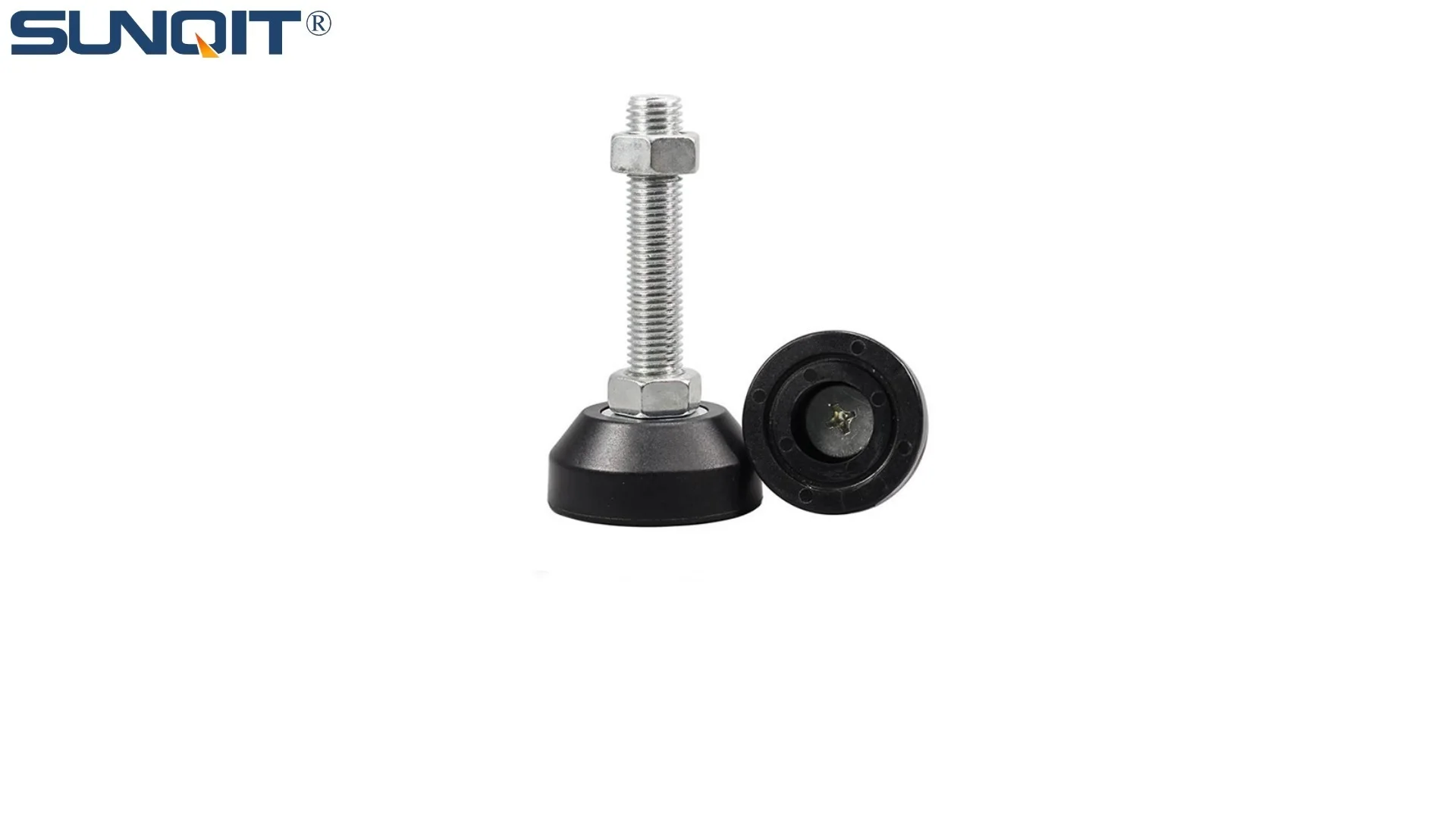
Walk into any manufacturing plant, assembly line, or workshop, and you'll notice one piece of equipment that serves as the quiet backbone of daily operations: the industrial workbench. It's where components are assembled, tools are organized, quality checks are performed, and ideas take tangible form. But for all its importance, a workbench is only as reliable as its foundation. Imagine a scenario where a technician is carefully soldering a circuit board, or a worker is aligning parts with sub-millimeter precision—even the slightest wobble could mean the difference between a flawless product and a costly error. This is where the unsung heroes of workbench stability come into play: leveling feet. And among these, the M10*56 rubber leveling feet stand out, particularly for their exceptional non-slip features that turn ordinary workbenches into pillars of precision and safety.
In this article, we'll dive deep into what makes M10*56 rubber leveling feet indispensable for industrial settings. We'll explore their design, the science behind their non-slip capabilities, how they integrate with popular workbench types like lean pipe workbenches and aluminum profile setups, and why they're a game-changer for anyone who values stability, safety, and efficiency. Whether you're a plant manager looking to upgrade your facility's workstations or a curious enthusiast wanting to understand the mechanics of industrial furniture, this guide will shed light on why these small but mighty components deserve a spot in your operation.
The Industrial Workbench: More Than Just a Table
Before we zoom in on leveling feet, let's take a moment to appreciate the workbench itself. Industrial workbenches are far from the simple wooden tables you might find in a garage. They're engineered for durability, versatility, and adaptability to specific tasks. Two popular types in modern facilities are lean pipe workbenches and aluminum profile workbenches. Lean pipe workbenches, built with modular steel or aluminum pipes and joints, are beloved for their flexibility—they can be easily reconfigured to suit changing production needs, making them a cornerstone of lean manufacturing systems. Aluminum profile workbenches, on the other hand, offer sleek, lightweight strength, often used in cleanrooms or settings where corrosion resistance and aesthetics matter.
But regardless of their material or design, all workbenches share a critical requirement: stability. Floors in industrial environments are rarely perfectly level. Concrete might have minor cracks, factory floors could be uneven from years of heavy equipment traffic, or temporary mats might create subtle height differences. A workbench that rocks or slides on such surfaces isn't just an annoyance—it's a hazard. Tools can tip over, parts might misalign, and workers could strain their backs adjusting to an unsteady surface. Over time, this instability can lead to decreased productivity, increased waste, and even workplace injuries. This is why choosing the right leveling feet isn't an afterthought; it's a decision that impacts every aspect of daily operations.
Leveling Feet 101: What They Do and Why They Matter
At their core, leveling feet are adjustable components attached to the bottom of workbench legs (or other equipment) to compensate for uneven floors. They typically consist of a threaded stem, a base, and an adjustment mechanism (like a nut or a rotating base) that allows users to raise or lower each foot individually. The goal? To ensure the workbench sits perfectly flat, distributing its weight evenly and eliminating (wobble). But not all leveling feet are created equal. Some prioritize height adjustment range, others focus on load capacity, and a select few—like the M10*56 rubber leveling feet—double down on preventing slippage, a feature that's non-negotiable in high-traffic, high-precision environments.
Anti-slip adjustable leveling feet, as the name suggests, combine two key functions: adjustability and slip resistance. The "adjustable" part lets you tweak the height to match floor irregularities, while the "anti-slip" aspect ensures the workbench stays put once leveled. This dual functionality is especially crucial in settings where workbenches are subjected to vibrations (from nearby machinery), frequent foot traffic, or accidental bumps. Without proper slip resistance, even a perfectly leveled workbench could shift over time, undoing all the careful adjustments and putting operations at risk.

M10*56 Rubber Leveling Feet: A Closer Look at Design
Now, let's focus on the star of the show: the M10*56 rubber leveling feet. To understand their appeal, we first need to decode their name. The "M10" refers to the metric thread size of the stem—the part that screws into the workbench leg. An M10 thread has a diameter of 10mm, a common size in industrial hardware that balances strength and compatibility with standard workbench leg designs. The "56" indicates the length of the threaded stem (56mm), which determines the maximum height adjustment range. This length is generous enough to accommodate most minor floor unevenness (think 1-2cm dips or bumps) while remaining compact enough to avoid making the workbench overly tall.
But the real magic lies in the "rubber" component: the base. Unlike metal or plastic bases, rubber offers a unique combination of flexibility and friction that's ideal for non-slip applications. The base of an M10*56 rubber leveling foot is typically made from a high-quality synthetic rubber compound, often nitrile or EPDM, chosen for its durability, resistance to oils and chemicals (common in industrial environments), and excellent grip. The base is usually slightly concave or textured, with patterns that enhance contact with the floor surface—think tiny ridges or a honeycomb design that traps air and increases friction.
The stem, meanwhile, is usually constructed from steel or stainless steel, coated with zinc or nickel to resist corrosion. This ensures the leveling foot can handle heavy loads (many M10*56 models support 200-300kg per foot) without bending or breaking. The stem and base are securely bonded together, often via vulcanization (a process that fuses rubber to metal under heat and pressure), so there's no risk of the base detaching even under stress.

The Science of Non-Slip: How Rubber Bases Prevent Slippage
To truly appreciate the non-slip features of M10*56 rubber leveling feet, we need to talk about friction. Friction is the force that resists motion when two surfaces come into contact, and it's the key to preventing slippage. The higher the friction between the leveling foot and the floor, the less likely the workbench is to move. Rubber excels here because of its viscoelasticity—the ability to both stretch (like a spring) and flow (like a liquid) under pressure. When you place a rubber base on a floor, it doesn't just sit on top; it conforms to the floor's irregularities (tiny scratches, bumps, or pores), creating thousands of tiny contact points that "grab" the surface.
Let's break it down: Imagine a concrete factory floor. Even if it looks smooth, under a microscope, it's covered in small indentations and rough patches. A metal leveling foot, with its hard, smooth surface, would only make contact with the highest points of these irregularities, leaving gaps that reduce friction. A rubber base, however, compresses slightly under the workbench's weight, filling in those gaps and increasing the total contact area. This increased contact translates to higher static friction—the force that keeps the workbench from sliding when pushed or vibrated.
Another factor is the rubber's hardness. M10*56 rubber leveling feet are typically made with rubber that has a Shore A durometer (a measure of hardness) between 60 and 80. Softer rubber (lower durometer) conforms better to floors but may wear faster, while harder rubber (higher durometer) is more durable but less flexible. The 60-80 range strikes a perfect balance: enough flexibility to grip uneven surfaces, enough rigidity to maintain shape under heavy loads. This is why you'll rarely find M10*56 feet with rubber harder than 80 Shore A—they'd sacrifice grip for durability, defeating the purpose of the non-slip design.
Environmental resistance is another piece of the puzzle. Industrial floors are often exposed to oils, coolants, or water—substances that can turn even the grippiest surfaces into slip hazards. The rubber compounds used in M10*56 feet are formulated to repel these liquids, or at least maintain friction when wet. Nitrile rubber, for example, is highly resistant to oils and greases, making it ideal for automotive or machinery workshops. EPDM rubber, on the other hand, stands up well to water and UV exposure, suited for outdoor or humid environments. This chemical resistance ensures the non-slip properties don't degrade over time, even in harsh conditions.

Integration with Lean Pipe Workbenches and Aluminum Profiles
One of the reasons M10*56 rubber leveling feet are so popular is their compatibility with modern workbench systems, particularly lean pipe workbenches and aluminum profile setups. Let's start with lean pipe workbenches, which are built using modular steel or aluminum pipes (often called "lean tubes") and joints. These workbenches are prized for their customizability—you can add shelves, tool hooks, or conveyor attachments with minimal effort. But this flexibility demands stable foundations, as the modular design can sometimes make the bench more prone to wobbling if not properly supported.
M10*56 rubber leveling feet pair seamlessly with lean pipe workbenches. Most lean pipe bench legs are designed with threaded inserts that accept M10 stems, so installing the feet is as simple as screwing them in by hand or with a wrench. The 56mm stem length provides enough adjustment to level the bench even if the floor is uneven across the bench's footprint (which is common in older factories). Once installed, the non-slip rubber bases prevent the bench from shifting as workers lean on it, move tools, or load/unload heavy components—critical for maintaining the bench's modular integrity (no loose joints or misaligned pipes) over time.
Aluminum profile workbenches, constructed from extruded aluminum profiles (think T-slot frames), are another area where M10*56 feet shine. Aluminum profiles are lightweight yet strong, often used in cleanrooms, labs, or electronics manufacturing where precision and aesthetics matter. These workbenches often have hollow legs with threaded holes, and M10*56 feet fit perfectly into these holes. The rubber bases also help dampen vibrations, which is essential when working with sensitive equipment like microscopes or laser measuring tools. Unlike metal feet, which can transmit vibrations from the floor to the bench, rubber acts as a shock absorber, keeping the workspace steady and reducing noise—a small but impactful benefit for worker comfort.
To illustrate this integration, consider a typical setup: a lean pipe workbench used for assembly in an automotive parts plant. The bench has a plywood top, a shelf for tools, and a small conveyor for moving parts. Each of its four legs is fitted with an M10*56 rubber leveling foot. During installation, the technician adjusts each foot to account for a slight slope in the concrete floor, ensuring the bench is perfectly level. Throughout the day, workers load heavy part bins onto the shelf, bump the bench with their hips while reaching for tools, and the conveyor vibrates as it moves parts. Thanks to the rubber feet, the bench stays rock-solid—no sliding, no wobbling, and no need for constant readjustment. This stability translates to faster assembly times, fewer errors, and less wear on the bench's joints and pipes.
Beyond Stability: Additional Benefits of M10*56 Rubber Leveling Feet
While non-slip stability is their primary claim to fame, M10*56 rubber leveling feet offer a host of secondary benefits that make them a smart investment. Let's explore a few:
Floor Protection
Industrial floors take a beating—scratches, dents, and chemical stains are par for the course. Metal leveling feet can exacerbate this by scraping the floor when adjusted or sliding. Rubber bases, however, are soft enough to avoid scratching concrete, tile, or epoxy floors. This is especially valuable in facilities with polished or painted floors (common in food processing or pharmaceutical plants) where maintaining a clean, damage-free surface is a priority.
Noise Reduction
Metal-on-concrete contact is noisy. Every time the workbench is bumped or vibrates, metal feet can create a clanging sound that adds to factory noise levels. Rubber dampens these vibrations, reducing noise pollution. Over time, this can lead to a quieter, less stressful work environment—studies show that lower noise levels improve focus and reduce fatigue, which in turn boosts productivity and reduces errors.
Corrosion Resistance
Many industrial environments are humid, or expose equipment to oils, coolants, or cleaning chemicals. The steel stems of M10*56 feet are often zinc-plated or nickel-plated, which resists rust and corrosion. The rubber base is also resistant to most industrial chemicals, so even if a spill occurs, the foot won't degrade or lose its grip. This longevity means fewer replacements and lower maintenance costs compared to plastic feet (which can crack) or uncoated metal feet (which rust).
Comparing M10*56 Rubber Feet to Other Leveling Options
To truly understand why M10*56 rubber leveling feet are a top choice, let's compare them to other common options on the market. Below is a table highlighting key differences:
| Feature | M10*56 Rubber Leveling Feet | Metal Leveling Feet (Steel/Brass) | Plastic Leveling Feet | Caster Wheels with Brakes |
|---|---|---|---|---|
| Non-Slip Grip | Excellent (high friction rubber base) | Poor (smooth metal surface; slides easily on concrete) | Fair (some grip, but wears quickly) | Good (brake locks wheel, but base may still slide) |
| Adjustment Range | 56mm (handles most floor unevenness) | Similar (varies by stem length) | Limited (shorter stems; ~30-40mm) | None (casters don't adjust height) |
| Load Capacity | High (200-300kg per foot) | Very High (300-500kg per foot) | Low (50-100kg per foot) | Medium (100-200kg per caster) |
| Floor Protection | Excellent (rubber won't scratch) | Poor (metal can scratch or dent floors) | Good (soft plastic, but prone to marking) | Fair (casters may leave marks; brakes can scratch) |
| Best For | Static workbenches needing stability, precision, and safety | Heavy machinery (low slip risk, high load) | Light-duty workbenches (home workshops, low traffic) | Mobile workbenches (needs to be moved regularly) |
As the table shows, M10*56 rubber feet strike a balance that's hard to beat for most industrial workbenches. Metal feet offer higher load capacity but lack slip resistance; plastic feet are cheap but wear out quickly; casters provide mobility but sacrifice stability (even with brakes, a bumped caster can still shift). For workbenches that stay in one place and demand precision, rubber leveling feet are the clear winner.
Real-World Impact: Stories from the Factory Floor
To bring this all to life, let's hear from real users who've upgraded to M10*56 rubber leveling feet. Take Maria, a production supervisor at a small electronics assembly plant in Ohio. "We used to have metal leveling feet on our lean pipe workbenches, and we were always fighting with them," she recalls. "The floors here are old, so even after leveling, the benches would slide a little when workers leaned on them. We had a few incidents where parts fell off the bench, and once, a technician spilled solder paste because the bench wobbled. We switched to M10*56 rubber feet six months ago, and it's been night and day. No more sliding, no more wobbles, and the techs say the workbench feels 'stuck to the floor'—in a good way. Our error rate on precision assemblies has dropped by 15% since then."
Another example comes from Raj, who manages a furniture manufacturing workshop. "We use aluminum profile workbenches for cutting and sanding wood," he explains. "The problem with our old plastic feet was that they'd wear down quickly from the sawdust and vibrations. We'd have to replace them every few months, and in between, the benches would get wobbly. M10*56 rubber feet have been much more durable. The rubber doesn't trap sawdust like plastic did, and they still grip even when the floor is dusty. Plus, they absorb some of the noise from the sanders—my workers say their ears don't ring as much at the end of the day. It's a small change, but it's made a big difference in morale."
These stories highlight a common theme: M10*56 rubber leveling feet don't just solve a technical problem (slippage); they improve the overall work experience. When workers trust that their workbench won't move or wobble, they can focus on their tasks instead of compensating for instability. This leads to better quality, higher productivity, and a safer environment—all of which contribute to a more successful operation.
Maintenance and Care: Keeping Your Leveling Feet in Top Shape
Like any industrial component, M10*56 rubber leveling feet perform best when properly maintained. Fortunately, their care is straightforward, requiring just a few simple steps:
Regular Cleaning
Dirt, oil, or debris on the rubber base can reduce friction, so it's important to clean the feet periodically. Use a damp cloth or sponge with mild soap to wipe the base—avoid harsh chemicals (like solvents) that can degrade the rubber. For stubborn grime (e.g., dried oil), a soft-bristled brush works well. If the workbench is in a particularly dusty environment (like a woodshop or metal fabrication shop), aim to clean the feet once a week; in cleaner settings (like a lab), once a month may suffice.
Check for Wear
Over time, the rubber base may wear down, especially if the workbench is moved frequently (though it shouldn't be, with non-slip feet!). Inspect the base for signs of flattening, cracks, or loss of texture. If the base feels hard or smooth (instead of slightly tacky), it's time to replace the foot. Most M10*56 feet last 2-3 years with regular use, but this can vary based on load and environment.
Tighten Loose Stems
Vibrations can sometimes cause the stem to loosen in the workbench leg. Every few months, check that each foot is screwed in tightly—use a wrench to snug it up if needed. A loose stem can lead to wobbling, even if the base is in good condition.
Adjust for Seasonal Changes
Floors can expand or contract with temperature and humidity changes (concrete, for example, absorbs moisture and swells slightly). If you notice the workbench wobbling after a seasonal shift, recheck the leveling and adjust the feet as needed. This is especially important in unheated or poorly insulated facilities.
By following these steps, you'll ensure your M10*56 rubber leveling feet continue to provide reliable non-slip performance for years to come.
Choosing the Right Leveling Feet: What to Look For
If you're convinced that M10*56 rubber leveling feet are right for your operation, here are a few tips to help you choose the best model:
- Rubber Quality: Opt for feet with nitrile or EPDM rubber bases, as these are more resistant to oils, chemicals, and temperature extremes than standard natural rubber.
- Load Capacity: Check the maximum load per foot (usually listed in kg or lbs). For a typical workbench, 200kg per foot is sufficient, but if you're using heavy tools or materials, go for higher capacity (300kg+).
- Thread Compatibility: Ensure the stem is M10 (10mm diameter) with a standard pitch (1.5mm is common). Most workbench legs use this size, but double-check your bench's specifications to avoid mismatches.
- Adjustment Range: 56mm is a good middle ground, but if your floors are very uneven, look for longer stems (e.g., 60mm or 70mm). Just keep in mind that longer stems may reduce stability if overextended.
- Brand Reputation: Stick to reputable suppliers who specialize in industrial hardware. Cheap, off-brand feet may use low-quality rubber or weak stems that fail prematurely.
Conclusion: Small Feet, Big Impact
In the grand scheme of industrial equipment, M10*56 rubber leveling feet might seem. They're small, often hidden under workbenches, and rarely the focus of attention. But as we've explored, their impact is anything but minor. By providing unbeatable non-slip stability, they turn ordinary workbenches into reliable, precise workstations that support productivity, safety, and quality.
Whether you're running a large manufacturing plant with lean pipe workbenches or a small workshop with aluminum profile setups, these feet offer a simple, cost-effective solution to one of the most common workbench challenges: instability. They're easy to install, compatible with most systems, and built to last—qualities that make them a favorite among plant managers, technicians, and workers alike.
So the next time you walk past a workbench, take a moment to glance down. Chances are, there's a set of M10*56 rubber leveling feet keeping it steady, (quietly) supporting the hard work happening above. And if you're in the market for new workbenches or looking to upgrade your current ones, remember: the right leveling feet aren't just an accessory—they're the foundation of a successful operation.