- Company Articles
- Products and Technology
- Product knowledge
- Nylon Swivel Roller Balls 1 Inch: Benefits for Small Parts Handling

Nylon Swivel Roller Balls 1 Inch: Benefits for Small Parts Handling
Related Product
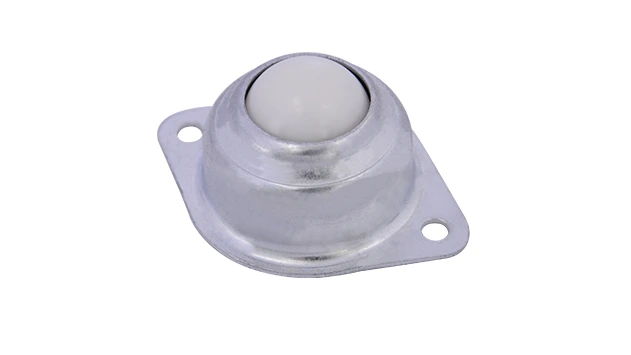
Nylon Swivel Roller Balls 1 Inch
Rotation is smooth, unimpeded, and light, suitable for various scenes.The wheels are made of nylon, wide and thick to steer smoothly, has a good mute effect, and no damage to the bottom plate.
Let's start with a common frustration in manufacturing and warehousing: small parts. Whether you're dealing with tiny screws, delicate electronic components, or miniature plastic fittings, moving these items efficiently can feel like solving a puzzle with missing pieces. Parts get stuck in gaps, slow down production lines, or even get damaged when forced through rigid systems. If you've ever watched a worker pause to free a jammed component or seen a conveyor belt grind to a halt because a 0.5-inch washer got wedged between metal rollers, you know how costly these delays can be—both in time and money.
But what if there was a solution that let small parts glide smoothly, quietly, and safely, without the hassle of jams or damage? Enter nylon swivel roller balls 1 inch —a humble but powerful tool that's transforming how facilities handle small parts. In this article, we'll dive into why these unassuming components are becoming a staple in lean operations, how they outperform other materials and sizes, and why they might just be the missing link in your workflow.
What Are Nylon Swivel Roller Balls 1 Inch?
Before we jump into their benefits, let's clarify what we're talking about. Nylon swivel roller balls are small, spherical components typically made from high-grade nylon (often nylon 6 or 66) mounted in a housing that allows 360-degree rotation. The "1 inch" refers to their diameter, making them larger than smaller alternatives like 0.5-inch roller balls but still compact enough for tight spaces. These balls are designed to be embedded into surfaces—think the shelves of a flow rack , the top of a workbench , or the rails of a roller track —where they act as miniaturized "bearings" for small parts.
Unlike rigid metal rollers or fixed slides, these nylon balls swivel independently, adapting to the shape and weight of the parts they carry. This flexibility is key to their effectiveness, especially when dealing with irregularly shaped or lightweight items that might otherwise get caught. And because they're made of nylon, they bring a host of advantages over metal or plastic alternatives—advantages we'll unpack next.
5 Key Benefits of Nylon Swivel Roller Balls 1 Inch
Why choose 1-inch nylon swivel roller balls over other options? Let's break down their most impactful benefits, drawing on real-world use cases and operational needs.
1. Smooth, Quiet, and Jam-Free Operation
Small parts—think screws, washers, or circuit board components—are notoriously finicky. Metal rollers, while durable, often have gaps between them that trap these tiny items. Even a 0.1-inch gap can catch a 0.2-inch nut, bringing a flow rack to a standstill. Nylon swivel roller balls eliminate this problem: their spherical shape and dense spacing (you can fit multiple 1-inch balls per square foot) create a near-continuous surface, leaving no room for jams.
Take, for example, an electronics manufacturer assembling smartphones. Their workbench s need to move small camera lenses (about 0.8 inches in diameter) from one station to the next. With metal rollers, 1 in 10 lenses would get stuck, requiring a worker to stop and retrieve them. After switching to 1-inch nylon swivel roller balls, jams dropped to zero. Why? The balls swivel to cradle the lens, distributing its weight evenly and letting it glide without resistance.
And let's not forget noise. Metal-on-metal contact in roller systems can create a constant din, contributing to worker fatigue and even hearing damage over time. Nylon, by contrast, dampens sound. A roller track fitted with nylon balls operates at around 55 decibels (about the volume of a quiet conversation), compared to 75 decibels (equivalent to a vacuum cleaner) for metal rollers. For facilities aiming to improve workplace ergonomics, this quiet operation is a game-changer.
2. Durable Nylon: Built to Last in Tough Environments
You might be thinking: Nylon? Isn't that softer than metal? Won't it wear out quickly? Surprisingly, high-quality nylon (like the kind used in these roller balls) is remarkably durable. It resists abrasion, chemicals, and temperature fluctuations—three common hazards in manufacturing settings.
Consider a lean system in an automotive parts plant, where roller balls are exposed to motor oil, grease, and cleaning solvents daily. Metal roller balls might corrode or seize up over time, but nylon is inherently resistant to most chemicals. Tests show that nylon swivel roller balls retain 90% of their performance after 10,000 hours of exposure to standard industrial oils—far longer than plastic alternatives, which can degrade or become brittle.
Temperature is another factor. Nylon roller balls operate reliably in temperatures ranging from -40°F to 200°F, making them suitable for both cold storage facilities (e.g., storing small medical components) and warm environments like injection molding plants. Metal rollers, while heat-resistant, can conduct cold or heat, making parts stick in extreme conditions—nylon insulates, keeping parts moving smoothly regardless of the climate.
3. Versatility: From Flow Racks to Turnover Trolleys
One of the biggest advantages of 1-inch nylon swivel roller balls is their adaptability. They're not limited to a single application—they thrive in almost any setting where small parts need to move. Here are just a few examples:
- Flow Racks: The angled shelves of a flow rack rely on gravity to move parts forward. Nylon roller balls reduce friction, letting even lightweight items (like 0.3-ounce resistors) slide effortlessly from the back to the picking front.
- Workbenches: Embedded into the surface of a workbench , these balls let workers slide trays, bins, or part holders with minimal effort. No more lifting heavy containers—just a gentle push, and the load glides into place.
- Roller Tracks: Integrated into roller track s, they turn rigid conveyor systems into flexible pathways for small parts. Unlike fixed rollers, swivel balls can handle curves and inclines without jamming.
- Turnover Trolleys: Trolleys used to transport parts between departments often have flat surfaces that make loading/unloading a chore. Adding 1-inch roller balls turns these trolleys into "slide-on, slide-off" systems, cutting loading time by up to 40%.
This versatility makes them a favorite for facilities with diverse needs. A single type of roller ball can solve problems across flow rack s, workbench es, and roller track s, reducing the need to stock multiple specialized components.
4. Cost-Effective: Lower Upfront and Long-Term Costs
At first glance, nylon roller balls might seem pricier than basic plastic alternatives. But when you factor in their lifespan, reduced maintenance, and productivity gains, they're far more cost-effective. Let's crunch the numbers:
A 4-foot section of 1-inch nylon swivel roller balls costs about $25, compared to $15 for plastic roller balls or $40 for metal ones. But plastic roller balls wear out in 6 months (needing replacement), while metal ones require lubrication every 2 weeks (adding labor costs). Nylon roller balls? They last 3–5 years with zero maintenance. Over 5 years, the total cost for nylon is $25, vs. $150 for plastic (10 replacements) or $140 for metal (lubrication + initial cost). That's a 83% savings over plastic and 82% over metal.
Then there's the productivity boost. A study by the Lean Manufacturing Institute found that facilities using nylon roller balls reported a 12% increase in throughput for small parts handling, thanks to fewer jams and faster movement. For a facility producing 10,000 parts per day, that's 1,200 extra parts—no additional labor required. When you add it all up, nylon swivel roller balls aren't just a purchase; they're an investment with a quick ROI.
5. Safety First: Gentle on Parts, Gentle on Workers
Small parts are often delicate. A metal roller might scratch a plastic component or nick a precision-machined metal part, rendering it useless. Nylon's smooth, non-abrasive surface eliminates this risk. It's soft enough to protect fragile items (like glass lenses or painted plastic parts) but strong enough to carry heavier loads (up to 20 lbs per ball for 1-inch models).
Workers benefit too. Traditional systems often require pushing or pulling heavy bins, leading to strain injuries in the shoulders, back, or wrists. With nylon roller balls, the force needed to move a 50-lb bin drops from 25 lbs (with a fixed slide) to just 5 lbs—a 80% reduction. This lowers the risk of musculoskeletal disorders, a leading cause of workplace absences in manufacturing.
And let's not overlook static electricity. In electronics manufacturing, static discharge can fry sensitive components. Nylon is naturally anti-static (when treated with additives), making 1-inch roller balls safe for use with PCBs, semiconductors, or other ESD-sensitive parts. Metal rollers, by contrast, can generate static, requiring expensive grounding systems to mitigate risk. Nylon simplifies safety compliance—no extra steps needed.
Real-World Impact: A Case Study
A mid-sized automotive parts supplier was struggling with their flow rack system for small fasteners (nuts, bolts, washers). Their metal roller-equipped racks jammed 3–4 times per shift, leading to 2 hours of downtime daily. Workers were frustrated, and the company was losing $1,500 per day in lost productivity.
After switching to 1-inch nylon swivel roller balls, jams dropped to zero. The quiet operation reduced noise complaints, and the anti-static properties protected their ESD-sensitive components. Within 3 months, the company recouped the cost of the roller balls, and by the end of the year, they'd saved over $450,000 in downtime and labor costs. "It's like night and day," said the plant manager. "We should have made the switch years ago."

Nylon Swivel Roller Balls 1 Inch vs. 0.5 Inch: Which Size is Right for You?
You might be wondering: Why 1 inch? What about smaller sizes like 0.5 inch? While 0.5-inch roller balls have their uses, 1-inch models are often the better choice for most small parts handling. Let's compare them side by side:
| Feature | Nylon Swivel Roller Balls 1 Inch | Nylon Swivel Roller Balls 0.5 Inch |
|---|---|---|
| Diameter | 1 inch | 0.5 inch |
| Load Capacity (per ball) | 15–20 lbs | 5–8 lbs |
| Ideal Part Size Range | 0.75–3 inches | 0.25–0.75 inches |
| Best For | Medium-small parts (e.g., screws, connectors, small tools), flow rack s, workbench es, roller track s | Micro-parts (e.g., circuit board resistors, jewelry components), precision |
| Spacing Required | 1.5 inches between centers (dense enough for most parts) | 0.75 inches between centers (more spacing needed for stability) |
| Durability | Longer lifespan (3–5 years) due to larger surface area distributing wear | Shorter lifespan (2–3 years) due to smaller size and higher pressure per unit area |
| Cost per Unit | Slightly higher ($2–3 per ball) | Lower ($1–2 per ball) |
As the table shows, 1-inch roller balls are the workhorses of small parts handling. They're versatile enough to handle most common part sizes, carry more weight, and last longer. Unless you're dealing with micro-parts smaller than 0.75 inches, 1-inch is the way to go.

Fitting into the Lean System : How Roller Balls Support Efficiency
Lean manufacturing is all about eliminating waste—whether it's time, labor, or materials. Nylon swivel roller balls align perfectly with this philosophy by targeting two key wastes: motion waste (unnecessary movement of workers) and waiting waste (delays in production). Here's how:
- Reducing Motion Waste: Workers no longer need to bend, lift, or push heavy bins. A 50-lb bin that once required two people to move can now be glided across a workbench with one hand, freeing up labor for more skilled tasks.
- Eliminating Waiting Waste: No more waiting for jams to be fixed or parts to slowly trickle through a system. With roller balls, parts move at a steady, predictable pace, keeping production lines flowing.
- Supporting 5S Principles: 5S (Sort, Set in Order, Shine, Standardize, Sustain) emphasizes organization and efficiency. Roller balls make it easy to "Set in Order" by creating designated, smooth pathways for parts, and "Shine" by reducing dust buildup (nylon is less likely to trap debris than metal).
Many facilities using lean system s report that adding nylon swivel roller balls was a "quick win"—a low-cost, high-impact change that delivered immediate results. As one lean coordinator put it: "You don't need to overhaul your entire operation to be lean. Sometimes, it's the small changes—like swapping out roller balls—that make the biggest difference."
Why Nylon Swivel Roller Balls 1 Inch Are the Future of Small Parts Handling
Small parts might be tiny, but their impact on your operation is huge. When they move smoothly, everything works—production speeds up, workers stay focused, and costs stay low. When they don't, the opposite happens. Nylon swivel roller balls 1 inch solve this problem with a rare combination of smooth operation, durability, versatility, and cost-effectiveness.
Whether you're outfitting a new flow rack , upgrading a workbench , or revamping a roller track system, these roller balls deliver results. They're quiet, safe, and built to last—qualities that make them indispensable in today's fast-paced, lean-focused facilities.
So, the next time you're troubleshooting a jammed flow rack or watching a worker strain to move a bin, remember: sometimes the solution is smaller than you think. Nylon swivel roller balls 1 inch might not grab headlines, but they're quietly revolutionizing small parts handling—one smooth glide at a time.