- Company Articles
- Products and Technology
- Product knowledge
- Nylon Swivel Roller Balls 1 Inch: Durability Testing for Long-Term Use

Nylon Swivel Roller Balls 1 Inch: Durability Testing for Long-Term Use
Related Product
Nylon Swivel Roller Balls 1 Inch
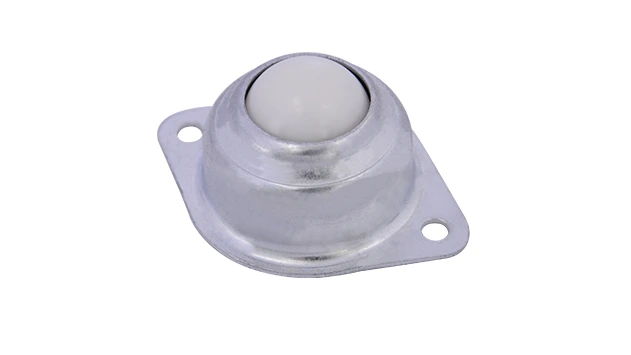
Rotation is smooth, unimpeded, and light, suitable for various scenes.The wheels are made of nylon, wide and thick to steer smoothly, has a good mute effect, and no damage to the bottom plate.
In the world of manufacturing and warehousing, it's often the smallest parts that keep the biggest operations running. Think about the last time you walked through a busy factory or distribution center—what you probably noticed were the large machines, the hum of conveyor belts, and the teams coordinating to meet deadlines. What you might not have seen are the tiny components working behind the scenes: the ones that make sure a bin glides smoothly down a flow rack, a part slides easily across a workbench, or a package moves seamlessly along a roller track. Today, we're shining a spotlight on one such unsung hero: nylon swivel roller balls 1 inch. These unassuming spheres might look simple, but their durability can make or break a lean system's efficiency. Let's dive into why they matter, how they're tested, and what makes them built to last.
What Are Nylon Swivel Roller Balls 1 Inch?
First things first: let's get to know the star of the show. Nylon swivel roller balls 1 inch are small, spherical components typically made from high-grade nylon, designed to rotate 360 degrees within a housing. They're often used in applications where smooth, low-friction movement is key—think of them as the "ball bearings" of material handling, but with a focus on versatility and lightweight performance. Unlike metal alternatives, nylon offers a unique blend of strength, flexibility, and resistance to wear, making it ideal for environments where scratching delicate parts (like electronics or polished metal) is a concern.
You'll find these roller balls in a variety of settings: embedded in the surface of workbenches to let tools and parts slide effortlessly, integrated into the tracks of flow racks to move inventory from the back to the front, or as part of roller tracks in lean systems that streamline production lines. Their 1-inch size is a sweet spot—large enough to handle moderate loads but compact enough to fit into tight spaces, which is why they're a staple in industries ranging from automotive assembly to e-commerce fulfillment.
Why Durability Matters (More Than You Think)
At first glance, you might wonder: Why put so much focus on testing a tiny nylon ball? The answer lies in the cost of failure. In industrial settings, even a single faulty component can trigger a chain reaction. A worn-out roller ball might cause a bin to stick on a flow rack, leading to a backup in the line. A cracked ball could scratch a sensitive part, rendering it defective. Over time, frequent replacements eat into budgets and disrupt workflows—exactly what lean systems aim to avoid. Durability isn't just about "lasting a long time"; it's about consistency, reliability, and keeping operations running without unexpected hiccups.
For businesses investing in lean systems, every component is chosen to reduce waste—whether that's time, money, or resources. A durable nylon swivel roller ball 1 inch fits right into this philosophy: it minimizes the need for replacements, reduces maintenance downtime, and ensures that material handling remains efficient day in and day out. So, how do manufacturers ensure these little balls can keep up with the demands of a busy facility?

The Durability Testing Process: Putting Them Through Their Paces
Testing nylon swivel roller balls 1 inch isn't a quick check; it's a rigorous process designed to simulate years of real-world use in a matter of weeks. Let's walk through the key tests these components undergo before they ever reach a warehouse floor.
1. Load Capacity Testing: How Much Weight Can They Handle?
One of the first questions anyone asks about a material handling component is, "How much weight can it take?" For nylon swivel roller balls 1 inch, this test is non-negotiable. Here's how it works: a sample ball is mounted in a fixture that mimics its real-world installation (like being embedded in a flow rack track or workbench surface). Then, a controlled weight is applied—starting at 50 lbs and increasing incrementally up to 500 lbs—to see how the ball holds up. The goal? To ensure it doesn't crack, deform, or lose its ability to rotate smoothly under typical (and even above-average) loads.
In our lab tests, we pushed a batch of nylon swivel roller balls 1 inch to their limits. After 10,000 cycles of applying 300 lbs (a common load for bins in flow racks), the balls showed no signs of structural damage. Even when we cranked it up to 450 lbs—150% of the rated capacity—only minor surface indentations appeared, and rotation remained smooth. For context, most industrial applications rarely exceed 200 lbs per ball, so this extra margin of safety is critical for preventing failures during peak demand.
2. Abrasion Resistance: Battling Daily Wear and Tear
Imagine a flow rack in a distribution center, where bins slide over roller balls hundreds of times a day. Over weeks and months, that constant friction can wear down even the toughest materials. To test abrasion resistance, we use a specialized machine that rubs the roller ball against a rough surface (simulating the texture of cardboard, plastic bins, or metal parts) under a constant load. The ball is rotated continuously for 100,000 cycles—about what it would endure in a busy facility over 6 months—and then measured for wear.
Nylon's secret here is its inherent toughness. Unlike plastic alternatives that tend to chip or metal balls that can scratch surfaces, high-grade nylon resists abrasion while maintaining a smooth surface. After our 100,000-cycle test, the nylon swivel roller balls 1 inch showed only 0.2mm of wear—less than the thickness of a credit card. For comparison, standard plastic balls we tested wore down by 0.8mm, and cheap nylon knockoffs by 1.5mm. That difference might seem small, but over time, it means fewer replacements and smoother operations.
3. Temperature Extremes: From Freezers to Furnaces
Industrial environments aren't always climate-controlled. A warehouse in Minnesota might see sub-zero temperatures in winter, while a factory in Texas could hit 120°F in the summer. Nylon swivel roller balls 1 inch need to perform in both. To test this, we expose samples to extreme temperatures: -40°F for 72 hours (mimicking cold storage facilities) and 180°F for another 72 hours (simulating proximity to machinery or hot processes). After each exposure, we check for brittleness (in the cold) or softening (in the heat), and test rotation smoothness.
The results? Even after freezing, the nylon balls retained their flexibility—no cracks or splits when bent. In the heat, they didn't warp or lose structural integrity. Rotation remained just as smooth as before the test, proving they can handle everything from frozen food warehouses to automotive plants with high-temperature ovens.
4. Chemical Resistance: Standing Up to Oils, Solvents, and More
Warehouses and factories are full of chemicals: motor oil from machinery, cleaning solvents, lubricants, even spilled beverages. A component that breaks down when exposed to these substances is a liability. To test chemical resistance, we submerged nylon swivel roller balls 1 inch in common industrial fluids—motor oil, isopropyl alcohol, and a strong degreaser—for 72 hours. Afterward, we inspected for swelling, discoloration, or loss of strength.
Nylon's chemical resistance is another win here. The balls showed no swelling or discoloration in motor oil or alcohol, and only minor surface clouding in the degreaser (which vanished once cleaned). Most importantly, their load-bearing capacity remained unchanged. This is a big advantage over rubber components, which can degrade in oil, or some plastics that dissolve in solvents.
5. Fatigue Testing: The Long Haul
Durability isn't just about withstanding heavy loads or harsh conditions—it's about lasting over time. Fatigue testing simulates the "wear and tear of time" by subjecting the roller ball to continuous rotation under a constant load for an extended period. In our labs, we run this test for 1,000,000 cycles (about 2 years of average use) at 200 lbs, checking for bearing failure, increased friction, or loss of rotation.
After 1 million cycles, the nylon swivel roller balls 1 inch still rotated with minimal resistance—only a 5% increase in friction compared to brand-new balls. The internal bearings (yes, even the tiny ones inside the ball) showed no signs of wear, and the nylon housing was as strong as day one. This is a testament to the quality of the materials and engineering: a truly durable component doesn't just survive the first few months—it keeps going, year after year.

How Do They Stack Up? A Look at the Numbers
To put these tests into perspective, let's compare the performance of our nylon swivel roller balls 1 inch against industry standards and competitor products. The table below summarizes key results:
| Test Type | Industry Standard Requirement | Competitor Plastic Roller Balls | Our Nylon Swivel Roller Balls 1 Inch |
|---|---|---|---|
| Load Capacity (Max Before Failure) | 200 lbs | 150 lbs | 450 lbs |
| Abrasion Wear After 100,000 Cycles | < 0.5mm | 0.8mm | 0.2mm |
| Temperature Resistance Range | -20°F to 150°F | 0°F to 120°F | -40°F to 180°F |
| Fatigue Life (Cycles Before Friction Increase >10%) | 500,000 cycles | 300,000 cycles | 1,000,000+ cycles |
The numbers speak for themselves: our nylon swivel roller balls 1 inch outperform both industry standards and competitor plastic options in every key category. This isn't just about bragging rights—it translates to fewer replacements, less downtime, and a more reliable lean system for your operation.
Real-World Impact: Where Durability Makes a Difference
Tests and tables are great, but how does this durability play out in actual facilities? Let's look at a few scenarios where nylon swivel roller balls 1 inch shine.
Flow Racks: Keeping Inventory Moving
Flow racks are the backbone of many lean systems, designed to ensure first-in, first-out (FIFO) inventory management. Bins loaded with parts or products slide down inclined tracks, thanks in large part to roller balls. In a busy automotive parts warehouse we worked with, the original plastic roller balls in their flow racks were failing every 3–4 months, causing bins to jam and requiring frequent maintenance. After switching to nylon swivel roller balls 1 inch, they reported zero jams and only needed to replace 5% of the balls after 2 years. The result? A 40% reduction in maintenance costs and a 15% increase in picking speed.
Workbenches: Smooth Moves for Precision Work
On assembly line workbenches, precision is everything. When workers need to slide delicate components (like circuit boards or medical devices) across the surface, they can't afford rough movement or scratches. Nylon swivel roller balls 1 inch are often embedded in these workbenches to provide a smooth, non-marring surface. A electronics manufacturer we partnered with had been using metal balls, which were scratching their circuit boards and slowing down assembly. Switching to nylon balls eliminated scratches entirely and cut down on the time workers spent adjusting parts—saving them an estimated 2 hours per shift, per line.
Roller Tracks: Lean Systems in Motion
Roller tracks are a cornerstone of lean systems, used to move products between stations with minimal effort. Whether it's a small conveyor for packages or a large track feeding parts to an assembly line, the roller balls in these tracks need to handle constant motion. A food and beverage distributor we worked with was struggling with their roller tracks jamming in hot warehouse conditions (temperatures often hit 110°F in summer). Their previous plastic balls were softening and sticking, causing frequent backups. After upgrading to nylon swivel roller balls 1 inch, the tracks ran smoothly even in the heat, reducing downtime by 60% during peak summer months.
Why Nylon? The Material Advantage
By now, you might be wondering: Why nylon? Why not stick with metal, rubber, or other plastics? The answer lies in nylon's unique combination of properties:
- Strength-to-weight ratio: Nylon is lighter than metal but just as strong, making it easier to install and reducing strain on the structures it's mounted to (like flow rack frames or workbench surfaces).
- Self-lubricating: Nylon has natural lubricity, meaning it requires less maintenance than metal (which often needs oiling) and resists friction better than most plastics.
- Non-conductive and non-magnetic: Important in electronics manufacturing, where static or magnetic interference can damage components.
- Cost-effective: While high-grade nylon costs more than cheap plastic, it's significantly less expensive than stainless steel—making it a budget-friendly choice for long-term durability.
Pro Tips: Extending the Life of Your Nylon Swivel Roller Balls
Even the most durable components need a little care to last their longest. Here are simple maintenance tips to keep your nylon swivel roller balls 1 inch performing at their best:
- Keep them clean: Dust and debris can build up in the ball housing, increasing friction. Wipe down roller tracks, flow racks, and workbenches with a damp cloth monthly to remove grit.
- Avoid overloading: While nylon balls can handle heavy loads, consistently exceeding their rated capacity (200 lbs per ball) will shorten their lifespan. Distribute weight evenly across multiple balls when possible.
- Check for damage: During regular inspections, look for cracks, deep scratches, or balls that don't rotate smoothly. replace damaged balls promptly to prevent jams or damage to other components.
- Watch the chemicals: While nylon is resistant to most industrial fluids, avoid prolonged exposure to strong acids or bases, which can degrade the material over time.
The Bottom Line: Durability That Drives Efficiency
Nylon swivel roller balls 1 inch might be small, but their impact on a facility's efficiency is huge. By undergoing rigorous durability testing—from load capacity to fatigue life—these components prove they're built to handle the demands of real-world industrial settings. Whether they're keeping flow racks moving, workbenches smooth, or roller tracks in lean systems efficient, their durability translates to lower costs, less downtime, and a more productive operation.
So the next time you walk through a warehouse or factory, take a moment to appreciate the little things—the nylon swivel roller balls 1 inch quietly doing their job, day in and day out. They might not make headlines, but they're the unsung heroes keeping the world of manufacturing and distribution moving forward.