
It's 9 AM on a Tuesday, and Maria, the production floor manager at a mid-sized electronics assembly plant, is staring at the stopwatch in her hand. The third conveyor line has jammed again this week, and each minute of downtime is costing the team 20 units of output – units that were supposed to ship to a key client by Friday. "If this keeps up," she mutters, "we'll miss the deadline, and that's a $50,000 contract on the line." Across the floor, Juan, a line worker, is kneeling beside the jammed conveyor, prying a stuck plastic bin free from a steel roller. "These metal rollers are brutal," he says, wiping sweat from his brow. "They scratch the bins, they get stuck when there's even a little dust, and they're so loud I can barely hear the quality check alerts."
Sound familiar? For manufacturing and assembly teams, downtime isn't just a minor annoyance – it's a silent profit killer. Whether it's a jammed conveyor, a stuck bin on a flow rack, or a workbench where parts take too long to move, these small interruptions add up to hours (or even days) of lost productivity each month. But what if there was a simple, affordable component that could slash these disruptions? Enter nylon swivel roller balls 1 inch – the unsung heroes of lean production lines. In this article, we'll dive into how these tiny, unassuming components are transforming workflows, reducing downtime, and making life easier for teams like Maria's and Juan's.
What Are Nylon Swivel Roller Balls 1 Inch, Anyway?
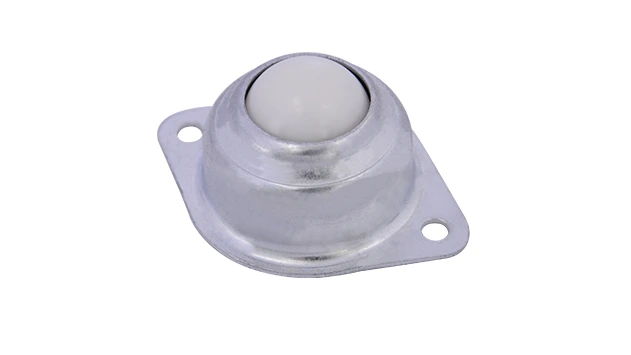
Let's start with the basics. Nylon swivel roller balls 1 inch are exactly what they sound like: small, spherical rollers (1 inch in diameter, or 25.4mm) made from high-grade nylon, mounted on a swivel mechanism that allows them to rotate 360 degrees. They're designed to be embedded into surfaces like flow rack shelves, conveyor tracks, or workbench tops, creating a smooth, low-friction surface that lets materials glide with minimal effort.
But don't let their size fool you. These little rollers are engineered for durability. The nylon used is often a reinforced grade (like PA6 or PA66), which resists impact, chemicals, and wear – crucial for busy production environments where parts, bins, and tools are constantly moving. The swivel mechanism, typically made from corrosion-resistant steel or aluminum, ensures the balls rotate freely without seizing up, even after months of heavy use.
Why Nylon? The Material Advantage Over Steel or Plastic
You might be wondering: "Why nylon? Why not stick with steel rollers, or cheaper plastic ones?" Great question. Let's break down the benefits of nylon swivel roller balls 1 inch compared to other common materials:
| Feature | Nylon Swivel Roller Balls (1 Inch) | Steel Swivel Roller Balls (1 Inch) | Standard Plastic Rollers (Fixed, 1 Inch) |
|---|---|---|---|
| Material | Reinforced nylon (PA6/PA66) | Stainless steel or carbon steel | Basic polyethylene (PE) or polypropylene (PP) |
| Weight per Unit | ~15 grams | ~45 grams | ~10 grams |
| Noise Level | Low (~50 dB – quieter than a normal conversation) | High (~75 dB – similar to a vacuum cleaner) | Medium (~60 dB) |
| Load Capacity (Per Ball) | Up to 50 lbs (22.7 kg) | Up to 100 lbs (45.4 kg) | Up to 20 lbs (9.1 kg) |
| Maintenance Needs | Minimal (occasional cleaning) | High (requires lubrication every 2-4 weeks; prone to rust) | Low (but prone to cracking under heavy loads) |
| Best For | Light-to-medium loads (bins, small parts, tools); sensitive surfaces (electronics, painted parts) | Heavy loads (metal parts, machinery); high-temperature environments | Very light loads (paper, small plastic parts); low-budget, low-use setups |
As you can see, nylon strikes a sweet spot: it's lighter than steel (reducing strain on conveyor motors and flow rack structures), quieter (making the workplace less stressful), and more durable than cheap plastic (so you won't be replacing rollers every month). Plus, nylon is non-marring – meaning it won't scratch or damage sensitive parts like circuit boards, painted components, or plastic bins. For teams handling electronics, medical devices, or finished goods, that's a game-changer.

How Nylon Swivel Roller Balls 1 Inch Slash Downtime
Now, let's get to the good stuff: how these rollers actually reduce downtime. We'll focus on four key areas where they make the biggest impact: flow racks, conveyors, workbenches, and lean system integration.
1. Flow Racks: No More Stuck Bins or Strained Workers
Flow racks are the backbone of many production lines, used to store and transport bins of parts from receiving to assembly stations. But traditional flow racks often use fixed steel rollers or even wooden slats, which can be frustratingly inefficient. Bins get stuck when they're slightly misaligned, workers have to push hard to get them moving, and heavy bins can even damage the racks over time.
Nylon swivel roller balls 1 inch solve this by creating a "floating" surface. Because each ball swivels independently, they adjust to the shape and weight of the bin, distributing the load evenly. Juan, from Maria's team, experienced this firsthand after their plant upgraded the flow racks: "Before, moving a full bin of circuit boards from the top shelf to the assembly line took two people – one to push, one to guide it. Now, I can slide it with one hand. And no more jams! The swivel balls just 'grab' the bin and keep it moving, even if it's not perfectly straight."
The result? Bins move 30-50% faster on flow racks equipped with nylon swivel roller balls, and jams drop by up to 70% (according to case studies from lean manufacturing consultants). That means fewer interruptions, less physical strain on workers, and more time spent assembling products – not wrestling with bins.
2. Conveyors: Smoother, Quieter, and Less Prone to Jams
Conveyors are another common source of downtime. A single jam can bring an entire line to a halt, requiring maintenance staff to stop what they're doing and fix the issue. Steel rollers are often the culprit here: they accumulate dust, debris, and even small metal shavings, which get stuck in the bearings and cause the rollers to seize. Plus, their rigidity means they can't adapt to slight variations in bin size or weight.
Nylon swivel roller balls 1 inch, when integrated into conveyor tracks, eliminate these problems. Their smooth, rounded surface doesn't trap debris, and the swivel mechanism allows them to "give" slightly when a bin is misaligned, preventing it from getting wedged. Maria's plant saw this in action after upgrading their third conveyor line: "We used to have 3-4 jams a week on that line. Now? Maybe one every two months. And when there is a jam, it's usually because a bin was overfilled – not because the rollers failed. The maintenance team used to spend 8-10 hours a week fixing conveyors; now they're down to 2-3 hours. That's time they can spend on preventive maintenance, like checking motor belts or lubricating gears, which keeps the whole line running smoother."
3. Workbenches: Faster Part Transfer, Happier Teams
Workbenches might not seem like a downtime hot spot, but think about it: how much time do assemblers spend reaching for parts, sliding bins across the bench, or rearranging tools? On a busy line, those seconds add up. Nylon swivel roller balls 1 inch can be embedded into workbench tops (or added as modular mats) to create a surface where parts and tools glide effortlessly. For example, an assembler working on a circuit board can slide a bin of resistors from the left side of the bench to the right with a light push, instead of picking it up and moving it. That saves 5-10 seconds per part – which, over an 8-hour shift, adds up to 20-40 minutes of extra assembly time.
Lisa, an assembler at Maria's plant, put it this way: "My hands used to ache at the end of the day from lifting bins and pushing heavy toolboxes. Now, everything just moves. I can focus on soldering and testing, not wrestling with materials. And because parts are easier to reach, I make fewer mistakes – which means less rework, and that's less downtime too!"
4. Seamless Integration with Lean Systems
Lean manufacturing is all about eliminating waste – and downtime is one of the biggest wastes of all. Nylon swivel roller balls 1 inch fit perfectly into lean systems because they're affordable, easy to install, and require minimal maintenance. Unlike expensive conveyor upgrades or automated robots, you can retrofit existing flow racks, conveyors, and workbenches with these rollers for a fraction of the cost. Maria's plant spent less than $5,000 on roller balls and installation for their flow racks and conveyors – and they're already seeing a return on investment through reduced downtime and higher output.

Technical Deep Dive: Specs That Matter
Not all nylon swivel roller balls are created equal. To get the best results, you need to choose the right specs for your application. Here's what to look for:
- Diameter: 1 inch (25.4mm) is the most common size, but smaller (0.5 inch) and larger (1.5 inch) options exist. 1 inch strikes a balance between load capacity and surface coverage.
- Load Capacity: Look for rollers rated for at least 50 lbs per ball. Higher-grade nylon (like PA66 with glass fiber reinforcement) can handle up to 75 lbs per ball – ideal for heavy bins or metal parts.
- Swivel Mechanism: Choose rollers with a sealed bearing or lubricated pivot point to prevent dust and debris from jamming the rotation. Stainless steel or aluminum pivots are best for corrosion resistance.
- Environmental Resistance: Nylon is naturally resistant to oils, greases, and mild chemicals (like isopropyl alcohol, used for cleaning). If your plant uses harsh chemicals, look for rollers with a chemical-resistant coating.
- Operating Temperature: Standard nylon rollers work well in temperatures from -20°C to 80°C (-4°F to 176°F). For extreme environments (like cold storage or high-heat assembly lines), opt for heat-stabilized nylon.
Case Study: XYZ Electronics Cuts Downtime by 40% with Nylon Swivel Roller Balls
Let's put this all into context with a real-world example. XYZ Electronics, a manufacturer of smartphone components, was struggling with frequent downtime on their assembly line. Their main issues: jammed conveyors (3-4 times per week), slow bin movement on flow racks (adding 2 hours of labor per day), and scratched parts from steel rollers (costing $2,000 per month in rework).
After consulting with a lean manufacturing expert, they decided to upgrade their flow racks, conveyors, and workbenches with nylon swivel roller balls 1 inch. Here's what happened in the first three months:
- Conveyor jams dropped from 12-16 per month to 3-4 – a 75% reduction.
- Bin movement time on flow racks decreased by 45%, freeing up 10 hours of labor per week.
- Scratched parts dropped by 90%, saving $1,800 per month in rework costs.
- Overall downtime fell by 40%, increasing monthly output by 1,200 units – enough to fulfill an additional client order.
The plant manager, Raj, summed it up: "We were skeptical at first – how could something so small make such a big difference? But the numbers don't lie. The rollers paid for themselves in two months, and the team morale? Through the roof. No one misses wrestling with stuck bins or shouting over steel roller noise."
Maintenance Tips: Keeping Your Rollers Rolling
Nylon swivel roller balls 1 inch are low-maintenance, but they're not "set it and forget it." To keep them working their best, follow these simple tips:
- Clean Regularly: Wipe down the rollers with a damp cloth or compressed air weekly to remove dust, debris, and oil buildup. For sticky residues (like adhesive from labels), use a mild detergent (avoid harsh solvents, which can damage nylon).
- Inspect Monthly: Check for cracked or worn rollers, and replace any that are damaged. Pay attention to the swivel mechanism – if a roller feels "stiff" or doesn't rotate freely, it might need a drop of lightweight lubricant (like silicone spray).
- Don't Overload: Stick to the rated load capacity. Overloading can warp the swivel mechanism or crack the nylon.
- Align Properly: When installing rollers on flow racks or conveyors, make sure they're evenly spaced (typically 2-3 inches apart) and level. Misaligned rollers can cause bins to veer off track.
Conclusion: Small Components, Big Impact
Downtime is the silent enemy of productivity, but it doesn't have to be. Nylon swivel roller balls 1 inch are proof that sometimes the simplest solutions are the most effective. By reducing jams, speeding up material flow, and making work easier for your team, these tiny rollers can transform your production line from a source of frustration to a well-oiled machine.
Maria's team learned this the hard way – but now, three months after upgrading to nylon swivel roller balls, she's smiling at her stopwatch. "We haven't had a conveyor jam in two weeks," she says. "Juan and Lisa are happier, output is up, and we're on track to hit that client deadline. Who knew something so small could make such a big difference?"
So, if you're tired of watching downtime eat into your profits, it might be time to take a closer look at your flow racks, conveyors, and workbenches. Chances are, a few nylon swivel roller balls 1 inch could be the upgrade you've been missing.