- Company Articles
- Products and Technology
- Product knowledge
- Nylon Swivel Roller Balls 1 Inch vs Ceramic: Cost-Effectiveness Analysis

Nylon Swivel Roller Balls 1 Inch vs Ceramic: Cost-Effectiveness Analysis
Related Product
Nylon Swivel Roller Balls 1 Inch
Rotation is smooth, unimpeded, and light, suitable for various scenes.The wheels are made of nylon, wide and thick to steer smoothly, has a good mute effect, and no damage to the bottom plate.
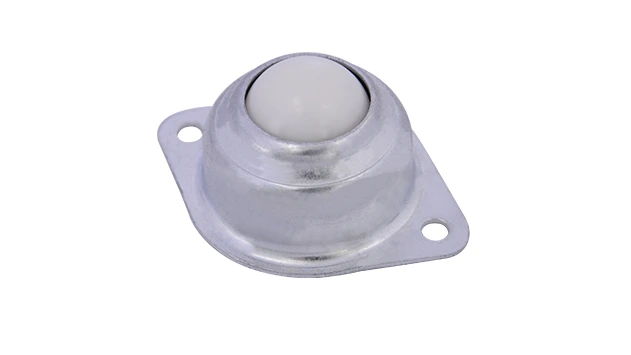
Walk into any bustling factory, warehouse, or assembly line, and you'll notice hundreds of small, unassuming components working tirelessly to keep operations moving. Among these unsung heroes are swivel roller balls—those tiny, omnidirectional spheres that make pushing, pulling, and sliding materials feel effortless. Whether it's on a lean pipe workbench, a flow rack, or a conveyor system, the right roller balls can mean the difference between a smooth, efficient workflow and a frustrating, error-prone one.
Today, we're zeroing in on a common dilemma for operations managers and procurement teams: choosing between nylon swivel roller balls 1 inch and their ceramic counterparts. At first glance, they might seem interchangeable—both are 1 inch in diameter, both swivel, both designed to reduce friction. But dig deeper, and you'll find stark differences in durability, performance, and most importantly, cost. In this guide, we'll break down everything you need to know to decide which option delivers the best value for your specific needs.
Why Swivel Roller Balls Matter: The Backbone of Material Handling
Before diving into the nylon vs. ceramic debate, let's take a moment to appreciate why these small components matter so much. Swivel roller balls—especially the 1-inch variety—are everywhere in material handling. They're the reason a worker can slide a heavy circuit board across an ESD workstation without straining their back. They're what allows boxes to glide seamlessly from a shelf to a picking cart on a flow rack. And they're critical for maintaining consistent speed on conveyor systems, where even a tiny snag can disrupt an entire production line.
The key here is efficiency . A well-chosen roller ball reduces friction to a minimum, making it easier to move materials with less force. This not only cuts down on physical strain for workers (which lowers injury risks and boosts morale) but also speeds up processes. When every second counts—say, in a high-volume automotive plant or a fast-paced e-commerce warehouse—those small time savings add up to big gains in productivity.
But efficiency isn't the only factor. Durability and cost play equally large roles. A roller ball that wears out quickly will need frequent replacements, disrupting workflows and eating into budgets. On the flip side, over-investing in a heavy-duty option for a light-use application is a waste of resources. That's why understanding the nuances of nylon vs. ceramic is so crucial.
Material Deep Dive: What Are Nylon and Ceramic Roller Balls Made Of?
To understand how these roller balls perform, we first need to look at their makeup. Let's start with nylon.
Nylon Roller Balls: Nylon is a synthetic thermoplastic polymer, most commonly polyamide (PA). It's prized for its flexibility, toughness, and resistance to chemicals and abrasion. Manufacturers often blend it with additives like glass fiber or molybdenum disulfide to enhance strength or reduce friction. For 1-inch swivel roller balls, nylon is typically molded into a smooth, spherical shape, sometimes with a metal or plastic core to reinforce the structure.
One of nylon's biggest selling points is its "give." Unlike rigid materials, nylon has a slight elasticity, which means it can absorb minor impacts without cracking. This makes it ideal for environments where materials might be dropped or jostled, like a busy lean pipe workbench where tools and components are constantly being moved around.
Ceramic Roller Balls: Ceramic roller balls are usually made from alumina (aluminum oxide) or zirconia (zirconium dioxide)—two types of advanced ceramics known for their extreme hardness. These materials are formed by sintering (heating powder at high temperatures) to create a dense, crystalline structure. The result? A roller ball that's harder than steel, resistant to heat, and virtually impervious to corrosion.
Ceramic's rigidity is a double-edged sword. On one hand, it won't dent or deform under heavy loads. On the other hand, it lacks nylon's flexibility, making it prone to chipping or shattering if dropped onto a hard surface (think concrete floors in a warehouse). This brittleness means ceramic roller balls require careful handling during installation and maintenance.

Performance Showdown: How Do They Stack Up?
Now, let's get into the nitty-gritty: how these materials perform in real-world scenarios. We'll compare them across four key metrics: load capacity, friction, durability, and temperature resistance.
1. Load Capacity: How Much Weight Can They Handle?
When it comes to moving heavy materials, load capacity is non-negotiable. A roller ball that buckles under pressure is worse than useless—it's a safety hazard.
Nylon: Most 1-inch nylon swivel roller balls can handle loads of 50–100 pounds per ball, depending on the grade of nylon and the design of the housing. For example, a standard nylon roller ball might max out at 75 pounds, while a glass-filled nylon version (reinforced with glass fibers) could push that to 100 pounds. This is more than enough for light to medium applications, like moving small parts on a lean pipe workbench or lightweight boxes on a plastic roller track guide rail yellow.
Ceramic: Ceramic roller balls are true heavyweights. Alumina ceramic balls can typically handle 150–200 pounds per ball, and zirconia versions (which are even stronger) can go up to 250 pounds. This makes them ideal for heavy-duty tasks, such as moving metal components on a steel roller track or pallets on a high-capacity flow rack.
The takeaway? If your workflow involves mostly light to medium loads (under 100 pounds), nylon will likely suffice. For anything heavier, ceramic is the safer bet.
2. Friction: Smoothness vs. Control
The whole point of roller balls is to reduce friction, but not all low-friction is created equal. Some applications need ultra-smooth movement (e.g., conveyor systems), while others benefit from a little resistance to prevent materials from sliding too quickly (e.g., workbenches where precision is key).
Nylon: Nylon has a higher coefficient of friction than ceramic, which means materials don't glide quite as easily. This can be a plus in situations where you want more control—for example, when assembling delicate electronics on an ESD workstation, where a sudden slide could damage components. The slight "grip" of nylon also reduces the risk of materials slipping off the work surface if the bench is accidentally jostled.
Ceramic: Ceramic is renowned for its low friction. Thanks to its ultra-smooth surface, materials slide with minimal effort, making it perfect for high-speed applications like conveyor belts or gravity-fed flow racks. However, this smoothness can be a drawback in low-speed, precision tasks—without enough friction, materials might shift unexpectedly, leading to errors.
3. Durability: How Long Will They Last?
Durability directly impacts cost-effectiveness. A cheaper roller ball that needs replacement every six months will end up costing more than a pricier one that lasts years.
Nylon: Nylon is durable, but it's not indestructible. Over time, it can wear down, especially if exposed to abrasive materials (like sand or metal shavings) or constant heavy loads. In a typical warehouse setting, you might need to replace nylon roller balls every 2–3 years. In harsher environments (e.g., factories with high dust or chemical exposure), that lifespan could drop to 1–2 years.
Ceramic: Ceramic is incredibly wear-resistant. Its hard surface doesn't scratch or degrade easily, even when in contact with rough materials. In ideal conditions, ceramic roller balls can last 5–7 years—sometimes longer. The catch? They're brittle. A sharp impact (like dropping a heavy tool on them) can chip or crack the ball, rendering it useless. So while they last longer overall, they're less forgiving of accidents.
4. Temperature Resistance: Handling Heat and Cold
Most warehouses and factories stay within a moderate temperature range, but some environments (e.g., food processing, automotive painting, or cold storage) push the limits.
Nylon: Nylon starts to soften at around 200°F (93°C) and melts at higher temperatures. This makes it a poor choice for hot environments, like near ovens or welding stations. On the flip side, it performs well in cold conditions (down to -40°F/-40°C), so it's suitable for refrigerated warehouses.
Ceramic: Ceramic thrives in extreme temperatures. Alumina ceramic can handle up to 2,000°F (1,093°C), and zirconia can go even higher. It also doesn't become brittle in the cold, making it versatile for both hot and cold environments. If your facility has temperature extremes, ceramic is the clear winner.

Cost Analysis: Nylon vs. Ceramic Over Time
Now, let's talk about the bottom line: cost. To truly assess cost-effectiveness, we need to look beyond the initial price tag and consider lifecycle cost —the total cost of ownership over time, including installation, maintenance, and replacement.
1. Initial Cost: Sticker Shock vs. Budget-Friendly
There's no getting around it: ceramic roller balls are more expensive upfront. Here's a rough price comparison based on current market rates (as of 2025):
- Nylon: $2–$5 per ball (standard nylon); $5–$8 per ball (glass-filled nylon)
- Ceramic: $8–$15 per ball (alumina); $15–$25 per ball (zirconia)
For a lean pipe workbench with, say, 20 roller balls, that's a big difference: $40–$100 for nylon vs. $160–$500 for ceramic. If you're working with a tight budget, nylon is immediately appealing.
2. Installation and Maintenance Costs
Installation costs are similar for both materials—you'll need to drill holes, mount the housing, and secure the balls. However, ceramic's weight can add a minor wrinkle: if you're installing them on a lightweight aluminum profile frame, you might need to reinforce the structure to support the extra weight of ceramic balls. This could add a few dollars per unit in labor or materials.
Maintenance is where nylon starts to lose its edge. Nylon roller balls require occasional cleaning to remove dust and debris, which can get trapped in the housing and increase friction. They also benefit from occasional lubrication (though some nylon formulations are self-lubricating). Ceramic balls, on the other hand, are virtually maintenance-free. Their smooth surface doesn't trap debris, and they don't need lubrication. The only maintenance required is periodic inspections for chips or cracks.
3. Lifecycle Cost: The Long-Term View
To truly compare cost-effectiveness, let's run the numbers over a 5-year period for a hypothetical scenario: a flow rack with 100 roller balls, used 8 hours a day, 5 days a week.
| Metric | Nylon (Standard) | Ceramic (Alumina) |
|---|---|---|
| Initial cost (100 balls) | $300 ($3/ball) | $1,000 ($10/ball) |
| Replacement frequency | Every 2 years | Every 5 years |
| Total replacements in 5 years | 2 (years 2 and 4) | 0 |
| Total replacement cost | $600 ($300 x 2) | $0 |
| Maintenance cost (5 years) | $100 (cleaning, lubrication) | $50 (inspections) |
| Total 5-year cost | $1,000 | $1,050 |
Wait a minute—nylon and ceramic end up costing roughly the same over 5 years? That's because while ceramic has a higher initial cost, nylon requires frequent replacements. But this is a simplified scenario. Let's tweak it: if the flow rack is used more heavily (12 hours a day), nylon's lifespan might drop to 1.5 years, requiring 3 replacements in 5 years. Suddenly, nylon's total cost jumps to $300 + ($300 x 3) + $150 (higher maintenance) = $1,350, while ceramic stays at $1,050. In this case, ceramic becomes the cheaper option.
Conversely, if the flow rack is used lightly (e.g., a lean pipe workbench in a small workshop, used 4 hours a day), nylon might last 4 years, needing only 1 replacement in 5 years. Then nylon's total cost is $300 + $300 + $50 = $650, beating ceramic's $1,050. The key variable here is usage intensity .
Real-World Applications: When to Choose Nylon vs. Ceramic
To make this concrete, let's look at three common scenarios and see which roller ball comes out on top.
Scenario 1: Lean Pipe Workbench in an Electronics Assembly Line
Imagine a workbench where technicians assemble circuit boards. Loads are light (5–15 pounds per component), and precision is critical—you don't want parts sliding around while soldering or wiring. The workbench is used 6 hours a day, 5 days a week, in a clean, temperature-controlled environment.
Best Choice: Nylon. The light loads mean nylon's 50–100 pound capacity is more than enough. The slight friction of nylon helps keep parts stable, reducing errors. And since usage is moderate, nylon will last 3–4 years, making it the most cost-effective option.
Scenario 2: Flow Rack in a Automotive Parts Warehouse
This flow rack stores heavy metal parts (e.g., engine blocks, transmission components) weighing 100–150 pounds each. It's used 10 hours a day, 6 days a week, and the environment is dusty with occasional temperature fluctuations (due to warehouse heaters/coolers).
Best Choice: Ceramic. The heavy loads exceed nylon's capacity, and the dusty, high-usage environment would wear out nylon quickly. Ceramic's high load capacity, dust resistance, and durability make it worth the initial investment.
Scenario 3: Conveyor System with Plastic Roller Track Guide Rail Yellow
A conveyor system moves lightweight boxes (20–30 pounds) of clothing in a distribution center. It runs 12 hours a day, 7 days a week, and the plastic roller track guide rail yellow is designed for smooth, low-friction movement.
Best Choice: Nylon. The loads are within nylon's range, and the plastic track complements nylon's smoothness. While usage is high, the light loads mean nylon will still last 2–3 years, and the lower initial cost makes it more economical than ceramic.
Final Verdict: Which Offers Better Cost-Effectiveness?
At the end of the day, there's no one-size-fits-all answer. Nylon swivel roller balls 1 inch and ceramic roller balls each have their strengths, and the "better" option depends on your specific needs. Here's a quick cheat sheet to help you decide:
Choose Nylon If:
- You're handling light to medium loads (under 100 pounds).
- You need moderate friction for control (e.g., workbenches, precision tasks).
- Your budget is tight, and usage is light to moderate (less than 8 hours/day).
- You're using a plastic roller track guide rail yellow or similar lightweight system.
Choose Ceramic If:
- You're handling heavy loads (over 100 pounds).
- You need ultra-smooth movement (e.g., high-speed conveyors, heavy flow racks).
- Usage is high (8+ hours/day) or the environment is harsh (dusty, high/low temperatures).
- You're willing to pay more upfront for longer-term savings.
Remember, cost-effectiveness isn't just about the price tag—it's about getting the most value for your investment. A nylon roller ball that lasts 3 years and costs $3 is a steal for a small workshop. A ceramic roller ball that lasts 5 years and costs $10 is a bargain for a high-volume warehouse. The key is to assess your workflow, loads, and usage patterns, then choose accordingly.
Wrapping Up: The Small Component with a Big Impact
Swivel roller balls might be small, but their impact on your operation's efficiency and bottom line is huge. Whether you opt for nylon swivel roller balls 1 inch or ceramic, the right choice will keep your materials moving smoothly, reduce downtime, and save you money in the long run.
So, take a close look at your workbenches, flow racks, and conveyors. Consider your loads, your environment, and your budget. And when in doubt, reach out to a trusted supplier—they can help you test both options in your specific setting. After all, the best decisions are the ones rooted in data and real-world testing.
Here's to smoother workflows, happier workers, and smarter spending—one roller ball at a time.