- Company Articles
- Products and Technology
- Product knowledge
- Nylon Swivel Roller Balls 1 Inch vs Rubber: Noise Reduction Comparison

Nylon Swivel Roller Balls 1 Inch vs Rubber: Noise Reduction Comparison
Related Product
Nylon Swivel Roller Balls 1 Inch
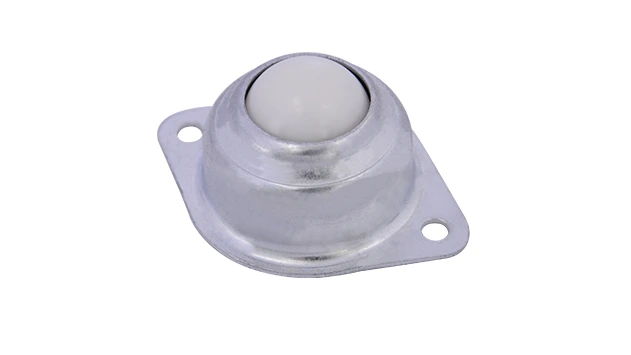
Rotation is smooth, unimpeded, and light, suitable for various scenes.The wheels are made of nylon, wide and thick to steer smoothly, has a good mute effect, and no damage to the bottom plate.
The Hum of the Factory: Why Noise Matters in Lean Systems
Walk into any manufacturing plant, and you'll immediately notice the symphony of sounds: the whir of conveyor belts, the clank of metal parts, the steady hum of machinery. While some level of noise is inevitable in industrial settings, excessive noise isn't just a nuisance—it's a productivity killer. Workers strain to communicate, focus wanes, and over time, fatigue sets in. That's where the smallest components can make a big difference. Take swivel roller balls 1 inch , for example. These unassuming little spheres, often found in lean system setups like workbenches , roller tracks , and conveyors , play a quiet but critical role in keeping operations running smoothly. But not all roller balls are created equal. When it comes to noise reduction, the choice between nylon and rubber can turn a clattering workstation into a calm, efficient space. Let's dive into how these two materials stack up, and why that matters for your team and your bottom line.
What Are Swivel Roller Balls, Anyway?
Before we compare materials, let's get clear on what we're talking about. Swivel roller balls—sometimes called ball transfer units—are small, spherical components designed to allow smooth, multidirectional movement of objects. Picture a workbench top dotted with these 1 inch balls: when you place a box or a part on top, it glides effortlessly, whether you push it forward, backward, or sideways. They're the unsung heroes of material handling, turning static surfaces into dynamic, flexible workspaces. In lean systems , where efficiency and waste reduction are king, this flexibility is gold. Roller tracks and conveyors use them to move parts along assembly lines, while workbenches rely on them for quick, easy access to tools and materials. And at 1 inch in size, they're the sweet spot for many industrial applications—big enough to handle moderate loads, small enough to fit into tight setups without dominating the workspace.
But here's the thing: every time an object moves over these balls, friction and impact create noise. The material of the balls themselves? That's the first line of defense against turning that movement into a racket. So let's break down the two heavyweights in the roller ball world: nylon and rubber.

Nylon Swivel Roller Balls: The Quiet Contender
Nylon—officially polyamide—is a synthetic polymer known for its toughness, low friction, and resistance to wear. When molded into 1 inch swivel roller balls, it brings some distinct advantages to the noise game. Let's start with its hardness. Nylon is a rigid material, but not brittle. When an object glides over a nylon roller ball, the contact is smooth and consistent. Unlike metal, which can clang and vibrate, nylon absorbs some of the impact through its slight flexibility (though not as much as rubber), and its low coefficient of friction means less scraping and grinding as parts move. Think of it like sliding a book across a wooden table versus a concrete floor—nylon is the wooden table, quiet and efficient.
Another plus? Nylon's surface texture. Most nylon roller balls are precision-molded to be smooth, which minimizes the "grab" between the ball and the object being moved. Less grab means less vibration, and less vibration means less noise. In a lean system where parts are constantly shuttled between workbenches and conveyors , this adds up. Imagine a production line where small electronic components—delicate, lightweight—need to move from a workbench to a roller track . With nylon balls, that movement is almost silent: a soft whisper rather than a rattle.
Durability also plays into noise reduction here. Nylon resists abrasion and doesn't degrade easily under heavy use, so the balls maintain their smooth surface and shape over time. A worn roller ball—scuffed, cracked, or misshapen—will create more noise as it struggles to roll evenly. Nylon's longevity means consistent performance, which translates to consistently lower noise levels in the long run.

Rubber Swivel Roller Balls: The Shock Absorber
Rubber, on the other hand, is all about flexibility. Made from either natural latex or synthetic materials like neoprene or nitrile, rubber is elastic—meaning it can compress and spring back into shape. That elasticity is its superpower when it comes to noise. When an object hits a rubber roller ball, the material deforms slightly, absorbing the impact like a tiny cushion. This dampens vibrations before they can turn into noise. Think of it as dropping a glass on a carpet versus a tile floor—rubber is the carpet, softening the blow.
But rubber's noise-fighting abilities come with a caveat: friction. Rubber has a higher coefficient of friction than nylon, which means objects don't glide quite as easily. If the rubber is soft or sticky (common in lower-quality rubber balls), this can create a "squeaky" noise as the object drags across the surface. Ever pushed a rubber-soled shoe across a gym floor? That's the sound of friction, and it's the same principle here. However, high-quality rubber roller balls—often treated with additives to reduce stickiness—can mitigate this. Some are even coated with a thin layer of Teflon or silicone to lower friction, blending rubber's shock absorption with smoother movement.
Rubber also excels in environments where parts are heavy or irregularly shaped. A metal bracket slamming down on a nylon ball might still make a thud, but on rubber? The impact noise is significantly reduced. In roller tracks that handle bulky items, or conveyors moving parts with uneven edges, rubber's ability to absorb shock can be a game-changer for noise levels. It's not just about the movement—it's about the stops and starts, too. When a part hits the end of a workbench or a barrier on a conveyor , rubber roller balls cushion that sudden halt, turning a sharp "bang" into a muted "thump."
Noise Showdown: Nylon vs Rubber in Real-World Settings
Numbers tell a clearer story than words, so let's imagine a side-by-side test in a typical factory setting. We'll set up two identical workbenches , each fitted with 1 inch swivel roller balls—one nylon, one rubber. We'll then run three common scenarios and measure the noise levels (in decibels, dB) using a sound meter. Here's what we might find:
| Scenario | Nylon Roller Balls (dB) | Rubber Roller Balls (dB) | Key Takeaway |
|---|---|---|---|
| Lightweight part (e.g., plastic casing) moving across the workbench at 1 ft/s | 45-50 dB (quiet conversation level) | 40-45 dB (library quiet) | Rubber edges out nylon for light, smooth movement due to shock absorption. |
| Heavy part (e.g., metal gear) moving across the workbench at 0.5 ft/s | 55-60 dB (normal office noise) | 50-55 dB (moderate rainfall) | Rubber still quieter, but the gap narrows—nylon's low friction helps here. |
| Part suddenly stopping against a barrier on the workbench | 65-70 dB (vacuum cleaner noise) | 55-60 dB (normal office noise) | Rubber's shock absorption shines in impact scenarios, cutting noise by ~10 dB. |
| Continuous movement on a conveyor (light parts, steady speed) | 50-55 dB (background music) | 55-60 dB (normal office noise) | Nylon pulls ahead here—lower friction means less squeaking from constant movement. |
The results? It's a mixed bag. Rubber wins in impact and heavy-load scenarios, while nylon takes the lead in continuous, light-load movement. But noise isn't the only factor—durability, maintenance, and cost also play into which material is right for your lean system .
Beyond Noise: Other Factors to Consider
Durability: Nylon is a workhorse. It resists chemicals, oils, and extreme temperatures better than most rubber, making it ideal for factories with harsh conditions (e.g., automotive plants with lubricants, food processing facilities with cleaning agents). Rubber, especially natural rubber, can degrade over time when exposed to oils or UV light, hardening or cracking—and a cracked roller ball? That's a noisy roller ball. However, synthetic rubbers like EPDM or nitrile are more resistant, narrowing the gap.
Load Capacity: Nylon can handle heavier loads than rubber before deforming. A 1 inch nylon roller ball might support 50 lbs without issue, while rubber might start to flatten under 40 lbs. For conveyors or roller tracks moving heavy machinery parts, nylon's strength is a big advantage. Rubber is better suited for lighter loads or where the priority is gentleness (e.g., electronics assembly, where delicate circuit boards need to avoid scratches).
Maintenance: Nylon is low-maintenance. It doesn't require lubrication (unlike metal), and its smooth surface resists dust and debris buildup. Rubber, on the other hand, can attract dirt if not cleaned regularly, which increases friction and noise over time. It also may need occasional lubrication to prevent squeaking, adding a small but consistent task to your team's to-do list.
Cost: Nylon roller balls are generally cheaper than high-quality rubber ones, especially in bulk. Rubber's shock-absorbing properties and specialized formulations (like oil-resistant or high-temperature rubber) drive up the price. For lean systems on a tight budget, nylon might be the practical choice—though it's worth weighing the long-term costs of noise-related productivity losses.
Choosing Your Champion: When to Pick Nylon vs Rubber
So, which one should you choose for your lean system ? The answer depends on your specific needs. Let's break it down by scenario:
Choose Nylon If: You need low friction and durability for continuous, light-to-moderate load movement (e.g., conveyors in electronics assembly lines, workbenches for small parts). You work in a harsh environment (chemicals, oils, extreme temps). You're on a budget and noise from impact isn't your biggest concern.
Choose Rubber If: You handle heavy or irregularly shaped parts, and impact noise is a top priority (e.g., roller tracks for metal components, workbenches where parts are frequently set down hard). You need to protect delicate surfaces (e.g., glass panels, painted parts). You're willing to pay a premium for shock absorption and can commit to regular maintenance.
And here's a pro tip: you don't have to choose one or the other. Many lean system setups mix materials. Use nylon roller balls on conveyors for smooth, continuous movement, and rubber ones on workbenches where parts are loaded and unloaded. It's all about balancing noise, cost, and performance for each specific task.
The Quiet Revolution: Why It Matters for Your Team
At the end of the day, noise reduction isn't just about comfort—it's about results. Studies show that prolonged exposure to noise above 85 dB can lead to hearing loss, but even lower levels (65-75 dB) can reduce productivity by up to 20%. Workers in quieter environments make fewer errors, communicate better, and report higher job satisfaction. In lean systems , where every second and every action counts, a quieter workspace is a more efficient workspace.
1 inch swivel roller balls might seem like a tiny detail, but in the grand scheme of a factory floor, they're part of a bigger picture. Every decibel reduced is a step toward a workspace that works with your team, not against them. Whether you choose nylon for its smooth efficiency or rubber for its shock-absorbing quiet, the right roller balls can turn the chaos of clattering parts into the calm of a well-oiled machine.
Final Thoughts: The Sound of Success
Nylon and rubber swivel roller balls each bring unique strengths to the noise reduction table. Nylon is the steady, low-friction workhorse, perfect for continuous movement and harsh conditions. Rubber is the gentle giant, absorbing shocks and softening impacts where noise matters most. In lean systems that rely on workbenches , roller tracks , and conveyors to keep operations flowing, the choice between them isn't just about materials—it's about creating a workspace that's efficient, sustainable, and, yes, quiet enough for your team to thrive.
So next time you're designing or upgrading your material handling setup, take a moment to listen. The sound of success? It might just be the quiet glide of a well-chosen roller ball.