- Company Articles
- Products and Technology
- Product knowledge
- Nylon Swivel Stem Caster Wheel with Brake: Cost-Effective Solution for Light Loads

Nylon Swivel Stem Caster Wheel with Brake: Cost-Effective Solution for Light Loads
Related Product
Swivel Stem Caster Wheel with Brake
360 Degree Swivel Stem Caster with brake. Threaded-post mount design, castors diameter 3 inch.Each swivel caster wheels loading 70KGS. Heavy enough and widely suit for carts, chairs, cabinet, flow rack, workbench, turnover rolley.
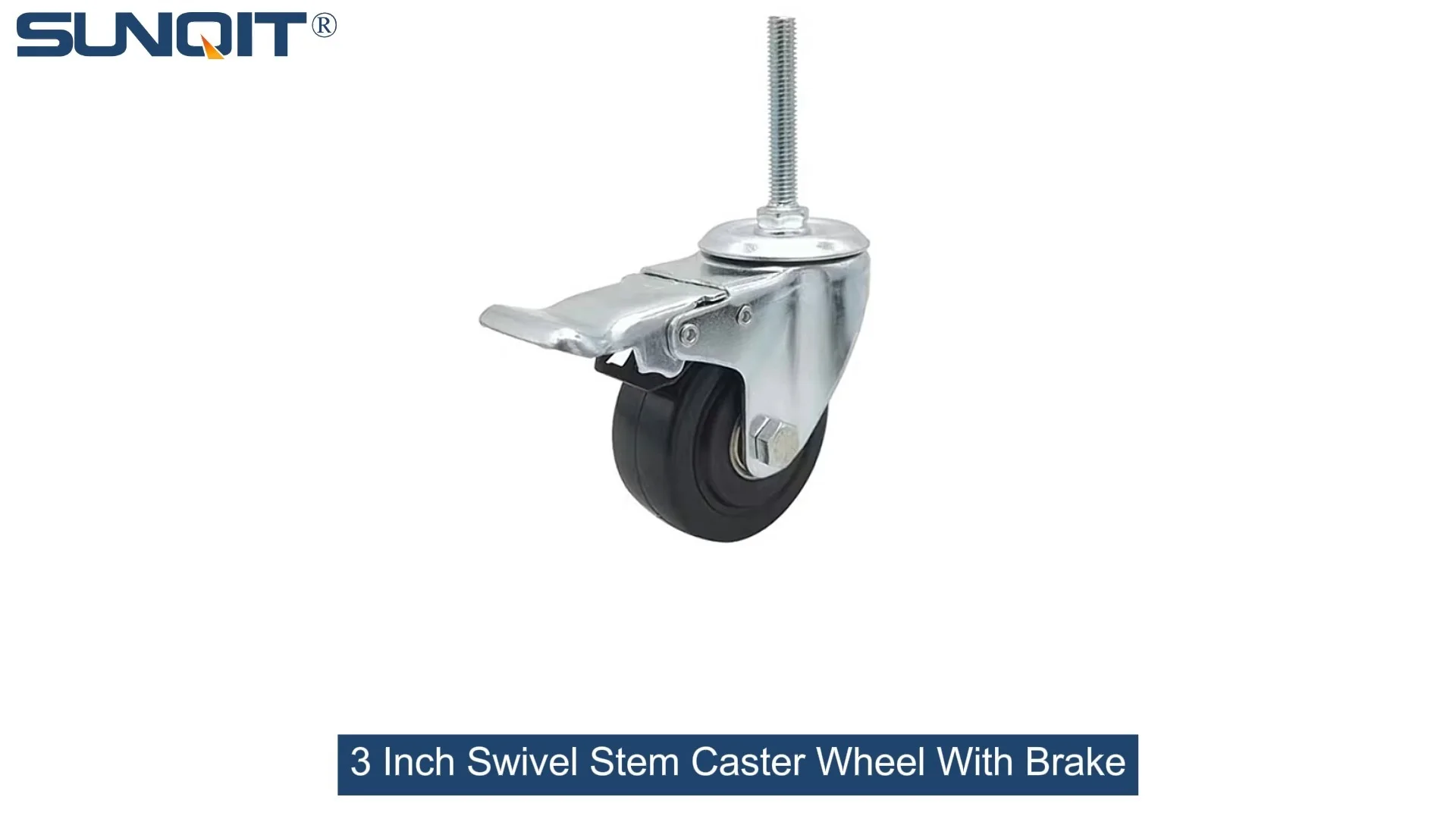
Let's start with a scenario we've all encountered, whether in a small workshop, a home garage, or even a busy office break room: You've got a cart stacked with tools, a workbench holding supplies, or a mobile shelf loaded with files. The problem? Moving it feels like wrestling a boulder. You push, it creaks. You try to turn, it resists. And if you're lucky enough to get it moving, stopping it in place feels like a game of chance. Sound familiar? For anyone dealing with light loads—think 50kg or less—overlooking the right caster wheel can turn simple tasks into daily frustrations. That's where the nylon swivel stem caster wheel with brake steps in: a quiet, affordable, and surprisingly versatile solution designed to make light-load mobility feel effortless.
We often equate "casters" with heavy-duty industrial gear—steel wheels built for warehouses, or rubber behemoths that can handle tons of weight. But not every space needs that kind of muscle. A home crafter moving a sewing station, a small bakery rolling a pastry cart, or a tech startup rearranging workbenches in a co-working space—these are all light-load scenarios where bulky casters just get in the way. They add unnecessary weight, cost more than needed, and make maneuvering in tight spaces a hassle. The nylon swivel stem caster with brake, though? It's the opposite: lightweight, budget-friendly, and built to thrive in the everyday, light-load environments we actually work in.
What Makes the Nylon Swivel Stem Caster Wheel with Brake Stand Out?
Before diving into why it works so well for light loads, let's break down what this caster actually is. At its core, it's a compact wheel assembly with three key parts: a nylon wheel, a swivel mechanism, a stem mount, and a built-in brake. Each component is designed with light-load tasks in mind, so nothing feels overengineered or extraneous.
The Nylon Wheel: Durable, Quiet, and Floor-Friendly
Nylon might not sound as tough as steel, but for light loads, it's a game-changer. Unlike hard plastic, which cracks easily, or rubber, which wears down quickly on rough floors, nylon strikes a sweet spot: it's resistant to scuffs, won't mark hardwood or tile, and glides smoothly over concrete without the (cì'ěr—sharp, grating) noise of metal. Ever heard a steel caster screech across a workshop floor? Nylon wheels? They're almost silent. That's a big deal if you're working in a shared space, a home office, or anywhere noise matters.
And don't let "light load" fool you—nylon is surprisingly strong. A typical 3-inch nylon caster can handle 40-60kg per wheel, which is more than enough for a loaded tool cart, a small workbench, or a mobile shelf. It's also resistant to oils, chemicals, and moisture, so even if you spill a little solvent in the garage or wipe down a kitchen cart, the wheel won't degrade over time.
Swivel 360°: Maneuverability in Tight Spaces
Ever tried pushing a cart with fixed casters? It's like trying to steer a shopping cart with a stuck wheel—you end up zigzagging, wasting energy, and probably muttering under your breath. The swivel mechanism here is where the magic happens. A good swivel stem caster rotates 360 degrees, letting you turn on a dime. That means navigating around a workbench leg, squeezing through a narrow doorway, or positioning a trolley exactly where you need it—no extra pushing or shimmying required. For small spaces, this isn't just a convenience; it's a space-saver. You won't need to leave extra room for "turning radius" when your caster does the heavy lifting (or rather, the smooth turning).
The Brake: Stability When You Need It
What good is a mobile cart if it won't stay put? The built-in brake is the unsung hero here. Most models have a simple "step-on" design—tap the brake pedal with your foot, and the wheel locks in place. No fumbling with levers, no wrestling with clamps. It's intuitive, even if you're balancing a armful of supplies. And when you're ready to move again? Step on the release, and you're off. This matters more than you might think: A workbench that rolls mid-project, or a cart that drifts away while you load it, isn't just annoying—it's a safety risk. The brake turns "maybe it'll stay" into "it's locked tight."
Why It's a Cost-Effective Choice (Beyond the Price Tag)
"Cost-effective" often gets reduced to "cheap," but that's not the case here. Sure, nylon casters are generally more affordable than steel or heavy-duty rubber options—you'll pay a fraction of the price for a set of four. But the real savings come from how little they cost to own over time. Let's break it down:
Low Maintenance, Long Lifespan
Steel casters need regular lubrication to keep their swivel mechanisms from seizing. Rubber wheels crack in extreme temperatures or wear down quickly on rough surfaces. Nylon? It's self-lubricating, so you won't need to stock up on grease. It resists UV rays, so leaving a cart outside (say, for a backyard project) won't make the wheel brittle. And because it's less likely to scuff floors, you'll avoid repair bills for scratched hardwood or chipped tile. Over a year, those small savings add up—no more buying replacement wheels every few months or hiring someone to fix floor damage.
No Over-Engineering, No Waste
Buying a heavy-duty caster for a light load is like using a sledgehammer to hang a picture: it works, but it's overkill. Heavy casters add unnecessary weight to your cart or workbench, making it harder to move even when empty. They also cost more upfront—sometimes 2-3x the price of nylon options. For a home workshop or small business, that's money better spent on tools, materials, or upgrading other equipment. The nylon swivel stem caster is designed to match the job: just enough strength, no extra bulk, and a price tag that won't make you wince.
Versatility Across Industries
One of the biggest hidden costs of equipment is "single-use" items—tools that only work for one task. The nylon swivel caster? It's a chameleon. Use it on a workbench in a hobby room, a hand trolley in a restaurant kitchen, a mobile shelf in a classroom, or even a plant stand on a patio. Its resistance to water and mild chemicals makes it suitable for both indoor and covered outdoor use. And since it comes in standard stem sizes (often 10mm or 12mm), it's easy to swap out old casters on existing equipment. No need to buy a whole new cart—just upgrade the wheels.

Where Does It Shine? Real-World Applications
To really understand the value of this caster, let's look at who's already using it—and loving it. These aren't hypothetical use cases; they're stories from small businesses, crafters, and everyday people who found their "aha!" moment with nylon swivel stem casters.
Home Workshops and DIY Spaces
Take Maria, a woodworker who runs a small Etsy shop from her garage. She used to have a heavy steel workbench with fixed casters that she could barely move, let alone turn. "I'd waste 10 minutes just positioning it to sand a piece," she told me. "Then I switched to 3-inch nylon swivel casters with brakes. Now I roll the bench to the window for natural light, lock it, and get to work. When I need space, I roll it to the side—no sweat. And the best part? They don't scratch my concrete floor like the steel ones did." For home crafters, artists, or DIYers, this caster turns a static workspace into a flexible one.
Small Retail and Cafés
Imagine a busy café during morning rush. Baristas need to move milk crates, pastry displays, and cleaning carts quickly—but quietly. Steel casters would clang on the tile, and rubber ones might leave marks. Nylon casters? They glide silently, so customers aren't distracted by the sound of clattering wheels. And the brake? Essential when loading a cart with fragile pastries—no more worrying about it rolling away mid-service. One café owner I spoke to even uses them on mobile condiment stations: "We move the station from the back to the front counter in seconds, lock it, and it stays put all day. No more 'oops, it rolled into a customer's foot' moments."
Lean Systems in Small Businesses
Lean manufacturing isn't just for big factories. Small businesses are adopting lean system principles too—streamlining workflows, reducing waste, and making processes more efficient. A key part of that is "5S" organization: keeping tools and materials where they're needed, when they're needed. Mobile workstations and carts are central to this, but only if they're easy to move. Nylon swivel casters fit right in here. They're lightweight enough to keep carts nimble, durable enough for daily use, and affordable enough to equip every workstation without blowing the budget. A local electronics repair shop, for example, uses them on tool trolleys that move between workbenches. "Each tech has their own cart with parts and tools," the manager explained. "With these casters, they roll it to the repair station, lock it, and get to work. No more time wasted walking back and forth to the supply closet."
Healthcare and Office Settings
Hospitals and clinics need mobility, but they also need cleanliness and quiet. Nylon casters are non-marking, so they won't track dirt or leave scuffs on polished floors. They're easy to wipe down with disinfectant, which is a must in medical settings. Even in offices, they're a hit: Think mobile printer stands, file carts, or snack trolleys in break rooms. One office manager told me, "We used to have metal casters on our supply carts, and every time someone moved one, it sounded like a train. Now with nylon, you can barely hear them. And the brakes mean the cart stays by the copy machine instead of drifting into the hallway."

Nylon vs. the Rest: Why It's the Best for Light Loads
Still on the fence? Let's compare the nylon swivel stem caster with brake to two common alternatives: rubber swivel casters and steel casters. This isn't about "which is better"—it's about "which is better for you ," especially if light loads are your norm.
| Feature | Nylon Swivel Stem Caster with Brake | Rubber Swivel Caster | Steel Caster |
|---|---|---|---|
| Load Capacity (per wheel) | 40-60kg (ideal for light loads) | 60-100kg (overkill for light tasks) | 100kg+ (industrial-grade, unnecessary for light use) |
| Cost (per caster) | $8-$15 (budget-friendly) | $12-$20 (mid-range) | $15-$30+ (premium price for heavy duty) |
| Noise Level | Low (quiet glide on most floors) | Medium (can squeak on rough surfaces) | High (loud on tile/concrete) |
| Floor Protection | Excellent (non-marking, won't scratch) | Good (but can leave marks if overloaded) | Poor (high risk of scratches/dents) |
| Maneuverability | High (lightweight, smooth swivel) | Medium (heavier, may stick on uneven floors) | Low (heavy, stiff swivel for heavy loads) |
| Best For | Workbenches, small trolleys, home use, light industrial | Medium loads, indoor/outdoor use (but costly for light tasks) | Warehouses, heavy machinery, outdoor rough terrain |
As the table shows, nylon casters aren't "better" than rubber or steel—they're better suited for light loads. If you're moving 50kg or less, rubber casters cost more and add unnecessary weight, while steel casters are overkill (and loud!). Nylon hits the sweet spot: enough strength, low cost, and features (like quiet operation and floor protection) that matter in everyday use.

Easy to Install: No Tools, No Fuss
You might be thinking, "This sounds great, but I'm not handy—will I even be able to install them?" Fear not. Nylon swivel stem casters are designed for simplicity. Most come with a standard stem (a metal rod that inserts into a hole or socket), and installation takes 5 minutes flat. Here's how it works:
- Check the stem size: Measure the hole where your old caster was (or where you want to install the new one). Common sizes are 10mm, 12mm, or 1/2 inch. Most suppliers list the stem diameter, so you can match it.
- Remove the old caster (if replacing): If you're upgrading an existing cart or workbench, twist or pull out the old caster. If it's stuck, a little WD-40 can help loosen it.
- insert the new caster: Push the stem into the hole. That's it! Some models have a threaded stem that screws in, but even then, it's just a few twists with your hand (no wrench needed unless it's extra tight).
- Test the brake: Step on the brake pedal to make sure it locks, then release it to ensure it rolls smoothly. Adjust if needed (though most come pre-adjusted).
And if you're building something from scratch—like a custom workbench using aluminum profile —these casters play well with standard accessories. Many aluminum profile systems have pre-drilled holes for stem casters, so you won't need to drill or modify anything. It's plug-and-play, even for beginners.
Pro tip: If your project needs a little extra height or the stem is too short, caster accessories like stem extenders or washers are cheap and easy to find. No need to buy a whole new caster—just add the part you need.
Maintenance: Set It and Forget It
Remember earlier when we talked about low maintenance? Let's get specific. Nylon casters are about as "set it and forget it" as it gets. Here's what you need to do to keep them rolling smoothly for years:
- Keep them clean: Wipe the wheels with a damp cloth every few weeks to remove dust, hair, or debris that might get stuck in the swivel mechanism. This is especially important if you're using them in a garage or workshop where sawdust or dirt builds up.
- Check the brake: Every month or so, step on the brake a few times to make sure it engages and releases smoothly. If it feels sticky, a drop of silicone lubricant (not oil!) on the pedal hinge should fix it.
- Inspect for wear: Nylon wheels are durable, but they can wear down over time (especially if used on rough surfaces like gravel). If you notice cracks, flat spots, or the wheel wobbles, it's time to replace it. Most last 2-3 years with regular use, so it's a rare expense.
That's it. No greasing, no tightening bolts, no special tools. For busy people who just want their equipment to work, this is a huge relief.
At the end of the day, the nylon swivel stem caster wheel with brake isn't just a "product"—it's a solution to a problem we've all ignored for too long: overcomplicating light-load mobility. We've been told to "buy the best" (read: the heaviest, most expensive) without stopping to ask, "What do I actually need?" For light loads—50kg or less—this caster delivers where it counts: maneuverability, stability, cost, and ease of use.
Whether you're a home crafter, a small business owner, or someone who just wants their garage cart to stop rolling away, this caster checks all the boxes. It's quiet enough for offices, tough enough for workshops, and gentle enough for hardwood floors. It installs in minutes, requires almost no maintenance, and costs less than you'd spend on a fancy lunch.
So the next time you find yourself struggling with a stuck cart or a workbench that won't budge, remember: you don't need industrial-grade muscle. Sometimes, the best solutions are the ones designed to fit your needs—not someone else's. The nylon swivel stem caster with brake is proof that cost-effective, practical, and downright useful equipment doesn't have to be complicated. It's just… smart.