- Company Articles
- Products and Technology
- Product knowledge
- Nylon vs. 40 Steel Roller Track White Wheel: Friction & Wear Resistance

Nylon vs. 40 Steel Roller Track White Wheel: Friction & Wear Resistance
Related Product
40 Steel Roller Track White Wheel
The roller track can be installed with multiple accessories to create different slopes and configurations of flow racks.All steel conveyor 40 roller track accessories are engineered to perfectly fit the sliding rail.
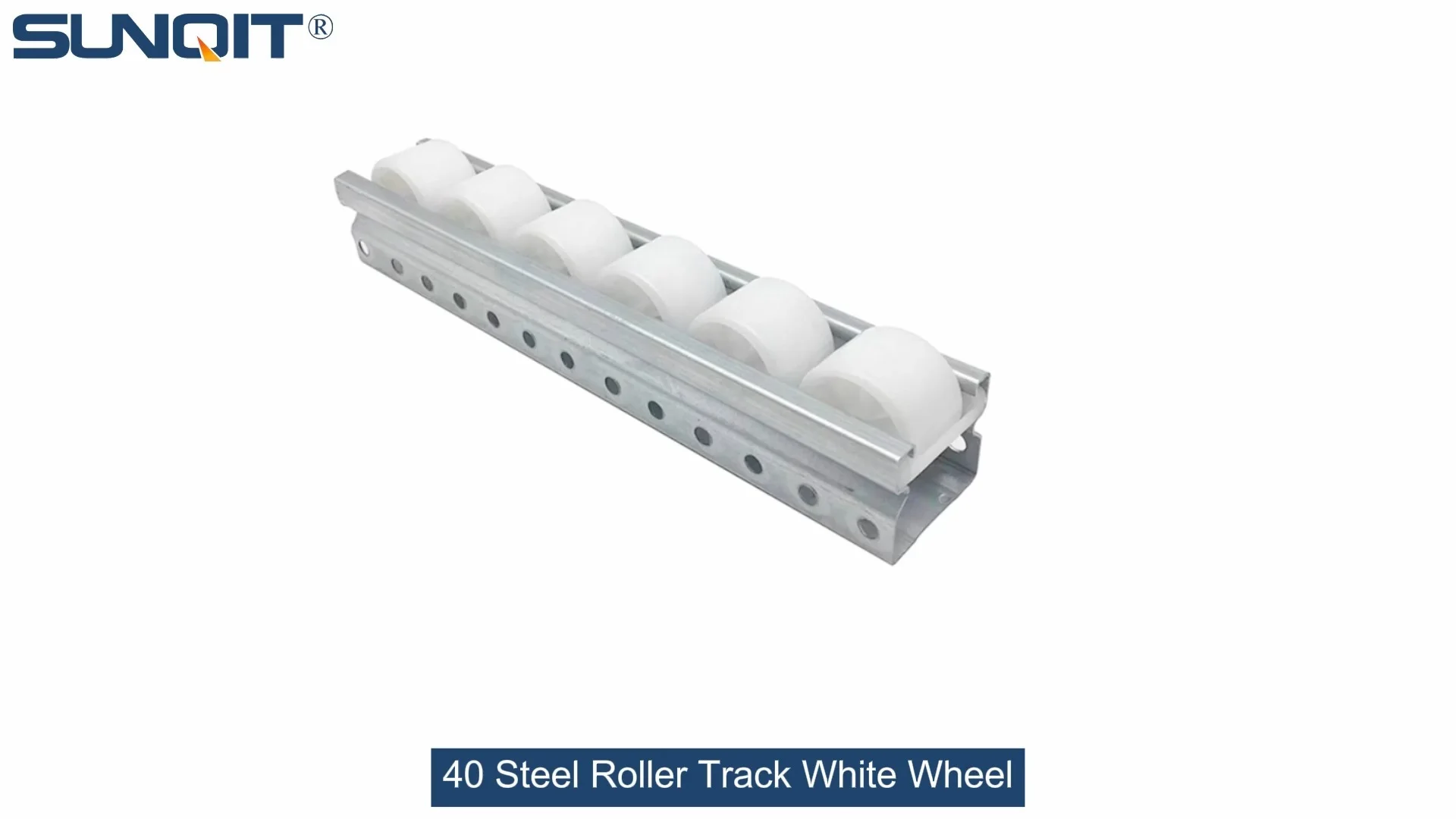
Nylon vs. 40 Steel Roller Track White Wheel: Friction & Wear Resistance
Roller tracks are the unsung heroes of modern manufacturing and logistics. Whether you're setting up a flow rack for parts storage or a conveyor line for assembly, the type of roller you choose can make or break your operation's efficiency. Today, we're going to take a deep dive into two popular options: Nylon roller track white wheels and 40 Steel roller track white wheels. We'll compare their friction levels, wear resistance, and everything else you need to know to pick the right one for your lean solution. Let's get started.
What is Nylon Roller Track White Wheel?
Nylon roller track white wheels are made from a synthetic polymer called nylon, which is known for its unique combination of strength, flexibility, and low friction. These rollers are often chosen for applications where smooth movement and noise reduction are priorities. Let's break down their key properties:
- **Material Properties**: Nylon is a thermoplastic, meaning it can be melted and reshaped. It has a low coefficient of friction, good impact resistance, and is non-corrosive.
- **Common Uses**: Light to medium load flow racks, 3C assembly lines (handling delicate electronic parts), and lean pipe systems where flexibility and ease of replacement are important.
- **Pros**: Low friction (saves energy), quiet operation, no rust, low maintenance (no lubrication needed), lightweight.
- **Cons**: Less rigid than steel (may flex under heavy loads), can soften at high temperatures, may chip if exposed to sharp objects.
What is 40 Steel Roller Track White Wheel?
40 Steel roller track white wheels are constructed from 40 carbon steel, a material with a carbon content of approximately 0.4%. This gives the steel good hardness and strength, making it ideal for heavy-duty applications. The white coating on these rollers is typically a protective layer to prevent corrosion and enhance appearance.
- **Material Properties**: 40 Steel is strong, rigid, and has high wear resistance. The white coating adds corrosion protection, though it's not indestructible.
- **Common Uses**: Heavy-duty conveyors, industrial flow racks, automotive manufacturing (moving heavy components), and areas with high temperatures.
- **Pros**: High load capacity, excellent rigidity, resistant to high temperatures, durable against sharp/rough materials.
- **Cons**: Higher friction (needs lubrication), can rust if coating is damaged, heavier, higher maintenance.
Friction Comparison: Nylon vs. 40 Steel
Friction is a critical factor in roller track performance. It affects energy consumption, noise levels, and how easily items move along the track. Let's compare the two materials:
| Material | Coefficient of Friction (vs. Steel Track) | Key Friction-Related Benefits | Key Friction-Related Drawbacks |
|---|---|---|---|
| Nylon | 0.15 - 0.25 | Low energy use, quiet operation, no lubrication needed | Static electricity buildup (may need anti-static treatment) |
| 40 Steel | 0.3 - 0.5 (unlubricated); 0.1 - 0.2 (lubricated) | Conductive (no static), high load capacity under friction | Requires lubrication, louder operation when unlubricated |
Nylon's lower friction means items glide more easily, reducing the power needed for conveyors. This is a big plus for lean solutions that prioritize energy efficiency. However, static electricity can be a problem in 3C assembly, so anti-static nylon is often used. Steel's higher friction can be mitigated with lubrication, but this adds to maintenance costs. Steel is conductive, which is beneficial in environments where ESD is a concern.
Wear Resistance Comparison: Nylon vs. 40 Steel
Wear resistance determines the lifespan of your rollers and how often you need to replace them. Let's analyze the factors that affect wear:
Abrasion Resistance
Nylon is resistant to most abrasive materials, but sharp edges can cause chipping. Steel is harder, so it's more resistant to sharp objects. For example, if you're moving parts with rough surfaces, steel rollers will hold up better over time.
Load-Related Wear
Under heavy loads, nylon may flex, leading to uneven wear. Steel is rigid, so it maintains its shape even under high pressure. A 40 Steel roller can handle loads up to 50kg per roller, while nylon is typically limited to 20-30kg per roller.
Corrosion Resistance
Nylon is non-corrosive, making it ideal for humid or wet environments. Steel rollers can rust if their protective coating is scratched. In a warehouse with high humidity, nylon rollers will outlast steel ones.
Temperature-Related Wear
Nylon softens at temperatures above 100°C, which can accelerate wear. Steel can withstand temperatures up to 500°C without deforming, so it's better for high-temperature applications like foundries or heat treatment facilities.
Lifespan Estimates
- Nylon: 3-7 years (light to medium use, humid environment)
- 40 Steel: 5-10 years (heavy use, dry environment)
- Nylon: 1-3 years (heavy use, high temperature)
- 40 Steel: 3-5 years (medium use, humid environment)
Other Key Considerations
Cost
Nylon rollers are generally 20-30% cheaper than 40 Steel rollers. This makes them a cost-effective choice for budget-conscious operations. However, if you need heavy load capacity, the initial cost of steel may be offset by longer lifespan.
Maintenance
Nylon requires minimal maintenance—no lubrication, no rust prevention. Steel rollers need regular lubrication (every 3-6 months) and inspection for rust. This adds to the long-term cost of steel rollers.
Environmental Impact
Nylon is a plastic, so it's not as eco-friendly as steel (which is recyclable). However, nylon rollers last a long time, reducing waste from frequent replacements. Steel is fully recyclable, making it a better choice for sustainability-focused operations.
Integration with Aluminum Profiles
Both rollers can be integrated with aluminum profiles, which are common in lean pipe systems. Nylon rollers are lightweight, so they're easy to install on aluminum frames. Steel rollers are heavier, but aluminum profiles are strong enough to support them if the load is within the profile's capacity. This flexibility makes both options suitable for lean pipe system setups.
How to Choose the Right Roller for Your Application
To make the best choice, consider these questions:
- What is the average load per roller?
- What is the operating temperature of your workspace?
- Is humidity or moisture a concern?
- Do you need quiet operation?
- What is your maintenance budget?
- Are you handling delicate or sharp materials?
If you're still unsure, consult a lean solution expert. They can help you assess your needs and recommend the best roller type for your specific application.
Final Thoughts
Nylon and 40 Steel roller track white wheels each have their strengths and weaknesses. Nylon is perfect for light loads, humid environments, and low maintenance. Steel is ideal for heavy loads, high temperatures, and durability. Both fit into lean manufacturing principles, so the choice depends on your unique operational needs. Whether you're setting up a flow rack, conveyor, or lean pipe system, understanding these differences will help you create a more efficient, productive workspace.