- Company Articles
- Products and Technology
- Product knowledge
- OEM Four Way Straight Lean Pipe Joint: Customization Options for Unique Projects

OEM Four Way Straight Lean Pipe Joint: Customization Options for Unique Projects
Related Product
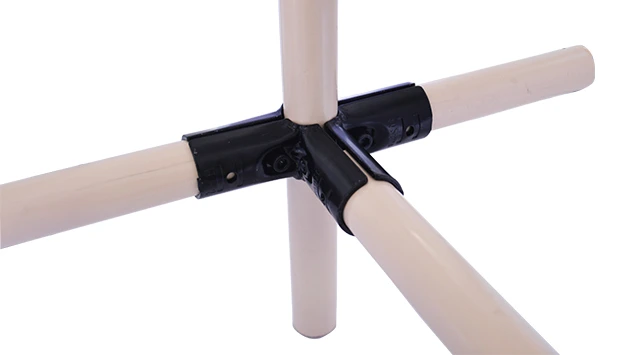
Four Way Straight Lean Pipe Joint
Four way lean pipe joint for 4 pcs 28MM lean pipe connection in straight angle, which used widely in workbench, flow rack, hand trolley frame connection.
Every workshop, factory floor, or manufacturing facility has a heartbeat—a rhythm of movement, assembly, and problem-solving that makes it unique. But if you've ever stood in the middle of a space that's supposed to hum with efficiency, only to feel like the tools and structures around you are working against that rhythm, you know the frustration. Maybe the workbench is just a few inches too tall, forcing workers to hunch. Or the material rack doesn't quite align with the conveyor, creating a bottleneck where parts get stuck. Often, the culprit isn't poor planning—it's the limitations of "one-size-fits-all" components. When standard parts can't keep up with your unique workflow, that's where custom solutions step in. And in the world of lean manufacturing, few components are as critical to getting that rhythm right as the humble yet mighty lean pipe joint .
Today, we're diving deep into one specific star player: the OEM four way straight lean pipe joint. It's not the flashiest tool in the shed, but for anyone building a lean system that needs to bend, adapt, and grow with their project, it's the unsung hero. Whether you're a small workshop owner retrofitting your space or a large manufacturer designing a new production line from scratch, understanding how this joint can be customized to fit your exact needs might just be the key to unlocking the efficiency you've been chasing. Let's start by demystifying what it is, why standard versions often fall short, and how a trusted lean pipe supplier can turn this simple component into a tailored solution for your most unique challenges.
What is a Four Way Straight Lean Pipe Joint, Anyway?
First things first: let's ground ourselves in the basics. Lean pipe systems—often called "flexible pipe systems" or "kitchen tube systems" in some circles—are the backbone of modern lean manufacturing. They're modular, lightweight structures built from pipes (usually steel, aluminum, or stainless steel) and joints that connect them, forming everything from workbenches and material racks to flow racks and conveyor supports. Think of them as the Lego blocks of the industrial world: simple on their own, but infinitely configurable when combined.
At the center of that configurability are the joints. And among the many types of joints (two-way, three-way, swivel, fixed), the four way straight lean pipe joint holds a special place. As the name suggests, it's designed to connect four pipes in a straight, linear configuration—typically along the x, y, and z axes, though some designs allow for variations. Imagine a cross shape, where the joint is the intersection point, and pipes extend outward in four directions. This might sound straightforward, but its simplicity is its power: it creates strong, stable connections that form the framework for larger structures. Need a multi-level material rack? The four way joint helps space shelves evenly. Building a workbench with overhead storage? It anchors the vertical supports to the horizontal frame.
But here's the catch: not all four way joints are created equal. Standard, off-the-shelf versions come in fixed sizes (usually 28mm or 30mm pipe diameters), fixed materials (often steel with a plastic coating), and fixed load capacities. For many projects, that's fine. If you're building a basic workbench with standard dimensions, a standard joint will do the job. But what if your project isn't "standard"?
The Problem with "One-Size-Fits-All" in a World of Unique Workflows
Let's talk about real life. A few months back, I spoke with Maria, a production manager at a mid-sized electronics assembly plant. Her team was tasked with designing a new line for small, delicate circuit boards. The existing workbenches were too large, taking up valuable floor space, and the material racks were too tall, making it hard for workers to reach components without straining. They needed a compact, custom setup: a low-profile workbench with integrated shelving on both sides, and a small flow rack that fed parts directly to the assembly station. The problem? The standard four way joints they ordered were too bulky. At 30mm in diameter, they added unnecessary width to the structure, making the workbench feel cramped. Worse, the plastic coating on the steel joints was prone to scratching, and with the sensitive electronics nearby, Maria was worried about static buildup.
"We tried modifying the standard joints," she told me. "We sanded down the edges to save space, but that weakened the connection. We even considered switching to a different system entirely, but that would have meant starting over with new pipes and accessories—time and money we didn't have." Maria's story isn't unique. I've heard similar frustrations from workshop owners retrofitting old spaces, from engineers designing specialized medical device assembly lines, and from startups scaling up production faster than their initial equipment can handle. The reality is, in today's fast-paced manufacturing world, "standard" is often just a starting point. Your workflow, your space, your materials—they're all unique. So why should your components be any different?
This is where OEM (Original Equipment Manufacturer) customization comes in. An OEM four way straight lean pipe joint isn't just a modified version of a standard part; it's a joint designed from the ground up to meet your specific requirements. It's the difference between trying to force a square peg into a round hole and having the peg custom-carved to fit perfectly. And when it comes to lean systems, that perfect fit translates to smoother workflows, happier workers, and a bottom line that benefits from reduced waste and increased productivity.

Customization Options: Tailoring the Joint to Your Project
So, what exactly can be customized with an OEM four way straight lean pipe joint? The short answer: almost everything. A good lean pipe supplier will work with you to understand your project's unique needs—space constraints, load requirements, environmental factors, and existing equipment—and then engineer a joint that checks all the boxes. Let's break down the most common customization options, and how they solve real-world problems.
1. Material Selection: More Than Just Steel
The first decision you'll likely make is material. Standard joints are often made of carbon steel with a PE (polyethylene) coating for durability and grip. But depending on your environment, that might not be ideal. Let's explore the options:
Take Maria's case, for example. Her team needed a joint that was lightweight (to keep the workbench easy to reposition), scratch-resistant (to avoid debris near sensitive parts), and ESD-safe (to protect the circuit boards). A standard steel joint with PE coating failed on all three counts. But an OEM joint made from aluminum lean pipe (yes, aluminum joints pair perfectly with aluminum pipes) solved the problem: it was lighter, naturally resistant to scratches, and could be anodized for ESD protection. The result? A workbench that was both compact and safe for their delicate products.
2. Size and Dimensions: When "Close Enough" Isn't Enough
Pipe diameter is the most obvious size factor, but it's not the only one. Standard joints are typically designed for 28mm or 30mm pipes, but what if your project uses non-standard pipe sizes? Maybe you're repurposing existing aluminum pipes that are 25mm in diameter, or you need a larger 40mm pipe for heavy loads. A custom joint can be machined to fit any pipe diameter, ensuring a snug, secure connection—no more wrapping tape around pipes to make them fit, or using adapters that add bulk.
Then there's the joint's own dimensions. Length, width, height—even the thickness of the joint walls. In tight spaces, every millimeter counts. I worked with a client once who was building a material rack for a narrow aisle in their warehouse. The standard four way joint extended 5cm from the pipe connection point, which would have made the rack too wide to fit through the aisle. By customizing the joint to have a slimmer profile (reducing the extension to 3cm), we kept the rack within the aisle's width limit without sacrificing strength.
Wall thickness is another critical factor. Thicker walls mean higher load capacity, but they also add weight and cost. A custom joint lets you balance strength and weight: if you're building a light-duty flow rack, you can opt for thinner walls to save on materials. If you're supporting a 500kg conveyor system, thicker walls ensure the joint won't bend or fail under pressure.
3. Finish and Coating: More Than Just Aesthetics
Finishes and coatings do more than make a joint look nice—they protect it, enhance its functionality, and even support safety. Standard PE coatings are fine for general use, but custom options open up new possibilities:
- Powder Coating: Adds color (red, blue, yellow) for visual organization. Imagine color-coding your workbenches by department: red for assembly, blue for testing. It sounds small, but it reduces errors by making it easier for workers to identify their stations.
- Anodizing (Aluminum): Creates a hard, corrosion-resistant surface. For outdoor use or cleanrooms, this is a game-changer—it prevents rust and makes cleaning a breeze.
- ESD Coating: As mentioned earlier, this dissipates static electricity, protecting sensitive electronics from damage. It's not just for joints; it's often paired with ESD workbenches and ESD mats for a fully protected workspace.
- Anti-Slip Coatings: For joints that connect to moving parts (like roller tracks), an anti-slip coating ensures pipes stay in place, even with vibration.
4. Load Capacity: Engineering for Your Exact Needs
This is where the "engineering" part of OEM comes into play. Standard joints have published load capacities (e.g., 100kg per connection), but those are general guidelines. They assume ideal conditions: pipes of standard thickness, even weight distribution, no vibration. But real-world projects rarely have ideal conditions. Maybe you need a joint that can support 150kg per pipe because you're storing heavy tooling. Or maybe you need a joint that can handle dynamic loads (like parts moving along a conveyor) rather than static loads (like a shelf with boxes). A custom joint can be engineered to meet these specific load requirements, often with FEA (Finite Element Analysis) testing to verify strength.
I once consulted with a automotive parts manufacturer that needed a flow rack to transport engine blocks—each weighing around 80kg. The standard four way joints they were using kept failing; the plastic coating would crack, and the steel would bend under the weight. By customizing the joint with thicker steel walls, reinforced connection points, and a heat-treated finish, we increased the load capacity to 120kg per pipe, ensuring the rack could handle the engine blocks with room to spare. No more bent joints, no more downtime, and no more frustrated workers.
5. Integration Features: Making the Joint Play Well with Others
A lean system is only as good as how well its components work together. That's why custom joints often include integration features—little design tweaks that make them compatible with other parts of your setup. For example:
- Threaded Holes: Pre-drilled holes for mounting accessories like tool hooks, label holders, or ESD mats.
- Notches or Grooves: To fit roller track guides, ensuring smooth material flow on flow racks.
- Caster Compatibility: If your structure is mobile (like a turnover trolley), the joint can be designed to attach directly to caster mounts, eliminating the need for extra adapters.
- Quick-Release Mechanisms: For structures that need to be disassembled and reconfigured frequently (common in agile manufacturing environments).
These might seem like minor details, but they add up. A joint with pre-threaded holes saves time during assembly—no more drilling on-site. A groove that fits roller track guides ensures materials glide smoothly, reducing friction and worker effort. It's these small, thoughtful customizations that turn a good lean system into a great one.

Why Partnering with the Right Lean Pipe Supplier Matters
Customization sounds great, but it's not something you can do alone. To turn your vision into reality, you need a lean pipe supplier that doesn't just sell parts—they solve problems. Here's what to look for:
1. Engineering Expertise
Custom joints require more than just a lathe and a machinist—they need engineering know-how. A good supplier will have a team of engineers who can review your project specs, suggest materials and designs, and even run simulations to test strength and durability. They'll ask questions: What's the maximum load? What's the environment like (temperature, moisture, chemicals)? How often will the structure be reconfigured? The more they understand your needs, the better the solution.
2. Prototyping Capabilities
No one wants to invest in a custom joint only to find out it doesn't work. Look for a supplier that offers prototyping—3D printing, CNC machining, or small-batch production—to create a sample joint you can test in your actual environment. Maria's team, for example, tested three prototype aluminum joints before settling on the final design: one with a standard anodized finish, one with ESD coating, and one with a slimmer profile. Testing them in their assembly line let them see which worked best with their pipes, tools, and workflow.
3. Flexibility in Materials and Production
A supplier that only works with steel isn't going to help if you need aluminum. Look for a partner with access to a range of materials (steel, aluminum, stainless steel) and production methods (casting, machining, forging). This flexibility ensures they can match the right material and process to your project, whether you need 10 custom joints or 1,000.
4. Communication and Collaboration
Customization is a collaborative process. You should feel like your supplier is a partner, not just a vendor. They should keep you updated on progress, share design drafts, and be responsive to feedback. If you have a question or need to make a change, they should be easy to reach and willing to adjust. I've seen projects fail because the supplier was unresponsive; don't let that be you.
The Ripple Effect: How a Custom Joint Strengthens Your Entire Lean System
It's easy to think of a four way straight lean pipe joint as just a small part of a larger system, but its impact is far-reaching. A well-designed custom joint doesn't just connect pipes—it strengthens your entire lean system in ways you might not expect:
- Reduced Waste: Poorly fitting joints lead to rework, scrap, and wasted time. A custom joint fits right the first time, eliminating these inefficiencies.
- Improved Safety: Overloaded or unstable joints are a safety hazard. Custom joints engineered for your load requirements reduce the risk of collapses or injuries.
- Enhanced Ergonomics: A joint that fits your space perfectly can lead to better workbench heights, easier material access, and less strain on workers—reducing fatigue and improving productivity.
- Faster Onboarding: A well-organized, intuitive lean system is easier for new workers to learn, cutting training time.
- Scalability: Custom joints designed with future growth in mind make it easier to expand or reconfigure your system as your needs change.
"We used to spend hours trying to make standard joints work," Maria told me after implementing her custom aluminum joints. "Now, the system just clicks. Workers aren't fighting with the equipment anymore—they're focused on building better products. And when we need to add a new station? We just order a few more custom joints and pipes, and we're up and running in a day. It's like night and day."
Real-World Applications: Where Custom Four Way Joints Shine
To truly appreciate the value of custom OEM four way straight lean pipe joints, let's look at some real-world applications across different industries:
Electronics Manufacturing
As we've seen with Maria's story, electronics manufacturing demands precision, ESD protection, and compact spaces. Custom aluminum joints with ESD coatings, slim profiles, and threaded holes for mounting ESD mats are common here. They're used in workbenches, component storage racks, and testing stations, ensuring sensitive parts are protected and workers have easy access.
Food and Beverage
In food processing, hygiene is king. Stainless steel four way joints with smooth, crevice-free finishes are a must—they're easy to clean and resistant to bacteria growth. Custom joints here might include notches for roller tracks (to transport bottles or packages) or integrated drains to prevent water buildup during cleaning.
Aerospace and Defense
Heavy loads and strict safety standards define these industries. Custom steel joints with reinforced walls, heat-treated finishes, and high load capacities are used in tooling racks, assembly fixtures, and material handling systems. Some even include RFID tags for asset tracking—another integration feature made possible by custom design.
Small-Batch and Custom Manufacturing
For workshops that produce small batches or one-off custom products, flexibility is key. Custom joints with quick-release mechanisms, lightweight aluminum construction, and compatibility with a range of pipe sizes make it easy to reconfigure workspaces daily. A furniture maker, for example, might use custom joints to build temporary workbenches for large tables one day, then disassemble and rebuild them as shelving for smaller parts the next.
Healthcare and Medical Devices
Cleanrooms, sterile environments, and precise workflows require specialized solutions. Anodized aluminum joints with ESD protection are common here, as are joints designed to fit in tight spaces (like between hospital beds or in lab cabinets). Some custom joints even include antimicrobial coatings to prevent the spread of germs.
The Future of Lean Systems: Why Customization Will Only Grow in Importance
The manufacturing landscape is changing fast. Trends like automation, Industry 4.0, and mass customization are pushing factories and workshops to be more agile, more efficient, and more adaptable than ever before. In this environment, the one-size-fits-all approach to components is becoming obsolete. Lean systems, which are built on the principles of continuous improvement and flexibility, are perfectly positioned to thrive—but only if their components can keep up.
Custom OEM four way straight lean pipe joints are at the forefront of this evolution. As more companies adopt lean principles, and as projects become increasingly unique, the demand for tailored components will grow. We'll see more advanced materials (like carbon fiber composites for ultra-lightweight applications), smarter integration features (like sensors embedded in joints to monitor load or vibration), and even more precise engineering (driven by AI and generative design tools).
But at the heart of it all will be the same core idea: that the best lean systems are those designed around people and their workflows. A custom joint isn't just a part—it's a tool that helps workers do their jobs better, safer, and more efficiently. And in a world where talent is scarce and competition is fierce, that's not just a nice-to-have; it's a competitive advantage.
Wrapping Up: Your Project Deserves a Joint That Fits
If you've made it this far, you probably have a project in mind—a workshop to organize, a production line to optimize, a space to transform. And you've realized that standard components might not cut it. That's okay. In fact, it's a good thing. Your project is unique, and it deserves components that are unique too.
The OEM four way straight lean pipe joint might not be the most glamorous part of your lean system, but it's one of the most critical. It's the quiet connector that holds everything together, turning a collection of pipes into a powerful, productive workspace. And when that joint is customized to fit your exact needs—your materials, your load requirements, your space—it becomes more than a part. It becomes a catalyst for efficiency, a tool for innovation, and a testament to the power of thinking outside the "standard" box.
So, what's next? Start by finding a lean pipe supplier who listens. Share your challenges, your goals, and your vision. Ask about their customization capabilities, their engineering process, and their prototyping options. And remember: a good supplier won't just sell you a joint—they'll help you build a better system, one connection at a time.
Your project's rhythm is waiting. Don't let a misfit joint throw it off beat.