- Company Articles
- Products and Technology
- Product knowledge
- OEM vs Aftermarket: Straight Lean Pipe Joint Square End Chrome Quality Comparison

OEM vs Aftermarket: Straight Lean Pipe Joint Square End Chrome Quality Comparison
Related Product
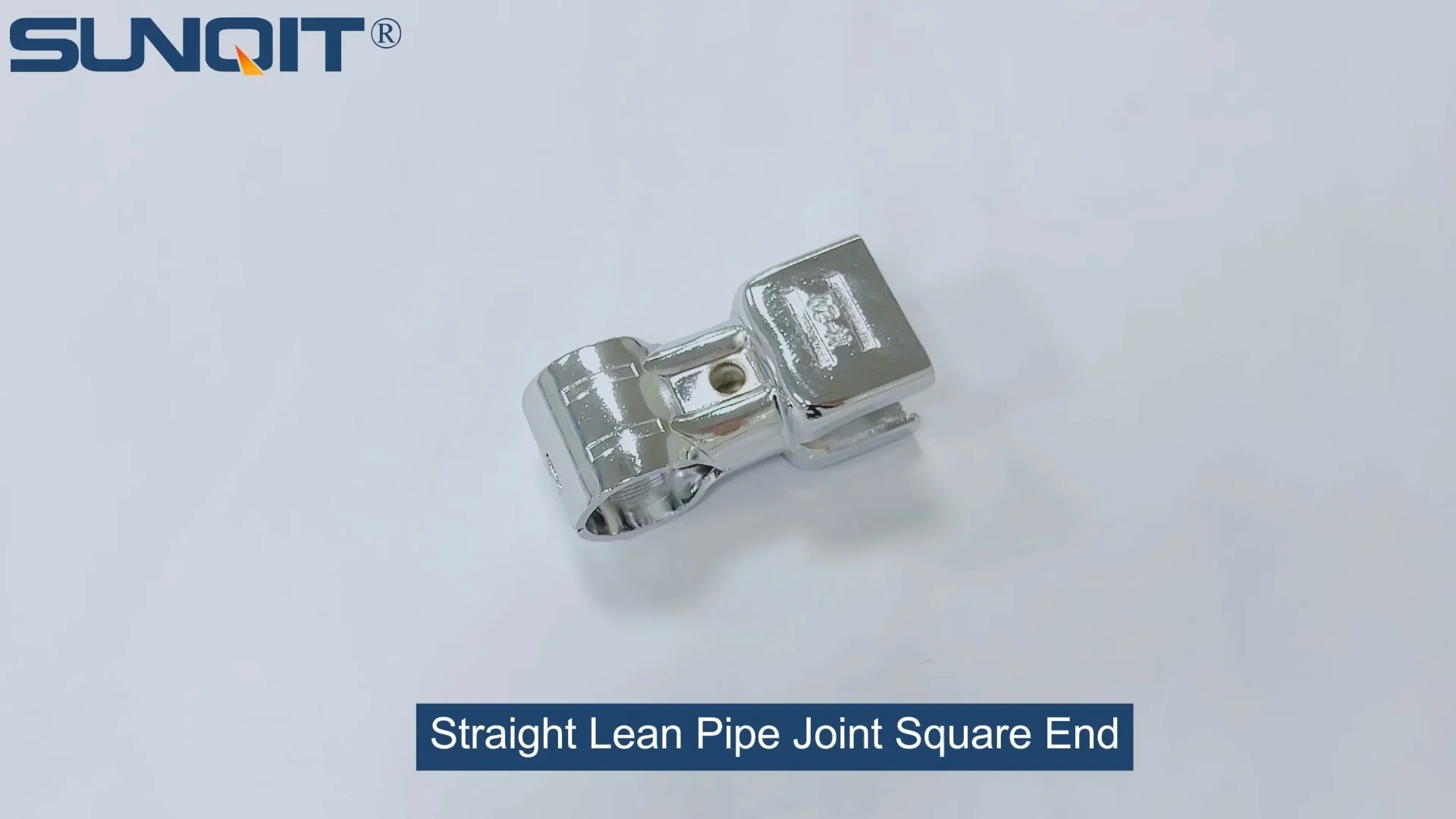
Straight Lean Pipe Joint Square End Chrome
Straight lean pipe joint square end, one side connect with 28mm round pipe, the other side connect with square tube.
The Unsung Hero of Lean Systems: Why Pipe Joints Matter More Than You Think
Walk into any well-run manufacturing facility, and you'll notice a rhythm—a seamless flow of materials, workers moving with purpose, and equipment that hums along without missing a beat. Behind that rhythm lies a lean system, a carefully orchestrated network of tools and structures designed to eliminate waste and boost efficiency. But here's the thing: even the most sophisticated lean system is only as strong as its weakest link. And more often than not, that link is something small, unassuming, and easy to overlook: the humble pipe joint.
Today, we're shining a spotlight on one such critical component: the Straight Lean Pipe Joint Square End Chrome. It might not grab headlines, but this little connector plays a starring role in holding together everything from workbenches and flow racks to conveyor systems and turnover trolleys. When it works well, you don't notice it. But when it fails? Suddenly, that smooth production line grinds to a halt, deadlines get missed, and frustration runs high.
If you're in charge of outfitting or maintaining a lean workspace, you've probably faced a common dilemma: OEM or aftermarket? Should you stick with the original equipment manufacturer's parts, or save some cash with a third-party alternative? It's a decision that feels trivial on the surface, but it can have ripple effects across your entire operation. Let's dive in and unpack what really matters when choosing between OEM and aftermarket Straight Lean Pipe Joint Square End Chrome—and why cutting corners here might end up costing you far more than you save.
First Things First: What Are OEM and Aftermarket, Anyway?
Before we compare quality, let's make sure we're on the same page about terminology. OEM stands for Original Equipment Manufacturer. These are the companies that designed and built your lean system (or its components) in the first place. When you buy an OEM Straight Lean Pipe Joint Square End Chrome, you're getting a part that's been engineered to match the exact specifications of your existing setup—same materials, same manufacturing standards, same rigorous testing.
Aftermarket parts, on the other hand, are made by third-party companies that aren't affiliated with the original manufacturer. They're often marketed as "compatible" or "replacement" parts, and they typically come with a lower price tag. But here's the catch: "compatible" doesn't always mean "equal." Aftermarket manufacturers may tweak designs, use cheaper materials, or skip quality checks to keep costs down. Some are reliable; others? Not so much.
So, the question isn't just "OEM or aftermarket?" It's "Which option will keep my lean system running smoothly, safely, and cost-effectively over the long haul?" To answer that, we need to dig into the details—starting with what makes a pipe joint truly high-quality.

Quality Factor #1: Materials—The Foundation of Durability
OEM: Precision in Every Molecule
When it comes to OEM Straight Lean Pipe Joint Square End Chrome, materials are non-negotiable. These joints are typically crafted from high-grade steel alloys, chosen for their strength, resistance to corrosion, and ability to withstand constant stress. The chrome plating isn't just for show, either—it's a thick, uniform layer applied through a multi-step process that ensures adhesion and longevity. This plating acts as a barrier against rust, scratches, and the wear and tear of daily use, whether the joint is holding up a heavy workbench or supporting a flow rack loaded with parts.
But it's not just about the steel and chrome. OEM manufacturers pay meticulous attention to even the smallest details, like the composition of the metal itself. They'll test for tensile strength, ductility, and impact resistance to ensure the joint can handle the loads it's designed for—no guesswork, no shortcuts. For example, a reputable lean system supplier might source steel from certified mills and subject each batch to third-party lab testing before it ever reaches the production line.
Aftermarket: Cutting Corners to Cut Costs
Aftermarket joints, by contrast, often start with compromises in materials. To hit a lower price point, manufacturers might use lower-grade steel—think recycled or low-carbon varieties that are prone to bending or cracking under pressure. The chrome plating? It's often thinner, applied unevenly, or skipped entirely in favor of cheaper coatings like paint or zinc. I've seen aftermarket joints that start rusting within months of installation, even in climate-controlled facilities, simply because the plating was too thin to protect the underlying metal.
Worse, some aftermarket suppliers don't just skimp on quality—they outright mislead. A joint labeled "chrome-plated" might actually be coated with a chrome-like paint, which chips off at the first sign of friction. Others use stainless steel pipe series materials but cut corners on the alloy mix, resulting in a joint that looks the part but lacks the strength to back it up. When you're relying on these joints to hold together a workbench where employees stand for hours or a flow rack carrying expensive components, those material shortcuts become serious safety risks.

Quality Factor #2: Manufacturing Processes—Precision vs. Speed
OEM: Where Tolerances Are Measured in Microns
If materials are the foundation, manufacturing processes are the blueprint that turns those materials into reliable components. OEM Straight Lean Pipe Joint Square End Chrome is produced using state-of-the-art machinery, from computer numerical control (CNC) machining for precise dimensions to automated assembly lines that ensure consistency. Tolerances here are incredibly tight—we're talking fractions of a millimeter. Why does that matter? Because a joint that's even slightly out of spec can throw off the entire system. A misaligned hole might make it impossible to attach a pipe securely, or a warped surface could cause a workbench to wobble, throwing off assembly line precision.
OEM manufacturers also invest heavily in quality control at every stage. Each joint undergoes multiple inspections: first, a visual check for defects like cracks or uneven plating; then, dimensional testing to ensure it matches the design specs; and finally, functional testing to confirm it can pivot, lock, or support weight as intended. Some even use 3D scanning technology to compare each finished joint to a digital model, leaving no room for error. It's a time-consuming process, but it's why OEM parts fit like a glove—every single time.
Aftermarket: Quantity Over Quality
Aftermarket manufacturers, by and large, prioritize speed and volume over precision. Many rely on outdated machinery or manual labor, leading to inconsistencies in every batch. A joint from one box might fit perfectly, while the next one is too loose or too tight—making assembly a frustrating, time-consuming process. I spoke with a plant manager recently who described trying to build a simple turnover trolley using aftermarket joints; he ended up spending an extra two hours filing down misaligned holes just to get the pipes to connect.
Quality control is often an afterthought, too. Instead of inspecting each part, aftermarket suppliers might do random spot checks—or skip inspections entirely. This means defective joints slip through the cracks, arriving at your facility with hidden flaws: a hairline crack in the metal, a poorly welded seam, or a locking mechanism that fails after a few uses. And when those flaws lead to equipment failure, good luck getting a replacement quickly—many aftermarket suppliers don't keep detailed records of their production runs, making it nearly impossible to trace the issue.
Quality Factor #3: Performance—Does It Do What It's Supposed to Do?
OEM: Consistency You Can Count On
At the end of the day, a pipe joint's job is simple: connect pipes securely and reliably. OEM joints excel at this because they're engineered to work in harmony with other components in the lean system. Whether you're attaching a joint to an aluminum pipe, a stainless steel tube, or a workbench frame, the fit is precise. The threads are clean and evenly spaced, so pipes screw in smoothly and lock tightly. The square end design ensures alignment, preventing the joint from twisting or shifting over time—critical for maintaining the stability of structures like flow racks, where even a small misalignment can cause parts to jam or fall off.
But performance isn't just about static strength. OEM joints are also designed to handle dynamic loads—think of a conveyor system where parts are constantly moving, or a turnover trolley that's pushed and pulled across a factory floor. The joints need to absorb shock, resist vibration, and maintain their integrity through thousands of cycles. OEM manufacturers test for this, too, using specialized equipment to simulate years of use in a matter of days. They'll measure how the joint deforms under stress, how the plating holds up to friction, and whether the locking mechanism weakens over time. The result? A joint that performs consistently, day in and day out, without unexpected failures.
Aftermarket: A Gamble with Your Workflow
Aftermarket joints, on the other hand, are often a roll of the dice when it comes to performance. Because they're not engineered to match specific lean system components, you might find that the threads don't line up with your aluminum pipe accessories, or the joint is slightly too large or small for your pipes. This can lead to loose connections that wobble or even come apart under load—a disaster if the joint is supporting a workbench or a rack with heavy materials.
Even when they do fit, aftermarket joints often lack the precision needed for smooth operation. I once observed a production line where aftermarket roller track connectors were used to build a flow rack. The joints didn't align properly, causing the rollers to sit at an angle. As a result, parts would get stuck halfway down the rack, forcing workers to stop what they were doing and manually push them through. What should have been a time-saving lean solution became a bottleneck, all because the joints couldn't do their simple job consistently.
Quality Factor #4: Cost—The Hidden Price of "Savings"
Aftermarket: Tempting Upfront, Costly in the Long Run
Let's be honest: the main appeal of aftermarket Straight Lean Pipe Joint Square End Chrome is the price tag. An aftermarket joint might cost half as much as an OEM one, and when you're buying hundreds of joints for a large project, that difference can seem significant. But here's the problem: cost isn't just about what you pay at the register. It's about the total cost of ownership—the repairs, replacements, downtime, and lost productivity that come with choosing a lower-quality part.
Consider this scenario: A manufacturer buys 500 aftermarket joints to build workbenches for a new assembly line. The upfront savings are $5,000—enough to buy a few extra tools or cover a small overtime budget. But within six months, 10% of the joints start to rust or fail, causing workbenches to wobble. The manufacturer has to shut down the line for repairs, replace the faulty joints, and pay workers overtime to catch up on missed production. The total cost? Tens of thousands of dollars in lost revenue and extra expenses—far more than the initial "savings."
OEM: Investing in Peace of Mind
OEM joints, by contrast, come with a higher upfront cost, but they're an investment in reliability. Because they're built to last, you'll spend less on replacements and repairs over time. More importantly, you'll avoid the hidden costs of downtime—like missed deadlines, rushed production, and frustrated employees. A single day of downtime on a busy assembly line can cost more than the price of dozens of OEM joints, making the initial premium seem trivial by comparison.
Many OEM suppliers also offer warranties, which can further protect your investment. If a joint fails prematurely (which is rare), the supplier will replace it at no cost—no arguments, no hassle. Aftermarket suppliers, on the other hand, often offer little to no warranty, leaving you on the hook if their parts fail.
The Verdict: OEM vs. Aftermarket in a Nutshell
To help you visualize the differences, here's a side-by-side comparison of OEM and aftermarket Straight Lean Pipe Joint Square End Chrome:
| Quality Aspect | OEM Straight Lean Pipe Joint Square End Chrome | Aftermarket Straight Lean Pipe Joint Square End Chrome |
|---|---|---|
| Materials | High-grade steel alloys with thick, uniform chrome plating; tested for strength and corrosion resistance. | Low-grade steel or recycled materials; thin or uneven plating (or none); prone to rust and bending. |
| Manufacturing | CNC machining for tight tolerances; rigorous quality control at every stage; 3D scanning and functional testing. | Outdated machinery or manual labor; inconsistent dimensions; minimal or no quality checks. |
| Performance | Precise fit with other components; handles static and dynamic loads; consistent operation over time. | Loose or misaligned connections; prone to wobbling or failure; disrupts workflow with jams or malfunctions. |
| Cost (Total Ownership) | Higher upfront cost, but lower long-term expenses due to durability, minimal replacements, and no downtime. | Lower upfront cost, but higher total cost due to frequent replacements, repairs, and production downtime. |
| Supplier Support | Offered by reputable lean system suppliers; includes warranties, technical support, and consistent availability. | Inconsistent stock; poor customer service; little to no warranty or technical assistance. |
Real-World Impact: When a Joint Failure Becomes a Crisis
I'll never forget a conversation I had with a facility manager named Maria a few years back. Her company had recently switched to aftermarket lean pipe joints to save money on a warehouse renovation. Six months later, she was dealing with a nightmare: a flow rack holding electronic components had collapsed, sending parts crashing to the floor. The cause? A failed aftermarket joint that had snapped under the weight, even though it was rated for the load.
"We saved $3,000 on the joints, but we lost $20,000 in damaged parts, and we had to shut down the line for two days to clean up and rebuild," Maria told me. "Not to mention the safety risk—someone could have been hurt. I'll never cut corners on these parts again."
Maria's story isn't an anomaly. Every year, countless businesses learn the hard way that when it comes to critical components like the Straight Lean Pipe Joint Square End Chrome, quality can't be sacrificed. These joints aren't just pieces of metal—they're the glue that holds your lean system together, and by extension, your productivity, safety, and bottom line.
Final Thoughts: Choosing What's Best for Your Operation
At the end of the day, the choice between OEM and aftermarket Straight Lean Pipe Joint Square End Chrome comes down to your priorities. If you're building a temporary structure or a low-stress application (like a lightweight storage rack in a back office), an aftermarket joint might suffice—just be prepared for frequent replacements. But if you're outfitting a production line, a warehouse, or any space where reliability and safety matter, OEM is the only way to go.
Remember, a lean system is about efficiency, and efficiency can't thrive on uncertainty. When you choose OEM, you're not just buying a joint—you're buying peace of mind. You're ensuring that your workbenches stay stable, your flow racks keep moving, and your team can focus on what they do best: making great products. And when you source those OEM parts from a trusted lean system supplier, you're also gaining a partner who stands behind their products, offers technical support when you need it, and helps you keep your operation running smoothly—today, tomorrow, and for years to come.
So the next time you're tempted by that cheap aftermarket joint, ask yourself: Can I afford the risk? For most of us, the answer is clear. When it comes to the backbone of your lean system, quality isn't a luxury—it's a necessity.