- Company Articles
- Products and Technology
- Product knowledge
- One Side Rotatory Parallel Lean Pipe Joints: Critical for Medical Device Clean Room Assembly

One Side Rotatory Parallel Lean Pipe Joints: Critical for Medical Device Clean Room Assembly
Related Product
Parallel Lean Pipe Joint
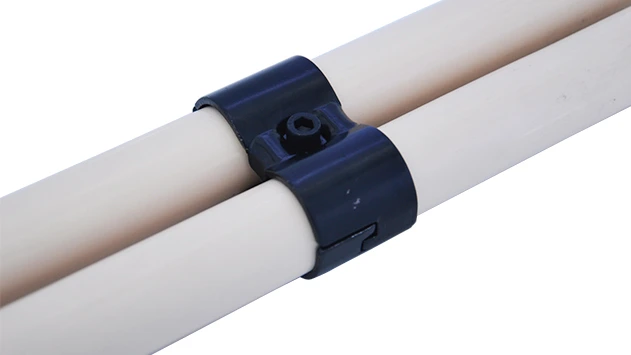
Parallel lean pipe joint used for 2 pcs 28MM lean pipe connection in parallel direction to enhance frame structure, usually for heavy payload requirement for workbench. flow rack, hand trolley.
Introduction: The Heartbeat of Medical Device Manufacturing
Walk into any medical device clean room, and you'll sense the quiet intensity—a space where precision isn't just a goal, it's a lifeline. Every workstation, every tool, every inch of surface is designed to minimize error, reduce contamination, and keep pace with the relentless demand for life-saving equipment. At the center of this orchestration lies a often-overlooked hero: the lean system . More specifically, the components that make these systems adaptable, hygienic, and efficient. Among these, one part stands out for its ability to transform rigidity into flexibility: the One Side Rotatory Parallel Lean Pipe Joint.
Medical device assembly isn't just about putting parts together. It's about adhering to ISO 14644 clean room standards, meeting FDA regulations, and adapting to rapid shifts in production—whether scaling up for a global health crisis or pivoting to assemble a new diagnostic tool. Traditional fixed workstations, with their rigid frames and one-size-fits-all design, often become bottlenecks. They slow down reconfiguration, trap contaminants in hard-to-reach crevices, and fail to support the ergonomic needs of workers assembling delicate instruments for hours on end. This is where the One Side Rotatory Parallel Lean Pipe Joint steps in: a small but mighty component that turns static lean pipe workbenches into dynamic, adaptable hubs of innovation.
The Challenges of Clean Room Assembly: Why Rigidity Fails
To understand the value of these rotatory joints, let's first unpack the unique challenges of medical device clean rooms. Unlike standard manufacturing floors, clean rooms operate under strict air filtration, temperature, and humidity controls. Even a single particle of dust can compromise a surgical instrument or render an implantable device unsafe. This means every surface must be easy to sanitize—no cracks, no porous materials, no hidden corners where bacteria or debris can linger.
Then there's the issue of variability. A clean room might assemble insulin pumps in the morning, surgical robots in the afternoon, and diagnostic test kits by evening. Each product requires different tool placements, workflow orientations, and worker positions. Fixed workbenches force teams to either crowd multiple setups into limited space or waste hours disassembling and rebuilding stations—time that could be spent producing life-saving devices. Ergonomics compound the problem: workers of different heights need adjustable surfaces to avoid strain, but fixed joints make height or angle changes nearly impossible without complete overhauls.
Durability is another concern. Clean room sanitization often involves harsh chemicals or high-pressure washing. Materials like low-grade steel can corrode, flake, or harbor bacteria over time, risking contamination. This is why many facilities are shifting to aluminum lean pipe systems—lightweight, corrosion-resistant, and easy to clean. But even aluminum setups fall short if their joints can't keep up. Fixed aluminum joints, while sturdy, lack the adaptability needed to keep pace with modern medical manufacturing.

Meet the Solution: What Are One Side Rotatory Parallel Lean Pipe Joints?
At first glance, a One Side Rotatory Parallel Lean Pipe Joint looks unassuming: a compact, often aluminum or stainless steel connector designed to link lean pipe sections. But its magic lies in its mechanics. Unlike traditional fixed joints, which lock pipes into a static angle, these rotatory joints feature a precision-engineered hinge on one side, allowing the connected pipe (and any attached accessories like tool holders or shelves) to rotate up to 180 degrees. The parallel design ensures stability even when adjusted, so shelves or work surfaces stay level without wobbling—critical when handling fragile components like pacemaker batteries or microelectrodes.
Materials matter here, too. Most high-quality rotatory joints are made from anodized aluminum or stainless steel pipe series alloys. Anodized aluminum forms a non-porous, corrosion-resistant layer that stands up to daily sanitization, while stainless steel adds extra durability for heavy-duty applications. Both materials are non-reactive, meaning they won't leach chemicals into the environment or react with cleaning agents like isopropyl alcohol or hydrogen peroxide—essential for maintaining FDA compliance.
The real game-changer, though, is adaptability. Imagine a worker assembling a catheter: they need their tools within arm's reach, but the catheter's length requires the workbench surface to tilt slightly to avoid bending the delicate tube. With a fixed joint, they'd have to awkwardly angle their body, risking strain or mistakes. With a One Side Rotatory Parallel Joint, they simply rotate the surface to the ideal angle, lock it in place with a secure clamping mechanism, and get back to work. When the next product—a bulkier surgical stapler—arrives, they adjust the joint again, repositioning shelves to accommodate larger tools. No tools, no disassembly, no downtime.

Technical Deep Dive: How These Joints Work (and Why It Matters)
Let's break down the mechanics. A typical One Side Rotatory Parallel Lean Pipe Joint consists of three main parts: a base connector that attaches to the main workbench frame, a rotating hinge, and a secondary connector that links to the adjustable pipe or shelf. The hinge uses precision ball bearings or friction-fit gaskets to allow smooth rotation while maintaining stability. Most models include a locking lever or set screw that, when tightened, holds the joint firmly in place—no slippage, even under the weight of heavy tools or materials.
What sets these joints apart from generic hinges is their compatibility with aluminum lean pipe systems. They're engineered to fit standard pipe diameters (often 28mm or 30mm), meaning they integrate seamlessly with existing workbenches, material racks, and trolleys. This backward compatibility is crucial for facilities looking to upgrade without replacing entire systems—a cost-saving feature that appeals to both large manufacturers and small-scale innovators.
Cleanability is built into the design, too. The rotating mechanism is sealed to prevent debris from entering the hinge, and the outer surfaces are smooth with rounded edges, eliminating crevices where contaminants could hide. Unlike traditional joints with multiple bolts or welds, these rotatory models can be wiped down in seconds with a disinfectant cloth, making them ideal for clean rooms operating under ISO 5 (Class 100) or stricter standards.
Traditional vs. Rotatory: A Clear Advantage
To put the benefits into perspective, let's compare traditional fixed joints with One Side Rotatory Parallel Lean Pipe Joints across key clean room priorities. The table below highlights why the latter is becoming a staple in medical device manufacturing:
| Feature | Traditional Fixed Joints | One Side Rotatory Parallel Joints |
|---|---|---|
| Adjustability | Fixed angles only; require disassembly to reconfigure. | 180° rotation; tool-free adjustment in seconds. |
| Cleanability | Welds, bolts, and crevices trap debris; hard to sanitize. | Smooth, sealed surfaces; rounded edges; no hidden gaps. |
| Ergonomics | Static height/angle forces workers into awkward positions. | Adjustable surfaces reduce strain; supports variable worker heights. |
| Compatibility | Often proprietary; hard to mix with other lean system components. | Fits standard lean pipe diameters; works with most aluminum/stainless steel systems. |
| Durability in Clean Rooms | Prone to corrosion from sanitizers; welds may weaken over time. | Anodized aluminum or stainless steel; resistant to chemicals and wear. |
Real-World Impact: How Rotatory Joints Transform Workflows
Let's step into a hypothetical (but realistic) clean room to see these joints in action. Consider a facility assembling two products: a minimally invasive surgical tool (MIST) and a portable ultrasound machine. The MIST requires a narrow work surface with tools positioned close to the worker's dominant hand, while the ultrasound machine, with its larger components, needs a wider bench and shelves for circuit boards and displays.
With traditional fixed joints, the team would need two separate workbenches—taking up twice the space and doubling the cost of materials. During peak demand, this could force the clean room to operate at half capacity, delaying shipments. With One Side Rotatory Parallel Joints, however, a single workbench transforms: in the morning, the surface is rotated to a narrow profile with tool holders angled for MIST assembly; by afternoon, the joint is adjusted to widen the bench, and shelves are swung into place for ultrasound components. No extra space, no wasted time—just a seamless transition.
Ergonomic benefits translate to real results, too. A study by the Occupational Safety and Health Administration (OSHA) found that adjustable workstations reduce musculoskeletal injuries by up to 35% in manufacturing settings. In medical device assembly, where precision is critical, this isn't just about worker comfort—it's about reducing errors caused by fatigue or discomfort. A worker who can adjust their bench height and tool angle is more likely to maintain focus, leading to fewer defective products and higher compliance with quality standards.
Compliance: Meeting the Strictest Standards
For medical device manufacturers, compliance isn't optional—it's the foundation of their business. The FDA's Quality System Regulation (QSR) and ISO 13485 demand rigorous control over production processes, including the tools and equipment used. One Side Rotatory Parallel Lean Pipe Joints support compliance in three key ways:
First, material safety. Reputable manufacturers use medical-grade aluminum or stainless steel, which are biocompatible and non-reactive. This ensures no harmful substances leach into the environment or contaminate products—a critical factor for devices that come into contact with patients.
Second, traceability. A reliable lean pipe supplier will provide material certificates, test reports, and compliance documentation for each batch of joints. This allows clean room operators to track components back to their source, simplifying audits and recalls if issues arise.
Third, cleanability. As mentioned earlier, the smooth, crevice-free design of these joints makes them easy to sanitize, supporting compliance with ISO 14644-2 cleaning protocols. Unlike painted or coated joints that can chip or peel, anodized aluminum joints maintain their integrity through hundreds of cleaning cycles, ensuring long-term compliance without frequent replacements.
Choosing the Right Joint: What to Look for in a Supplier
Not all rotatory joints are created equal. To maximize performance in a clean room, look for a lean pipe supplier that prioritizes three key qualities: precision engineering, material quality, and compatibility.
Precision engineering ensures smooth rotation and secure locking. A joint with loose bearings or a weak locking mechanism will slip during use, risking product damage or worker injury. Ask suppliers for load-testing data—most reputable ones will provide ratings for maximum weight capacity (often 50-100kg per joint) and rotation durability (thousands of cycles without wear).
Material quality is non-negotiable. Avoid joints made from low-grade steel or plastic, which can degrade under sanitization or shed particles. Opt for anodized aluminum or 316 stainless steel, both of which offer excellent corrosion resistance and cleanability.
Finally, compatibility with your existing lean system saves time and money. Check that the joint fits your current pipe diameter and works with accessories like shelves, tool hooks, and cable management systems. A supplier that offers samples or on-site testing can help confirm compatibility before you invest in bulk.
Conclusion: Small Joints, Big Impact
In the high-stakes world of medical device manufacturing, success hinges on the details. A single component can mean the difference between meeting a critical deadline and falling behind, between a compliant product and a costly recall, between a productive team and a frustrated one. The One Side Rotatory Parallel Lean Pipe Joint may be small, but its impact is profound: it turns rigid lean pipe workbenches into adaptable hubs, reduces contamination risks, supports worker well-being, and keeps clean rooms compliant and efficient.
As medical technology continues to evolve—with smaller, more complex devices and faster production timelines—the need for flexibility will only grow. Fixed systems belong to the past; the future belongs to components that can keep up with change. For clean room managers and manufacturers looking to stay ahead, investing in One Side Rotatory Parallel Lean Pipe Joints isn't just a upgrade—it's a commitment to the precision, adaptability, and care that define life-saving medical device assembly.
In the end, it's simple: when your workbench can adapt, your team can innovate. And in healthcare, innovation isn't just good for business—it's good for humanity.