- Company Articles
- Products and Technology
- Product knowledge
- One Side Rotatory Parallel Lean Pipe Joints: Design Innovations for Modern Production Lines

One Side Rotatory Parallel Lean Pipe Joints: Design Innovations for Modern Production Lines
Related Product
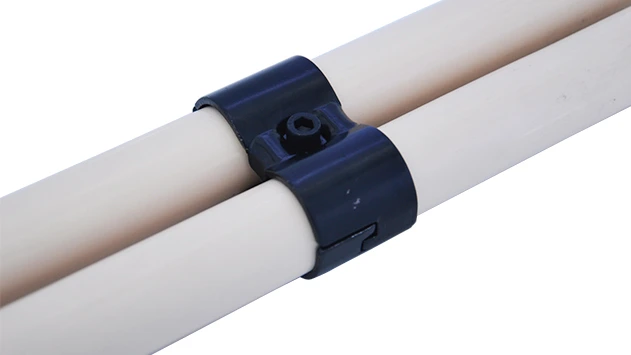
Parallel Lean Pipe Joint
Parallel lean pipe joint used for 2 pcs 28MM lean pipe connection in parallel direction to enhance frame structure, usually for heavy payload requirement for workbench. flow rack, hand trolley.
Walk into any modern manufacturing facility today, and you'll likely notice a common theme: the relentless pursuit of efficiency. From automotive assembly plants to electronics workshops, the pressure to produce more, waste less, and adapt faster has never been higher. In this fast-paced environment, the tools and systems that keep production lines moving aren't just equipment—they're the backbone of operational success. One such unsung hero, quietly revolutionizing how factories configure their workspaces, is the lean pipe system. But even the most reliable systems hit roadblocks, and that's where innovations like the one side rotatory parallel lean pipe joint come into play.
Lean manufacturing isn't just a buzzword; it's a philosophy centered on minimizing waste while maximizing value. For decades, lean pipe (also known as "flexible pipe") has been a cornerstone of this philosophy, offering a modular way to build workbenches, material racks, and conveyor systems. But as production demands grow more dynamic—with shorter product cycles, custom orders, and frequent layout changes—traditional lean pipe setups have started to show their limits. Rigid joints, time-consuming adjustments, and limited reusability have left many facility managers scratching their heads, wondering if there's a better way to balance structure and flexibility. Enter the one side rotatory parallel lean pipe joint: a small but mighty component that's quietly redefining what lean pipe systems can do.
The Frustration of "Set It and Forget It" in Modern Manufacturing
To understand why the one side rotatory parallel lean pipe joint matters, let's start with the problem it solves. Traditional lean pipe systems rely on fixed joints—think T-joints, L-joints, or straight connectors—that lock pipes into rigid angles. While these work for static setups, they become a headache when production needs shift. Imagine a small electronics plant that suddenly lands a contract for a new gadget. The existing workbenches, built with standard lean pipe joints , are too low for the taller components now being assembled. To adjust them, workers must disassemble the entire structure, swap out joints, and rebuild—wasting hours (or even days) of valuable production time. Or consider a warehouse where seasonal demand spikes require reconfiguring material racks to accommodate bulkier inventory. With fixed joints, each adjustment means loosening bolts, realigning pipes, and hoping everything stays stable once reassembled. It's not just time-consuming; it's wasteful—the very opposite of lean principles.
The core issue? Traditional joints prioritize stability over adaptability. They're designed to hold pipes firmly in place, but that firmness becomes a liability when change is constant. Facility managers began asking: What if a joint could offer both stability and flexibility? What if it could rotate to adjust angles while keeping pipes parallel, ensuring alignment even as layouts shift? These questions led to the development of the one side rotatory parallel lean pipe joint—a design that marries the best of rigidity and rotation.
Meet the One Side Rotatory Parallel Lean Pipe Joint: A Design Built for Adaptability
At first glance, the one side rotatory parallel lean pipe joint might look similar to its traditional counterparts. It's a compact, often metal component that connects two or more lean pipes. But peek closer, and you'll spot the game-changer: a built-in rotational mechanism on one side, paired with a parallel alignment guide. This simple yet ingenious design allows one section of the joint to rotate (typically 0–180 degrees) while keeping the connected pipes parallel to each other. No more misalignment, no more wobbly structures, and no more disassembly for minor adjustments.
Let's break down how it works. Picture two horizontal lean pipes connected by this joint. On one side, a rotating collar lets one pipe pivot up or down, while the other side remains fixed. A parallel guide—often a small rod or groove—ensures that as the rotating side moves, the two pipes stay perfectly parallel. This might sound trivial, but in practice, it's transformative. For example, on a workbench , this means you can adjust the height of a shelf or tool rail without detaching it from the main frame. On a roller track system, it lets you tilt the track slightly to improve material flow without rebuilding the entire conveyor. The joint adapts, so your production line doesn't have to stop.
Design Innovation 1: Rotational Freedom Without Sacrificing Stability
The first breakthrough in this joint's design is its rotational mechanism. Unlike traditional fixed joints, which lock pipes at 90-degree or 45-degree angles, the one side rotatory joint uses a precision-engineered pivot. This pivot—often made from durable alloys—allows smooth, controlled rotation with minimal friction. What's clever is how it balances movement and stability: a spring-loaded locking pin or friction washer lets users rotate the joint to the desired angle, then lock it in place with a simple twist or lever. No tools required, no fumbling with bolts. This "adjust and secure" process takes seconds, not minutes, turning what was once a production-halting task into a quick tweak.
Take a real-world example: a automotive parts supplier that assembles brake components. Their workbenches have overhead tool racks built with lean pipe. When a new, longer brake caliper enters production, the racks need to be raised by 6 inches to clear the parts. With a traditional joint, workers would need to unbolt each rack, add extension pipes, and reattach—risking misalignment. With a one side rotatory parallel joint, they simply unlock the pivot, rotate the rack upward, lock it, and get back to work. The parallel guide ensures the rack stays level, so tools don't slide off. It's efficiency in action.
Design Innovation 2: Parallel Alignment—The Secret to Smooth Material Flow
The "parallel" in the joint's name is just as critical as the "rotatory." In material handling systems—like roller track conveyors or turnover trolleys—keeping pipes perfectly parallel is non-negotiable. Even a slight misalignment can cause jams, slow down material flow, or damage delicate parts. Traditional joints, which rely on manual alignment, often fall short here. A worker might tighten a bolt slightly off-center, creating a hairline angle that throws the entire system off. The one side rotatory parallel joint eliminates this risk with its integrated parallel guide. This guide—usually a metal rod or groove machined into the joint—ensures that as one pipe rotates, the other follows in perfect parallel. It's like training wheels for lean pipe systems: you get the freedom to adjust, but the structure stays true.
Consider a roller track system used to move plastic bins between assembly stations. With traditional joints, if the track isn't parallel, bins can catch on the edges, causing backups. Workers might spend hours shimming pipes or readjusting joints to fix the issue. With the one side rotatory parallel joint, the track can be tilted to accommodate faster or slower flow (e.g., steeper for heavier bins, gentler for fragile parts) while the parallel guide keeps the rollers aligned. No more jams, no more wasted time—just smooth, consistent movement.
Design Innovation 3: Compatibility with Modern Materials—Aluminum Lean Pipe Takes Center Stage
While the joint's mechanics are impressive, its compatibility with modern materials is what makes it truly versatile. In recent years, aluminum lean pipe has emerged as a popular alternative to traditional steel lean pipe. Lighter, corrosion-resistant, and easier to handle, aluminum pipes are ideal for facilities that need to reconfigure systems frequently (since they're easier to lift and move). But aluminum's lighter weight also means it requires joints that can grip securely without damaging the pipe's surface. The one side rotatory parallel joint is engineered with this in mind, using non-marring, high-friction grips that hold aluminum pipes firmly without crushing or scratching them. This compatibility opens up new possibilities: imagine a food processing plant using aluminum lean pipe (to avoid rust) and rotatory joints to quickly adjust material racks for seasonal produce—no more worrying about corrosion or joint slippage.
Aluminum lean pipe also pairs well with the joint's rotational design. Since aluminum is lighter, workers can adjust rotating sections with less effort, reducing fatigue and injury risk. A 20-foot steel pipe might require two people to reposition; an aluminum pipe of the same length can be adjusted by one worker, thanks to the joint's smooth pivot. It's a small change, but it adds up to big improvements in workplace ergonomics.

From Workbenches to Roller Tracks: Real-World Applications That Shine
The one side rotatory parallel lean pipe joint isn't just a theoretical improvement—it's a practical solution that shines in real-world settings. Let's explore three key applications where it's making a measurable difference: workbench setups, roller track conveyors, and turnover trolleys. In each case, the joint transforms rigid systems into adaptable tools that grow with production needs.
Workbenches: Adjust on the Fly for Changing Tasks
Workbenches are the heart of any assembly line, and their design directly impacts worker productivity. A bench that's too low causes back strain; too high leads to shoulder fatigue; cluttered with tools wastes time. Traditional workbenches, built with fixed lean pipe joints , force workers to adapt to the bench. The one side rotatory parallel joint flips this script, letting the bench adapt to the worker.
Take workbench E (a common single-deck, no-caster design) as an example. In a traditional setup, the height is fixed during assembly. If a new worker with a taller stature joins the team, or if the task changes to require standing instead of sitting, the bench is stuck. With one side rotatory parallel joints, the legs of the bench can be rotated to adjust height in 1-inch increments. The parallel guide ensures the bench top stays level, so tools and parts don't slide off. Even better, accessories like tool rails, LED light bars, or bin holders can be rotated into optimal positions—no disassembly required. A worker assembling small circuit boards might angle the tool rail toward them for easy access; another working on larger machinery can rotate it outward to free up space. It's customization without compromise.
Roller Tracks: Flexibility Meets Speed in Material Handling
Roller track systems are the arteries of production lines, moving parts from station to station. In high-volume settings—like automotive plants or e-commerce fulfillment centers—these systems need to handle varying loads, speeds, and part sizes. Traditional roller tracks, built with fixed joints, are limited to straight lines or pre-determined curves. The one side rotatory parallel joint changes this by allowing curved or angled tracks that can be adjusted on demand.
Imagine a warehouse that processes both small parcels and large boxes. For parcels, a steep, straight roller track moves them quickly; for boxes, a gentler, curved track prevents tipping. With traditional joints, this would require two separate tracks. With one side rotatory parallel joints, a single track can be reconfigured: unlock the joints, rotate sections to create a curve, lock them, and switch between parcel and box mode in minutes. The parallel guide ensures the rollers stay aligned, so even large boxes glide smoothly. It's like having a chameleon of a conveyor system—one that adapts to whatever comes down the line.
Turnover Trolleys: Lightweight and Adaptable for Dynamic Warehouses
Turnover trolleys are workhorses in warehouses, used to transport parts between storage and production. But their fixed designs often limit their utility: a trolley built for small bins can't easily adapt to larger crates. The one side rotatory parallel joint solves this by letting users adjust the trolley's side rails, dividers, or shelves to fit different load sizes. For example, a trolley used to transport electronic components during the week can be reconfigured on weekends to carry bulk packaging materials—all without tools. The joint's compatibility with aluminum lean pipe makes the trolley lightweight enough for one person to maneuver, even when fully loaded. It's a small change that turns a single-purpose tool into a multi-tasker.

Traditional vs. Rotatory Parallel: A Side-by-Side Comparison
To truly grasp the impact of the one side rotatory parallel lean pipe joint, let's put it head-to-head with traditional lean pipe joints. The table below compares key factors like adjustment time, flexibility, and compatibility—metrics that matter most to facility managers.
| Feature | Traditional Lean Pipe Joint | One Side Rotatory Parallel Lean Pipe Joint |
|---|---|---|
| Adjustment Time | 30–60 minutes (requires disassembly/reassembly) | 2–5 minutes (tool-free rotation and locking) |
| Flexibility | Fixed angles (90°, 45°, straight); limited reconfiguration | Rotates 0–180° with parallel alignment; adaptable to any angle |
| Compatibility with Aluminum Lean Pipe | Limited (may crush or scratch aluminum; requires extra padding) | Optimized (non-marring grips designed for aluminum's lighter weight) |
| Load Capacity | High (but decreases with frequent disassembly) | High (stable parallel alignment maintains load integrity) |
| Cost Over Time | Higher (frequent replacement of worn bolts/joints) | Lower (reusable across configurations; minimal wear on components) |
The numbers speak for themselves: the one side rotatory parallel joint slashes adjustment time, boosts flexibility, and works seamlessly with modern materials like aluminum lean pipe. Over time, these benefits translate to lower labor costs, reduced downtime, and a system that grows with your business—not against it.
The Ripple Effect: How a Small Joint Drives Lean Manufacturing Success
At this point, you might be thinking: "It's just a joint—how much difference can it really make?" The answer lies in the ripple effect of small efficiencies. In lean manufacturing, every minute saved on adjustment time is a minute added to production. Every reduction in waste (like excess parts or labor) boosts the bottom line. Let's break down the broader impact:
- Reduced Labor Costs: With tool-free adjustments, workers spend less time on setup and more time on value-added tasks. A facility with 10 adjustable workbenches could save 20+ hours per month—enough to reassign workers to quality control or process improvement.
- Longer System Lifespan: Traditional joints wear out quickly from repeated disassembly; their bolts strip, and threads weaken. The one side rotatory parallel joint's pivot mechanism is designed for repeated use, extending the life of the entire lean pipe system by 30–50%.
- Support for Continuous Improvement (Kaizen): Lean manufacturing thrives on kaizen—small, daily improvements. With a flexible joint, workers can experiment with layouts, test new workflows, and implement changes without waiting for maintenance teams. It empowers frontline staff to drive innovation.
- Lower Carbon Footprint: Reusable systems mean fewer raw materials are needed for new setups. Aluminum lean pipe, paired with durable joints, reduces the need for steel (which has a higher carbon footprint to produce). It's lean manufacturing with a side of sustainability.
Looking Ahead: The Future of Lean Pipe Innovation
As manufacturing continues to evolve—with trends like automation, IoT, and mass customization—lean pipe systems will need to keep pace. The one side rotatory parallel lean pipe joint is just the beginning. What might the future hold? We could see joints with built-in sensors that alert managers when parts are wearing out, or 3D-printed custom pivots for niche applications. Some manufacturers are already experimenting with "smart" joints that connect to facility management software, tracking usage patterns to suggest optimal layouts. There's also growing interest in eco-friendly materials, like recycled aluminum or bio-based plastics, for joint components. Whatever the future brings, one thing is clear: the demand for flexible, adaptable lean pipe systems will only grow—and the joints that power them will remain critical to success.
Final Thoughts: Small Components, Big Impact
In the grand scheme of manufacturing, the one side rotatory parallel lean pipe joint is easy to overlook. It's not as flashy as a robotic arm or as high-tech as a smart sensor. But in the daily grind of keeping production lines moving, it's the small, practical innovations that make the biggest difference. This joint embodies the spirit of lean manufacturing: it eliminates waste (time, labor, materials), maximizes value (flexibility, adaptability), and empowers workers to do their best. For facility managers tired of rigid setups and endless adjustments, it's more than a component—it's a tool that lets their operations keep up with the pace of modern manufacturing.
So the next time you walk through a factory, take a closer look at the lean pipe systems. Chances are, the ones that look the most dynamic—workbenches that adjust with a twist, roller tracks that curve and straighten with ease—are powered by joints like this. In a world where change is the only constant, the one side rotatory parallel lean pipe joint is proof that sometimes, the best innovations are the ones that help us adapt—without breaking a sweat.