- Company Articles
- Products and Technology
- Product knowledge
- One Side Rotatory Parallel Lean Pipe Joints: Key to Agile Manufacturing in 2025

One Side Rotatory Parallel Lean Pipe Joints: Key to Agile Manufacturing in 2025
Related Product
Parallel Lean Pipe Joint
Parallel lean pipe joint used for 2 pcs 28MM lean pipe connection in parallel direction to enhance frame structure, usually for heavy payload requirement for workbench. flow rack, hand trolley.
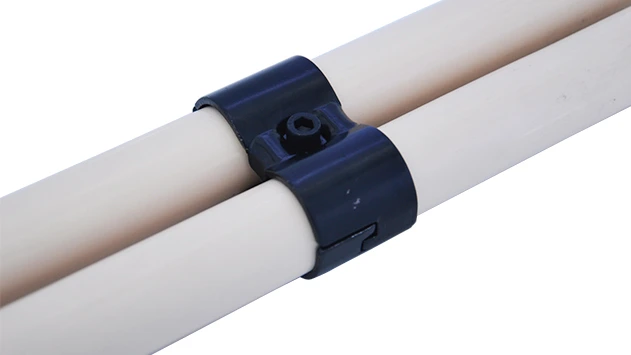
Walk into any manufacturing facility today, and you'll feel it—the hum of urgency. Orders change overnight. Customer demands shift on a dime. A production line that worked perfectly for last month's batch is suddenly obsolete. In 2025, agility isn't just a buzzword; it's the difference between thriving and falling behind. And while we often talk about big-picture strategies or high-tech automation, the real magic of agile manufacturing often lies in the smallest, most unassuming tools. Today, we're shining a light on one such tool: the One Side Rotatory Parallel Lean Pipe Joint. It might not have the flash of a robotic arm, but ask any plant manager or line worker, and they'll tell you—this little joint is quietly revolutionizing how we build, adapt, and grow.
The Agility Crisis: Why Rigid Systems Are Holding Us Back
Let's start with the problem we're all trying to solve. Think about the last time you had to rearrange a room in your house. Maybe you wanted to move a bookshelf to make space for a new desk. If that bookshelf was bolted to the wall, you'd spend an hour prying off screws, hauling it across the room, and resecuring it—only to realize it doesn't quite fit. Frustrating, right? Now multiply that by 100, and you've got the daily reality of traditional manufacturing setups.
For decades, production lines, workbenches, and material racks were built to be "permanent." They used fixed joints, welded frames, or bolts that required power tools to adjust. Need to raise a workbench by 6 inches for ergonomics? Grab a wrench, disassemble the legs, swap in longer pipes, and hope you didn't misplace the right bolts. Want to reconfigure a flow rack to handle larger parts? Clear the line, take apart the entire structure, and rebuild from scratch. By the time you're done, you've lost hours of production time—and that's if everything goes smoothly.
In 2025, that's no longer acceptable. A recent survey by the Manufacturing Agility Institute found that 78% of plant managers cite "inability to quickly reconfigure workspaces" as their top barrier to meeting changing demand. Meanwhile, workers report frustration with rigid setups: 62% say they've skipped ergonomic adjustments (like tilting a work surface) because the process was too time-consuming, leading to increased fatigue and errors. The message is clear: rigidity is the enemy of agility. And that's where our star player comes in.
Meet the Hero: What Are One Side Rotatory Parallel Lean Pipe Joints?
At first glance, the One Side Rotatory Parallel Lean Pipe Joint looks simple—and that's the point. It's a small, often aluminum or steel connector designed to link lean pipes (those versatile, often PE-coated tubes you see in factories) into structures like workbenches, flow racks, or trolleys. But here's the twist: unlike traditional fixed joints, this one has a secret superpower. As the name suggests, one side rotates . Picture a joint where one end locks firmly onto a pipe, while the other end swivels smoothly around it—up to 180 degrees in some models—without losing stability. Tighten a lever, and it holds like a rock. Loosen it, and you can reposition the entire section in seconds.
Let's break down the design. Most models feature a dual-component structure: a fixed base (the "parallel" part, which runs along the pipe) and a rotating arm (the "rotatory" side). The base clamps onto the main pipe using a friction-fit or quick-release mechanism, while the arm connects to the secondary pipe, allowing it to pivot. Some even come with built-in stops or detents, so you can lock it at specific angles (30°, 45°, 90°) for consistency. Materials matter too—many are made from lightweight aluminum or corrosion-resistant steel, balancing strength with portability. And they're compatible with standard lean pipes (1.2mm to 2.0mm PE coated), aluminum profiles, and even some stainless steel pipes, making them easy to integrate into existing setups.
But why does this rotation matter? Let's circle back to that bookshelf example. With a traditional joint, moving that shelf meant disassembling. With a rotatory joint? Loosen the lever, swing the arm to the new position, retighten, and you're done. No tools, no disassembly, no lost parts. That's the game-changer.

Traditional vs. Rotatory: A Night-and-Day Difference (Let's Compare)
To really understand the impact, let's put traditional fixed joints head-to-head with our one side rotatory parallel heroes. The table below breaks down the key differences—ones that show up in your team's daily work, your bottom line, and your ability to keep up with 2025's demands.
| Feature | Traditional Fixed Joints | One Side Rotatory Parallel Joints |
|---|---|---|
| Adjustment Time | 30–60 minutes (disassemble/reassemble) | 30–60 seconds (loosen, rotate, retighten) |
| Tools Required | Wrenches, screwdrivers, sometimes power tools | None (most use hand-tightened levers) |
| Flexibility | Fixed angles only; requires pipe cutting for changes | Continuous rotation (0–180°); no cutting needed |
| Ergonomic Potential | Limited—adjustments are rare due to time | High—workers can tweak height/angle on the fly |
| Cost Over Time | Higher (downtime, replacement parts from over-tightening) | Lower (reduced downtime, reusable across setups) |
The numbers speak for themselves. What used to take an hour now takes a minute. What required a toolbox now requires a flick of the wrist. And that's just the start.

Beyond Speed: The Hidden Benefits of Rotatory Joints
Sure, faster adjustments are great, but the real value of these joints goes deeper. Let's explore how they're transforming day-to-day work in ways that matter to everyone—from the C-suite to the shop floor.
1. Ergonomics: Putting Workers First
Jen, a line worker at a mid-sized electronics plant, sums it up: "Before, our workbench was fixed at 36 inches. I'm 5'2", so I was hunching over all day. My back hurt, and I made more mistakes. Now, with the rotatory joints, I loosen the lever, tilt the surface up 5 degrees, and lock it. Two minutes, no tools. I can even adjust it mid-shift if my hands get tired. It sounds small, but it's changed how I feel at the end of the day."
Ergonomics isn't just about comfort—it's about productivity. The Bureau of Labor Statistics reports that musculoskeletal disorders (MSDs) cost U.S. manufacturers $20 billion annually in lost workdays and compensation. Rotatory joints make it easy to adjust workbench height, tilt angles, or flow rack positions to fit each worker's body, reducing strain and keeping teams healthier. And since adjustments are so quick, workers are more likely to make them—no more "I'll just tough it out" mentality.
2. Lean Systems: Supporting the "Continuous" in Continuous Improvement
If you're familiar with lean manufacturing, you know it's all about continuous improvement —small, incremental changes that eliminate waste. But how do you make "continuous" changes when your tools are stuck in place? That's where rotatory joints and lean systems become a match made in heaven.
Take 5S, for example—the lean methodology for organizing workspaces (Sort, Set in Order, Shine, Standardize, Sustain). A cluttered, rigid workspace makes "Set in Order" nearly impossible. With rotatory joints, you can rearrange tools, bins, or work surfaces daily to reflect what's actually needed. Need to add a new bin for incoming parts? Swing the arm, attach a new pipe segment, and you're done. No more waiting for maintenance to drill holes or weld brackets.
Or consider kaizen events—those focused improvement workshops where teams brainstorm better workflows. In the past, ideas often died on the vine because "we can't change the line that fast." Now, teams can prototype new layouts in hours, test them, and refine them on the spot. A recent kaizen at a automotive parts plant used rotatory joints to redesign their flow rack, reducing material retrieval time by 40%—and they did it without shutting down production.
3. Adaptability: From Startup to Scale-Up
Startups and small manufacturers have long struggled with scaling up. Invest in a custom workbench today, and it might be too small (or too big) six months from now. Enter rotatory joints: they grow with you. A lean pipe workbench built with these joints can expand by adding sections, or shrink by folding parts away. A flow rack can reconfigure to handle tiny components one week and bulky assemblies the next. Even turnover trolleys—those handy carts for moving materials—benefit: adjust the frame width using rotatory joints to fit different bin sizes, then lock it down. It's like having a Swiss Army knife for your production floor.
Case in point: GreenTech, a startup making solar panel components, started with just 3 workbenches. As orders grew, they used rotatory joints to add extensions, reposition tool holders, and even convert one bench into a testing station by rotating the top surface to a 45° angle. "We saved over $15,000 in new equipment costs in the first year," says operations manager Raj. "We just repurposed what we had."
Real-World Magic: How These Joints Transform Key Workspaces
Let's get concrete. Where exactly are these joints making the biggest impact? Let's zoom in on three common setups: lean pipe workbenches, flow racks, and turnover trolleys—each a cornerstone of modern manufacturing.
Example 1: The Lean Pipe Workbench That Does It All
Picture a standard workbench: a flat surface on four legs, maybe a shelf below. Functional, but static. Now, add rotatory joints. Suddenly, that flat surface can tilt (for drafting or assembly), rise or lower (for standing vs. sitting work), or even split into sections (one side for tools, one for assembly). The legs? Adjust their angle to fit uneven floors. The shelf? Swing it out of the way when you need extra legroom, then swing it back. At a medical device plant in Ohio, workers use rotatory-jointed workbenches to assemble both small catheters (tilted surface, magnifying lamp attached via a rotating arm) and larger monitors (flat surface, height raised). "We used to need two separate benches," says supervisor Mike. "Now one does the job, and we've freed up 12 square feet of floor space."
Example 2: Flow Racks That Keep Up with Demand
Flow racks—those sloped racks with roller tracks that let materials "flow" to the front—are a staple in lean systems. But traditional flow racks have fixed angles, meaning they work best for one type of part. Too steep, and parts slide too fast; too shallow, and they get stuck. With rotatory joints, you can adjust the slope of each roller track individually. Need to slow down fragile components? Tilt the track up slightly. Speeding up heavy parts? Tilt it down. At a food packaging plant, this flexibility was a game-changer when they switched from glass jars to plastic bottles. "The bottles were lighter, so they weren't sliding," explains logistics lead Sarah. "We loosened the rotatory joints, tilted the tracks a few degrees more, and they flowed perfectly. No new racks, no downtime."
Example 3: Turnover Trolleys That Adapt to the Load
Turnover trolleys (or "material carts") are the workhorses of the factory floor, moving parts from storage to line and back. But a trolley built for small bins isn't much use for large pallets. Rotatory joints solve this by letting you adjust the trolley's frame. Need to carry long pipes? Swing the side rails out to extend the length. Hauling fragile electronics? Fold down the sides to add padding. And when paired with caster wheels (another key keyword from our list), these trolleys become even more versatile. Lock the casters, adjust the frame with the joints, unlock, and roll—all in under a minute. A furniture manufacturer in North Carolina uses these trolleys to move both table legs (short, stackable) and table tops (long, flat), saving the cost of buying two separate cart types.
The Future of Agile Manufacturing: Why 2025 Is the Year of the Joint
So, why now? What makes 2025 the perfect time for these rotatory joints to take center stage? For starters, the pandemic accelerated the need for flexibility—factories had to pivot from making one product to another (think ventilators vs. cars) overnight, and rigid setups couldn't keep up. Now, as we settle into a "new normal" of constant change, the demand for adaptable tools is higher than ever.
Then there's the rise of small-batch, custom manufacturing. In 2025, consumers want products tailored to their needs—whether it's a personalized phone case or a made-to-order medical device. Mass production lines built for 10,000 identical units can't handle runs of 100 or 10. Rotatory joints enable "micro-lines" that can switch between products in minutes, making small-batch production profitable.
And let's not forget sustainability. The manufacturing industry is under pressure to reduce waste, and building disposable, single-use setups is the opposite of sustainable. Rotatory joints promote reuse: a workbench frame can last 10 years, with only the surface or accessories needing replacement. They also reduce shipping emissions—instead of buying a new rack and shipping it, you can reconfigure the one you have.
Choosing the Right Joint: What to Look For
Ready to dive in? Not all rotatory joints are created equal. Here's what to keep in mind when shopping:
- Rotation Range: Some joints rotate 90°, others 180°. Think about your needs—do you need full flipping capability, or just minor adjustments?
- Locking Mechanism: Quick-release levers are fastest, but some prefer bolt-on for extra security. Test it—you want something that's easy to loosen but stays tight under load.
- Material Compatibility: Ensure it works with your existing lean pipes (PE coated, aluminum, stainless steel) and aluminum profiles. Most manufacturers list compatible pipe diameters.
- Weight Capacity: Don't skimp here. A joint rated for 50 lbs won't hold a 200-lb workbench. Check the specs for both static (stationary) and dynamic (moving) loads.
- Durability: Look for corrosion-resistant finishes (like powder coating) if you're using them in wet or humid environments. Aluminum is lightweight; steel is stronger for heavy use.
And don't forget to involve your team. The workers using the joints daily will have the best insights into what works. Let them test a few models—you might be surprised by which features they prioritize (ease of use often tops the list over maximum rotation range).
Final Thoughts: The Future Is Rotatory
In 2025, agile manufacturing isn't about grand gestures—it's about the small, smart tools that make adaptability feel effortless. The One Side Rotatory Parallel Lean Pipe Joint is one of those tools. It turns rigid workspaces into flexible, worker-friendly environments. It turns hours of downtime into minutes of adjustment. It turns "we can't" into "we can—right now."
So the next time you walk through a factory, take a closer look at those lean pipe structures. Chances are, the ones that look like they were built to move? They're using rotatory joints. And the teams using them? They're the ones keeping up with demand, staying healthy, and turning change into opportunity.
Agility isn't coming—it's here. And it's got a new best friend: a little joint with a big rotation.