- Company Articles
- Products and Technology
- Solution
- One Side Rotatory Parallel Lean Pipe Joints: Material Handling Solutions for Small Warehouses

One Side Rotatory Parallel Lean Pipe Joints: Material Handling Solutions for Small Warehouses
Related Product
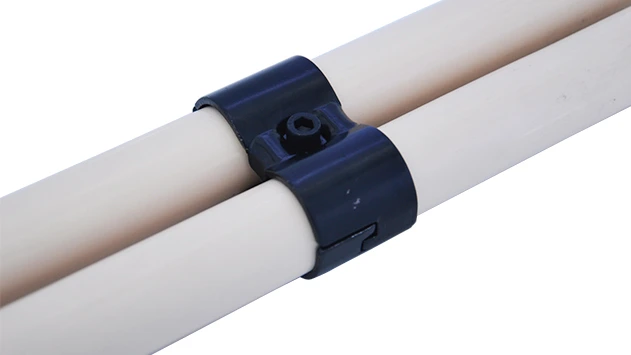
Parallel Lean Pipe Joint
Parallel lean pipe joint used for 2 pcs 28MM lean pipe connection in parallel direction to enhance frame structure, usually for heavy payload requirement for workbench. flow rack, hand trolley.
Walk into any small warehouse—whether it's a local e-commerce fulfillment center, a family-run manufacturing shop, or a regional distribution hub—and you'll notice the same quiet struggle: doing more with less. Space is tight, budgets are stretched thin, and every day brings new orders, new inventory, and new demands. In these spaces, efficiency isn't just a buzzword; it's the difference between keeping up and falling behind. That's where lean pipe systems come in, and at the heart of these systems lies a unsung hero: the one side rotatory parallel lean pipe joint. Let's dive into how this unassuming component is transforming small warehouses, one flexible, cost-effective solution at a time.
Small Warehouses, Big Challenges: The Struggle to Keep Up
Small warehouses are the backbone of local economies, but they face challenges that their larger counterparts can often brush off with bigger budgets or more square footage. Let's start with space. A small warehouse might measure 1,000 to 5,000 square feet—hardly enough room for sprawling conveyor belts or fixed metal shelving that can't be adjusted. Then there's budget: investing in custom-built material handling equipment? For most small businesses, that's just not feasible. And perhaps most frustrating of all is adaptability. One month, you're storing small electronics; the next, bulky seasonal items. Fixed systems lock you into one way of working, leaving you scrambling when needs change.
Take the example of a small automotive parts distributor I visited last year. Their warehouse was packed with rigid steel shelving that reached the ceiling, but half the shelves sat empty because the bins were too deep for their current inventory. Meanwhile, their packing station was a rickety wooden table that wobbled every time someone set down a heavy box. When I asked the manager why they didn't upgrade, he sighed: "Custom metal workbenches cost a fortune, and by the time we'd get them, our inventory might change again. We can't afford to bet on something that might not fit next quarter."
Sound familiar? If you run a small warehouse, you've probably faced this exact dilemma. The good news? There's a solution that doesn't require a construction crew, a six-figure budget, or a crystal ball to predict future needs. It's called a lean system , and it's built on the idea that your workspace should work for you—flexible, modular, and ready to adapt at a moment's notice.
Lean Systems 101: Why "Less" Actually Means "More"
At its core, a lean system is all about eliminating waste. Not just physical waste, but wasted time, wasted space, and wasted effort. Traditional warehouses often fall into the trap of overcomplicating things: fixed shelving that can't be adjusted, conveyor systems that take up half the floor, workbenches that are either too tall or too short for the task at hand. Lean systems flip that script by focusing on simplicity, modularity, and user-centric design.
And the star of the lean system show? Lean pipe —those lightweight, durable pipes (often coated in plastic for grip and protection) that you've probably seen in factory settings. But lean pipe isn't just for big factories. When paired with the right joints and accessories, it becomes a building block for custom material handling solutions that fit your space, your budget, and your ever-changing needs.

Meet the Hero: One Side Rotatory Parallel Lean Pipe Joints
Let's get up close with the one side rotatory parallel lean pipe joint. It might not look like much at first glance—just a small, metal connector with a rotating mechanism—but its impact is huge. Here's how it works: unlike fixed joints that lock pipes at a rigid angle, this joint has a rotating component on one side. That means you can pivot one pipe while keeping the other fixed, allowing you to adjust angles, reposition shelves, or modify structures without disassembling the entire system.
The "parallel" part is key, too. These joints are designed to connect pipes that run alongside each other (parallel), ensuring stability even when parts of the structure are rotated. Think of it like a hinge that lets a shelf tilt forward for easier access, or a workbench extension that can be folded down when not in use—all without tools, all in minutes.
Why does this matter for small warehouses? Let's break it down with three real-world scenarios:
- Adjustable Shelving: You stock small boxes one week and large crates the next. With a one side rotatory joint, you can tilt a shelf downward to let crates slide forward, then rotate it back to level for boxes—no need to buy new shelving.
- Flexible Workbenches: Your morning shift assembles small parts standing up; your afternoon shift packs orders sitting down. Instead of two separate workbenches, use a joint to adjust the height of the work surface in seconds.
- Mobile Racks: Need to move inventory from the back to the front? Attach casters to a lean pipe rack built with these joints, and you've got a mobile unit that can navigate tight aisles—no forklift required.

Why These Joints Are a Game-Changer for Small Warehouses
So, what makes one side rotatory parallel lean pipe joints so special? Let's count the ways:
1. Flexibility That Saves Space (and Sanity)
In small warehouses, every inch counts. Fixed systems force you to plan for your "worst-case" space needs, leaving valuable square footage unused most of the time. With these joints, you can design systems that shrink or expand as needed. For example, a flow rack built with one side rotatory joints can have its lanes adjusted to fit different box sizes—no disassembly, no tools, just a quick twist of the joint. Need to move the flow rack to make room for a pallet? Add casters, and it's mobile. When the pallet is gone, roll it back. It's like having a chameleon in your warehouse—always adapting to its environment.
2. Cost-Effective: No More "One and Done" Investments
Traditional material handling equipment is a one-time purchase with a big price tag—and if it doesn't work later, you're stuck. Lean pipe systems, by contrast, are modular. You start with a few pipes and joints, then add to them as your business grows. One side rotatory parallel joints are affordable (often under $10 each), and because they're reusable, you can repurpose them when you redesign your workspace. That automotive parts distributor I mentioned earlier? They replaced their rigid shelving with a lean pipe system and saved over $15,000 compared to custom metal shelving. And when their inventory changed six months later, they just reconfigured the joints—no new equipment needed.
3. Easy to Assemble (No Construction Degree Required)
Here's a secret: you don't need to be a engineer to build with lean pipe joints. Most systems click together by hand, and one side rotatory joints are no exception. The rotating mechanism is designed to lock securely once adjusted, so you don't have to worry about wobbly structures. I've seen warehouse teams assemble a basic workbench in under an hour—no drills, no welding, just a few pipes and joints. For small businesses without dedicated maintenance staff, this is a game-changer. You don't have to wait for a contractor; you can make changes yourself, on your schedule.
4. Built to Last, But Gentle on Inventory
Lean pipe is typically made of steel with a plastic coating, which means it's strong enough to hold heavy loads (think 200+ pounds per shelf) but gentle enough for delicate items like electronics or cosmetics. The one side rotatory joints are made of durable metal, often zinc-plated to resist rust, so they'll stand up to the daily wear and tear of a busy warehouse. And because the system is modular, if a joint does wear out (after years of use), you can replace just that part—no need to scrap the whole system.
From Chaos to Order: Real-World Applications in Small Warehouses
Let's get concrete. How do one side rotatory parallel lean pipe joints actually work in day-to-day operations? Let's look at three common small warehouse setups and how these joints make a difference.
Case 1: The E-Commerce Fulfillment Center
Imagine a small e-commerce business that sells everything from books to kitchen gadgets. Their biggest challenge? Picking and packing orders quickly. Their old setup had fixed shelves with inventory spread out, forcing pickers to walk back and forth across the warehouse. Enter a lean pipe workbench with one side rotatory joints. Here's how they transformed:
- Pick Module: They built a U-shaped workbench where pickers stand in the center. The outer edges have flow racks with inventory, and the inner edge is the packing station. One side rotatory joints let the flow rack lanes tilt downward, so boxes slide toward the picker—no more reaching or bending.
- Adjustable Packing Surface: The packing station has a fold-down extension that can be rotated up when packing large items (like a toaster oven) and folded down when packing small items (like a phone case). This saves 3 square feet of space when the extension isn't needed—space that's now used for a small cart of shipping supplies.
- Mobile Returns Station: Returns are a hassle, but with a lean pipe cart built with one side rotatory joints, they can sort returns on the go. The cart has foldable shelves that adjust to different box sizes, and when returns are processed, it folds flat for storage.
Result? Pick times dropped by 30%, and they're now processing 20% more orders per day—all without expanding their warehouse.
Case 2: The Local Manufacturer
A small furniture manufacturer with a 3,000-square-foot warehouse needed a better way to move parts from the cutting station to the assembly line. Their old system? Employees carrying parts in bins—slow and error-prone. They considered a conveyor system, but the quote was $20,000, and it would take up half their floor space. Instead, they built a gravity-fed roller conveyor using lean pipe, roller track, and one side rotatory joints. Here's how it worked:
- Adjustable Angle: The conveyor's slope can be tweaked using one side rotatory joints—steeper for heavy parts, gentler for delicate ones. No more parts sliding too fast and getting damaged.
- Modular Lanes: They added and removed lanes as production needs changed. When they started making smaller tables, they split one wide lane into two narrow ones. When demand for large desks spiked, they merged lanes back.
- Portable: The entire conveyor is built on a lean pipe frame with casters. At the end of the day, they roll it out of the way to free up floor space for cleaning—something a fixed conveyor could never do.
Result? They spent $1,200 on pipes, joints, and roller track—1/16th the cost of a traditional conveyor. Assembly took two employees one afternoon, and production time for each piece dropped by 15 minutes.
Traditional vs. Lean: A Comparison That Speaks for Itself
Still not convinced? Let's put traditional material handling solutions head-to-head with lean pipe systems using one side rotatory parallel joints. The table below compares key features to show why lean is the smarter choice for small warehouses:
| Feature | Traditional Solutions (Fixed Shelving, Custom Conveyors) | Lean Pipe with One Side Rotatory Parallel Joints | Why It Matters for Small Warehouses |
|---|---|---|---|
| Cost | $5,000–$50,000+ (custom built) | $500–$5,000 (modular, scalable) | Small budgets can't afford overpriced, one-time investments. |
| Assembly Time | Days to weeks (requires contractors) | Hours (assembled by your team, no tools needed) | Minimize downtime—start using your system the same day. |
| Adaptability | Fixed design—can't change without replacement | Reconfigurable in minutes (adjust angles, add/remove parts) | Stay agile as inventory, orders, and needs change. |
| Space Usage | Requires planning for maximum size | Shrinks/expands as needed (folds, tilts, rolls) | Make the most of limited square footage. |
| Durability | High (but can't be repaired—must be replaced) | High (parts are replaceable individually) | Save money long-term by replacing only worn parts, not entire systems. |
Getting Started: Building Your First Lean Pipe System
Ready to give one side rotatory parallel lean pipe joints a try? Here's how to start:
- Assess Your Pain Points: What's causing the most frustration? Is it picking time? Lack of space? Difficulty moving inventory? Start there.
- Start Small: You don't need to redesign your entire warehouse at once. Start with a single project—a workbench, a flow rack, or a small conveyor. This lets you test the system and learn as you go.
- Choose the Right Parts: You'll need lean pipe (usually 28mm or 30mm diameter), one side rotatory parallel joints, and accessories like casters, roller track, or workbench tops. Most lean system suppliers offer starter kits with everything you need.
- Involve Your Team: Who uses the space every day? Ask them what they need. They'll have great ideas for how to make the system work better—after all, they're the ones who know the pain points best.
Pro tip: Look for suppliers who offer samples of joints and pipes. This lets you test the fit and feel before buying in bulk. And don't be afraid to experiment—lean systems are meant to be tweaked. If a design doesn't work, just take it apart and try again. That's the beauty of modularity.
Conclusion: Small Warehouses Deserve Big Solutions
Small warehouses might not have the space or budget of their larger counterparts, but they have something equally valuable: agility. With the right tools, they can pivot faster, adapt quicker, and compete with bigger businesses—all from a fraction of the square footage. One side rotatory parallel lean pipe joints are more than just hardware; they're a tool for empowerment. They let you take control of your space, your budget, and your efficiency—no construction crew, no crystal ball, no six-figure investment required.
So, if you're tired of watching your warehouse struggle to keep up, maybe it's time to think small—small parts, that is. Because sometimes, the biggest solutions come in the tiniest packages. And in the world of small warehouses, that package is a lean pipe joint that rotates, adapts, and keeps up with whatever your business throws at it.
Here's to working smarter, not harder—and to a warehouse that finally works for you .