- Company Articles
- Products and Technology
- Product knowledge
- One Side Rotatory Parallel Lean Pipe Joints: Reducing Downtime in Automotive Parts Assembly

One Side Rotatory Parallel Lean Pipe Joints: Reducing Downtime in Automotive Parts Assembly
Related Product
Parallel Lean Pipe Joint
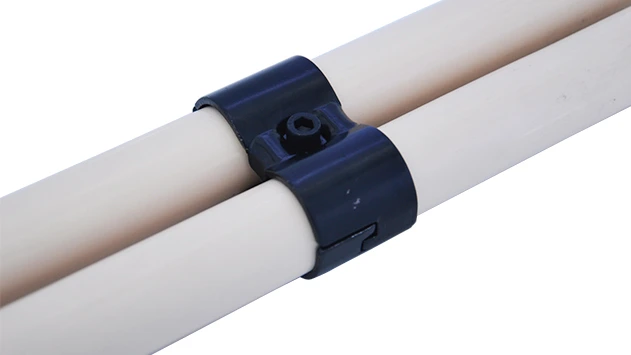
Parallel lean pipe joint used for 2 pcs 28MM lean pipe connection in parallel direction to enhance frame structure, usually for heavy payload requirement for workbench. flow rack, hand trolley.
In the high-stakes world of automotive parts assembly, where production targets loom like deadlines and every minute of operation translates to real dollars, downtime isn't just an inconvenience—it's a crisis. A single hour of halted production can cost a manufacturer tens of thousands of dollars in lost revenue, not to mention the domino effect on supply chains, customer commitments, and team morale. For plant managers and floor supervisors, the daily battle is to keep lines moving, minimize interruptions, and balance speed, quality, and cost. This is where lean manufacturing principles take center stage—and at the heart of effective lean systems lies a small but transformative component: the lean pipe joint. Specifically, the one side rotatory parallel lean pipe joint has emerged as a quiet disruptor, offering the flexibility, durability, and adaptability that rigid, outdated components simply can't match.
But before diving into the nuts and bolts of these innovative joints, let's ground ourselves in the basics. What defines a lean system, and why do its building blocks matter so much in automotive assembly? Lean manufacturing, rooted in the Toyota Production System, is fundamentally about eliminating waste—whether that's wasted time, materials, or effort. In practice, this means designing workflows and workspaces that are efficient, adaptable, and responsive to change. Lean pipe structures, typically constructed from aluminum or steel pipes connected by joints, are the backbone of these systems. They form everything from workbenches where technicians assemble intricate sensors to flow racks that feed materials to the line, and conveyors that shuttle components between stations. These structures need to be tough enough for daily use but flexible enough to reconfigure when production needs shift—and that's where the right joints become game-changers.
The Hidden Cost of Traditional Lean Pipe Joints
For decades, automotive plants relied on fixed or limited-movement lean pipe joints. These joints, while functional, came with a laundry list of flaws that directly fed into downtime. Picture this: A production line needs to switch from assembling small ignition coils to larger alternator brackets. The workbench, perfectly sized for coils, now needs to be taller, wider, or angled to fit the brackets. With traditional fixed joints, this adjustment would involve hunting for a wrench, loosening bolts, repositioning pipes, and retightening—20 minutes per workstation, minimum. Multiply that by 20 workbenches across a plant, and a "quick changeover" becomes a half-day slog, stopping production in its tracks.
Then there's maintenance. Traditional joints often had a maze of small parts—nuts, bolts, washers—that loosened over time from machinery vibrations or repeated use. A loose joint might make a workbench wobble, leading to assembly errors or safety hazards. Fixing it meant stopping the line, disassembling part of the structure, and replacing components—another unplanned downtime nightmare. And if a joint failed completely? The entire section of the lean system might need to be shut down, delaying production until a replacement arrived.
One Side Rotatory Parallel Joints: A Design Revolution
The one side rotatory parallel lean pipe joint was engineered to solve these pain points. At first glance, it looks unassuming, but its design hides a clever functionality: one side fixed, the other rotating parallel to the pipe axis, allowing tool-free adjustment and secure locking. Unlike traditional joints, which treated flexibility as an afterthought, these joints make adaptability their core feature.
Let's break down their key advantages:
- Tool-Free Adjustment: No wrenches, no screwdrivers—just a simple lever or twist to loosen, reposition, and lock. A worker can adjust a workbench height in 10 seconds instead of 10 minutes.
- 360-Degree Parallel Rotation: The rotating side keeps pipes aligned along a parallel plane, making it easy to adjust workbench angles, flow rack shelf heights, or conveyor track alignment without disrupting the entire structure.
- Durable Construction: Made from high-grade aluminum or steel, these joints withstand the daily grind of automotive plants—vibrations, temperature swings, and repeated adjustments. Their simplified design means fewer parts to wear out or break.
- Rock-Solid Locking: Despite their ease of use, these joints don't skimp on stability. The locking mechanism creates a tight, rattle-free connection that supports heavy parts and tools without slipping—a must for precision work.
- Backward Compatibility: They work with standard lean pipe sizes (28mm or 40mm diameter), so plants don't need to replace entire pipe systems. Just swap old joints for new ones—a cost-effective upgrade.

How These Joints Slash Downtime: Real-World Impact
The benefits of these joints aren't just theoretical—they translate directly to less downtime and more productive hours on the line. Let's explore how they tackle the biggest downtime culprits in automotive assembly.
Faster Changeovers for Mixed-Model Production
Modern automotive manufacturing thrives on variety. A single plant might produce 50+ part variants—think brake calipers for sedans vs. SUVs, or sensors for electric vs. gas engines. Each variant often demands workstation tweaks. With traditional joints, switching between variants meant lengthy changeovers as workers disassembled and reassembled sections. With one side rotatory parallel joints, changeovers become almost instant.
Take a flow rack supplying door hinges to the line. For small hinges, shelves are spaced 6 inches apart; for larger hinges, 12 inches. With traditional joints, adjusting 6 shelves takes 30 minutes (5 minutes per shelf). With a rotatory joint? Flip the lever, slide the shelf, lock—10 seconds per shelf. A 30-minute task becomes a 1-minute task, letting the line restart immediately.
Fewer Maintenance Emergencies
Unplanned downtime stings most, as it disrupts schedules and requires repairs. Traditional joints, with their many small parts, loosened or broke often, causing wobbly workbenches or misaligned conveyors. One side rotatory parallel joints, with their robust design, drastically cut these incidents. The tool-free locking stays tight under vibration, and fewer moving parts mean less wear.
Consider a conveyor with roller tracks moving gearboxes to testing. A loose traditional joint might tilt the track, jamming gearboxes. Fixing it? Stop the line, remove the joint, reinstall—60 minutes. With a rotatory joint, alignment stays true, and adjustments (if needed) happen on the fly without stopping production.
Ergonomics: Reducing Errors, Boosting Speed
Downtime isn't just machines stopping—it's also human error. Poorly adjusted workstations force workers into awkward positions, leading to mistakes that require rework. A technician assembling a fuel injector might strain to reach tools, misaligning an O-ring. Discovering the error later means disassembly and rebuilding—20 minutes per unit. Rotatory joints let workers adjust workbenches instantly: lower for seated tasks, higher for standing; tilt surfaces to reduce glare. This cuts strain, speeds assembly, and slashes errors.

Traditional vs. Rotatory Joints: A Clear Comparison
To quantify the impact, let's compare traditional fixed joints with one side rotatory parallel joints across key downtime drivers. Data comes from automotive plants that upgraded their lean systems:
| Metric | Traditional Fixed Joints | One Side Rotatory Parallel Joints | Improvement |
|---|---|---|---|
| Workbench height adjustment time | 15–20 minutes | 30–60 seconds | 95% faster |
| Monthly maintenance incidents (per 100 joints) | 8–10 incidents | 1–2 incidents | 80–87% reduction |
| Production line changeover time (5 workstations) | 2–3 hours | 30–45 minutes | 75–83% faster |
| Worker-reported ergonomic strain | 35–40% of workers | 5–10% of workers | 70–87% reduction |
| Joint replacement time (when needed) | 45–60 minutes | 5–10 minutes | 83–92% faster |
For a mid-sized plant producing 10,000 parts daily, a 25% downtime reduction translates to 2,500 extra parts monthly—boosting revenue and competitiveness.
Integrating with Workbenches, Flow Racks, and Conveyors
The true power of these joints shines when paired with other lean components. Let's see how they elevate workbenches, flow racks, and conveyors—key players in automotive assembly.
Workbenches: From Static to Adaptive
Workbenches are where technicians spend most of their shifts, assembling parts with precision. Traditional benches were fixed, forcing workers to adapt. With rotatory joints, benches become dynamic: A technician assembling circuit boards lowers the bench to seated height; switching to brackets, they raise it to standing in seconds. Tool rails reposition to keep essentials handy, cutting reach time.
Take the "Workbench E (Single Deck—Without Caster)," a popular model. Originally fixed, upgrading to rotatory joints lets height adjust from 700mm to 1100mm, and the surface tilts 30 degrees for better visibility. A static bench becomes a customizable workspace that evolves with tasks—no downtime for adjustments.
Flow Racks: Smoother Material Flow
Flow racks keep materials accessible, but traditional racks had fixed shelf angles. A new part might jam or slide too fast. Rotatory joints let workers tweak angles instantly: shallow for small clips, steep for heavy brackets. "Material Rack B (3 Row and 3 Floor)," a common design, becomes versatile—one rack serves multiple part types, reducing the need for dedicated racks and material-moving downtime.
Conveyors: Jam-Free and Aligned
Conveyors move parts between stations, and even minor misalignment causes jams. Traditional systems used rigid joints, making alignment a chore. Rotatory joints allow micro-adjustments to roller tracks (like "40 Steel Roller Track Yellow Wheel" or "38 Aluminum Roller Track Black ESD"), ensuring parts flow smoothly. A misaligned section? Loosen, tweak, lock—done in seconds, no line stop.
Choosing a Lean Pipe Supplier: Quality Matters
Not all joints are created equal. To maximize downtime reduction, choose a supplier that prioritizes quality: high-grade aluminum/steel, rigorous testing (vibration, load, wear), and tool-free design. Look for suppliers offering full lean systems—pipes, workbenches, racks—to ensure compatibility. Avoid cheap, flimsy joints; they'll fail faster, causing more downtime than they solve. A reputable supplier will also provide training, so your team can make the most of the joints from day one.
Conclusion: Small Parts, Big Results
In automotive manufacturing, where every second counts, the one side rotatory parallel lean pipe joint is more than an upgrade—it's a strategic investment. It turns static workspaces into adaptive hubs, slashes changeover and maintenance time, and empowers workers to do their best. For plants striving to meet tight deadlines, reduce costs, and stay competitive, these joints are the quiet heroes that keep lines moving, parts flowing, and revenue growing. After all, in a industry where downtime is the enemy, the right joint can turn losses into gains—one adjustment at a time.