- Company Articles
- Products and Technology
- Product knowledge
- One Side Rotatory Parallel Lean Pipe Joints: Supporting Sustainable Manufacturing Practices

One Side Rotatory Parallel Lean Pipe Joints: Supporting Sustainable Manufacturing Practices
Related Product
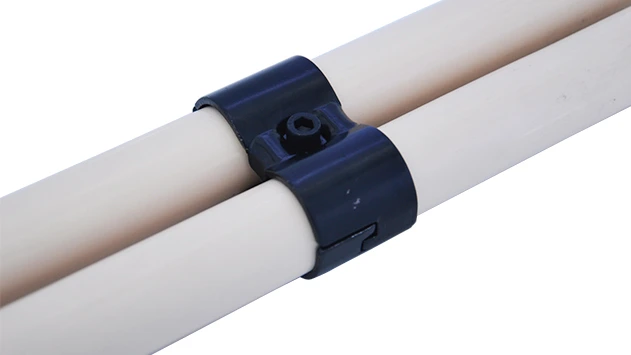
Parallel Lean Pipe Joint
Parallel lean pipe joint used for 2 pcs 28MM lean pipe connection in parallel direction to enhance frame structure, usually for heavy payload requirement for workbench. flow rack, hand trolley.
The Hidden Heroes of Modern Manufacturing
Walk into any bustling factory, and your eyes might be drawn to the robots whirring on the assembly line, the conveyor belts carrying products like a steady river, or the workers in bright safety vests coordinating tasks with precision. But if you look closer—past the flashy machinery and the organized chaos—you'll find the unsung heroes of manufacturing: the small, unassuming components that hold everything together. Today, we're shining a light on one such hero: the one side rotatory parallel lean pipe joint. It might not grab headlines, but in the quest for sustainable, efficient manufacturing, this little joint is a game-changer.
Sustainability in manufacturing isn't just a buzzword. It's a pressing need. Factories worldwide are grappling with rising material costs, stricter environmental regulations, and the growing expectation from consumers to produce goods responsibly. The challenge? How to reduce waste, cut energy use, and minimize carbon footprints—all while keeping production lines running smoothly and profits intact. Enter lean manufacturing, a philosophy built on the idea of "doing more with less." And at the heart of lean manufacturing lies a simple yet powerful tool: lean pipe systems. These systems, made from modular pipes and joints, let factories build, adapt, and rebuild workbenches, racks, and production lines with ease. But not all joints are created equal. The one side rotatory parallel lean pipe joint, in particular, is redefining what it means to be "lean" and sustainable.
What Even Is a One Side Rotatory Parallel Lean Pipe Joint?
Let's start with the basics. Imagine you're building a workbench for an assembly line. Traditionally, you might use welded steel frames or rigid plastic structures. They're strong, but once they're built, they're stuck. If you need to adjust the height, add a shelf, or move the workbench to a new location, you're out of luck—you'd have to take it apart and start over, wasting time, materials, and money. That's where lean pipe systems come in. They use lightweight pipes (often aluminum or steel) and joints that snap or screw together, no welding required. And the one side rotatory parallel lean pipe joint? It's the flexible cousin in this family.
Picture this: a joint that connects two parallel pipes but lets one side rotate freely. Need to angle a shelf slightly to let parts slide more easily? Rotate the joint. Want to fold down a section of a workbench when it's not in use? Twist the joint. Unlike fixed joints, which lock pipes into place at rigid angles, this joint gives workers the power to tweak, adjust, and reconfigure their setups on the fly. It's like having a production line that can "bend" without breaking.
Real-World Example: Maria, a production manager at a small electronics factory, was struggling with her assembly line. Her team built two types of products: small circuit boards and larger routers. The circuit boards needed a low workbench for soldering, while the routers required a taller surface to fit their size. For months, Maria's team wasted 30 minutes every morning switching between two separate workbenches. Then, she discovered lean pipe systems with one side rotatory parallel joints. Now, they use a single workbench: the height-adjustable legs, connected by these rotating joints, let workers lower or raise the surface in seconds. "It's like magic," Maria told me. "We used to throw away old workbench parts when we reconfigured—now we just twist a joint and reuse everything."
These joints are typically made from durable materials like aluminum or high-grade plastic, designed to withstand the wear and tear of daily factory life. But their real superpower isn't just strength—it's adaptability. In a world where product lifecycles are getting shorter (think: new smartphone models every 6 months, seasonal clothing lines, or custom-made machinery), factories can't afford to be stuck with rigid setups. The one side rotatory parallel joint turns "permanent" into "temporary," and "wasteful" into "wise."

Sustainability: More Than Just a "Green" Label
So, how does a tiny joint contribute to sustainability? Let's break it down. Sustainable manufacturing has three pillars: environmental, economic, and social. The one side rotatory parallel lean pipe joint strengthens all three.
Environmental Sustainability: Waste is the enemy of sustainability, and manufacturing is notorious for it—scrap metal from welded frames, broken plastic parts from rigid structures, and excess energy used to produce new components when old ones become obsolete. The one side rotatory parallel joint fights waste in two key ways. First, it's reusable. Unlike welded joints, which are destroyed when you take them apart, these joints can be unscrewed, moved, and reused on new setups. A study by the Lean Manufacturing Institute found that factories using modular lean pipe systems reduce material waste by up to 40% compared to traditional setups. Second, many of these joints are made from aluminum lean pipe, a material that's 100% recyclable. When a joint finally reaches the end of its life (which, with proper care, could be decades), it can be melted down and turned into new parts, reducing the need for mining raw materials.
Economic Sustainability: For factories, sustainability isn't just about saving the planet—it's about saving money. Rigid production lines often require expensive overhauls when product designs change. With modular joints, those overhauls become simple tweaks. Take a furniture manufacturer, for example. If they switch from making wooden chairs to metal stools, they might need narrower workbenches. With traditional setups, they'd have to buy new workbenches (costing thousands of dollars) and discard the old ones (wasting even more). With one side rotatory parallel joints, they can adjust the existing workbenches by repositioning pipes and joints—no new purchases, no waste. Over time, these savings add up. A mid-sized factory could save $50,000+ annually on material and labor costs by using modular lean pipe systems, according to industry estimates.
Social Sustainability: Happy workers are productive workers. Rigid setups can lead to frustration—imagine bending over a workbench that's too low for hours, or struggling to reach tools because the shelf is fixed in the wrong spot. The one side rotatory parallel joint lets workers customize their workspaces to fit their needs. A taller worker can raise their bench; a left-handed assembler can rotate a tool rack for easier access. This reduces strain, cuts down on workplace injuries, and boosts morale. When workers feel their comfort and efficiency are valued, they're more engaged—and that's good for business.
"Sustainability isn't about making one big change. It's about making a thousand small ones. The one side rotatory parallel joint is one of those small changes that adds up to something huge." — Raj Patel, Sustainability Director at a global automotive parts manufacturer.

From Joints to Systems: Building a Lean Workbench That Lasts
A joint is only as good as the system it's part of. To truly see the impact of the one side rotatory parallel lean pipe joint, let's zoom out and look at the bigger picture: the lean pipe workbench. Workbenches are the heart of any assembly line—they're where products are built, tested, and packaged. A well-designed workbench can streamline workflow, reduce errors, and keep tools within arm's reach. A poorly designed one? It's a bottleneck waiting to happen.
Traditional workbenches are often "one-size-fits-all," built to meet the needs of a specific product. But when production shifts, they become liabilities. A lean pipe workbench, built with modular pipes and joints (including our star joint), is different. It's a blank canvas. Need a shelf for tools? Add a few pipes and joints. Want a conveyor belt attachment to move parts to the next station? Rotate a joint to angle the belt just right. Need to roll the workbench across the factory floor? Attach casters (another modular component) to the base. The possibilities are endless, and the key is flexibility.
| Feature | Traditional Workbench | Lean Pipe Workbench with One Side Rotatory Parallel Joints | Sustainability Impact |
|---|---|---|---|
| Setup Time | 2–3 days (requires welding/cutting) | 2–3 hours (no tools needed for basic setups) | Reduces energy use from power tools; cuts labor hours by 90% |
| Reusability | Low (often discarded when no longer needed) | High (pipes and joints can be repurposed indefinitely) | Reduces material waste by up to 70% |
| Customization | Limited (fixed height, no adjustable shelves) | Unlimited (adjust height, add/remove components in minutes) | Extends workbench lifespan by 5–10 years |
| Material | Often steel or plastic (hard to recycle) | Aluminum lean pipe (100% recyclable) | Reduces reliance on non-recyclable materials |
Take the example of a medical device manufacturer I visited last year. They produce everything from small syringes to large MRI machine parts, each requiring different workbench setups. Before switching to lean pipe systems, they had 12 different workbenches—one for each product line. When a product was discontinued, the workbench sat idle, collecting dust. Today, they have 4 lean pipe workbenches, all built with one side rotatory parallel joints. When they need to switch from syringes to MRI parts, the team reconfigures the workbench in under an hour. No idle equipment, no wasted space, no extra costs. "We used to have a storage room full of old workbenches," the plant manager told me. "Now, that room is a break area for employees. It's not just about saving money—it's about making our factory a better place to work."
Choosing the Right Lean Pipe Supplier: Trust Matters
Not all one side rotatory parallel lean pipe joints are created equal. To maximize sustainability and efficiency, you need high-quality components. That's where choosing the right lean pipe supplier comes in. A reliable supplier doesn't just sell parts—they partner with you to build a system that meets your needs. Here's what to look for:
Quality Materials: The best joints are made from durable, recyclable materials like aluminum or stainless steel. Avoid suppliers who cut corners with cheap plastic or low-grade metal—these joints will break quickly, leading to more waste and higher replacement costs.
Design Expertise: A good supplier doesn't just hand you a catalog—they ask questions. What products do you make? How often do your setups change? What's your biggest workflow challenge? They'll then recommend the right combination of pipes, joints, and accessories (like casters or shelves) to solve those problems.
Commitment to Sustainability: Look for suppliers who prioritize eco-friendly manufacturing practices—using renewable energy in their factories, recycling packaging, or offering take-back programs for old components. A supplier that cares about sustainability is more likely to produce components that align with your green goals.
Remember: the cheapest joint isn't always the best deal. A high-quality one side rotatory parallel joint might cost a few dollars more upfront, but it will last longer, reduce waste, and save you money in the long run. As the saying goes, "Buy nice, or buy twice."
The Future of Manufacturing: Small Parts, Big Dreams
The manufacturing landscape is changing fast. Smart factories, powered by AI and automation, are becoming the norm. But even in this high-tech world, the basics still matter. A robot can assemble a product in seconds, but if the workbench it's operating on is rigid and outdated, that robot's efficiency goes to waste. The one side rotatory parallel lean pipe joint is a bridge between the old and the new—it's a simple, low-tech component that makes high-tech manufacturing possible.
Looking ahead, the circular economy will become even more critical. Factories won't just make products—they'll design them to be taken apart, reused, and recycled. Modular components like lean pipe joints will be the building blocks of this economy. Imagine a future where a car manufacturer, instead of scrapping an entire assembly line when a new model launches, simply reconfigures the workbenches, racks, and conveyors using the same pipes and joints. Waste drops to zero, costs plummet, and the planet breathes a little easier.
So, the next time you walk through a factory, take a moment to look down at the workbenches, the racks, and the pipes that hold everything together. You might just spot a one side rotatory parallel lean pipe joint—a small part with a big mission. It's not just connecting pipes; it's connecting the present to a more sustainable future. And in that future, every joint, every pipe, and every workbench will tell a story of innovation, efficiency, and respect for the planet we all share.