- Company Articles
- Products and Technology
- Product knowledge
- One Side Rotatory Parallel Lean Pipe Joints vs. Universal Joints: Which Offers More Flexibility?

One Side Rotatory Parallel Lean Pipe Joints vs. Universal Joints: Which Offers More Flexibility?
Related Product
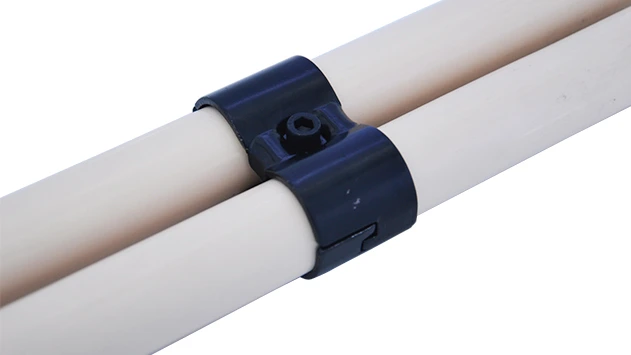
Parallel Lean Pipe Joint
Parallel lean pipe joint used for 2 pcs 28MM lean pipe connection in parallel direction to enhance frame structure, usually for heavy payload requirement for workbench. flow rack, hand trolley.
Introduction: The Backbone of Lean Systems
In the world of manufacturing and production, where efficiency is king, lean systems have become the gold standard for streamlining workflows, reducing waste, and keeping operations agile. At the heart of these systems lies a seemingly small but critical component: the lean pipe joint. These unassuming connectors are the glue that holds together everything from workbenches and flow racks to conveyor systems and material trolleys. But not all joints are created equal. Today, we're diving into two popular types: one side rotatory parallel lean pipe joints and universal joints . Which one truly delivers the flexibility modern factories and workshops need? Let's unpack this.
First, let's set the stage. Lean systems thrive on modularity— the ability to build, reconfigure, and adapt structures quickly as needs change. Whether you're assembling a workbench for electronics production or a flow rack for warehouse picking, the joints you choose dictate how easily you can adjust heights, angles, or layouts. This isn't just about convenience; it's about downtime, labor costs, and staying competitive in a fast-paced market. So, when we talk about "flexibility," we're really talking about a joint's ability to support dynamic, real-world demands.
Understanding Lean Pipe Joints: More Than Just Connectors
Before we compare the two joint types, let's get clear on what a lean pipe joint does. At its core, a lean pipe joint connects two or more lengths of pipe (often aluminum lean pipe or steel) to form rigid or semi-rigid structures. But modern joints do more than just "hold things together." They allow for rotation, adjustment, and even disassembly—key features for modular systems. Think of them as the "knees" and "elbows" of your production line: they need to bend when necessary, stay strong when needed, and not slow you down when you need to rearrange.
Most lean pipe joints are designed to work with standard pipe diameters (like 28mm or 30mm for aluminum lean pipe) and are compatible with accessories like casters, roller tracks, and workbench surfaces. The best joints balance three factors: strength (to support tools, materials, or products), adjustability (to tweak angles or positions), and ease of use (so your team isn't fumbling with specialized tools during reconfigurations).

One Side Rotatory Parallel Lean Pipe Joints: Stability Meets Controlled Movement
What Are They?
Let's start with one side rotatory parallel lean pipe joints. As the name suggests, these joints allow rotation on one side while keeping the other side fixed—or "parallel"—to the connected pipe. Picture a T-joint where one arm can swivel up and down, but the other arm stays locked in a straight line with the main pipe. This design is intentional: it offers controlled movement without sacrificing stability.
These joints are typically made from die-cast aluminum or steel, with a rotating mechanism (often a pin or bearing) on one end and a fixed clamp on the other. They're engineered for precision: the rotation is smooth but not loose, with built-in stops to prevent over-rotation. This makes them ideal for setups where you need occasional adjustment but want to avoid accidental movement during operation.
Key Features & Benefits
- Controlled Rotation: The single rotating axis means you can adjust angles (often 0-90 degrees) with precision. For example, if you're building a workbench with a side shelf, you can tilt the shelf up when not in use or angle it for better access—no guesswork, no wobbly movement.
- Stability in Parallel Configurations: Since one side stays fixed, these joints excel at maintaining parallel alignment between pipes. This is crucial for structures like roller tracks or material racks, where even a slight misalignment can cause jams or uneven loading.
- Easy Locking Mechanisms: Most models feature a simple lever or bolt to lock the rotation in place. Once set, they hold firm under load, so you don't have to worry about shelves sagging or tracks shifting mid-production.
- Cost-Effective: Compared to universal joints, one side rotatory parallel joints are often more affordable. They have fewer moving parts, which lowers manufacturing costs—and that savings passes to you.
Best For: Structured, Low-Fuss Setups
These joints shine in environments where the workflow is relatively consistent but still needs occasional tweaks. For example:
- Assembly Workbenches: A workbench with a side-mounted tool rack. You might need to angle the rack for better tool access but want it to stay put during assembly. One side rotatory joints let you set the angle once and lock it.
- Fixed-Angle Material Racks: Think of a flow rack with inclined shelves for gravity-fed parts. The angle of the incline rarely changes, but during setup, you need to dial it in perfectly. These joints make that initial adjustment easy and keep it stable afterward.
- Production Lines with Standardized Processes: If your team assembles the same product day in and day out, you don't need joints that can twist in every direction. One side rotatory joints offer just enough flexibility without overcomplicating things.
Potential Drawbacks
Of course, no joint is perfect. The controlled rotation that makes these joints stable is also their limitation. They can't swivel 360 degrees or pivot in multiple directions. If your workflow requires frequent, multi-axis adjustments—say, a mobile trolley that needs to adapt to different workstations throughout the day—these joints might feel restrictive. Additionally, the fixed parallel side means they're not ideal for complex, non-linear structures (like a zig-zag conveyor system).

Universal Joints: The Swiss Army Knife of Lean Pipe Connections
What Are They?
Now, let's turn to universal joints. These are the "all-terrain vehicles" of lean pipe connections. Unlike one side rotatory joints, universal joints allow rotation in multiple axes—often 360 degrees horizontally and a wide range vertically. Imagine a ball-and-socket joint (like your shoulder) that lets you move your arm up, down, left, right, and everywhere in between. That's the idea here.
Universal joints are built with a central rotating core (sometimes a ball or gimbal) that connects two or more pipe clamps. This core allows each connected pipe to move independently, making them incredibly versatile. They're often used in setups where the structure needs to bend, twist, or adapt to irregular spaces.
Key Features & Benefits
- Multi-Axis Rotation: The biggest selling point. Universal joints can pivot in almost any direction, making them perfect for complex structures. Need a conveyor that turns a corner and then slopes upward? Universal joints can handle that.
- Adaptability to Dynamic Environments: If your factory floor is always changing—new product lines, seasonal demand spikes, or temporary workstations—universal joints thrive. They let you reconfigure on the fly without replacing the entire structure.
- Compatibility with Complex Accessories: Want to mount a monitor arm, a tool holder, and a parts bin on the same workbench, all at different angles? Universal joints make it possible, with each component adjustable independently.
- Future-Proofing: As your business grows, your needs will change. Universal joints give you the flexibility to repurpose structures. A workbench today could become a mobile cart tomorrow, thanks to their adaptability.
Best For: Dynamic, Ever-Changing Workflows
Universal joints are a game-changer for environments where rigidity is the enemy. Here are some scenarios where they shine:
- Custom Workstations: Think of a research and development lab where each project requires a unique setup. Scientists might need to adjust shelving heights, tool positions, and monitor angles daily. Universal joints make these changes quick and easy.
- Mobile Trolleys and Carts: A trolley that delivers materials to different parts of the factory needs to navigate tight spaces and adapt to varying loading heights. Universal joints let you adjust the handle angle, shelf positions, and even wheel alignment on the go.
- Prototype Production Lines: When you're testing a new product, the assembly process is constantly evolving. Universal joints let you tweak the line layout without stopping production for hours.
- Space-Constrained Areas: In small factories or warehouses, every inch counts. Universal joints let you build structures that wrap around pillars, fit into corners, or stack vertically—maximizing space without sacrificing functionality.
Potential Drawbacks
With great flexibility comes some trade-offs. Universal joints are more complex than one side rotatory joints, which means they're often pricier. They also have more moving parts, which can wear out faster if not maintained properly. And while their multi-axis movement is a strength, it can be a weakness in high-vibration environments: without proper locking, joints might loosen over time, leading to wobbly structures. Finally, for simple, fixed setups, they're overkill—you're paying for flexibility you don't need.
Head-to-Head: Comparing Key Factors
To make the choice clearer, let's put these two joint types side by side. The table below compares them across critical factors for lean system flexibility:
| Factor | One Side Rotatory Parallel Lean Pipe Joints | Universal Joints |
|---|---|---|
| Rotation Range | Single axis (e.g., 0-90 degrees) | Multi-axis (360 degrees horizontal, wide vertical range) |
| Stability | High (fixed parallel side prevents unwanted movement) | Moderate (may loosen in high vibration; requires secure locking) |
| Ease of Installation | Simple (fewer parts; basic tools needed) | More complex (multiple components; may require alignment) |
| Cost | Lower (simpler design) | Higher (complex mechanism) |
| Best For | Fixed or rarely adjusted structures (workbenches, static flow racks) | Dynamic, frequently reconfigured setups (custom workstations, mobile carts) |
| Maintenance Needs | Low (fewer moving parts) | Moderate (lubrication of rotating parts; periodic tightening) |
The Verdict: Which Joint Offers More Flexibility?
The answer depends on what "flexibility" means for your operation. If flexibility is about adaptability to ever-changing needs—custom setups, frequent reconfigurations, or complex, multi-directional structures— universal joints are the clear winner . Their ability to rotate in multiple axes makes them indispensable for dynamic environments where rigidity would stifle innovation.
But if flexibility is about reliable adjustability—being able to make precise, occasional changes without sacrificing stability—then one side rotatory parallel joints offer a better balance. They're the workhorses of standardized production lines, where "set it and forget it" is the name of the game.
In many cases, the best solution is a hybrid approach. Use universal joints in areas that need constant tweaking (like R&D workbenches or mobile carts) and one side rotatory joints in static areas (like fixed flow racks or assembly lines with stable processes). This way, you're not overspending on flexibility you don't need, but you're still prepared for changes where they matter most.
Final Thoughts: Investing in the Right Lean System
At the end of the day, lean pipe joints are more than just hardware—they're an investment in your lean system 's efficiency and longevity. Choosing between one side rotatory parallel joints and universal joints isn't about picking "the best" joint; it's about picking the best joint for your unique needs.
Start by evaluating your workflow: How often do you reconfigure structures? What kind of loads do they support? Are precision and stability more important than adaptability? Talk to your team—they'll have insights into pain points (like "we spend too much time adjusting the flow rack angle") that can guide your choice. And don't forget to consider long-term costs: a slightly pricier universal joint might save you money down the line if it reduces downtime during reconfigurations.
Whether you opt for the controlled stability of one side rotatory parallel joints or the go-anywhere versatility of universal joints, the goal is the same: to build a lean system that works for your team, not against them. After all, in lean manufacturing, the most flexible systems are the ones that make everyone's job a little easier—and a lot more productive.