- Company Articles
- Products and Technology
- Procurement Guidelines
- One Side Rotatory Parallel Lean Pipe Joints: What to Look for When Purchasing

One Side Rotatory Parallel Lean Pipe Joints: What to Look for When Purchasing
Related Product
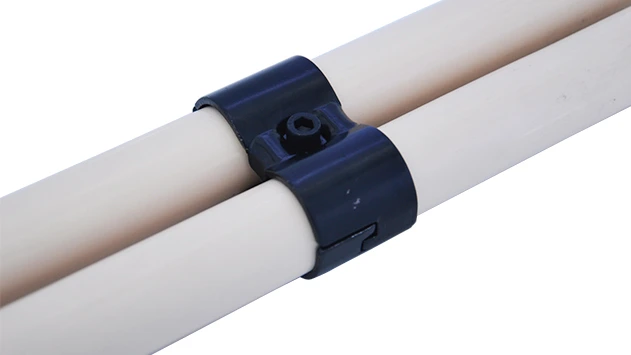
Parallel Lean Pipe Joint
Parallel lean pipe joint used for 2 pcs 28MM lean pipe connection in parallel direction to enhance frame structure, usually for heavy payload requirement for workbench. flow rack, hand trolley.
Walk into any modern manufacturing facility, and you'll likely notice a quiet hero working behind the scenes: lean pipe systems. These unassuming structures—made of pipes, joints, and accessories—form the backbone of assembly lines, workbenches, material racks, and more. They're the reason production floors can adapt quickly, reduce waste, and keep operations running like well-oiled machines. But here's the thing: none of that efficiency happens without the right components. And today, we're zooming in on one component that's easy to overlook but critical to success: the one side rotatory parallel lean pipe joint.
If you've ever reconfigured a workbench, adjusted a material rack, or set up a temporary assembly line, you know the frustration of joints that stick, wobble, or fail under pressure. The right joint, though? It turns those headaches into afterthoughts. So, whether you're a production manager upgrading your facility, a small business owner building your first lean setup, or a procurement specialist sourcing parts, this guide is for you. We're breaking down everything you need to know about one side rotatory parallel lean pipe joints—what they are, why they matter, and most importantly, how to choose the best ones for your needs.
Understanding Lean Systems: The Backbone of Modern Manufacturing
Before we dive into the specifics of joints, let's take a quick step back. Lean manufacturing isn't just a buzzword—it's a philosophy centered on eliminating waste, streamlining processes, and maximizing value. And at the heart of any lean operation is flexibility. Production lines need to shift from making Product A to Product B in hours, not days. Material racks need to adapt to new inventory sizes. Workbenches need to adjust to different operator heights or task requirements.
That's where lean pipe systems come in. Made from lightweight yet durable materials like steel, aluminum, or stainless steel, these systems use modular pipes and joints to create custom structures. Think of them as industrial Legos: mix and match components to build exactly what you need, then take it apart and rebuild when things change. And while the pipes get a lot of attention, the joints are the glue that holds it all together—literally and figuratively. They determine how strong the structure is, how easy it is to reconfigure, and how long it will last.
Enter the one side rotatory parallel lean pipe joint. Unlike fixed joints that lock pipes in place, or swivel joints that rotate 360 degrees, this type of joint lets one side rotate while keeping the other side fixed. Picture a workbench shelf that needs to tilt slightly to feed parts to an assembly line, or a material rack arm that swings out to load/unload without disrupting the rest of the structure. That's the magic of the one side rotatory parallel joint: controlled movement where you need it, stability where you don't.
What Are One Side Rotatory Parallel Lean Pipe Joints, Exactly?
Let's start with the basics. A one side rotatory parallel lean pipe joint is a connector designed to join two lean pipes (or other structural components) in a parallel arrangement, with one side able to rotate around a fixed axis. The "parallel" part means the pipes it connects run alongside each other (think of two horizontal pipes on a workbench frame), and the "one side rotatory" part means one pipe can pivot relative to the other—say, to adjust the angle of a shelf or the height of a material guide.
These joints are often used in setups where controlled movement is key. For example: a workbench with a tilting top to reduce operator strain, a flow rack where sections need to angle downward to feed parts to the next station, or a mobile trolley with adjustable side rails. Unlike fixed joints, which keep everything rigid, or fully swiveling joints, which offer unlimited rotation, these joints strike a balance: stability when you need it, movement when you don't.
But not all one side rotatory parallel joints are created equal. Some are made for light-duty tasks, like holding small tools on a workbench. Others are built to handle heavy loads, like stacks of metal parts on a material rack. The difference? Materials, design, and engineering. And that's where the buying process gets tricky. Let's break down what to look for.

Key Factors to Consider When Purchasing One Side Rotatory Parallel Lean Pipe Joints
1. Material Quality: It Starts with the Basics
First things first: what's the joint made of? Most lean pipe joints are crafted from steel, aluminum, or a combination of both. But not all steel or aluminum is the same. Let's break it down:
Steel Joints: Traditional lean pipe systems often use steel joints, which are known for strength and durability. Look for joints made from high-grade carbon steel—ideally with a chrome plating or powder coating. Chrome plating adds corrosion resistance (important if your facility is humid or uses coolants) and a smooth finish that reduces friction during rotation. Powder coating, on the other hand, offers better scratch resistance and comes in colors that can help with organization (e.g., yellow for high-traffic areas, gray for standard use).
Aluminum Lean Pipe Joints: If you're using aluminum lean pipe (a lighter, more corrosion-resistant alternative to steel), you'll want aluminum joints to match. Aluminum is naturally rust-proof, making it ideal for cleanrooms, food processing facilities, or outdoor use. Look for joints made from extruded aluminum with an anodized finish—this process hardens the surface, boosting scratch resistance and durability. Just note: aluminum is lighter than steel, so it may not handle the same heavy loads. If you're dealing with bulky materials, steel might still be the way to go.
Plastic Components: Some joints have plastic parts, like washers or bushings, to reduce friction during rotation. These are fine, but check the plastic quality. Cheap plastics can crack or wear down quickly, especially under repeated use. Look for high-density polyethylene (HDPE) or nylon—these materials stand up to friction, chemicals, and temperature changes better than generic plastics.
2. Rotational Mechanism: Smoothness and Reliability
The whole point of a "rotatory" joint is to rotate smoothly, right? So don't skimp here. A good joint should spin easily with minimal effort, even when under load. Here's what to test (or ask about):
Bearings or Bushings: How does the joint rotate? Some use plain bushings (simple sleeves that reduce friction), while others have ball bearings for smoother movement. Bearings are better for heavy loads or frequent rotation—they distribute weight evenly and reduce wear. If the joint uses bearings, ask what type: sealed bearings (better for dusty environments) or open bearings (may need more lubrication). Avoid joints with no friction-reducing components—they'll stick or seize up quickly.
Locking Mechanism: Most rotatory joints let you lock the rotation at a specific angle. This is crucial for stability—imagine a workbench shelf that tilts unexpectedly mid-task! Test the lock: it should engage firmly, hold the position under load, and release easily without jamming. Look for locks with clear "click" positions or a smooth lever action—avoid vague, slippery locks that are hard to adjust.
Wear and Tear: Over time, even the best joints will wear down. Ask the supplier about the expected lifespan of the rotational components. Do they offer replacement parts (like bearings or bushings) if something wears out? A joint that's easy to repair will save you money in the long run compared to one you have to replace entirely.
3. Compatibility: Will It Play Nice with Your Existing Setup?
There's nothing more frustrating than ordering a batch of joints only to find they don't fit your pipes. Lean pipe systems come in standard sizes, but "standard" can vary by region or manufacturer. Here's what to check:
Pipe Diameter: Most lean pipes are 28mm (1.1 inches) or 30mm (1.18 inches) in diameter. Make sure the joint's inner diameter matches your pipes. A joint that's too loose will wobble; too tight will be impossible to assemble (or damage the pipe).
Thread Type and Depth: If the joint uses screws or bolts to attach to pipes, check the thread type (metric vs. imperial) and depth. A shallow thread might not grip the pipe securely, leading to loosening over time. If you're unsure, ask the supplier for compatibility charts—reputable lean pipe suppliers will have these on hand.
Accessory Compatibility: Will the joint work with other lean pipe accessories? For example, if you want to add a caster wheel to a trolley frame, does the joint have a hole or bracket for that? Or if you need to attach a tool hook, is there a mounting point? The more compatible the joint, the more versatile your lean system will be.
4. Load Capacity: Don't Overestimate (or Underestimate)
Every joint has a maximum load it can handle—both static (when the structure is stationary) and dynamic (when it's being moved or rotated). Ignore this at your peril. A joint rated for 50kg might hold 60kg for a week, but over time, the stress will cause bending, cracking, or failure. Here's how to get it right:
Check the Spec Sheet: Reputable suppliers will list load capacities clearly. Look for two numbers: vertical load (weight pushing down on the joint) and horizontal load (weight pulling or pushing sideways). For example, a joint might handle 100kg vertically but only 50kg horizontally—important if you're building a cantilevered shelf (which puts horizontal stress on joints).
Test in Real-World Conditions: If possible, request a sample and test it with your actual materials. A joint that handles 100kg of evenly distributed weight might struggle with 100kg of unevenly stacked boxes. your use case—stack tools, parts, or products on the structure and see how the joint holds up during rotation.
Factor in Redundancy: If safety is critical (e.g., holding heavy machinery or fragile components), err on the side of overcapacity. A joint rated for 150kg is better than one rated for 100kg if your average load is 90kg—it leaves a buffer for unexpected stress.
5. Supplier Reliability: Not All Lean Pipe Suppliers Are Created Equal
You could check every box on the list above, but if your supplier cuts corners, you'll still end up with subpar joints. So take time to vet the supplier. Here's what to look for:
Reputation and Experience: How long have they been a lean pipe supplier? Do they specialize in lean systems, or are they a general hardware store? Specialists are more likely to understand your needs and offer technical support. Look for customer reviews or case studies on their website—if other manufacturers trust them, that's a good sign.
Certifications: Quality matters, and certifications prove it. Look for suppliers whose products meet ISO 9001 (quality management) or ISO 14001 (environmental management) standards. For industries like aerospace or medical devices, ask about compliance with industry-specific regulations (e.g., FDA for food contact).
Customer Support: What happens if a joint fails? A good supplier will offer warranties (at least 12 months), replacement parts, and responsive customer service. Avoid suppliers who ghost you after the sale—you'll regret it when you need help troubleshooting.
6. Cost vs. Value: Cheap Joints Cost More in the Long Run
It's tempting to opt for the cheapest joints to save money, but here's the truth: cheap joints cost more over time. A $5 joint that fails after 6 months will cost you in downtime, replacement parts, and potential damage to materials. A $10 joint that lasts 5 years? That's a steal.
When comparing prices, factor in: How often will I need to replace it? How much downtime will a failure cause? What's the cost of damaged products if the joint fails? Sometimes, spending a little more upfront saves a lot of hassle later.
7. Ease of Installation and Maintenance
Unless you have an in-house engineering team, you'll want joints that are easy to install. Look for features like tool-free assembly (some joints use hand-tightened knobs) or clear instructions. Avoid joints that require special tools or complex alignment—they'll slow down setup and reconfiguration.
Maintenance matters too. Will you need to lubricate the joint regularly? If so, how easy is it to access the moving parts? Sealed bearings might need less maintenance than open ones, but they're harder to lubricate if they start to stick. Choose a joint that fits your team's maintenance capacity—if you rarely have time for upkeep, prioritize low-maintenance options.

Steel vs. Aluminum Lean Pipe Joints: A Quick Comparison
| Feature | Steel Lean Pipe Joints | Aluminum Lean Pipe Joints |
|---|---|---|
| Material | Carbon steel (often chrome-plated or powder-coated) | Extruded aluminum (often anodized) |
| Weight | Heavier (better for stability with heavy loads) | Lighter (easier to reconfigure, better for portability) |
| Corrosion Resistance | Moderate (chrome/powder coating helps, but can rust if scratched) | High (naturally rust-proof; ideal for humid/clean environments) |
| Load Capacity | Higher (up to 200kg+ per joint, depending on design) | Lower (typically 50-150kg per joint) |
| Cost | Lower upfront cost | Higher upfront cost, but lower long-term maintenance |
| Best For | Heavy-duty applications (e.g., automotive assembly, material racks with bulky parts) | Light to medium loads, cleanrooms, food processing, or outdoor use |
Common Mistakes to Avoid
Even with the best intentions, it's easy to make missteps when buying joints. Here are a few to watch for:
Buying Based on Price Alone: As we mentioned, cheap joints rarely pay off. Prioritize quality over cost—your future self will thank you.
Ignoring Compatibility: Assuming "all lean pipe joints fit all pipes" is a recipe for disaster. Double-check pipe diameter, thread type, and material compatibility before ordering.
Overlooking Load Capacity: Don't guess—check the spec sheet and test if possible. A joint that "feels strong" might not hold up under real-world stress.
Skipping Supplier Research: A flashy website doesn't make a reliable supplier. Read reviews, ask for references, and verify certifications.
Case Study: How the Right Joint Transformed a Production Line
The Challenge:
A mid-sized electronics manufacturer was struggling with their assembly line workbenches. The workbenches used fixed joints, so reconfiguring them for new product sizes took hours—delaying production starts. Worse, the material racks above the workbenches used cheap, stiff rotatory joints that made it hard to adjust shelf angles, leading to operators straining to reach parts.
The Solution:
The manufacturer switched to one side rotatory parallel lean pipe joints (aluminum, since their facility used aluminum lean pipe) with ball bearings and easy-locking levers. They worked with a reputable lean pipe supplier to ensure the joints were compatible with their existing pipes and tested load capacities with their heaviest components.
The Results:
- Reconfiguring a workbench now takes 15 minutes instead of 2 hours—saving 8+ hours per product launch.
- Operator strain reports dropped by 40% thanks to adjustable material rack angles.
- Joint failures (which had caused 3-4 production stops monthly) disappeared entirely.
- After 2 years, the joints still rotate smoothly with no signs of wear—proving the upfront investment in quality paid off.
Final Thoughts: Your Lean System Deserves the Best Joints
At the end of the day, one side rotatory parallel lean pipe joints might seem like small parts, but they play a huge role in your facility's success. They're the difference between a production line that adapts quickly and one that fights change. Between operators who work comfortably and those who struggle with awkward setups. Between a lean system that saves time and money and one that becomes a source of frustration.
So, when you're ready to buy, remember: focus on material quality, rotational smoothness, compatibility, load capacity, and supplier reliability. Don't cut corners, and don't settle for "good enough." Your lean system—and your team—deserve better.
And if you're still unsure where to start? Reach out to a trusted lean pipe supplier. They'll help you assess your needs, recommend the right joints, and ensure your lean system works as hard as you do. After all, in lean manufacturing, every detail counts—and that includes the joints that hold it all together.