- Company Articles
- Products and Technology
- Product knowledge
- One Side Rotatory vs. Double Side Rotatory Parallel Lean Pipe Joints: Pros and Cons

One Side Rotatory vs. Double Side Rotatory Parallel Lean Pipe Joints: Pros and Cons
Related Product
Parallel Lean Pipe Joint
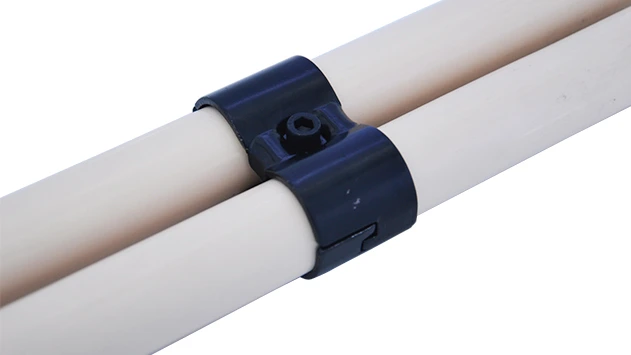
Parallel lean pipe joint used for 2 pcs 28MM lean pipe connection in parallel direction to enhance frame structure, usually for heavy payload requirement for workbench. flow rack, hand trolley.
In the world of manufacturing, where every second and every square inch of space counts, the smallest components often make the biggest difference. Think about the assembly lines humming with activity, the workbenches where precision meets productivity, and the flow racks that keep materials moving like a well-choreographed dance. Behind all this efficiency lies a unsung hero: the lean pipe joint. These unassuming connectors are the backbone of modular lean systems, holding together everything from workstations to material handling racks. Today, we're zeroing in on two critical players in this space: one side rotatory and double side rotatory parallel lean pipe joints. If you've ever wondered which one deserves a spot in your facility, or why choosing the right joint feels like solving a puzzle with high stakes, you're in the right place. Let's break down their quirks, strengths, and weaknesses—because when it comes to keeping your operations lean, even the joints matter.
Understanding Lean Pipe Systems: More Than Just Pipes and Joints
Before we dive into the nitty-gritty of rotatory joints, let's take a step back. Lean pipe systems—often called "flexible pipe systems"—are the chameleons of the manufacturing world. They're built from lightweight, durable tubes (like aluminum lean pipe or stainless steel) and a variety of connectors, designed to be reconfigured on the fly. Need a new workbench for a sudden order surge? Done. Want to adjust a flow rack to accommodate a new product size? No problem. This flexibility is why they're the go-to for facilities embracing lean manufacturing principles—minimizing waste, maximizing efficiency, and adapting faster than rigid, fixed structures ever could.
At the heart of these systems are the lean pipe joints. They're the glue that holds everything together, but not all glue is created equal. Some joints lock pipes in place permanently, while others allow for rotation or swiveling. Today, we're focusing on a specific subset: parallel lean pipe joints. These are the connectors that link two pipes running side by side, creating structures like the frames of workbenches, the sides of flow racks, or the rails of material trolleys. And within this category, the one side rotatory and double side rotatory designs stand out for their ability to add movement to otherwise static setups.
What Are Parallel Lean Pipe Joints, Anyway?
Let's keep it simple: parallel lean pipe joints are designed to connect two pipes that run parallel to each other—think of two vertical poles holding up a shelf, or two horizontal bars on the side of a trolley. Unlike joints that connect pipes at angles (like 90-degree or 45-degree joints), parallel joints keep pipes aligned, creating stable, linear structures. But what makes the "rotatory" versions special? Rotatory joints add a hinge-like mechanism, letting the connected pipes pivot or rotate relative to each other. This rotation can be limited to one axis (like a door swinging open) or more, depending on the design.
Now, imagine you're building a flow rack—a structure where materials slide from one end to the other, often using roller tracks. The sides of that rack might need to tilt slightly to adjust the speed of the materials. Or maybe you're setting up a workbench where the height of a side shelf needs to change based on the task. That's where rotatory parallel joints come in. They turn rigid frames into adjustable tools, letting your facility adapt without rebuilding from scratch.

One Side Rotatory Parallel Lean Pipe Joints: The Simple, Steady Performer
Design Basics: What Makes Them "One Side"?
One side rotatory parallel lean pipe joints (let's call them "single-rotary" for short) have a straightforward design: one end of the joint is fixed to a pipe, while the other end has a rotating mechanism that attaches to the parallel pipe. Picture a clamp that's bolted tight to the first pipe, with a hinge that lets the second pipe swing up, down, or sideways—depending on the joint's axis of rotation. Most single-rotary joints rotate along one plane (like a seesaw), though some can pivot 360 degrees if they have a swivel base.
These joints are often made from die-cast metal (like zinc alloy) or reinforced plastic, with a simple locking mechanism—a lever, knob, or set screw—to hold the rotated position in place. When you need to adjust, you loosen the lock, move the pipe to the desired angle, and tighten it back up. No fancy tools required, which is part of their appeal.
Pros: Why Factories Love Them
Let's start with the obvious: single-rotary joints are budget-friendly. Since they have fewer moving parts and simpler manufacturing, they cost less than their double-rotary cousins. For small businesses or facilities with tight budgets, this alone can make them the default choice. If you're building a basic flow rack or a workbench that only needs occasional adjustments, why pay extra for features you won't use?
They're also easy to install and use. Even if you're not a seasoned maintenance tech, you can figure out how to attach a single-rotary joint in minutes. The locking mechanisms are intuitive—turn a knob, flip a lever—and the rotation is smooth but not overly loose, so you don't have to fight with it to get the angle right. This simplicity reduces downtime during setup or reconfiguration, which is a win for busy shifts.
Another plus: they save space. Single-rotary joints are compact, with a low profile that doesn't add bulk to your structure. In tight work areas—like a crowded assembly line or a small warehouse—every inch counts. A bulky joint might get in the way of workers or materials, but single-rotary designs stay out of the way, keeping your workflow unobstructed.
Finally, they're reliable for light to medium loads. If you're using them to support shelving with small parts, tools, or lightweight materials (under 50 lbs per joint), single-rotary joints hold steady. They don't wobble or slip when properly locked, so you don't have to worry about your setup shifting mid-task. For many facilities, this load capacity is more than enough.
Cons: Where They Fall Short
But no product is perfect, and single-rotary joints have their limits. The biggest downside? Limited flexibility. Since only one side rotates, you're stuck with adjustments in one plane. Want to tilt a shelf up and swivel it to the side? You'll need extra joints or a different design. This can be frustrating if your tasks require multi-directional movement, forcing you to work around the joint's limitations instead of with them.
Load capacity is another sticking point. While they handle light to medium loads well, single-rotary joints struggle with heavy weights. The rotating mechanism is only supported on one side, so the stress of a heavy pipe or shelf can cause the joint to bend, loosen, or even break over time. If you're building a flow rack for metal parts or a workbench with heavy machinery, you'll need something sturdier.
They also wear out faster with frequent use. The single rotating point takes all the stress of adjustments, so the hinges or locking mechanisms can wear down—especially if you're reconfiguring daily. A stripped set screw or a sticky lever might seem minor, but in the middle of a shift, it can bring work to a halt while you hunt for a replacement joint.

Double Side Rotatory Parallel Lean Pipe Joints: The Flexible Powerhouse
Design Basics: Double the Rotation, Double the Possibilities
Double side rotatory parallel lean pipe joints ("double-rotary" for short) step up the complexity: both ends of the joint have rotating mechanisms, letting both connected pipes move independently. Instead of one fixed pipe and one moving pipe, both pipes can pivot, swivel, or tilt—either in the same plane or different ones, depending on the joint's design. Some double-rotary joints even have a central rotating hub, so the entire joint can spin 360 degrees, adding a third axis of movement.
These joints are built for durability, often using high-strength steel or aluminum alloys, with precision bearings in the rotating parts to ensure smooth movement. The locking mechanisms are more robust too—dual locks (one for each rotating end) or a central lock that secures both positions at once. This added engineering makes them heavier and bulkier than single-rotary joints, but also more versatile.
Pros: Why They're Worth the Investment
Flexibility is the name of the game here. With two rotating ends, double-rotary joints let you adjust both pipes to create complex angles or configurations. Imagine a workbench where the left shelf tilts up for easy access and the right shelf swivels out of the way to make space for a large component. Or a flow rack where the left rail is angled steeply for fast-moving small parts and the right rail is nearly flat for heavier items. With double-rotary joints, these scenarios aren't just possible—they're easy.
They also handle heavier loads. Since the rotation is supported on both ends, the weight is distributed more evenly across the joint, reducing stress on individual components. A well-made double-rotary joint can support 100+ lbs per joint, making them ideal for heavy-duty applications: industrial workbenches, material trolleys for metal parts, or flow racks for automotive components.
Durability is another win. The precision bearings and high-quality materials mean they stand up to frequent adjustments and heavy use. If your facility reconfigures workstations daily or runs 24/7 shifts, double-rotary joints won't wear out as quickly as single-rotary ones. You'll spend less time replacing worn parts and more time keeping production on track.
Finally, they future-proof your setup. Manufacturing needs change—new products, new processes, new safety standards. With double-rotary joints, you don't have to rebuild your lean pipe systems from scratch when that happens. You can tweak, adjust, and repurpose existing frames, saving time and money in the long run. It's like buying a Swiss Army knife instead of a single-blade pocket knife—you'll find uses for the extra features eventually.
Cons: The Trade-Offs to Consider
Of course, all that flexibility comes with a price tag. Double-rotary joints cost 2–3 times more than single-rotary ones. For large projects—say, outfitting an entire factory with flow racks—this can add up quickly. If you don't actually need the extra rotation, you're throwing money away.
They're also bulkier and heavier. The extra metal and bearings make them larger, which can be a problem in tight spaces. A double-rotary joint might stick out from the frame, catching on clothing or materials, or make a workbench feel cramped. Installation is trickier too—aligning two rotating ends takes more time, and the locking mechanisms, while robust, can be stiffer, requiring more force to adjust.
Overcomplication is a risk, too. If you're using double-rotary joints for a simple setup that only needs basic adjustments, you might end up with a system that's harder to use than necessary. Workers might avoid adjusting it because it feels "too complicated," defeating the purpose of having a flexible system in the first place.
Side-by-Side: Comparing the Two (Plus a Handy Table)
Still trying to decide? Let's put single-rotary and double-rotary joints head-to-head. The table below breaks down their key features, so you can see at a glance which one fits your needs.
| Feature | One Side Rotatory Parallel Joint | Double Side Rotatory Parallel Joint |
|---|---|---|
| Cost | Lower (budget-friendly) | Higher (premium price) |
| Flexibility | Limited (one plane of rotation) | High (multiple planes, independent rotation) |
| Load Capacity | Light to medium (up to ~50 lbs/joint) | Medium to heavy (up to ~150 lbs/joint) |
| Installation Difficulty | Easy (no special tools needed) | Moderate (may require alignment tools) |
| Size/Bulk | Compact, low profile | Larger, heavier |
| Best For | Basic setups, occasional adjustments, tight budgets | Heavy use, frequent reconfigurations, complex tasks |
Real-World Applications: When to Choose Which
Workbenches: The Heart of the Factory Floor
Workbenches are where the magic happens—assembly, testing, packaging. The right joint can turn a static table into a multi-functional workspace. Let's say you run a small electronics shop, building custom circuit boards. Your workbench needs a side shelf for tools and a tray for small parts. Most days, the shelf stays at waist height, and the tray is flat. For this, single-rotary joints are perfect. They're cheap, easy to install, and you only adjust them a few times a month when switching between board sizes.
Now, imagine a large automotive plant, assembling engine components. The workbench needs to hold heavy tools, and the operators switch between tasks hourly—one hour assembling a starter motor (requiring a low shelf), the next testing a alternator (needing a high, angled shelf). Here, double-rotary joints shine. They can handle the weight of the tools, and the operators can adjust both shelves quickly without slowing down production.
Flow Racks: Keeping Materials Moving
Flow racks are all about material flow—getting parts from the storage end to the assembly line smoothly. In a warehouse picking small e-commerce items, a basic flow rack with single-rotary joints works fine. The angle of the roller tracks only needs a slight tilt to gravity-feed the items, and you rarely change the configuration. The single-rotary joints keep costs down, and the simplicity means workers can restock quickly.
But in a medical device factory, where parts are delicate and come in varying sizes (tiny screws, larger casings), you need more control. A flow rack with double-rotary joints lets you adjust the angle of each track independently—steep for screws to move fast, shallow for casings to avoid damage. The joints can also pivot to create curves in the rack, fitting around tight corners in the cleanroom. Here, the extra cost of double-rotary joints pays off in reduced product damage and faster assembly times.
Common Mistakes to Avoid
Even the best joints can fail if misused. One common mistake is overloading single-rotary joints. Just because a joint says it can hold 50 lbs doesn't mean you should stack 60 lbs on it and expect it to last. Over time, the locking mechanism will wear out, and the joint will start to slip—putting workers at risk and slowing down production. Always check the load rating and err on the side of caution.
Another mistake is ignoring maintenance. Both single- and double-rotary joints need occasional cleaning and lubrication, especially if they're used in dusty or humid environments. A little WD-40 on the hinges or a wipe-down with a dry cloth can prevent rust and keep the rotation smooth. Neglecting this leads to stiff, hard-to-adjust joints that frustrate workers and slow down adjustments.
Finally, choosing based solely on cost. It's tempting to buy single-rotary joints to save money, but if your facility needs frequent adjustments or handles heavy loads, you'll end up replacing them more often—and losing productivity in the process. It's better to invest in double-rotary joints upfront if you know you'll need the flexibility. Think of it as buying quality shoes: they cost more, but they last longer and keep your feet (or in this case, your workflow) happy.
Maintenance Tips: Making Your Joints Last
Whether you have single- or double-rotary joints, a little care goes a long way. Here are some quick tips:
- Clean regularly: Wipe off dust, grease, and debris with a damp cloth. For metal joints, dry thoroughly to prevent rust.
- Lubricate moving parts: Use a light machine oil or silicone spray on hinges and swivel points every 3–6 months (more often if used heavily).
- Tighten locks periodically: Set screws and knobs can loosen over time. A quick check during weekly maintenance ensures joints stay locked in place.
- replace worn parts: If a locking mechanism sticks or a hinge feels loose, replace the joint (or the worn part) immediately. Don't wait for it to fail during a shift.
Conclusion: It's All About Your Needs
At the end of the day, there's no "better" joint—only the right joint for your facility. Single-rotary parallel lean pipe joints are the reliable workhorses, perfect for budget-conscious operations with simple, steady needs. They keep costs low and workflows moving without fuss. Double-rotary joints are the innovators, turning rigid systems into adaptable tools that grow with your business. They cost more, but they pay off in flexibility, durability, and productivity.
Remember, lean manufacturing isn't just about cutting waste—it's about creating systems that work for people . The right lean pipe joint might seem like a small detail, but it can make a big difference: a worker who doesn't have to struggle with a stuck shelf, a team that can reconfigure a workbench in minutes instead of hours, a factory that stays competitive because it can adapt faster than the other guy. So next time you're building or upgrading your lean pipe system, take a moment to think about the joints. They're small, but they're the unsung heroes keeping your operation lean, mean, and ready for whatever comes next.