- Company Articles
- Products and Technology
- Product knowledge
- One Side Rotatory vs. Fixed Parallel Lean Pipe Joints: Which Suits Your Production Line?

One Side Rotatory vs. Fixed Parallel Lean Pipe Joints: Which Suits Your Production Line?
Related Product
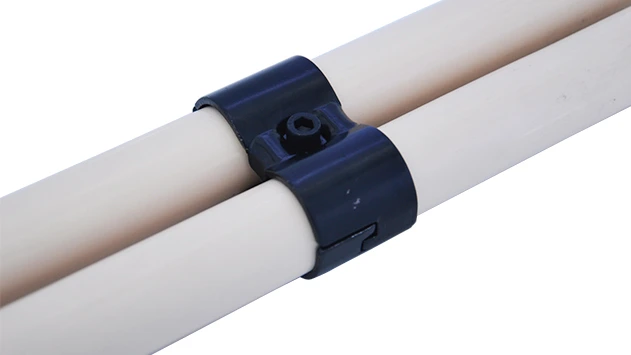
Parallel Lean Pipe Joint
Parallel lean pipe joint used for 2 pcs 28MM lean pipe connection in parallel direction to enhance frame structure, usually for heavy payload requirement for workbench. flow rack, hand trolley.
The Backbone of Lean Production – Why Joints Matter More Than You Think
Walk into any efficient manufacturing facility today, and you'll likely hear the term "lean system" thrown around. From the assembly line churning out smartphones to the warehouse organizing inventory, lean principles—eliminating waste, streamlining workflow, maximizing value—are the backbone of modern production. But here's the thing: lean systems don't just happen because of big-picture strategies. They're built from the ground up, one component at a time. And among those components, few are as yet critical as the lean pipe joint.
Think about it: a lean pipe workbench, the centerpiece of many production assemble lines, relies on these small connectors to hold its structure together. A wobbly joint can throw off an entire workstation, slowing down tasks and creating frustration for workers. A rigid joint that can't adapt to new layouts? It turns a "flexible" production line into a static obstacle when your team needs to reconfigure for a new product. In short, the right lean pipe joint isn't just a part—it's a silent partner in your quest for efficiency.
Today, we're zeroing in on two heavyweights in the world of lean pipe joints: the one side rotatory lean pipe joint and the fixed parallel lean pipe joint. Both have their place, but choosing between them can feel like picking between a Swiss Army knife and a trusty wrench—each excels in specific scenarios. By the end of this article, you'll know exactly which one deserves a spot on your production floor.
Meet the Contenders: What Are These Joints, Anyway?
Before we dive into the nitty-gritty, let's make sure we're all on the same page. What are one side rotatory and fixed parallel lean pipe joints, and how do they fit into your lean system?
First, the basics: lean pipe systems (often made with aluminum lean pipe for its lightweight strength) are modular setups used to build workbenches, material racks, flow racks, and more. They're popular because they're easy to assemble, disassemble, and reconfigure—no welding or heavy tools required. And the magic that makes this modularity possible? You guessed it: joints. These small, often metal connectors link pipes together at various angles, forming the structure of your workstation or rack.
One Side Rotatory Lean Pipe Joints: As the name suggests, these joints allow for rotation on one side. Picture a hinge that lets one pipe pivot relative to another, usually within a 180-degree range. They're designed for flexibility—think of a workbench shelf that needs to tilt to slide materials down to a worker, or a conveyor arm that adjusts to different product heights. The rotation is smooth, often with a locking mechanism to hold the joint in place once you've set the angle you need.
Fixed Parallel Lean Pipe Joints: These are the "steady Eddies" of the joint world. They connect two pipes in a fixed, parallel position, with zero rotation or movement. If you need a straight, rigid structure—like the legs of a heavy-duty workbench or the uprights of a material rack—fixed parallel joints are your go-to. They're all about stability, built to withstand constant weight and vibration without shifting.
Now that we know what they are, let's dig into how they stack up in real-world use.

Design Deep Dive: The Mechanics Behind Each Joint
To truly understand which joint is right for your production line, you need to peek under the hood (or, in this case, under the plastic or metal casing). Let's break down the design of each, and how those design choices impact performance.
One Side Rotatory Joints: Built for Movement
At first glance, a one side rotatory joint might look similar to its fixed counterpart, but inside, it's a different story. Most are made from die-cast aluminum or steel, coated to resist corrosion (important in factories where oil, dust, or moisture are common). The key feature? A central pivot point, often a metal pin or bearing, that allows one end of the joint to rotate freely while the other stays fixed to the pipe.
Some models include a tension adjustment screw—tighten it, and the rotation becomes stiffer, preventing accidental movement during use; loosen it, and the joint swivels smoothly for quick adjustments. This is a game-changer for teams that need to reposition parts of their lean pipe workbench multiple times a day. Imagine a workstation where workers alternate between assembling small components (needing a low shelf) and large machinery (needing that shelf out of the way). With a rotatory joint, they can flip the shelf up in seconds, no tools required.
Another design perk? Many one side rotatory joints are compatible with standard aluminum lean pipe sizes (like 28mm or 30mm), so you won't need to invest in special pipes to use them. They often come with plastic or rubber gaskets to reduce noise when rotating—small touches that add up to a quieter, more pleasant work environment.
Fixed Parallel Joints: Engineered for Stability
Fixed parallel joints, by contrast, are all about rigidity. Their design is simpler but purposeful: two or more pipe sockets set at a fixed angle (usually 90 degrees for parallel alignment), connected by a solid metal bridge. No moving parts, no pivot points—just a sturdy bracket that locks pipes into place.
Materials matter here. Many fixed joints are made from heavier steel or thick aluminum to handle higher loads. The sockets are often lined with rubber or plastic inserts to grip the pipes tightly, preventing slippage even under constant pressure. Some even have set screws that drill into the pipe slightly (don't worry, it doesn't damage the pipe) for an extra layer of security. When you bolt a fixed parallel joint to a lean pipe workbench, you can trust that it won't budge—even if a worker leans on it, or a heavy box is slammed onto the surface.
The tradeoff? No movement. Once installed, a fixed parallel joint keeps pipes exactly where you put them. That's great for static setups but limiting if your production line needs to evolve.

Functionality Face-Off: How They Perform on the Production Floor
Design is one thing, but how do these joints actually work when the pressure is on? Let's put them to the test in common production scenarios.
Flexibility: When You Need to Adapt on the Fly
Picture this: Your production line makes two products: small electronic kits and large industrial tools. The small kits require a low, narrow workbench for detailed assembly, while the tools need a wider, taller surface to accommodate their size. If your lean pipe workbench uses fixed parallel joints, switching between setups means disassembling the entire frame—unscrewing joints, removing pipes, reconfiguring, and reattaching. That could take an hour or more, during which production grinds to a halt.
Enter the one side rotatory joint. With these, workers can simply loosen the tension screw, rotate the shelf or crossbar to the desired angle, and lock it back in place. What once took an hour now takes 10 minutes. For production lines with frequent changeovers—common in industries like consumer electronics or custom manufacturing—this flexibility is a game-changer. It reduces downtime, keeps workers focused on value-adding tasks, and makes your lean system truly "lean."
But what if your production line rarely changes? If you make the same product day in and day out, and your workbench or material rack stays the same for months on end, flexibility becomes less important. In that case, the fixed parallel joint's stability takes center stage.
Load Capacity: When Weight and Durability Matter Most
Let's talk about heavy lifting. Suppose your lean pipe workbench holds large automotive parts—think engine blocks or transmission housings—that weigh 50 pounds or more. A wobbly joint here isn't just inefficient; it's dangerous. Workers could lose their balance, parts could fall, and the entire structure could collapse.
Fixed parallel joints shine in this scenario. Their solid construction and lack of moving parts mean they can handle significantly more weight than most rotatory joints. A typical fixed joint can support 200-300 pounds per connection, while a rotatory joint might top out at 150-200 pounds (depending on the model). If your production assemble line deals with heavy materials, fixed joints are the safer bet.
That said, not all production lines need to support heavy loads. If you're assembling small parts like circuit boards or packaging lightweight items, a rotatory joint's load capacity is more than enough. And the added flexibility might make it worth choosing over a fixed joint, even if it can't handle as much weight.
Maintenance: Keeping Things Running Smoothly
No production line has time for constant repairs. So how do these joints hold up over time?
Fixed parallel joints are low-maintenance champions. With no moving parts, there's little to wear out. Occasional checks to ensure screws are tight (vibration from machinery can loosen them over time) are usually enough. They're also less prone to dirt and debris buildup, since there are no gaps or crevices where dust can collect.
Rotatory joints, with their moving parts, need a bit more TLC. The pivot points can collect dust or grime, which can make rotation stiff or noisy. A quick wipe-down with a cloth and a drop of lubricant (like silicone spray) every few months keeps them moving smoothly. Some models also have replaceable bearings, so if the pivot starts to wear, you can swap out the bearing instead of replacing the entire joint—a small cost-saving detail that adds up over time.
| Feature | One Side Rotatory Lean Pipe Joint | Fixed Parallel Lean Pipe Joint |
|---|---|---|
| Flexibility | High – rotates 180 degrees for quick reconfiguration | Low – fixed position, no rotation |
| Load Capacity | Moderate (150-200 lbs per joint) | High (200-300 lbs per joint) |
| Maintenance Needs | Moderate – occasional lubrication and cleaning of pivot points | Low – minimal upkeep, just tighten screws periodically |
| Best For | Dynamic production lines with frequent changeovers; workbenches needing adjustable angles | Static setups with heavy loads; rigid structures like material racks or fixed workstations |
| Cost | Slightly higher (due to moving parts) | Lower (simpler design) |
Real-World Success: How One Manufacturer Solved Their Workflow Woes
Case Study: From Frustration to Efficiency – A Small Electronics Plant's Journey
Let's wrap this up with a story that brings these differences to life. A few years back, I worked with a small electronics manufacturer in the Midwest that produced both smart home devices and medical monitors. Their production assemble line was a patchwork of lean pipe workbenches, all built with fixed parallel joints. At first, it worked—they made one product at a time, and the static setup was stable.
But as their business grew, they started taking on more custom orders. One week, they'd be assembling 500 smart thermostats (small, lightweight, requiring a narrow workbench); the next, 200 medical monitors (bulky, needing extra space for wiring and testing). The fixed joints became a nightmare. Each changeover meant two workers spending 2-3 hours disassembling and rebuilding the workbenches. Production delays piled up, and workers grumbled about the "pointless" heavy lifting.
After evaluating their options, they switched half their workbenches to one side rotatory joints. The results were immediate. Changeover time dropped from 3 hours to 30 minutes. Workers could adjust shelf heights and angles without tools, and the team even started experimenting with new layouts—like tilting shelves to let parts slide gently into place, reducing the need to bend over and pick up components. Within six months, their production efficiency increased by 25%, and worker satisfaction scores (measured via monthly surveys) went up too.
The kicker? They kept fixed parallel joints on their material racks, which held heavy boxes of components. Those racks rarely changed, so the stability of fixed joints was still the best fit. It wasn't about choosing one joint over the other—it was about choosing the right joint for the right job.
Choosing Your Joint: A Simple Framework
So, how do you decide which joint is right for your production line? Start with these three questions:
1. How often does your setup change? If you reconfigure workbenches or racks monthly (or more), one side rotatory joints will save you time and hassle. If your layout stays the same for six months or longer, fixed parallel joints are likely sufficient.
2. What's the maximum weight your structure needs to support? For loads over 200 pounds, lean toward fixed parallel joints. For lighter loads (under 150 pounds), rotatory joints offer flexibility without sacrificing safety.
3. What's your maintenance budget? If you have limited time for upkeep, fixed joints are the low-fuss option. If you can spare a few minutes every month for lubrication and cleaning, rotatory joints are worth the small effort.
Remember, there's no "one size fits all" answer. Many facilities use a mix of both joints—rotatory on dynamic workbenches, fixed on static racks—to get the best of both worlds. The goal is to build a lean system that works for your team, not against them.
Final Thoughts: Invest in the Joint That Moves Your Production Forward
At the end of the day, a lean pipe joint might seem like a small part of a big system. But as any production manager will tell you, small parts can have a big impact. The right joint keeps your lean pipe workbench stable, your production assemble line flowing, and your team focused on what matters: creating value.
One side rotatory joints bring flexibility to dynamic, ever-changing lines. Fixed parallel joints bring stability to heavy, static setups. Both have their place in a well-run facility. The key is to assess your needs, test a few options (many suppliers offer sample joints), and see what works best for your team.
After all, lean production isn't just about eliminating waste—it's about making smart choices that add up to big results. And when it comes to those choices, even something as small as a joint can make all the difference.