- Company Articles
- Products and Technology
- Product knowledge
- One Side Rotatory vs. Locking Parallel Lean Pipe Joints: When to Use Each Type

One Side Rotatory vs. Locking Parallel Lean Pipe Joints: When to Use Each Type
Related Product
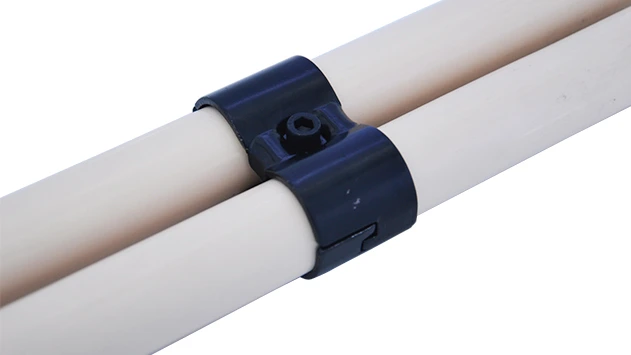
Parallel Lean Pipe Joint
Parallel lean pipe joint used for 2 pcs 28MM lean pipe connection in parallel direction to enhance frame structure, usually for heavy payload requirement for workbench. flow rack, hand trolley.
Walk into any modern manufacturing facility, warehouse, or assembly line, and you'll likely spot a maze of workbenches, material racks, and turnover trolleys keeping operations running smoothly. Behind these unsung heroes of productivity lies a humble yet critical component: the lean pipe joint. These small, unassuming connectors are the "glue" that holds lean systems together, turning simple aluminum or steel pipes into customized structures that adapt to a company's unique needs. But not all joints are created equal. Today, we're diving deep into two of the most common types: one side rotatory lean pipe joints and locking parallel lean pipe joints . By the end, you'll know exactly which one to reach for the next time you're building (or upgrading) your lean setup—whether it's a workbench for electronics assembly or a heavy-duty material rack for automotive parts.
The Backbone of Lean Systems: Why Lean Pipe Joints Matter
Before we jump into the specifics of each joint type, let's take a step back and appreciate why these tiny components are so vital. Lean manufacturing—at its core—is about eliminating waste, streamlining processes, and maximizing efficiency. And lean pipe systems (often called "flexible pipe systems") are the physical embodiment of this philosophy. Made from materials like aluminum lean pipe or steel with a plastic coating, these systems are lightweight, modular, and infinitely reconfigurable. But without the right joints, that flexibility goes out the window.
Lean pipe joints are the connectors that let you attach pipes at angles, build shelves, add casters, or create custom work surfaces. They determine how easy it is to adjust a structure, how much weight it can hold, and how durable it will be over time. Choose the wrong joint, and you might end up with a wobbly workbench that slows down production, or a material rack that can't handle heavy loads—both classic examples of the very waste lean aims to eliminate. So, whether you're a production manager, a facility engineer, or a small business owner setting up a workshop, understanding the difference between one side rotatory and locking parallel joints is key to building a system that works for you, not against you.
Meet the Contenders: What Are One Side Rotatory and Locking Parallel Lean Pipe Joints?
At first glance, lean pipe joints might all look similar—small, metal or plastic pieces with holes for pipes—but their designs and functions vary widely. Let's break down our two main players.
One Side Rotatory Lean Pipe Joints: The "Flexible Adaptors"
Imagine a joint that lets you rotate one pipe relative to another, like a hinge on a door but for your workbench. That's the one side rotatory joint. As the name suggests, these joints have one fixed end (attached to a pipe or structure) and one rotating end, allowing the connected pipe to pivot up, down, or sideways within a certain range (usually 180 degrees or more). They're often made from aluminum or zinc-plated steel, with a smooth bearing or pin mechanism that ensures easy, friction-free movement.
What makes them special? Their ability to adapt on the fly. Need to adjust the height of a tool holder on your workbench? Loosen the joint, rotate the pipe to the perfect angle, and tighten it back down. Building a turnover trolley that needs to navigate tight corners? Use one side rotatory joints on the handlebar so operators can adjust their grip without strain. These joints thrive in environments where change is constant—think small-batch manufacturing, prototyping labs, or facilities that frequently reconfigure production lines.
Real-World Example: The Adjustable Assembly Workbench
A electronics manufacturer in California produces both smartphones and tablets, which require different workbench setups. For smartphone assembly, workers need a lower shelf for tools; for tablets, a higher shelf to accommodate larger components. Instead of building two separate workbenches (wasting space and money), they used one side rotatory joints on the shelf supports. Now, with a quick twist of a wrench, the shelves pivot up or down in 30 seconds—no disassembly required. "It's like having a chameleon workbench," says Maria, the production supervisor. "We save at least 2 hours a day on reconfiguration alone."
Locking Parallel Lean Pipe Joints: The "Stability Specialists"
If one side rotatory joints are the "yoga instructors" of lean systems (flexible and adaptable), locking parallel joints are the "weightlifters"—all about strength and stability. These joints are designed to connect two pipes in a fixed, parallel position (think: vertical supports for a shelf or horizontal rails on a material rack). Unlike their rotatory cousins, they don't move once tightened. Instead, they use a clamping mechanism (usually a hex bolt or cam lever) that grips the pipes tightly, creating a rigid connection that can withstand heavy loads.
Locking parallel joints are typically made from high-strength steel or aluminum, with reinforced corners to prevent bending under pressure. They're the go-to choice when you need a structure to stay exactly where you put it—no wobbling, no shifting, no surprises. Common applications include heavy-duty material racks, static workbenches for precision assembly, or conveyor supports that carry hundreds of pounds of parts per hour.
Real-World Example: The Heavy-Duty Material Rack
A automotive parts supplier in Michigan needed a rack to store engine blocks, each weighing 250 pounds. A flimsy rack wasn't an option—one collapse could damage parts worth thousands of dollars and put workers at risk. They chose locking parallel joints for the vertical uprights and horizontal beams. Each joint was rated to hold 1,000 pounds, and the rack now safely stores 12 engine blocks per shelf (3 shelves total). "We've had that rack for 5 years, and it still doesn't budge," says Tom, the warehouse manager. "Even when forklifts bump into it accidentally, the joints hold tight. It's like building with industrial-strength Legos—once it's locked, it's locked."

Head-to-Head: Comparing Key Features (With a Handy Table)
Still not sure which joint is right for your project? Let's put them side by side. The table below breaks down their key features, from adjustability to load capacity, so you can see how they stack up.
| Feature | One Side Rotatory Lean Pipe Joint | Locking Parallel Lean Pipe Joint |
|---|---|---|
| Adjustability | High: Rotates 180°+ on one axis; easy to reposition without disassembly. | Low: Fixed parallel position; requires loosening/tightening to adjust (often needs disassembly for major changes). |
| Load Capacity | Moderate: Typically 50–200 pounds per joint (varies by material; aluminum models lower, steel higher). | High: 200–1,000+ pounds per joint (steel models rated for heaviest loads). |
| Installation Time | Fast: 1–2 minutes per joint (no precise alignment needed). | Moderate: 2–5 minutes per joint (requires careful alignment to keep pipes parallel). |
| Ideal For | Reconfigurable structures: Adjustable workbenches, mobile trolleys, temporary setups. | Static, heavy-duty structures: Material racks, fixed workbenches, conveyor supports. |
| Material Compatibility | Works with most lean pipes (aluminum lean pipe, steel, plastic-coated). | Best with rigid pipes (steel or thick-walled aluminum lean pipe); may slip on thin plastic-coated pipes. |
| Cost | Mid-range: $5–$15 per joint (varies by size and material). | Mid-to-high range: $8–$25 per joint (higher for heavy-duty steel models). |
| Maintenance | Occasional lubrication of the rotating mechanism to prevent rust or sticking. | Minimal: Check bolts for tightness periodically (especially under heavy loads). |

When to Choose Which: Real-World Applications
The table above gives you a snapshot, but real-world decisions often come down to context. Let's walk through common scenarios where one joint type shines over the other.
Scenario 1: You Need a Workbench That Grows With Your Team
Workbenches are the workhorses of any production floor, but their needs change. Maybe you hire taller workers who need higher surfaces, or you start assembling larger products that require more table space. If flexibility is your top priority, one side rotatory joints are the way to go. For example, using them on the legs of a workbench lets you adjust the height in 2-inch increments (by rotating the legs relative to the tabletop). Or, if you need to add a side shelf for tools, rotatory joints make it easy to swing the shelf out of the way when not in use.
On the flip side, if your workbench is for precision tasks (like assembling medical devices) where even a millimeter of wobble could ruin a product, locking parallel joints are better. They'll keep the tabletop rock-solid, ensuring measurements stay accurate and parts align perfectly.
Scenario 2: You're Building Turnover Trolleys for Material Handling
Turnover trolleys (those wheeled carts that move parts from one station to another) need to be both durable and maneuverable. One side rotatory joints are a game-changer here. For example, attaching the handlebar to the trolley frame with rotatory joints lets operators adjust the handle height to match their height (no more hunching over for shorter workers or stooping for taller ones). They also help when navigating tight aisles—if a trolley needs to make a sharp turn, the handle can pivot slightly to reduce strain on the operator's wrists.
However, the trolley's base (where the wheels and load-bearing frame connect) should still use locking parallel joints. Why? Because that's where the weight sits. A wobbly base could cause the trolley to tip over, especially when carrying heavy loads. So, it's not uncommon to mix joint types: rotatory for the handle and locking parallel for the frame.
Scenario 3: You Need a Material Rack for Bulky, Heavy Items
Material racks are all about load capacity. If you're storing pallets of raw materials, large machinery parts, or stacks of metal sheets, locking parallel joints are non-negotiable. Their rigid connections prevent shelves from sagging or collapsing, even under repeated use. For example, a 3-row, 3-floor material rack (like "Material Rack B" in many supplier catalogs) relies on locking parallel joints to keep each shelf level and stable. Without them, the weight of the top shelf could bow the middle beams, putting the entire structure at risk.
One side rotatory joints, on the other hand, would be a poor choice here. Even if you tightened them initially, the constant vibration from warehouse traffic or the weight of the load could cause them to rotate slightly over time, leading to uneven shelves or, worse, a collapse.
Beyond the Basics: Lean Pipe and Accessories That Complement Your Joints
Joints don't work alone—they're part of a larger ecosystem of lean pipe and accessories that make your system complete. The right accessories can enhance the performance of both one side rotatory and locking parallel joints, so it's worth considering them during the planning phase.
For one side rotatory joints, look for accessories that enhance adjustability: swivel casters (to make trolleys even more maneuverable), quick-release levers (to speed up reconfiguration), or angle indicators (to ensure consistent positioning across multiple joints). For example, adding a swivel caster with a brake to a trolley with rotatory handle joints lets you lock the trolley in place, adjust the handle, then unlock and roll—all in seconds.
For locking parallel joints, focus on accessories that boost stability and load capacity: reinforced pipe clamps (to add extra support at stress points), anti-slip leveling feet (to keep racks steady on uneven floors), or steel gusset plates (to strengthen corner connections). A material rack using locking parallel joints will be even more durable with gusset plates—they distribute weight across the joint, reducing the risk of bending under heavy loads.
Making the Final Call: 5 Questions to Ask Before Choosing
Still torn between the two? Ask yourself these five questions to narrow it down:
- How often will I need to reconfigure the structure? If it's daily or weekly, go with one side rotatory. If it's once a year or less, locking parallel is fine.
- What's the maximum weight the structure will hold? Under 200 pounds? Either joint works. Over 200 pounds? Locking parallel is safer.
- Is precision critical? For tasks like electronics assembly or medical device manufacturing, locking parallel joints prevent wobble. For general storage or mobile carts, rotatory is okay.
- Who will be using the structure? If operators need to adjust it without tools, look for one side rotatory joints with quick-release levers. If only trained maintenance staff will handle adjustments, locking parallel is fine.
- What's my budget? One side rotatory joints are slightly cheaper upfront, but if you need to reinforce a structure later (because you skimped on locking parallel), the costs add up. Think long-term!
Conclusion: Building a Lean System That Lasts
At the end of the day, there's no "better" joint—only the right joint for the job. One side rotatory lean pipe joints bring flexibility and adaptability to dynamic environments, while locking parallel joints bring strength and stability to heavy-duty, static setups. The key is to assess your needs: How often will you adjust the structure? How much weight will it carry? What level of precision do you need? Answering these questions will guide you to the joint that turns your lean pipe system from a collection of pipes into a productivity powerhouse.
And remember: lean manufacturing is about continuous improvement. Don't be afraid to experiment. Maybe start with a mix of both joints—rotatory for adjustable parts and locking parallel for fixed ones. Over time, you'll learn what works best for your team, your products, and your workflow. After all, the goal isn't just to build a structure—it's to build a system that helps your business thrive.
So, the next time you're unboxing a lean pipe and accessories, take a moment to appreciate the joints. They may be small, but they're the difference between a system that frustrates your team and one that empowers them to do their best work. Now go build something amazing.