- Company Articles
- Products and Technology
- Product knowledge
- One Way Rotatory Straight Lean Pipe Joint Applications in 3C Assembly Lines

One Way Rotatory Straight Lean Pipe Joint Applications in 3C Assembly Lines
Related Product
One Way Rotatory Straight Lean Pipe Joint
Two way lean pipe joint for 2 pcs 28MM lean pipe connection in straight angle with rotatory fucntion, which used widely in workbench, flow rack, hand trolley frame connection.
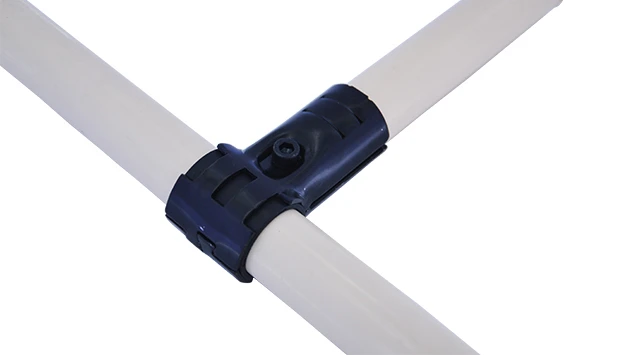
In the fast-paced world of 3C manufacturing—where smartphones, laptops, and wearables fly off production lines at breakneck speeds—every second counts. These assembly lines are a symphony of precision: tiny components like microchips and connectors must align perfectly, workers need ergonomic setups to avoid fatigue, and material flow must be seamless to keep up with demand. Enter lean manufacturing systems, the backbone of efficient 3C production. At the heart of these systems lies a humble yet powerful component: the One Way Rotatory Straight Lean Pipe Joint . This unassuming piece of hardware might not grab headlines, but it's quietly revolutionizing how 3C factories build, adapt, and thrive.
Let's dive into why this joint matters, how it works, and the real-world impact it has on making your next smartphone or tablet a reality.
What Even Is a One Way Rotatory Straight Lean Pipe Joint?
First things first: let's demystify the name. In lean manufacturing, lean pipe (often called "lean tube") is the workhorse—lightweight, durable tubes used to build everything from workbenches to material racks. Joints are the connectors that hold these pipes together, turning a pile of tubes into a functional structure. Most joints are fixed, locking pipes at rigid angles (think 90° or 45°). But the One Way Rotatory Straight Lean Pipe Joint? It's different.
Imagine a joint that lets you rotate a pipe in one direction—say, upward—with smooth, controlled movement, then locks it firmly in place once you've set the angle. No tools, no fuss. It's like a hinge with a built-in brake, designed for quick adjustments. Typically made from zinc-plated steel or high-grade aluminum (to resist corrosion in factory environments), these joints are engineered to handle the daily wear and tear of 3C assembly lines, where parts are constantly moving and setups change with new product launches.
But why "one way"? Because in 3C work, you often need precise, one-directional adjustments. For example, tilting a workbench surface slightly upward to keep small screws from rolling off—you don't want it accidentally tilting back down mid-assembly. The one-way rotation ensures stability once set, while still allowing for easy repositioning when needed.
Key Features That Make It a 3C Factory Favorite
Not all joints are created equal, and in 3C manufacturing—where precision and speed are non-negotiable—the One Way Rotatory Straight Lean Pipe Joint stands out for a few critical reasons:
- Tool-Free Adjustment: In a factory where a line changeover can mean the difference between meeting a deadline and losing a client, waiting for a technician with a wrench is a luxury. These joints twist by hand, letting workers adjust setups in seconds.
- Controlled Rotation: Unlike fully swiveling joints, the one-way mechanism prevents over-rotation. This is a lifesaver when handling delicate 3C components—no more accidentally knocking a circuit board off a tilted workbench.
- Compatibility: They play nice with standard lean pipe (28mm diameter is common) and even aluminum profile systems, which are growing in popularity for their lightweight strength. This means factories don't have to overhaul existing infrastructure to adopt them.
- Durable Grip: Once locked, these joints hold tight. We're talking about supporting the weight of a fully loaded parts bin or a workbench with tools—no slipping, no wobbling.
- Cost-Effective: Compared to custom-machined adjustable structures, these joints are affordable and reusable. A single joint can outlast multiple product cycles, adapting to new assembly needs without replacement.

How It Transforms 3C Assembly Lines: Real-World Applications
Now, let's get practical. How does this joint actually make 3C assembly lines better? Let's walk through four key scenarios where it shines.
1. Ergonomic Workbenches: Keeping Workers Comfortable (and Productive)
3C assembly is repetitive work. Imagine spending 8 hours a day hunched over a fixed-height workbench, soldering tiny wires onto a motherboard. Fatigue sets in, mistakes happen, and workers burn out. Enter adjustable workbenches built with One Way Rotatory Straight Lean Pipe Joints.
Here's how it works: A basic workbench frame is built with lean pipes. The tabletop, mounted on joints, can tilt upward (0° to 30°, typically) to reduce neck and back strain. Workers adjust it to their height and task—tilting slightly for detailed work like component placement, flattening for assembling larger modules. Since the joint locks in place, there's no risk of the surface shifting mid-task. One factory in Shenzhen, which produces smartwatch screens, reported a 22% reduction in worker complaints about wrist pain after switching to these adjustable workbenches.
Even better, when a new worker takes over the station, they can tweak the angle in 10 seconds—no tools, no downtime. It's customization at scale, and it's all thanks to that one-way rotation.
2. Material Flow: Smoothing the Path for Tiny Parts
In 3C lines, parts move fast—from circuit boards to camera lenses, every component has a strict path to follow. Roller track systems (those conveyor-like setups with small wheels) are the arteries of this flow, carrying bins and trays between stations. But here's the problem: not all parts move at the same height or angle. A bin of screws might need a gentle downward slope to glide smoothly, while a tray of fragile OLED screens needs to stay level to avoid cracks.
This is where the One Way Rotatory Straight Lean Pipe Joint becomes a logistics hero. By attaching roller tracks to pipes connected with these joints, workers can angle the track upward or downward in one direction, then lock it. For example, at a smartphone assembly line in Dongguan, they use these joints to adjust roller tracks between "loading" and "unloading" angles. When a bin arrives at a station, the track tilts slightly upward to slow it down (preventing spills), and when it's time to send it to the next station, a quick twist tilts it downward for gravity-fed flow. No more jams, no more broken parts—just steady, reliable movement.
3. Adapting to New Products: The "Quick Changeover" Lifesaver
3C manufacturers don't have the luxury of sticking to one product. A factory might make 5 different smartphone models in a single year, each with unique components and assembly steps. Rebuilding workbenches or racks from scratch every time? That's time-consuming and expensive. The One Way Rotatory Straight Lean Pipe Joint turns "rebuild" into "reconfigure."
Take a lean system used for testing laptop keyboards. When a new model with a slimmer design comes in, the test fixtures need to sit lower. With fixed joints, workers would have to disassemble the entire rack, cut new pipes, and reassemble. With rotatory joints? They loosen the joints, lower the pipes to the new height, lock them, and they're done—all in under an hour. A factory in Suzhou reported cutting product changeover time by 65% after switching to these joints, letting them launch new models weeks faster than competitors.
4. Temporary Workstations: Flexibility for Peak Seasons
Holiday seasons mean 3C factories run at full tilt, often adding temporary assembly lines to meet demand. These lines need to be set up fast and torn down just as quickly. The One Way Rotatory Straight Lean Pipe Joint makes temporary setups a breeze.
Imagine building a temporary workbench using lean pipes and these joints. No need to measure angles precisely—just adjust as you go, lock the joints, and start production. When the rush is over, disassemble the pipes, stack them, and store them for next time. It's like Legos for adults, but built to handle industrial loads. One electronics manufacturer in Guangzhou uses this approach to add 20 temporary stations during the pre-Christmas rush, saving over $100,000 annually compared to buying fixed, disposable workbenches.

Why It's Better Than Other Joints: A Quick Comparison
Still not convinced this joint is worth the hype? Let's stack it up against other common lean pipe joints used in 3C assembly. The table below breaks down how it performs on key metrics like flexibility, ease of use, and ideal applications.
| Joint Type | Flexibility | Ease of Adjustment | Best For | 3C Assembly Rating (1-5) |
|---|---|---|---|---|
| Fixed Lean Pipe Joint | Low (locks at fixed angles) | Hard (requires tools to reposition) | Permanent structures (e.g., static racks) | 2/5 (too rigid for frequent changes) |
| 90° Crossing Lean Pipe Joint | Medium (locks at 90° intersections) | Moderate (tools needed for disassembly) | Corner connections in workbenches | 3/5 (useful but not adjustable) |
| Parallel Lean Pipe Joint | Medium (holds pipes parallel) | Moderate (tools for setup, no rotation) | Shelving or dual-pipe structures | 3/5 (limited use cases) |
| One Way Rotatory Straight Lean Pipe Joint | High (one-way rotation, lockable) | Easy (tool-free, hand-adjustable) | Adjustable workbenches, roller tracks, temporary setups | 5/5 (perfect for 3C's need for speed and flexibility) |
The verdict? For 3C assembly lines—where change is constant and precision is king—the One Way Rotatory Straight Lean Pipe Joint is the clear winner.
The Bigger Picture: Lean Systems and the Future of 3C Manufacturing
At the end of the day, the One Way Rotatory Straight Lean Pipe Joint is more than just a part—it's a symbol of how lean system thinking is reshaping manufacturing. Lean isn't just about cutting costs; it's about empowering workers, reducing waste, and building systems that adapt as needs change. In 3C, where products evolve faster than ever, adaptability isn't optional—it's survival.
As factories adopt more automation and smart technologies (like IoT sensors to track material flow), the need for flexible infrastructure will only grow. Imagine a future where your workbench adjusts automatically based on the product you're assembling, guided by data. The One Way Rotatory Straight Lean Pipe Joint is a stepping stone to that future—simple, reliable, and ready to work alongside the tech of tomorrow.
Wrapping Up: It's the Little Things That Matter
The next time you unbox a new smartphone, take a moment to appreciate the invisible heroes that made it possible. The One Way Rotatory Straight Lean Pipe Joint might not be as flashy as the latest chipset or camera, but it's a quiet innovator—making assembly lines safer, faster, and more adaptable. For 3C manufacturers, it's not just a joint; it's a tool that turns chaos into order, and ideas into products.
So here's to the little things: the joints, the pipes, the workers who twist and lock and adjust—all to make sure your next device is built with care, precision, and a whole lot of lean thinking.