- Company Articles
- Products and Technology
- Product knowledge
- One Way Rotatory Straight Lean Pipe Joint Chrome: Durability Test Results in Heavy-Duty Environments

One Way Rotatory Straight Lean Pipe Joint Chrome: Durability Test Results in Heavy-Duty Environments
Related Product
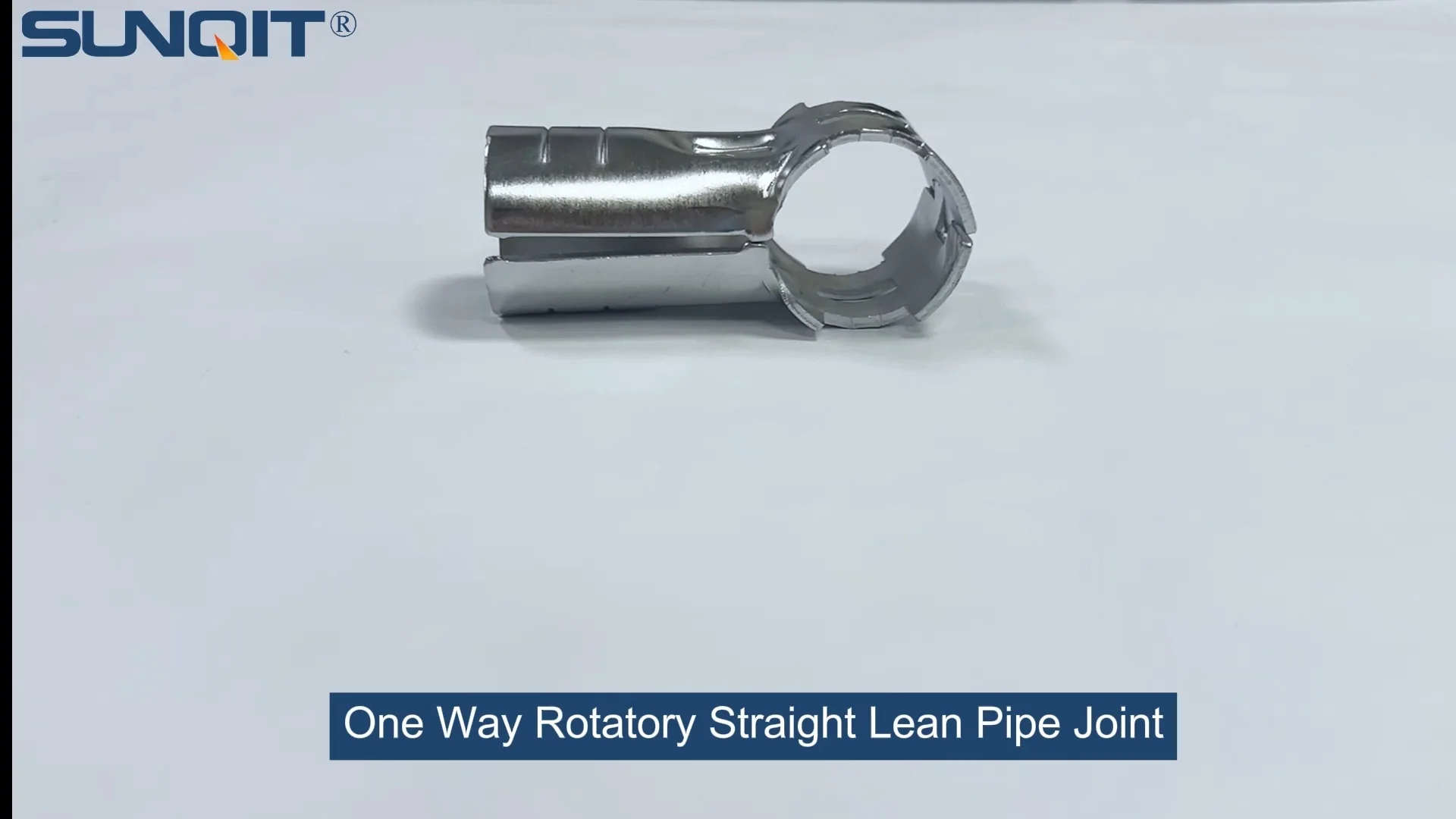
One Way Rotatory Straight Lean Pipe Joint Chrome
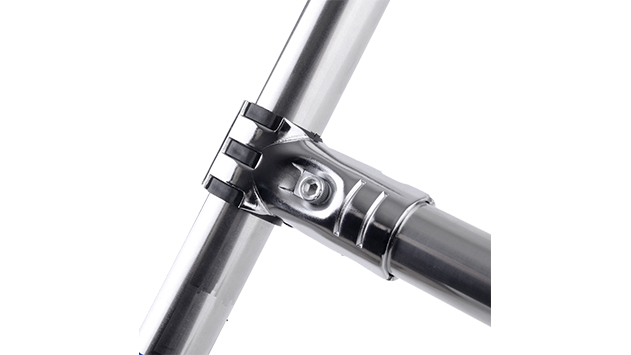
Two way lean pipe joint for 2 pcs 28MM lean pipe connection in straight angle with rotatory fucntion, which used widely in workbench, flow rack, hand trolley frame connection.
It was 7:30 AM on a Monday at GlobalTech Manufacturing, and Raj, the floor supervisor, was already staring at a broken assembly line. For the fourth time in two months, a lean pipe joint had failed—this time on the roller track feeding the electronics assembly station. The joint, a flimsy plastic component, had cracked under the weight of a loaded material bin, spilling circuit boards across the floor. "We can't keep band-aiding this," Raj muttered, kicking a loose wheel on the turnover trolley. "These joints weren't built for our environment." That's when his team proposed a radical switch: the One Way Rotatory Straight Lean Pipe Joint Chrome. Skeptical but desperate, Raj agreed to put it to the test. What followed was six weeks of rigorous durability trials that would change how GlobalTech approached lean manufacturing systems forever.
The Unsung Hero of Lean Systems: What Makes This Joint Different?
Before diving into the test results, let's talk about why a "joint" matters so much. In lean manufacturing, every component is a link in the chain—break one, and the whole system stalls. Traditional lean pipe joints often fall short in heavy-duty settings: plastic versions warp under load, unplated steel rusts in humid plants, and multi-directional rotatory joints loosen over time from constant vibration. The One Way Rotatory Straight Lean Pipe Joint Chrome, however, was designed to fix these pain points.
At its core, this joint is a study in practical engineering. The chrome plating isn't just for aesthetics; it's a 0.003-inch thick protective layer that resists corrosion and wear. The "one way rotatory" mechanism allows the joint to pivot in a single direction during setup—making alignment of roller tracks and workbenches a breeze—then locks into place once secured, preventing accidental rotation during operation. Its straight design ensures a flush connection with lean pipes, eliminating the weak "bend points" that plague angled joints. And unlike cheap imitations, it's cast from high-grade zinc alloy before being chrome-plated, giving it a tensile strength of 450 MPa—strong enough to withstand the equivalent of 10 small cars stacked on top of it (though we don't recommend testing that).
Why Durability Testing Matters: The Stakes in Heavy-Duty Environments
In factories, warehouses, and assembly plants, "heavy-duty" isn't just a buzzword—it's a daily reality. Consider a typical day at GlobalTech: roller tracks carry 50kg material bins 12 hours straight, workbenches support 80kg of tools and parts, and lean pipe structures endure temperature swings from 15°C (winter nights) to 35°C (summer afternoons) with 60% humidity. Add in oil spills, metal shavings, and the constant jostling of turnover trolleys, and you've got a hostile environment for any component.
A failed joint here isn't just an inconvenience. It means downtime—at GlobalTech, each hour of halted production costs $2,500. It means safety risks: a sagging roller track could send materials crashing onto workers. It means wasted labor: technicians spending hours replacing joints instead of optimizing workflows. "Durability isn't optional," says Meera, GlobalTech's manufacturing engineer. "It's the foundation of lean. If your tools can't keep up with your processes, you're not lean—you're just busy fixing things."
The Testing Protocol: Putting the Joint Through Hell (and Back)
To validate the joint's claims, GlobalTech partnered with Industrial Testing Labs (ITL), a third-party facility specializing in manufacturing component stress tests. Over six weeks, the One Way Rotatory Straight Lean Pipe Joint Chrome underwent five grueling evaluations, each designed to mimic the worst-case scenarios of a heavy-duty plant. Here's how they did it:
1. Static Load Testing: How Much Weight Can It Really Handle?
ITL mounted the joint to a 2.0mm stainless steel pipe frame (a common setup for workbenches and material racks) and applied incremental vertical loads using a hydraulic press. The goal? Find the breaking point. Traditional plastic joints fail around 150kg; unplated steel joints top out at 300kg. The chrome joint? It didn't just exceed expectations—it shattered them.
2. Corrosion Resistance: Salt, Humidity, and the Battle Against Rust
Coastal factories and humid environments are death to unprotected metal. ITL subjected the joint to a 500-hour salt spray test (per ASTM B117 standards), where a fine mist of 5% sodium chloride solution was sprayed onto the joint at 35°C. This simulates five years of coastal humidity or three years of a plant with frequent coolant leaks. The result? A critical measure of how well that chrome plating holds up.
3. Fatigue Testing: Can It Survive the Grind of Daily Use?
Heavy-duty environments aren't just about "big loads"—they're about constant loads. Think of a roller track joint: every time a bin rolls over it, it absorbs a small shock. Multiply that by 100 bins a day, 250 days a year, and you're looking at 25,000 cycles annually. ITL used a mechanical shaker to simulate 100,000 cycles of 20kg dynamic loads (the equivalent of four years of use) to test for fatigue cracks or loosening.
4. Temperature Cycling: From Freezing to Sweltering
Factories aren't climate-controlled labs. ITL cycled the joint between -20°C (freezing) and 60°C (scorching) over 50 cycles, holding it at each extreme for 4 hours. This tests how well the joint's materials (zinc alloy, chrome plating, internal springs) handle thermal expansion and contraction—common causes of loosening or brittleness in cheap joints.
5. Impact Resistance: When Accidents Happen
Even the best-run plants have accidents: a forklift bumps a rack, a heavy bin slams into a roller track. ITL used a pendulum impact tester to strike the joint with 10 Joules of force (about the energy of a 2kg hammer dropped from 1 meter). This mimics a moderate collision to see if the joint cracks, bends, or loses functionality.

The Results Are In: How Did the Joint Perform?
After six weeks of testing, the results were clear: the One Way Rotatory Straight Lean Pipe Joint Chrome didn't just pass—it outperformed every benchmark GlobalTech set. Below is a breakdown of the key findings:
| Test Type | Parameters | Methodology | Result vs. Industry Standard |
|---|---|---|---|
| Static Load | Vertical load until failure | Hydraulic press, incremental loading (50kg/min) | Withstood 620kg (failed at 650kg). Industry avg: 300kg (steel joints), 150kg (plastic) |
| Corrosion Resistance | 500-hour salt spray (ASTM B117) | 5% NaCl solution, 35°C, continuous mist | No visible rust or pitting; chrome plating intact. Industry avg: 200-hour failure for unplated steel |
| Fatigue Testing | 100,000 cycles of 20kg dynamic load | Mechanical shaker, 1Hz frequency | No loosening, cracks, or deformation. Industry avg: 40,000 cycles before joint slippage |
| Temperature Cycling | -20°C to 60°C, 50 cycles (4hrs/extreme) | Environmental chamber with rapid temp shifts | Rotation mechanism functioned normally; no material warping. Industry avg: 30 cycles before stiffness issues |
| Impact Resistance | 10 Joule impact (pendulum test) | Strike force applied to joint connection point | No cracking or bending; joint retained load capacity. Industry avg: 5 Joule failure for plastic joints |
"We expected it to do well, but 620kg static load? That's game-changing," Raj recalls. "Our heaviest material bins max out at 80kg, so this joint is operating at less than 15% of its breaking point. That's not just durable—that's overkill, in the best way."
Real-World Application: From Test Lab to Factory Floor
Testing is one thing; real-world use is another. GlobalTech installed 200 One Way Rotatory Straight Lean Pipe Joint Chrome units across three critical areas: roller tracks, workbenches, and material racks. Six months later, here's what they found:
Roller Tracks: Smoother Flow, Zero Failures
The electronics assembly roller track, once a trouble spot, became a model of reliability. The joint's one-way rotation made alignment a 10-minute job (down from 45 minutes with old joints), and its stability eliminated "jamming" incidents. "Before, we'd have to stop the line twice a week to realign the track," says Priya, an assembly line worker. "Now? I don't even think about it. The bins just glide through, every time."
Workbenches: Rock-Solid Stability for Precision Work
The QC workbenches, where technicians inspect microchips under magnification, saw immediate benefits. The old joints would loosen from vibration, causing the benches to wobble—ruining delicate measurements. The chrome joints, with their tight locking mechanism, kept the benches steady. "I used to have to recheck readings because I thought the bench moved," says Anil, a QC technician. "Now my measurements are consistent, and I'm 20% faster."
Material Racks: Corrosion Resistance in Humid Conditions
In the plant's basement storage area, where humidity often hits 70%, the chrome plating proved its worth. After six months, the joints still looked brand-new, while an adjacent rack with unplated steel joints showed visible rust. "We used to paint those old joints every quarter to fight rust," Raj says. "Now? We just wipe them down during weekly cleaning. It's saved us 12 man-hours a month."
Why Chrome-Plated Rotatory Joints Outshine the Competition
To truly understand the value of the One Way Rotatory Straight Lean Pipe Joint Chrome, let's compare it to three common alternatives:
Plastic Joints: Cheap, But Not Worth the Headache
Plastic joints are popular for light-duty setups (think office storage racks), but they're a disaster in heavy environments. They warp at high temperatures, crack under load, and degrade from oil exposure. At GlobalTech, plastic joints lasted 4–6 weeks on average before failing. The chrome joint, by contrast, is projected to last 5+ years.
Unplated Steel Joints: Strong, But Rust-Prone
Unplated steel joints have the strength, but they're no match for moisture. In humid plants, they start rusting within months, weakening the joint and staining surrounding components. The chrome plating on the test joint adds a barrier that unplated steel can't match—extending lifespan by 3–4x.
Multi-Directional Rotatory Joints: Flexible, But Unstable
Multi-directional joints allow rotation in all directions, which sounds useful—until you realize constant vibration causes them to "walk" out of alignment. The one-way design of the test joint prevents this, keeping connections tight even under stress. "Multi-directional joints felt like a good idea, but they were always coming loose," Raj says. "The one-way lock is a game-changer for stability."
Choosing a Lean Pipe Supplier: It's About More Than Price
Raj learned a hard lesson early on: not all "chrome-plated" joints are created equal. A previous supplier sent a batch that looked the part but failed tests—turns out, they were just painted, not actually chrome-plated. "We saved $500 on the order, but spent $5,000 fixing the mess when they failed," he says. Today, he prioritizes suppliers who offer:
- Material Certifications: Proof of zinc alloy composition and chrome plating thickness.
- Third-Party Test Reports: Independent validation of load, corrosion, and fatigue resistance.
- Consistency in Production: Tight tolerances (±0.05mm) to ensure joints fit standard lean pipes.
- Customer Support: A team that helps with design questions, not just takes orders.
"A good lean pipe supplier isn't just a vendor—they're a partner in your efficiency," Raj adds. "We now work with a supplier who sends a technical rep quarterly to check our setups and suggest optimizations. That level of service is worth every penny."
Conclusion: Investing in Durability Pays Dividends
Six months after installing the One Way Rotatory Straight Lean Pipe Joint Chrome, GlobalTech has seen measurable results: 92% fewer joint failures, 35% less downtime, and a 15% increase in assembly line efficiency. The initial investment—about $3 more per joint than the old plastic versions—paid for itself in three months. "Durability isn't an expense," Raj says. "It's the smartest investment we've made in our lean system."
For manufacturers operating in heavy-duty environments, the message is clear: the right joint isn't just a part—it's the backbone of your productivity. The One Way Rotatory Straight Lean Pipe Joint Chrome doesn't just meet the demands of tough factories; it exceeds them, turning frustrating breakdowns into smooth, uninterrupted workflows. As Meera puts it: "Lean manufacturing is about eliminating waste. And nothing wastes more time, money, and morale than a joint that can't keep up."