- Company Articles
- Products and Technology
- Product knowledge
- One Way Rotatory Straight Lean Pipe Joint Chrome for Mobile Workstations: Stability Tips

One Way Rotatory Straight Lean Pipe Joint Chrome for Mobile Workstations: Stability Tips
Related Product
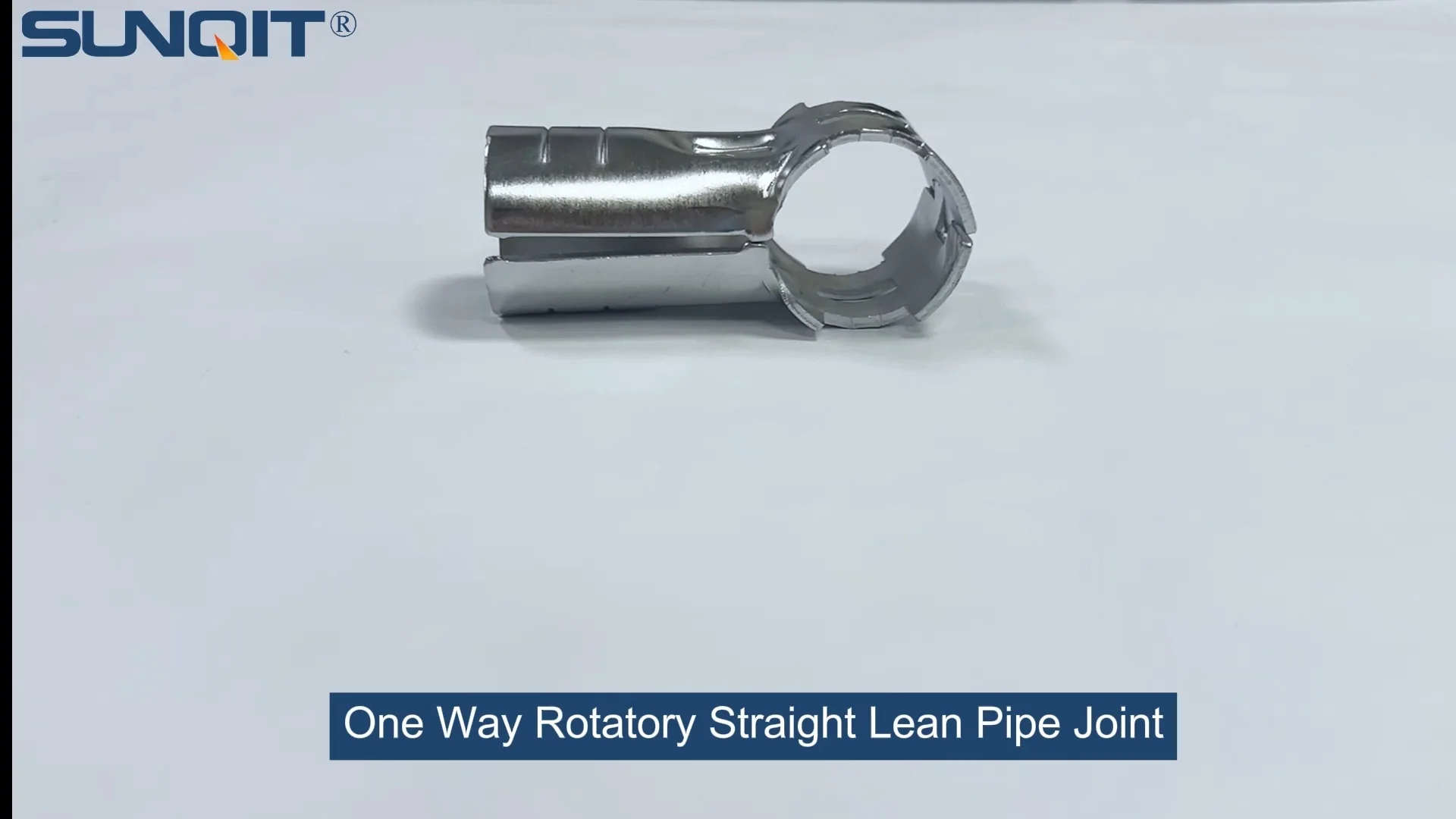
One Way Rotatory Straight Lean Pipe Joint Chrome
Two way lean pipe joint for 2 pcs 28MM lean pipe connection in straight angle with rotatory fucntion, which used widely in workbench, flow rack, hand trolley frame connection.
Introduction: The Role of Mobile Workstations in Modern Lean Systems
Walk into any efficient manufacturing or assembly facility today, and you'll likely notice a common sight: mobile workstations gliding smoothly across the floor, carrying tools, materials, and even entire workbenches to where they're needed most. These aren't just ordinary carts—they're the backbone of lean systems, designed to eliminate waste, reduce downtime, and keep operations flowing like a well-oiled machine. But here's the thing about mobility: it's a double-edged sword. A workstation that moves freely can boost productivity, but one that wobbles, tips, or fails to stay steady when in use? That's a recipe for delays, frustration, and even safety risks.
In lean systems, where every second and every movement counts, stability isn't just a nice-to-have—it's non-negotiable. Imagine an operator trying to assemble delicate electronics on a workstation that rocks back and forth as they tighten a screw. Or a material handler struggling to load parts onto a cart that keeps shifting, causing components to slide off. These scenarios don't just slow down work; they erode the very efficiency lean systems aim to create. That's why the quest for stable mobile workstations has become a top priority for facility managers and lean coordinators alike.
At the heart of this stability challenge lies the components that hold these workstations together. From the pipes that form the frame to the wheels that let them move, every part plays a role. But if there's one component that often gets overlooked—and yet holds the key to steady performance—it's the joints. Specifically, the One Way Rotatory Straight Lean Pipe Joint Chrome . This unassuming piece of hardware might not look like much, but its design, durability, and functionality can make or break a workstation's stability. In this article, we'll dive deep into how this joint works, why it matters, and share actionable tips to ensure your mobile workstations are both flexible and rock-solid.
Meet the Star: One Way Rotatory Straight Lean Pipe Joint Chrome
Let's start with the basics: What exactly is a One Way Rotatory Straight Lean Pipe Joint Chrome? In simple terms, it's a connector that joins two lean pipes (the metal tubes commonly used in lean system structures) in a straight line, with a unique twist—it allows rotation in one direction only. Unlike fixed joints, which lock pipes rigidly in place, or multi-directional joints that swivel freely, this chrome-plated wonder offers controlled movement. Picture a door hinge that only opens to 90 degrees instead of swinging all the way around—that's the level of precision we're talking about here.
The "chrome" in its name isn't just for show. Chrome plating adds a layer of protection against rust and corrosion, making the joint ideal for busy factory floors where spills, humidity, or dust might otherwise take a toll. It also gives the joint a smooth, low-friction surface, ensuring that the one-way rotation feels seamless, not stiff or jerky. And because it's designed for lean pipes—typically made of steel or aluminum—it's built to handle the weight of tools, materials, and even the workbench itself without bending or warping.
So why choose a one-way rotatory joint over other types? Let's say you're building a mobile lean pipe workbench that needs to tilt slightly to allow materials to slide into a bin below. A fixed joint would keep the surface flat, leaving you to manually lift heavy items. A multi-directional joint might over-rotate, causing the bench to tip. But the one-way rotatory joint? It lets you tilt the surface to a specific angle (say, 30 degrees) and holds it there, thanks to its internal locking mechanism. That's the kind of control that turns a basic workstation into a precision tool.
The Foundation of Stability: Understanding Lean Pipe Workbench Dynamics
Before we dive into stability tips, let's take a step back and look at how a mobile lean pipe workbench is put together. At its core, it's a frame made of lean pipes connected by joints, topped with a work surface (like a wooden or metal deck), and mounted on caster wheels for mobility. Sounds simple enough, but each component interacts with the others in ways that affect stability. Think of it like a human body: the pipes are the bones, the joints are the hinges, the casters are the feet, and the work surface is the torso. If any part is weak or misaligned, the whole structure suffers.
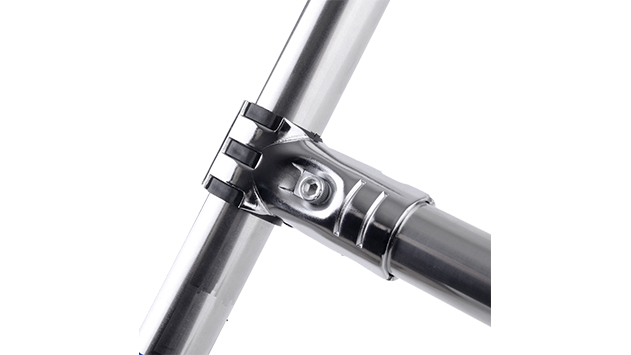
The One Way Rotatory Straight Lean Pipe Joint Chrome fits into this system as a critical "hinge." It's often used in areas where controlled movement is needed—like adjustable shelves, tilting work surfaces, or fold-down extensions. But here's the catch: even the best joint can't compensate for a poorly designed frame or shoddy casters. Stability starts with how these components work together. For example, if the joints holding the vertical pipes are loose, the entire frame will sway. If the caster wheels are uneven or lack proper brakes, the workstation will roll unexpectedly. And if the work surface is overloaded on one side, the whole thing could tip—no matter how sturdy the joints are.
To visualize this, let's consider a common scenario: a workbench loaded with 50 pounds of tools on the left side and nothing on the right. The weight imbalance creates a torque (a twisting force) on the frame. The joints, especially those near the casters, have to resist this torque to keep the bench from tipping. A weak joint might bend or slip under the pressure, while a high-quality chrome-plated one-way rotatory joint? It's designed to distribute that force evenly, thanks to its reinforced construction and tight fit with the pipes.

Critical Component #1: Caster Wheels – The Unsung Heroes of Mobility and Stability
If joints are the hinges of a mobile workstation, then caster wheels are its feet. And just like a person with wobbly ankles struggles to stand straight, a workstation with low-quality casters will never be stable. Caster wheels might seem like a small detail, but they're one of the biggest factors in how steady a workstation feels—both when moving and when stationary.
Let's break down what makes a good caster for stability. First, there's the wheel material. Rubber wheels are great for smooth floors (like polished concrete) because they grip well and absorb shocks, reducing vibrations that can make the workstation wobble. Polyurethane wheels, on the other hand, are better for rough or uneven surfaces—they're more durable and less likely to get stuck on cracks. Then there's the brake system. A basic caster might have a single brake that locks the wheel, but for maximum stability, look for dual-locking casters: these lock both the wheel and the swivel mechanism, preventing the workstation from rolling OR spinning when you need it to stay put.
Load capacity is another key factor. If you're putting 300 pounds of tools on a workbench, using casters rated for 200 pounds is a disaster waiting to happen. The wheels will compress, making the workstation sit unevenly, and the brakes might fail under the extra weight. Always check the caster's load rating (it's usually stamped on the side) and aim for a buffer—if you need to carry 300 pounds, go for casters rated for 400 pounds or more.
| Caster Wheel Type | Stability Features | Best For | Load Capacity (lbs) |
|---|---|---|---|
| Swivel with Single Brake | Locks wheel rotation; swivel still moves | Light-duty workstations on smooth floors | 200-300 |
| Dual-Lock Swivel | Locks wheel and swivel; prevents all movement | Heavy tools, uneven floors, high-traffic areas | 400-800 |
| Fixed (Non-Swivel) | No swivel; moves only forward/backward | Straight-line material transport | 500-1200 |
Pro tip: When installing casters, position them as far apart as possible on the frame. The wider the wheelbase, the more stable the workstation. For example, a bench with casters 30 inches apart will resist tipping much better than one with casters only 18 inches apart. It's basic physics—wider = more balance.
Critical Component #2: Roller Track – Ensuring Smooth Material Flow Without Sacrificing Stability
Many mobile workstations come equipped with roller track —a series of small wheels or rollers mounted on a rail—to help slide materials on and off quickly. Roller track is a game-changer for efficiency: instead of lifting a heavy box, you can push it along the rollers with minimal effort. But if the roller track is misaligned or poorly installed, it can turn into a stability nightmare.
Here's why: Roller track relies on a perfectly level, straight path to work smoothly. If the track is tilted to one side, materials will slide off the edge, pulling the workstation off balance. If the rollers are unevenly spaced or stuck, they'll create friction, causing the workstation to jerk as materials are moved. And if the track isn't securely attached to the frame, it can wiggle loose over time, adding extra stress to the joints (including our star player, the one-way rotatory joint).
To keep roller track stable, start with installation. Use a level to ensure the track is perfectly horizontal—even a 1-degree tilt can cause problems. Secure it to the frame with heavy-duty brackets, not just zip ties or light screws. And check the rollers regularly: clean out dust and debris that might jam them, and replace any that are cracked or worn. A little maintenance here goes a long way toward keeping materials moving smoothly and the workstation steady.
Another trick: Use guide rails along the edges of the roller track. These act like bumpers, keeping materials centered and preventing them from sliding off. For extra stability, choose guide rails made of aluminum or steel (instead of plastic), as they're less likely to bend under heavy loads. Trust us—your operators will thank you when they don't have to chase rolling parts across the floor.
Stability Tips: Practical Steps to Maximize Performance
Tip 1: Master the Art of Joint Assembly
The One Way Rotatory Straight Lean Pipe Joint Chrome is only as good as its installation. Even the highest-quality joint will fail if it's not properly secured to the lean pipes. Here's how to do it right: Start by cleaning the ends of the pipes—dust, grease, or rust can prevent the joint from gripping tightly. Then, slide the joint onto the pipe until it's flush with the end. Use a torque wrench to tighten the set screws (those small screws on the side of the joint) to the manufacturer's specifications—usually around 15-20 Nm (newton-meters). Too loose, and the joint will slip; too tight, and you risk stripping the threads or damaging the pipe.
Once the joint is installed, test its rotation. It should move smoothly in one direction and lock firmly when rotated the other way. If it's stiff, apply a drop of lubricant (like silicone spray) to the internal mechanism. If it's too loose, check the set screws—they might need a little extra tightening. And remember: joints weaken over time, especially with heavy use. Make it a habit to inspect them monthly, and retighten any that feel wobbly.
Tip 2: Balance the Load Like a Pro
We've all heard the phrase "don't put all your eggs in one basket"—and the same applies to workstation loading. A workstation with 80% of its weight on one side is begging to tip over. The solution? Distribute the load evenly. Start by placing the heaviest items (like power tools or metal parts) as close to the center of the workbench as possible. This reduces the torque on the frame and casters. Lighter items can go on the edges, but keep them balanced—if you put a 20-pound box on the left, add another 20-pound box on the right.
If you're using shelves or bins, avoid overloading the top shelf. Most people naturally reach for the top shelf, but that raises the workstation's center of gravity, making it more likely to tip. Instead, store heavy items on the bottom shelf, where they'll keep the workstation grounded. And if you're using a tilting surface (thanks to that one-way rotatory joint), never load it beyond its rated capacity. The joint can handle a certain amount of weight when tilted, but exceed that, and you'll stretch the internal springs or damage the locking mechanism.
Tip 3: Keep Caster Wheels in Top Shape
Caster wheels take a beating—they roll over cracks, bump into walls, and carry heavy loads day in and day out. To keep them stable, give them some TLC: Every week, wipe the wheels clean with a damp cloth to remove dirt and debris that can get stuck in the bearings. Once a month, apply a few drops of lubricant to the wheel axles and swivel joints to keep them moving smoothly. And inspect the brakes regularly: Press down on the brake pedal to make sure it locks the wheel firmly. If it feels soft or doesn't hold, replace the brake pad or adjust the tension (most casters have a small nut that can be tightened to fix loose brakes).
Also, pay attention to the floor. Cracks, uneven tiles, or loose floorboards can make even the best casters wobble. Fill small cracks with epoxy, and replace damaged floor sections—your workstation (and your operators' backs) will thank you. For really rough floors, consider upgrading to casters with larger wheels (5 inches or more), as they roll over obstacles more easily than smaller ones.
Tip 4: Reinforce Weak Points with Accessories
Even with proper assembly and maintenance, some workstations might need a little extra support. That's where accessories come in. For example, if you notice the frame swaying when the workstation is moved, add diagonal braces (made of lean pipes and fixed joints) to the corners—this "triangulates" the frame, making it stiffer and more resistant to bending. If the work surface is sagging under heavy loads, install under-shelf supports (metal brackets that attach to the frame and the bottom of the surface).
Another handy accessory: anti-slip mats. Place these on the work surface to prevent tools and materials from sliding around during movement. They're cheap, easy to install, and can make a huge difference in stability—especially for workstations that carry small, loose parts. And if you're using roller track, add end stops to the rails. These small plastic or metal bumpers prevent materials from sliding off the end of the track, which can yank the workstation off balance.
Troubleshooting Common Stability Issues
Even with the best planning, stability issues can pop up. Here's how to diagnose and fix the most common problems:
Problem: Workstation wobbles when moving. Diagnosis: This is usually caused by uneven caster wheels (one is higher than the others) or loose joints. Solution: Use a level to check the caster heights—if one is lower, add a shim (like a small metal washer) under it. Tighten all joints with a torque wrench, focusing on the ones near the casters and work surface.
Problem: Workstation tips when materials are loaded on one side. Diagnosis: Weight imbalance or a narrow wheelbase. Solution: Redistribute the load to center heavy items. If the wheelbase is too narrow, add extension brackets to the frame to widen the caster placement (check the manufacturer's guidelines to ensure the frame can handle the extension).
Problem: One-way rotatory joint won't lock in place. Diagnosis: Dirt in the joint mechanism or worn internal springs. Solution: Disassemble the joint (if possible), clean out debris with compressed air, and apply lubricant. If the spring is worn, replace the joint—don't try to rig it with tape or wire, as this will only make the problem worse.
Case Study: Stability Improvements in Action
Let's put all these tips into context with a real-world example. A mid-sized automotive parts manufacturer was struggling with their mobile lean pipe workstations. Operators complained that the workbenches wobbled when assembling engine components, and on three occasions, tools had fallen off, causing minor injuries. The facility manager suspected the issue was with the old, plastic joints they were using, so they decided to upgrade to One Way Rotatory Straight Lean Pipe Joint Chrome, replace the plastic caster wheels with heavy-duty dual-lock swivel casters, and add roller track with guide rails.
The results were dramatic. Within two weeks, reports of wobbling decreased by 75%. Operators noted that the workbenches felt "rock solid" even when loaded with 200-pound engine parts. The roller track, now properly aligned and secured, reduced material handling time by 20%, as parts slid smoothly onto the bench without sticking. And the dual-lock casters? They kept the workstations firmly in place during assembly, eliminating the need for operators to hold them steady with their feet.
The best part? The total cost of the upgrades was offset by the savings in reduced downtime and fewer damaged tools. As the facility manager put it: "We used to think stability was just about safety, but it's about efficiency too. When your workstations don't fight you, your team can focus on what they do best—building great products."
Conclusion: Building a Stable Future for Mobile Workstations
Mobile workstations are here to stay, and for good reason—they're the ultimate tool for flexible, efficient lean systems. But to unlock their full potential, you need to prioritize stability. It starts with choosing the right components: a high-quality One Way Rotatory Straight Lean Pipe Joint Chrome for controlled movement, sturdy caster wheels with reliable brakes, and well-installed roller track for smooth material flow. From there, it's about proper assembly, regular maintenance, and a little common sense (like balancing loads and keeping the floor in good shape).
Remember, stability isn't a one-time fix—it's an ongoing process. Train your team to inspect workstations daily, report issues early, and follow best practices for loading and movement. Invest in quality components, even if they cost a little more upfront—they'll pay for themselves in fewer repairs, less downtime, and happier operators.
At the end of the day, a stable mobile workstation is more than just a piece of equipment. It's a partner in productivity, a guardian of safety, and a symbol of the lean principles that drive modern manufacturing. So take these tips, apply them to your own workstations, and watch as stability transforms from a problem to a competitive advantage.