- Company Articles
- Products and Technology
- Product knowledge
- One Way Rotatory Straight Lean Pipe Joint Chrome: How It Reduces Downtime in Production

One Way Rotatory Straight Lean Pipe Joint Chrome: How It Reduces Downtime in Production
Related Product
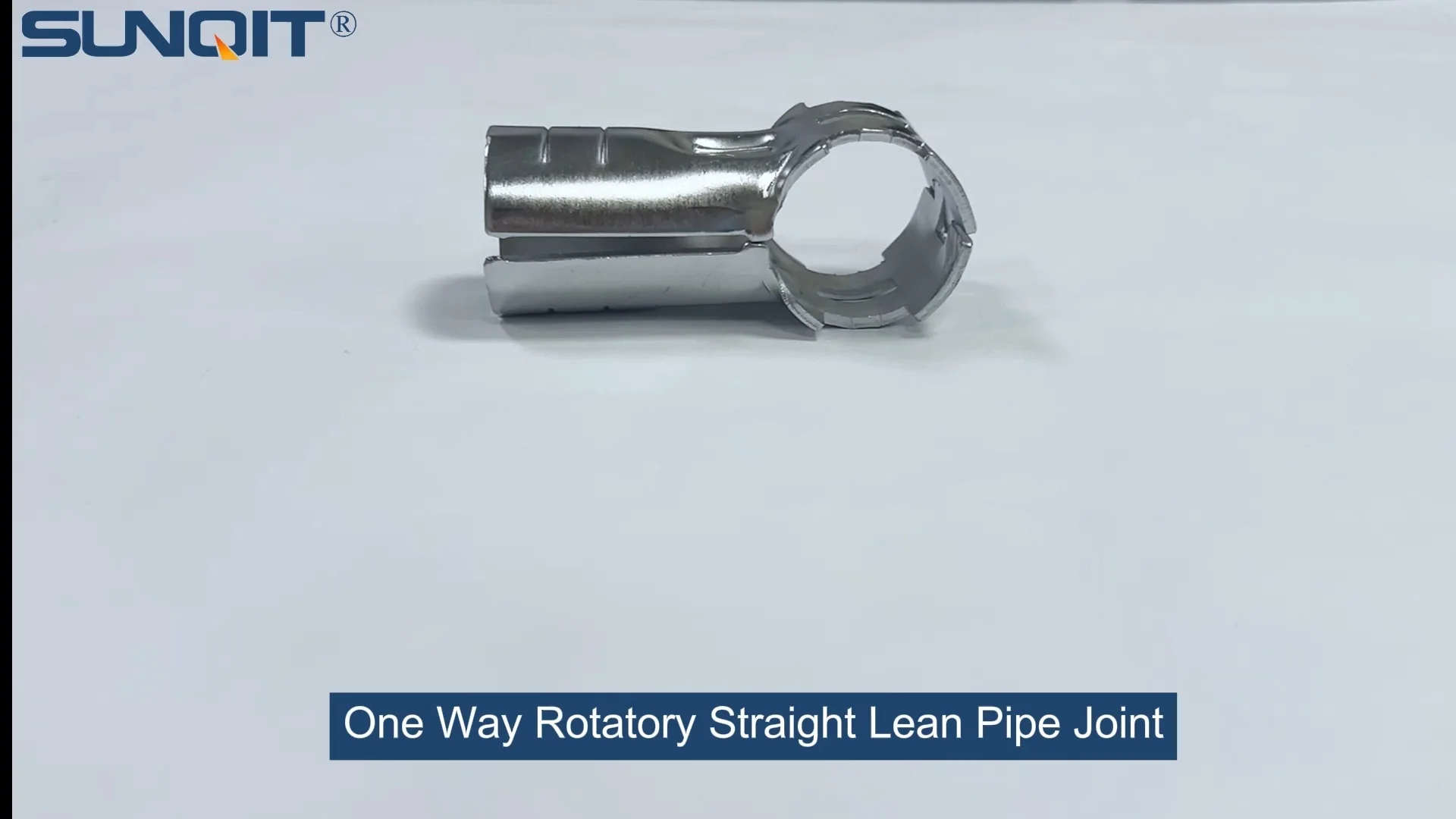
One Way Rotatory Straight Lean Pipe Joint Chrome
Two way lean pipe joint for 2 pcs 28MM lean pipe connection in straight angle with rotatory fucntion, which used widely in workbench, flow rack, hand trolley frame connection.
Picture this: It's 9 AM on a Monday, and your production line is humming. Conveyors glide, workers assemble components with focus, and every minute feels like progress. Then—*clunk*. A lean pipe joint on the material rack snaps. The line halts. Mechanics scramble with tools, parts are rerouted, and by the time it's fixed, you've lost 45 minutes. Multiply that by a few such incidents a week, and suddenly your quarterly targets are slipping. Sound familiar? For manufacturers, downtime isn't just a delay—it's a silent profit killer. But what if the solution was smaller than you think? Enter the One Way Rotatory Straight Lean Pipe Joint Chrome : a tiny component with a huge mission to keep your production line moving.
Why does downtime hurt so much? According to industry reports, unplanned downtime costs manufacturers an average of $22,000 per minute. For mid-sized factories, that's over $1 million a year lost to broken joints, misaligned tracks, and cumbersome reconfigurations. The One Way Rotatory Straight Lean Pipe Joint Chrome isn't just a part—it's a defense against that loss.
Lean Pipe Systems: The Unsung Heroes of Modern Production
Before we dive into the joint itself, let's talk about the backbone it supports: lean pipe systems . If you've walked through an automotive plant, electronics assembly floor, or even a warehouse, you've seen them—those modular structures made of pipes and joints that form workbenches, material racks, conveyors, and turnover trolleys. Lean pipe systems are the Swiss Army knives of manufacturing: flexible, affordable, and infinitely customizable. They're the reason a factory can retool a line for a new product in hours instead of days, or adjust a workstation to fit a worker's height with a few twists of a joint.
At their core, these systems rely on two things: pipes (often steel, aluminum, or stainless steel) and joints. The pipes provide structure; the joints provide movement and adaptability. And when it comes to adaptability, not all joints are created equal. Traditional fixed joints lock pipes into rigid angles, making reconfiguration a hassle. Swivel joints, while flexible, can be wobbly under heavy loads. That's where the One Way Rotatory Straight Lean Pipe Joint Chrome steps in—it's designed to balance flexibility, stability, and speed.
Meet the One Way Rotatory Straight Lean Pipe Joint Chrome: A Closer Look
Let's get up close with this unsung hero. Imagine holding it in your hand: a compact, chrome-plated component with a cylindrical body, a rotating sleeve, and precision-machined grooves. It's not flashy, but every detail serves a purpose. Let's break down what makes it unique.
1. The Chrome Advantage: Durability That Stands the Test of Time
First, that shiny chrome coating isn't just for looks. Chrome plating adds a hard, corrosion-resistant layer to the underlying steel, making the joint impervious to the oils, coolants, and humidity that plague factory floors. Think about it: a traditional uncoated joint might start rusting after six months of exposure to machine oil. A chrome-plated one? It'll still look new after years. Less rust means fewer seized joints, fewer replacements, and—you guessed it—less downtime.
But durability isn't just about resisting rust. Chrome also reduces friction. When you rotate the joint, the chrome surface glides smoothly, so workers don't have to strain to adjust a rack or reposition a workbench. That smooth operation cuts down on the "fiddling time" that eats into productivity—no more wrestling with stuck joints or using wrenches to loosen corroded parts.
2. One-Way Rotation: Control Without Compromise
Here's where the "one way" in the name matters. Unlike fully swiveling joints that can rotate 360 degrees (and sometimes rotate too much, causing instability), this joint rotates in one direction—usually 180 degrees—before locking into place. Why does that matter? Imagine you're building a material rack B (3 row and 3 floor) for storing circuit boards. You need the shelves to tilt slightly forward so parts slide easily, but you don't want them to tilt backward and dump components on the floor. The one-way rotation lets you set that angle precisely, then locks it in. No more accidental over-rotation, no more wobbly shelves, no more stops to readjust.
This controlled rotation is a game-changer for production assemble lines, where consistency is key. A worker assembling smartphones, for example, needs their parts bin at a specific angle to reach components without straining. With a one-way rotatory joint, they can set that angle once and trust it won't shift mid-shift. That stability translates to faster, more accurate work—and fewer interruptions.
3. Snap-and-Go Installation: Because Time Is Money
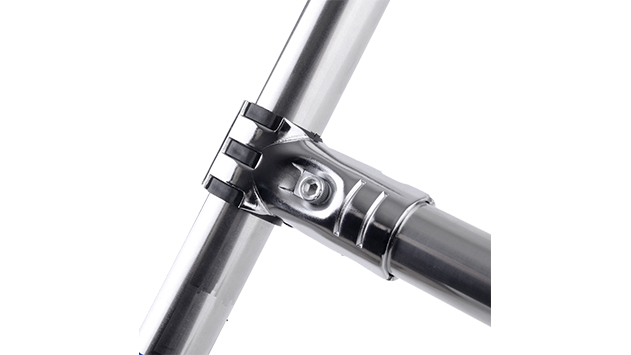
Let's talk about installation. Traditional lean pipe joints often require tools: hex keys, wrenches, maybe even a hammer to tap them into place. Each joint can take 2-3 minutes to secure, and if you're building a 20-foot material rack with dozens of joints, that adds up. The One Way Rotatory Straight Lean Pipe Joint Chrome? It's designed for tool-free assembly. Slide the pipe into the joint, twist the sleeve until it clicks, and you're done. No tools, no hassle, no wasted time.
"We used to spend 45 minutes just setting up a simple workbench with old joints," says Maria, a production supervisor at a mid-sized electronics plant in Ohio. "Now, with these chrome rotatory joints? Two workers can build a full material rack in under 20 minutes. That's time we can spend actually making products, not assembling shelves."
How This Joint Cuts Downtime: 3 Real-World Scenarios
Numbers tell the story, but let's ground this in real life. Here are three common downtime culprits—and how the One Way Rotatory Straight Lean Pipe Joint Chrome solves them.
Scenario 1: Line Retooling for a New Product
Problem: A car parts manufacturer needs to switch from assembling door handles to side mirrors. Their old line uses fixed-joint lean pipe racks, which require tools to disassemble. Each rack takes 25 minutes to break down and rebuild. With 12 racks, that's 5 hours of downtime.
Solution: With one-way rotatory joints, workers can adjust the racks on the fly. No disassembly needed—just rotate the joints to reangle shelves, slide in new roller track sections, and lock them. Total time? 1 hour. Downtime reduced by 80%.
Scenario 2: A Stuck Joint on the Assembly Line
Problem: On a smartphone assembly line, a joint on the component conveyor seizes up, jamming the flow of circuit boards. The maintenance team has to shut down the line, spray lubricant, and use pliers to free it—30 minutes of lost production.
Solution: Chrome-plated joints resist corrosion and friction. Even after months of use, the rotatory sleeve glides smoothly. If a joint *does* need adjustment, it can be rotated by hand in seconds. Downtime: 5 minutes (mostly to clear the jammed boards).
Scenario 3: Worker Ergonomics Adjustments
Problem: A worker complains of wrist strain from reaching awkwardly for parts on a fixed-height workbench. HR mandates an adjustment, which requires loosening 8 traditional joints with a hex key, readjusting the pipes, and retightening—20 minutes of downtime per workstation.
Solution: The one-way rotatory joint lets the worker adjust the workbench height themselves in 2 minutes flat. No tools, no maintenance team needed. Downtime: 0 (the worker adjusts it during a break).

Traditional Joints vs. One Way Rotatory Chrome Joint: A Head-to-Head Comparison
Still not convinced? Let's put it all in black and white. Here's how the One Way Rotatory Straight Lean Pipe Joint Chrome stacks up against two common alternatives: traditional fixed joints and standard swivel joints.
| Feature | Traditional Fixed Joint | Standard Swivel Joint | One Way Rotatory Chrome Joint |
|---|---|---|---|
| Installation Time | 5-7 minutes (requires tools) | 3-4 minutes (tools often needed) | 30 seconds (tool-free) |
| Adjustability | Fixed angles only; requires disassembly to reconfigure | 360° rotation but prone to over-adjustment | 180° one-way rotation with locking mechanism |
| Durability | Prone to rust; needs replacement every 1-2 years | Moderate rust resistance; lasts 2-3 years | Chrome-plated; corrosion-resistant; lasts 5+ years |
| Maintenance Needs | Regular lubrication; occasional wrench tightening | Frequent lubrication to prevent wobbling | Minimal; occasional wipe-down to remove debris |
| Impact on Downtime | High (long setup/reconfiguration time) | Moderate (wobbling causes jams; over-adjustment) | Low (fast setup; stable; easy adjustments) |
Beyond the Joint: Why Choosing the Right Lean Pipe Supplier Matters
Even the best joint design is only as good as the supplier behind it. When you're shopping for lean pipe components, look for a lean pipe supplier that prioritizes precision manufacturing. A poorly made joint—even with a chrome coating—might have misaligned threads or a loose sleeve, defeating the purpose of reduced downtime.
Reputable suppliers test their joints under real-world conditions: they'll simulate years of rotation, expose them to industrial chemicals, and measure how much weight they can support before bending. They'll also offer warranties—often 3-5 years—because they stand behind their product's durability. Don't skimp on this: a cheap, low-quality joint might save you $5 upfront, but cost you $500 in downtime when it fails.
Final Thoughts: Small Parts, Big Impact
In the grand scheme of manufacturing, a lean pipe joint is easy to overlook. It's small, it's simple, and it doesn't have the flash of a robotic arm or a high-tech conveyor. But as any production manager will tell you, the smallest parts often cause the biggest headaches. Downtime doesn't come from grand failures—it comes from seized joints, wobbly racks, and the 10-minute adjustments that add up to hours over a week.
The One Way Rotatory Straight Lean Pipe Joint Chrome is more than a component. It's a commitment to efficiency. It's the difference between a line that sputters and a line that flows. It's the reason a worker can adjust their workstation in 2 minutes instead of 20, or a team can retool a rack in an hour instead of a day. In a world where every minute counts, that's not just progress—that's profit.
So, what's next? If you're tired of watching downtime eat into your production targets, take a walk through your facility. Look at the lean pipe systems. Check the joints. Are they rusted? Do they require tools to adjust? If the answer is yes, it might be time to make the switch. Your bottom line—and your workers—will thank you.