- Company Articles
- Products and Technology
- Product knowledge
- One Way Rotatory Straight Lean Pipe Joint Chrome in Semiconductor Industry: Cleanroom Compatibility

One Way Rotatory Straight Lean Pipe Joint Chrome in Semiconductor Industry: Cleanroom Compatibility
Related Product
One Way Rotatory Straight Lean Pipe Joint Chrome
Two way lean pipe joint for 2 pcs 28MM lean pipe connection in straight angle with rotatory fucntion, which used widely in workbench, flow rack, hand trolley frame connection.
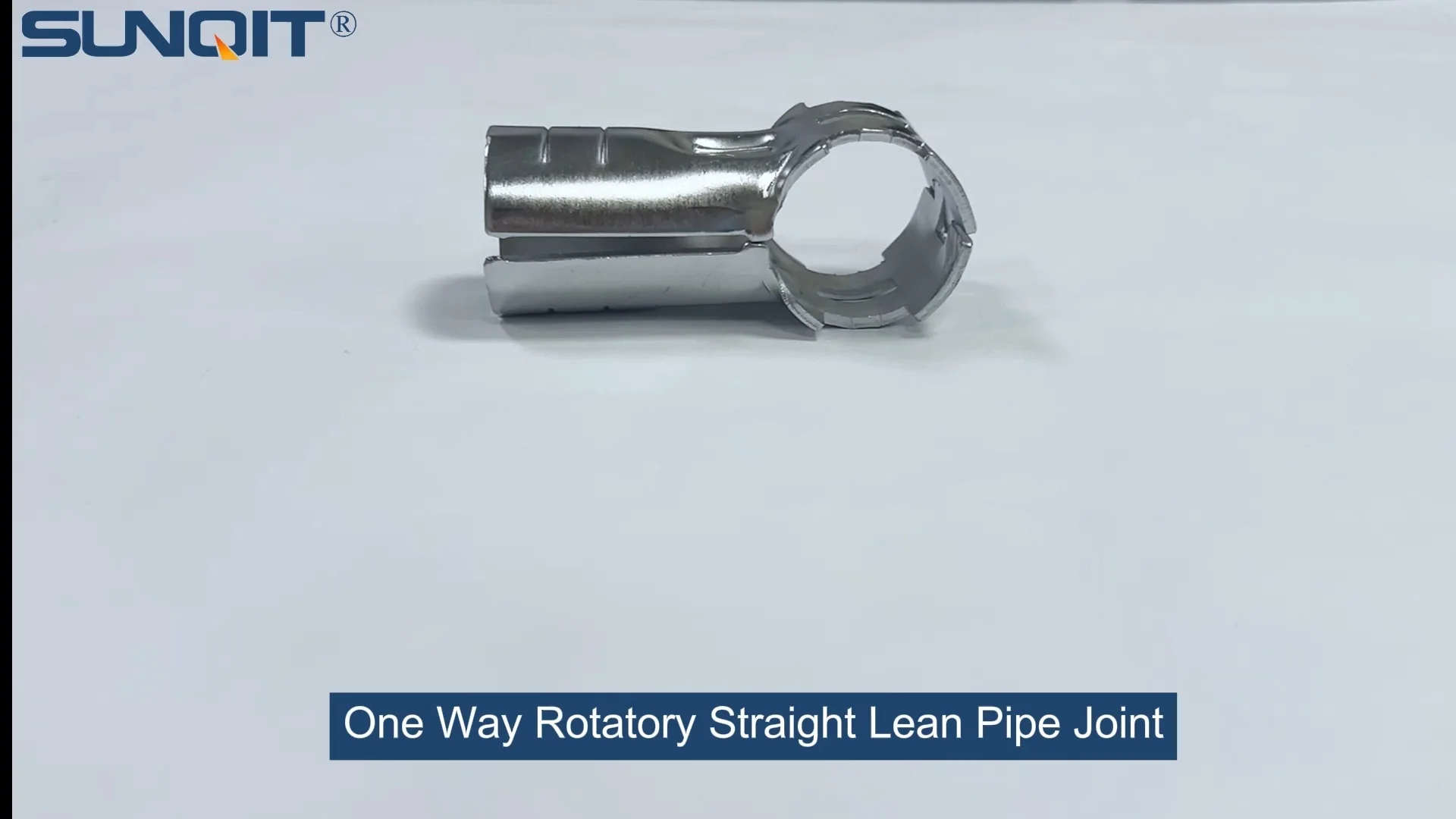
Walk into a semiconductor cleanroom, and you'll step into a world where precision isn't just a goal—it's the air you breathe. Every surface, every tool, every tiny component is designed to keep particles larger than 0.5 microns at bay. Why? Because a single speck of dust can ruin a microchip with billions of transistors, costing manufacturers thousands of dollars per failed unit. In this high-stakes environment, even the smallest parts of the production line matter. That's where the one way rotatory straight lean pipe joint chrome comes in—a but critical component that bridges the gap between lean manufacturing efficiency and cleanroom rigor.
1. Lean Systems in High-Tech Manufacturing: The Backbone of Efficiency
Before diving into the specifics of this joint, let's talk about lean systems —the philosophy that's revolutionized manufacturing over the past few decades. At its core, lean is about eliminating waste: wasted time, wasted materials, wasted movement. In semiconductor plants, where production lines run 24/7 and every second counts, lean isn't just a buzzword; it's a survival strategy. From streamlining material flow to optimizing workstation layouts, lean systems ensure that every step adds value, not clutter.
But here's the catch: semiconductor manufacturing isn't just about speed. It's about speed without compromise on cleanliness or precision. Traditional lean tools—like generic workbenches or basic material racks—often fall short here. They might introduce particles, corrode under harsh cleaning chemicals, or lack the adjustability needed for rapidly evolving chip designs. That's why specialized components, tailored to cleanroom conditions, are non-negotiable. And the one way rotatory straight lean pipe joint chrome? It's a prime example of how lean innovation meets cleanroom demands.
2. Unpacking the One Way Rotatory Straight Lean Pipe Joint Chrome: Design & Functionality
At first glance, this joint might look like just another metal connector. But take a closer look, and you'll see why it's become a staple in semiconductor facilities worldwide. Let's break down its key features:
Material Science: Chrome Plating for Cleanrooms
The "chrome" in the name isn't just for shine—it's a protective barrier. Chrome plating creates a smooth, non-porous surface that resists corrosion, chipping, and particle shedding. In cleanrooms, where daily wipe-downs with isopropyl alcohol or specialized detergents are routine, this durability is game-changing. Unlike painted or untreated metal joints, chrome-plated ones won't degrade over time, ensuring that they don't release harmful particles into the air. This is critical for maintaining ISO Class 5-7 cleanroom standards, where even a few extra particles per cubic meter can trigger production halts.
Engineering Precision: One-Way Rotation Mechanism
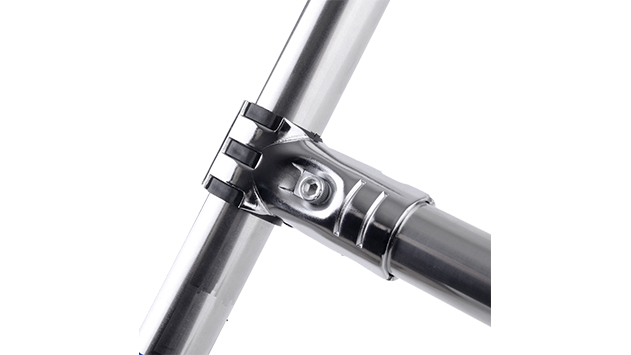
The "one way rotatory" feature is where the engineering magic happens. Traditional lean pipe joints either lock into fixed angles or swivel freely, which can lead to accidental movement in high-traffic areas. The one way design, however, allows rotation in a single direction (typically 0-180 degrees) with a smooth, controlled stop at the endpoint. Imagine a lean pipe workbench where a technician needs to adjust a tool arm—with this joint, they can pivot the arm precisely into place without worrying about it swinging back or jamming. This controlled movement reduces the risk of human error, minimizes tool damage, and keeps workflows uninterrupted.
Compatibility with Lean Pipe Accessories
No component works in isolation, and this joint is no exception. It's designed to integrate seamlessly with a wide range of lean pipe accessories , from aluminum guide rails to roller tracks and caster wheels. Whether you're building a custom flow rack for wafer containers or a mobile workstation for chip testing, this joint ensures a snug, stable fit. Its standardized sizing (compatible with 28mm and 30mm lean pipes) means it plays well with existing lean setups, too—no need to overhaul your entire system to upgrade.
3. Cleanroom Compatibility: Why This Joint Stands Out
Cleanrooms are unforgiving environments. To earn a spot on the production floor, a component must meet strict criteria: low particle emission, chemical resistance, ESD (electrostatic discharge) safety, and easy cleanability. Let's see how the one way rotatory joint checks these boxes:
ISO Class Compliance: Particle Control
ISO 14644-1 cleanroom standards classify environments by the number of particles per cubic meter. Semiconductor manufacturing typically requires ISO Class 5 (fewer than 3,520 particles ≥0.5μm/m³) to Class 7 (fewer than 352,000 particles ≥0.5μm/m³). The chrome-plated surface of this joint is ultra-smooth , leaving no crevices for dust or debris to hide. Even after repeated rotations, the mechanism doesn't generate friction-induced particles—a common issue with plastic or uncoated metal joints. Testing shows that when integrated into a lean pipe workbench or flow rack, this joint contributes less than 0.1 particles ≥0.5μm per hour, well below ISO Class 5 limits.
Chemical Resistance: Standing Up to Cleaners
Cleanrooms aren't just dust-free—they're also regularly sanitized with aggressive chemicals to kill microbes and remove residues. From hydrogen peroxide vapor to strong alkaline detergents, these cleaners can eat away at inferior materials. The chrome plating on this joint, however, is resistant to most industrial cleaners, including those with pH levels from 2 to 12. Unlike painted joints, which can bubble or peel, chrome maintains its integrity, ensuring long-term performance even in daily cleaning cycles.
ESD Safety: Protecting Sensitive Electronics
Static electricity is a silent killer in semiconductor manufacturing. A single electrostatic discharge can fry delicate microchips, rendering them useless. While ESD-safe workbenches (like ESD workstations ) are standard, the components that build those workstations matter too. The one way rotatory joint's chrome plating is conductive, allowing static charges to dissipate harmlessly to ground. This makes it compatible with ESD protocols, adding an extra layer of protection when used in conjunction with ESD mats, wrist straps, and grounded lean pipe workbench frames.

4. Real-World Applications in Semiconductor Production
Theory is one thing—real-world performance is another. Let's look at how semiconductor plants are using this joint to solve everyday challenges:
Assembly Line Workstations: Precision Adjustments
Semiconductor assembly involves mounting tiny components (some smaller than a grain of sand) onto wafers or substrates. Technicians need workstations that adapt to different tasks—inspection, bonding, testing—without requiring full teardowns. A lean pipe workbench equipped with one way rotatory joints allows tool arms, magnifying lenses, or lighting fixtures to pivot into position with micrometer-level precision. For example, a bonding tool arm can be rotated 90 degrees to access a wafer, then locked in place to prevent drift during operation. This flexibility reduces setup time by up to 30% compared to fixed workstations, letting teams switch between chip designs faster.
Material Flow Optimization with Flow Racks
Moving materials—like wafer cassettes or test trays—through the cleanroom requires systems that minimize human contact and particle generation. Flow racks with roller tracks are a lean staple here, but traditional roller setups often have fixed angles, leading to jams or uneven flow. By integrating one way rotatory joints into flow rack supports, engineers can adjust the incline of roller tracks in 5-degree increments, ensuring smooth, gravity-driven movement of materials. This not only reduces jams but also cuts down on the need for manual intervention—another source of particle contamination.
Conveyor Systems: Controlled Directionality
Conveyors are the arteries of semiconductor plants, moving wafers between etching, deposition, and testing stations. In cleanrooms, conveyor components must avoid backtracking (which can cause collisions) and maintain consistent speed. The one way rotatory joint's directional lock prevents reverse movement, ensuring that wafers only travel forward. This is especially critical in "buffer zones" between process steps, where even a slight backward shift can disrupt timing and lead to product defects.
5. Comparative Analysis: One Way Rotatory Joint vs. Traditional Lean Pipe Joints
To truly appreciate the value of the one way rotatory straight lean pipe joint chrome, let's compare it to two common alternatives: standard fixed joints and freely swiveling joints. The table below highlights key differences in cleanroom performance and functionality:
| Feature | One Way Rotatory Straight Lean Pipe Joint Chrome | Standard Fixed Lean Pipe Joint | Freely Swiveling Lean Pipe Joint |
|---|---|---|---|
| Rotation Control | One-way (0-180°) with controlled stop | No rotation (fixed angle) | 360° free rotation |
| Material & Coating | Chrome-plated steel (smooth, non-porous) | Zinc-plated steel or plastic (may have rough edges) | Aluminum or plastic (prone to wear) |
| Cleanroom Compatibility (ISO Class) | ISO Class 5+ (low particle emission) | ISO Class 8+ (may shed particles from seams) | ISO Class 7 (friction from swiveling generates particles) |
| Chemical Resistance | Resistant to most industrial cleaners (pH 2-12) | Moderate (zinc plating may corrode over time) | Low (plastic degrades with harsh chemicals) |
| ESD Safety | Conductive (dissipates static) | Variable (zinc is conductive; plastic is not) | Non-conductive (plastic) or limited (aluminum) |
| Best For | Cleanrooms, precision workstations, directional flow systems | Static layouts, non-cleanroom environments | General manufacturing, non-critical material handling |
6. Choosing the Right Lean Pipe Supplier: Beyond the Product
A top-tier component is only as good as the lean pipe supplier behind it. In semiconductor manufacturing, where compliance and reliability are non-negotiable, selecting a supplier with cleanroom expertise is critical. Here's what to look for:
- Cleanroom Testing Certifications: Ask for ISO 14644-1 particle emission reports and chemical resistance test data specific to the one way rotatory joint.
- Material Traceability: Chrome plating thickness, base metal composition, and joint tolerances should be fully documented—critical for audits and quality control.
- Customization Support: Semiconductor plants often need bespoke lean setups. A good supplier will work with your team to adjust joint specifications (e.g., rotation angle, plating thickness) to fit unique workflows.
- Lead Times: Chip production lines can't wait for parts. Choose a supplier with local inventory or short manufacturing cycles to avoid delays.
7. Future Trends: Innovations in Lean Pipe Technology for Semiconductor
The semiconductor industry is evolving faster than ever, with smaller chip nodes (3nm, 2nm, and beyond) demanding even stricter cleanroom standards. What's next for lean pipe components like the one way rotatory joint? Here are two emerging trends:
Smart Joints with Sensors: Imagine a joint that monitors rotation cycles, detects wear, and sends alerts before failure. Early prototypes integrate micro sensors into the joint housing, transmitting data to plant management systems. This predictive maintenance could reduce unplanned downtime by up to 40%.
Advanced Coatings for Extreme Environments: As chipmakers adopt more aggressive processes (like EUV lithography), components will need to withstand higher temperatures and harsher chemicals. Next-gen chrome-nickel alloys, with enhanced corrosion resistance, are already in testing stages.
8. Conclusion: The Small Component That Makes a Big Difference
In the grand scheme of semiconductor manufacturing—with its multi-billion-dollar tools and cutting-edge materials—the one way rotatory straight lean pipe joint chrome might seem. But as any cleanroom engineer will tell you, success lies in the details. This joint isn't just a connector; it's a bridge between lean efficiency and cleanroom precision. It ensures that lean systems deliver on their promise of waste reduction without compromising the sterility and safety that semiconductor production demands.
Whether you're building a lean pipe workbench for wafer inspection, a flow rack for material storage, or a conveyor system for chip transport, choosing components that are designed for cleanrooms isn't an option—it's a necessity. And in that world, the one way rotatory straight lean pipe joint chrome isn't just a part of the solution. It's a testament to how innovation, even at the smallest scale, drives the future of technology.