- Company Articles
- Products and Technology
- Product knowledge
- One Way Rotatory Straight Lean Pipe Joints & Lean Six Sigma Implementation

One Way Rotatory Straight Lean Pipe Joints & Lean Six Sigma Implementation
Related Product
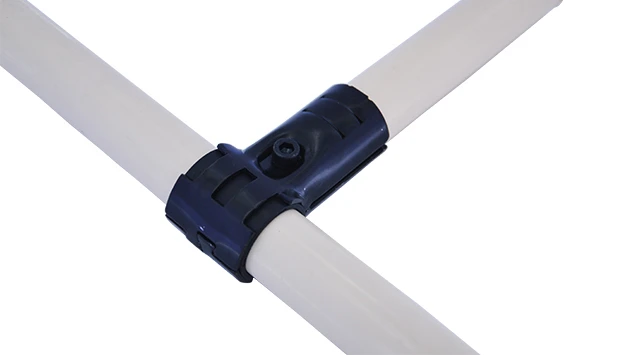
One Way Rotatory Straight Lean Pipe Joint
Two way lean pipe joint for 2 pcs 28MM lean pipe connection in straight angle with rotatory fucntion, which used widely in workbench, flow rack, hand trolley frame connection.
Understanding the Heartbeat of Lean Six Sigma: People, Process, and Physical Tools
Lean Six Sigma isn't just a buzzword thrown around in boardrooms—it's a mindset, a methodology, and a promise to make work better. At its core, it's about two things: eliminating waste ( Lean ) and reducing variation ( Six Sigma ). But here's the thing: you can't achieve that with spreadsheets and meetings alone. You need the right physical tools to turn those ideas into action. That's where lean pipe systems, and specifically components like the One Way Rotatory Straight Lean Pipe Joint , step in. They're the unsung heroes that bridge the gap between theory and the factory floor, turning abstract concepts like "continuous flow" and "standardized work" into tangible, daily realities.
Think about a typical manufacturing or assembly line. Walk through it, and you'll see the same problems crop up: workbenches that can't adjust to new product sizes, material racks that cause operators to reach awkwardly (wasting time and increasing strain), or conveyor systems that bottleneck because they're rigid and unchangeable. These aren't just minor inconveniences—they're sources of waste. And waste, in Lean Six Sigma terms, is the enemy. It's the time lost, the extra steps, the frustration that creeps into a team's day. The solution? Systems that adapt as quickly as your processes do. Systems built on flexibility, durability, and common sense. That's exactly what lean pipe systems deliver—and the One Way Rotatory Straight Lean Pipe Joint is the linchpin that makes that flexibility possible.
Lean Pipe Systems: The Backbone of Adaptive Workspaces
Before we dive into the specifics of that star joint, let's talk about lean pipe systems as a whole. What are they? In simple terms, they're modular structures built from pipes, joints, and accessories that can be configured into almost anything: workbenches, material racks, conveyor tracks, trolleys—you name it. Unlike traditional fixed infrastructure (think welded steel racks or custom-built tables), these systems are designed to be changed. Need to reconfigure a workbench for a new product? Loosen a few joints, adjust the pipes, and you're done. No welding, no waiting for a contractor, no downtime. That's the beauty of it: adaptability .
But why does adaptability matter for Lean Six Sigma? Because customer demands change. Product designs evolve. And if your workspace can't keep up, you're stuck in the past. Lean pipe systems solve that by letting you "design on the fly." They're also cost-effective. Instead of replacing an entire rack when you need a new layout, you reuse the same pipes and joints. That's waste reduction in action—both financial and environmental. And let's not forget the human element: when operators can adjust their own workspaces to fit their needs, they feel empowered. They take ownership. And that's when real improvement happens.
| Traditional Fixed Infrastructure | Lean Pipe Systems |
|---|---|
| Custom-built; hard to modify | Modular; reconfigurable in minutes |
| High upfront cost; expensive to replace | Lower initial investment; reusable components |
| Requires specialized labor (welders, carpenters) | Assembled by in-house teams with basic tools |
| Prone to obsolescence with product changes | Adapts to new products and processes |
| Often leads to wasted space or overcrowding | Optimizes space usage dynamically |

The Star Player: One Way Rotatory Straight Lean Pipe Joint – What It Is and Why It Matters
Now, let's zoom in on the One Way Rotatory Straight Lean Pipe Joint . If lean pipe systems are the body, this joint is the elbow—it bends, it moves, and it keeps everything connected. But not just any movement: "one way rotatory" means it rotates in a single direction, in place once adjusted. That might sound simple, but in a busy workspace, that control is everything.
Imagine an operator assembling small electronic components on a workbench . The workbench has a material rack attached to the side, holding parts bins. But depending on the component being assembled, the operator might need that rack tilted slightly forward for easier access. With a traditional fixed joint, they'd be stuck—either reaching too far (wasting time) or asking for help to rebuild the rack (more waste). But with the One Way Rotatory Straight Lean Pipe Joint? They can adjust the angle with a quick twist, lock it in, and get back to work. No tools, no waiting, no frustration. That's standardized work with a human touch—because the best processes are the ones that work for the people using them.
But the benefits don't stop at adjustability. These joints are built tough. Most are made from durable materials like zinc-plated steel or aluminum, designed to handle the daily wear and tear of a factory floor. They're also easy to assemble: no nuts, bolts, or complicated tools. Just slide the pipe into the joint, tighten a lever or screw, and you're good to go. This simplicity cuts down on setup time, which is critical when you're trying to implement a new process quickly (hello, rapid improvement events!).
Another key advantage? Consistency. In Six Sigma, reducing variation is everything. If two operators build the same material rack but use different joint angles because the joints slip or don't lock properly, you end up with inconsistent workspaces. That leads to inconsistent processes, which leads to defects. The One Way Rotatory Joint eliminates that by locking securely in place, ensuring that every rack, every workbench, every trolley built with it is standardized. That consistency is the foundation of reliable, repeatable results.

Beyond the Joint: How Aluminum Profile and Roller Track Complete the System
A star player needs a great supporting cast, and the One Way Rotatory Straight Lean Pipe Joint is no exception. Two components that often steal the spotlight alongside it are aluminum profile and roller track . Together, they form a trio that transforms ordinary workspaces into Lean Six Sigma powerhouses.
Let's start with aluminum profile. Unlike traditional steel pipes, aluminum profiles are lightweight but incredibly strong. They're also precision-engineered with T-slots, which means you can attach accessories—like bins, tools, or even the One Way Rotatory Joint—anywhere along the length, without drilling holes. This flexibility is a game-changer for workbenches. For example, a quality control station might need a light, a magnifying glass, and a small parts bin. With aluminum profile, you can mount all three exactly where the operator needs them, adjust as needed, and reposition if the task changes. It's like building with Legos for grown-ups—only sturdier and more practical.
Then there's roller track. If aluminum profile is the "where" of your workspace, roller track is the "how" of material flow. Roller tracks are exactly what they sound like: tracks with small rollers that let materials glide smoothly from one station to the next. When integrated with lean pipe systems and the One Way Rotatory Joint, they become a powerful tool for creating continuous flow—one of the core principles of Lean. Imagine a production line where parts move automatically from the assembly station to the testing station, thanks to a gently sloped roller track. No more operators carrying bins back and forth (waste!), no more bottlenecks because someone forgot to move the next batch (variation!). Just steady, consistent flow.
Here's how it all comes together: The aluminum profile forms the frame of a material rack. The One Way Rotatory Straight Lean Pipe Joints angle the roller track so that parts slide down to the operator at just the right speed. The workbench, also built from aluminum profile, is positioned at the perfect height to catch those parts. It's a system where every component has a job, and every job supports the goal: making work easier, faster, and better. That's the magic of Lean Six Sigma in action—not just a methodology, but a symphony of tools working in harmony.
From Theory to Results: A Real-World Example
Let's put this all into context with a hypothetical (but realistic) scenario. Meet Acme Electronics, a mid-sized manufacturer of circuit boards. They'd been struggling with two big issues: high defect rates (due to inconsistent assembly processes) and low operator morale (due to awkward workspaces). Their Lean Six Sigma team identified the root cause: rigid workbenches and material racks that didn't adapt to the variety of board sizes they produced. Operators were constantly repositioning themselves, reaching for parts, or adjusting tools—all forms of waste. The team decided to invest in a lean pipe system, centered around the One Way Rotatory Straight Lean Pipe Joint, aluminum profile, and roller track.
Here's what happened next:
- Workbench Reconfiguration: Old fixed workbenches were replaced with aluminum profile workbenches. Using the One Way Rotatory Joints, operators could adjust the height and angle of the work surface and attached material racks. For smaller boards, they lowered the surface; for larger ones, they raised it. Defects dropped by 18% in the first month because operators were more comfortable and focused.
- Material Flow with Roller Track: A roller track system was installed between the soldering and inspection stations. The track, angled with One Way Rotatory Joints, let boards glide smoothly to inspectors—no more carrying. Lead time for each batch decreased by 22% because there was no more waiting for materials to be moved.
- Operator Empowerment: Teams were trained to reconfigure their own workspaces using the joints and profiles. Within weeks, they started suggesting improvements: adding extra roller track sections, adjusting rack angles for specific parts, even building custom trolleys for tool storage. Morale scores, measured via monthly surveys, jumped by 30%. As one operator put it: "I don't feel like the workspace is working against me anymore. It works with me."
Acme's story isn't unique. It's a reminder that Lean Six Sigma isn't about perfection—it's about progress. And progress happens when you give teams the tools to solve their own problems. The One Way Rotatory Straight Lean Pipe Joint, aluminum profile, and roller track didn't just fix Acme's processes; they gave the people behind those processes the power to make things better. That's the real win.
Implementing It Yourself: Tips for Success
So, you're convinced. You want to bring these tools into your workspace. Where do you start? Here are a few practical tips:
Start Small, Think Big: Don't try to reconfigure your entire facility at once. Pick a problem area—a single workbench, a material rack, or a conveyor section—and test the system there. Measure the results, get feedback from the team, and then scale up. This "pilot first" approach reduces risk and builds buy-in.
Involve the People Who Use the Space: Operators, technicians, and frontline supervisors know the workspace better than anyone. Ask them what's not working. What do they wish they could adjust? What wastes their time? Their input will ensure you're solving real problems, not just checking boxes.
Choose Quality Components: Not all lean pipe joints or aluminum profiles are created equal. Look for suppliers who specialize in these systems—they'll have the expertise to help you choose the right components (like the One Way Rotatory Straight Lean Pipe Joint) for your needs. Cheap, flimsy joints will slip, break, or fail to lock, undoing all your hard work.
Train Your Team to Adapt: Even the most flexible system is useless if no one knows how to adjust it. Hold short training sessions on how to use the joints, reconfigure the aluminum profile, and maintain the roller track. Make it hands-on—let people practice building and adjusting structures. The more comfortable they are, the more they'll use the system to its full potential.
Measure Everything: Lean Six Sigma is data-driven, so track the metrics that matter. Did lead time decrease? Defects? Operator absenteeism? Even small improvements add up, and sharing those wins will keep the team motivated to keep improving.
The Future of Lean: Tools That Grow With Your Business
As manufacturing and service industries evolve—with shorter product lifecycles, higher customization demands, and a focus on employee well-being—the need for adaptable workspaces will only grow. Lean Six Sigma will remain a guiding light, but the tools that support it will continue to get smarter, more durable, and more user-friendly. The One Way Rotatory Straight Lean Pipe Joint is just one example of that evolution: a simple component with a big impact, designed to make work not just more efficient, but more human.
At the end of the day, Lean Six Sigma is about respect—for your customers (by delivering better products), for your data (by making informed decisions), and for your team (by giving them the tools to succeed). When you combine that respect with systems built on flexibility, adaptability, and common sense, you don't just improve processes—you build a culture where everyone can thrive. And that's the greatest waste reduction of all: wasted potential.
So, the next time you walk through your workspace, look around. What's not working? What could be adjusted, reconfigured, or simplified? Then ask yourself: Could the One Way Rotatory Straight Lean Pipe Joint, aluminum profile, or roller track be the solution? Chances are, the answer is yes. Because in the world of Lean Six Sigma, the best tools are the ones that help people do their best work—one joint, one pipe, one improvement at a time.