- Company Articles
- Products and Technology
- Product knowledge
- One Way Rotatory Straight Lean Pipe Joints: Eco-Friendly Manufacturing Choice

One Way Rotatory Straight Lean Pipe Joints: Eco-Friendly Manufacturing Choice
Related Product
One Way Rotatory Straight Lean Pipe Joint
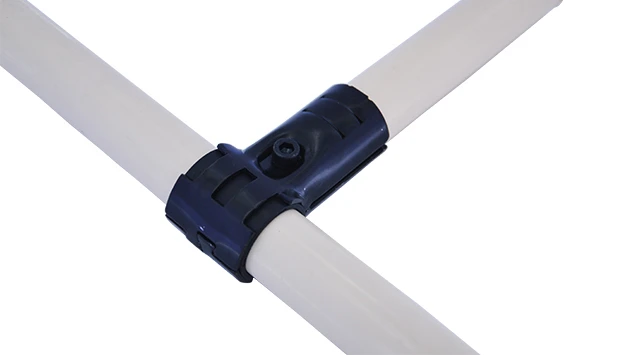
Two way lean pipe joint for 2 pcs 28MM lean pipe connection in straight angle with rotatory fucntion, which used widely in workbench, flow rack, hand trolley frame connection.
The Shift to Eco-Friendly Manufacturing: Why Lean Systems Matter
Walk into any modern factory today, and you'll likely notice a quiet revolution underway. Gone are the days of rigid, wasteful production lines bolted to the floor, destined for the scrap heap the moment a new product comes along. Instead, you'll find workbenches that reconfigure with a few twists, material racks that adapt to changing needs, and conveyor systems that seem to "breathe" with the rhythm of production. This isn't just about efficiency—it's about sustainability. As the world grapples with climate change, manufacturers are under pressure to reduce waste, cut carbon footprints, and embrace greener practices. And at the center of this transformation? Lean systems built on innovative components like the one way rotatory straight lean pipe joint.
Traditional manufacturing setups are notoriously resource-heavy. Think about it: a fixed steel workbench might last a decade, but when your production line needs to shift—say, to accommodate a new product size or a faster assembly process—that bench becomes obsolete. You either spend hours welding modifications (wasting energy and materials) or haul it to the dumpster, adding to landfill waste. Multiply that by every workbench, rack, and conveyor in a factory, and the environmental cost becomes staggering. But lean systems? They're different. They're built on the idea that flexibility equals sustainability. And the unsung hero making that flexibility possible? The joints that connect the pipes.
Enter the one way rotatory straight lean pipe joint. It sounds technical, but its purpose is simple: to connect lean pipes in a way that's strong, adjustable, and reusable. No welding, no permanent bolts, no waste. Just a joint that lets you build, disassemble, and rebuild—over and over again. And when paired with materials like aluminum lean pipe, it becomes a game-changer for eco-friendly manufacturing. Let's dive into why this small component is making such a big impact.
Lean Pipe 101: The Backbone of Modern Lean Systems
Before we get into the specifics of the one way rotatory straight lean pipe joint, let's take a step back and talk about lean pipe itself. What is it, and why has it become the go-to material for sustainable factories? At its core, lean pipe (sometimes called "flexible pipe" or "modular pipe") is exactly what it sounds like: lightweight, durable tubing designed to be assembled into custom structures. Early versions were often made of steel, but today, aluminum lean pipe is stealing the spotlight—and for good reason.
Aluminum lean pipe is a revelation for sustainability. Unlike steel, it's naturally resistant to rust and corrosion, meaning it lasts longer in humid factory environments without the need for toxic coatings. It's also lightweight, reducing energy use during transportation and making on-site assembly a breeze (no heavy machinery required). But the biggest win? Aluminum is 100% recyclable. In fact, recycling aluminum uses just 5% of the energy needed to produce new aluminum—one of the highest recycling efficiencies of any metal. That's a huge deal for manufacturers looking to shrink their carbon footprints.
But lean pipe alone is just a tube. To turn it into a workbench, a flow rack, or a conveyor, you need joints. Joints are the "connectors" that hold the pipes together, allowing you to create angles, attach shelves, or build multi-level structures. And not all joints are created equal. Fixed joints might work for static setups, but in a dynamic factory, you need joints that can adapt. That's where the one way rotatory straight lean pipe joint shines. Its unique design allows for one-directional rotation, making it easy to align pipes, adjust heights, or reposition components—all without tools. Imagine building a material rack: with a fixed joint, you'd have to measure twice, cut once, and hope it's perfect. With a rotatory joint? You can tweak, rotate, and refine until it's exactly what you need. And when you need to change it later? Just twist, disassemble, and start fresh. No waste, no hassle.

Deep Dive: What Makes the One Way Rotatory Straight Lean Pipe Joint Special?
Design That Puts Flexibility First
Let's get technical for a minute—without the jargon. The one way rotatory straight lean pipe joint is engineered with a simple but genius mechanism: a rotating collar that allows the connected pipes to pivot in one direction (usually horizontally) while staying fixed in others. This might sound minor, but in practice, it solves a big problem: alignment. When building modular structures, getting pipes to line up perfectly can be frustrating. A rotatory joint takes the guesswork out. Need to angle a shelf slightly to improve material flow? Rotate the joint. Want to adjust a conveyor's incline for faster part movement? Twist and lock. It's like having a built-in "fine-tuning" knob for your entire lean system.
But it's not just about rotation. These joints are also built to be strong. Made from high-grade aluminum (matching the pipes they connect), they can support heavy loads without bending or breaking. Think about a workbench holding 200 pounds of tools and parts—you need joints you can trust. Most one way rotatory straight lean pipe joints are tested to withstand thousands of cycles of rotation and weight, ensuring they last for years, even in high-traffic factory environments.
Tool-Free Assembly: Saving Time and Reducing Waste
Here's another win for sustainability: tool-free assembly. Traditional joints often require wrenches, screwdrivers, or even welding equipment—all of which take time and energy. Worse, over-tightening or stripping screws can ruin a joint, making it useless. The one way rotatory straight lean pipe joint? It typically uses a simple clamp or twist-lock mechanism. Slide the pipe into the joint, twist the collar, and it's secure. No tools, no hassle, no damage. This not only speeds up assembly (saving labor costs) but also ensures the joint can be reused dozens of times. Even better, when you disassemble, there's no scrap metal from broken screws or bent parts—just pipes and joints ready for their next project.

Eco-Friendly Advantages: How These Joints Cut Waste and Carbon Footprints
So, we've talked about flexibility and durability—but how exactly do one way rotatory straight lean pipe joints make manufacturing more eco-friendly? Let's break it down into three key areas: material efficiency, energy savings, and lifecycle sustainability.
| Feature | Traditional Steel Joints | One-Way Rotatory Straight Lean Pipe Joints (Aluminum) |
|---|---|---|
| Material Source | Often made from virgin steel, requiring mining and high-energy smelting | Typically uses recycled aluminum (up to 80% post-consumer content) |
| Recyclability | Low; steel recycling requires removing coatings (energy-heavy) and loses quality over time | High; aluminum retains 100% quality after recycling, with minimal energy input |
| Waste During Reconfiguration | High; cutting/welding creates scrap metal; old joints often discarded | Low; joints are reusable; no cutting or welding needed |
| Energy Use in Lifecycle | High; production, transportation (heavy weight), and disposal all energy-intensive | Low; lightweight (less transport energy), recyclable (reduced production energy) |
| Durability | Prone to rust; needs replacement every 5-7 years in humid environments | Corrosion-resistant; lasts 10+ years with proper care |
Material Efficiency: Less Waste, More Reuse
The biggest eco-friendly win for these joints is material efficiency. Traditional fixed joints lock you into a single design—if you need to change your setup, you're forced to cut pipes, weld new connections, or throw away entire structures. With one way rotatory straight lean pipe joints, that's a thing of the past. Because they're reusable, you can disassemble a workbench and rebuild it as a material rack, or reconfigure a conveyor into a turnover trolley. Every time you reuse a joint, you're avoiding the need to buy new materials. Over time, this adds up: a single factory might save hundreds of pounds of steel or aluminum annually by reusing joints instead of replacing them.
Even better, when a joint finally reaches the end of its lifecycle (after years of use), it's 100% recyclable. Unlike plastic or coated steel joints, aluminum joints can be melted down and turned into new joints, pipes, or other aluminum products—no waste, no landfill.
Energy Savings: From Factory Floor to Supply Chain
Sustainability isn't just about materials—it's about energy, too. One way rotatory straight lean pipe joints save energy in three key ways: during production, transportation, and use.
First, production: Aluminum joints require less energy to manufacture than steel ones, especially when made from recycled aluminum. As mentioned earlier, recycling aluminum uses 95% less energy than producing new aluminum. That's a massive reduction in carbon emissions right off the bat.
Second, transportation: Aluminum is lightweight—about one-third the weight of steel. That means shipping a batch of aluminum joints uses less fuel than shipping steel ones. Multiply that by hundreds of joints per order, and the savings add up for both suppliers and manufacturers.
Third, on the factory floor: Tool-free assembly means less time spent using energy-intensive tools like welders or grinders. Reconfiguring a workbench with rotatory joints takes minutes, not hours—cutting down on electricity use and labor (which, indirectly, reduces the carbon footprint of employee commutes and facility operations).
Lifecycle Sustainability: Built to Last, Designed to Reuse
The average fixed steel joint might last 5-7 years before rusting or becoming obsolete. A well-made one way rotatory straight lean pipe joint? It can last 15+ years, thanks to aluminum's corrosion resistance and the joint's durable design. But even when it's no longer needed, it doesn't end up in a landfill. Aluminum joints are highly valuable to recyclers, so they're almost always collected and recycled, closing the loop on the material lifecycle. This "cradle-to-cradle" approach is the gold standard for sustainability—and these joints make it possible.
Real-World Impact: How Factories Are Using These Joints to Go Green
Talk is cheap—so let's look at real examples of how one way rotatory straight lean pipe joints are making a difference. From automotive plants to small electronics workshops, manufacturers are seeing tangible benefits in both sustainability and bottom-line savings.
Case Study 1: Automotive Supplier Cuts Waste by 40%
A mid-sized automotive parts manufacturer in Ohio was struggling with waste. Their production lines were built with fixed steel workbenches, and every time they switched between producing parts for SUVs and sedans, they'd have to replace entire sections of the line. Scrap metal was piling up, and their landfill costs were skyrocketing. Then they switched to a lean system using aluminum lean pipe and one way rotatory straight lean pipe joints.
The results? Their workbenches now reconfigure in under an hour, no welding required. Old racks are disassembled and rebuilt into new ones. In the first year, they reduced metal waste by 40% and cut energy use by 12% (largely from less welding and cutting). "We used to have a dumpster dedicated just to old steel parts," said the plant manager. "Now, that dumpster is half-empty, and we're saving $15,000 a year on waste removal. Plus, our employees love how easy it is to adjust their workstations—morale is up, too."
Case Study 2: Electronics Assembly Line Boosts Flexibility, Cuts Lead Times
A California-based electronics manufacturer was struggling to keep up with fast-changing consumer demands. Their assembly lines for smartphones and tablets needed constant tweaks, but their fixed conveyor systems couldn't keep pace. They turned to lean pipe conveyors built with one way rotatory straight lean pipe joints and aluminum guide rails.
Today, their conveyors can be reconfigured in minutes to accommodate different product sizes. When a new tablet model launches, they simply adjust the rail heights and reposition the rollers—no need for new equipment. This not only reduced waste (they used to discard old conveyor sections) but also cut lead times for new products by 25%. "We're no longer stuck waiting for custom steel conveyors," said the operations director. "We can iterate faster, which means we're more competitive—and greener, too."
Case Study 3: Small Manufacturer Saves Big on Startup Costs
It's not just big factories benefiting. A small family-owned furniture manufacturer in North Carolina was hesitant to invest in sustainability due to budget constraints. They needed workbenches and material racks but couldn't afford custom steel setups. Then they discovered lean pipe systems with one way rotatory straight lean pipe joints.
By buying used aluminum lean pipe and new rotatory joints, they built their entire production line for a third of the cost of traditional steel setups. And when they outgrew their space a year later? They disassembled everything, moved to a larger facility, and rebuilt—no new materials needed. "We thought sustainability was only for big companies with deep pockets," said the owner. "But these joints made it affordable. We're saving money and doing our part for the planet—win-win."
Choosing the Right Lean Pipe Supplier: Your Partner in Sustainability
So, you're convinced: one way rotatory straight lean pipe joints are the way to go. Now, how do you find the right supplier? Not all lean pipe suppliers are created equal—and if you want to maximize sustainability, you need a partner who shares your values.
First, look for suppliers who prioritize recycled materials. Ask: What percentage of your aluminum lean pipe is made from recycled content? Do your joints use recycled aluminum, too? A good lean pipe supplier will be transparent about their sourcing—some even offer certifications like the ASI (Aluminum Stewardship Initiative) label, which ensures responsible production and recycling practices.
Next, check their product range. A supplier with a wide selection of joints, accessories (like aluminum guide rails or roller track connectors), and pre-built structures (like workbenches or flow racks) can help you create a fully integrated lean system. This reduces the need to source from multiple suppliers, cutting down on transportation emissions.
Don't forget to ask about durability testing. A joint might look good on paper, but if it breaks after a few months, it's not sustainable—it's just wasteful. Reputable suppliers will test their joints for load capacity, rotation cycles, and corrosion resistance, and they'll share those results with you. Look for joints rated to last at least 10 years under normal use.
Finally, consider their recycling program. What happens to old or defective joints? A supplier with a take-back program will recycle them, ensuring they don't end up in landfills. Some even offer discounts on new joints when you return old ones—an incentive to keep materials in the loop.
The Future of Manufacturing: Lean, Green, and Rotatory
As we look ahead, the role of one way rotatory straight lean pipe joints in sustainable manufacturing will only grow. Here's why:
First, circular economy trends: More and more manufacturers are adopting "circular" models, where waste is minimized, and materials are reused indefinitely. Lean pipe systems with reusable joints fit perfectly into this model—they're designed for disassembly and recycling, making them a cornerstone of circular manufacturing.
Second, rising energy costs: As energy prices continue to climb, the lightweight, energy-efficient nature of aluminum lean pipe and joints will become even more attractive. Manufacturers will prioritize solutions that reduce both material and energy waste—and rotatory joints deliver on both.
Third, consumer demand: Today's consumers care about sustainability. They want to know that the products they buy are made in eco-friendly factories. Manufacturers who adopt lean systems with rotatory joints can market their sustainability efforts, appealing to eco-conscious buyers and boosting brand loyalty.
Finally, innovation: Suppliers are already developing smarter joints—some with built-in sensors to monitor wear and tear, others with even more flexible rotation mechanisms. As these innovations hit the market, the sustainability and efficiency of lean systems will only improve.
Conclusion: Small Joints, Big Impact
At first glance, the one way rotatory straight lean pipe joint might seem like a small, unassuming component. But in reality, it's a powerful tool for change. It's proof that sustainability in manufacturing doesn't have to mean sacrificing efficiency or profitability—in fact, it can enhance both. By choosing modular, reusable lean systems built on aluminum lean pipe and rotatory joints, manufacturers can reduce waste, cut energy use, and build more resilient, flexible operations.
So, whether you're running a massive automotive plant or a small workshop, it's time to think differently about your production setup. Ask yourself: Are my current systems built for waste… or for reuse? If it's the former, maybe it's time to make the switch. The planet (and your bottom line) will thank you.
In the end, sustainability isn't about grand gestures—it's about the small, intentional choices we make every day. And when it comes to manufacturing, few choices are as impactful as the decision to build with one way rotatory straight lean pipe joints. They're not just connecting pipes—they're connecting us to a greener, more efficient future.