- Company Articles
- Products and Technology
- Product knowledge
- One Way Rotatory Straight Lean Pipe Joints for Automotive Manufacturing Flexibility

One Way Rotatory Straight Lean Pipe Joints for Automotive Manufacturing Flexibility
Related Product
One Way Rotatory Straight Lean Pipe Joint
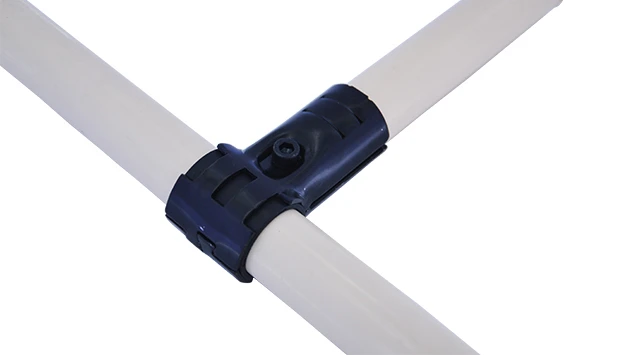
Two way lean pipe joint for 2 pcs 28MM lean pipe connection in straight angle with rotatory fucntion, which used widely in workbench, flow rack, hand trolley frame connection.
The Pulse of Modern Automotive Manufacturing: Why Flexibility Isn't Optional Anymore
Walk into any modern automotive plant, and you'll notice a rhythm—robots whirring, workers moving with purpose, parts flowing from station to station like a well-choreographed dance. But behind that rhythm lies a hidden challenge: how to keep that dance adaptable when the music changes. Today's auto industry isn't just about building cars; it's about building many kinds of cars—electric vehicles, hybrids, gas-powered models, each with unique components, production timelines, and customization options. A factory that can't pivot quickly risks falling behind, whether it's shifting from a sedan to an SUV line or accommodating a last-minute design tweak for a new EV battery pack.
This is where "lean manufacturing" principles step in—not as a buzzword, but as a lifeline. At its core, lean manufacturing is about eliminating waste, streamlining processes, and, crucially, staying flexible. And when it comes to flexibility on the factory floor, the tools that hold everything together matter just as much as the robots and assembly lines. Enter the unsung heroes of lean setups: the joints, pipes, and connectors that turn static workspaces into dynamic, reconfigurable systems. Among these, one component stands out for its ability to transform rigidity into adaptability: the one way rotatory straight lean pipe joint chrome.
Meet the Game-Changer: What Is a One Way Rotatory Straight Lean Pipe Joint Chrome?
Let's start with the basics. Lean pipe systems—often made from aluminum, steel, or coated steel—are the backbone of modular workspaces in manufacturing. They're the pipes you see in workbenches, material racks, and flow lines, held together by joints that determine how rigid or flexible the entire structure is. Traditional fixed joints do their job: they hold pipes at 90-degree angles, 45-degrees, or straight lines, creating sturdy but static frames. But what if you need to adjust the angle of a workbench shelf by 10 degrees to fit a taller component? Or reposition a flow rack to route parts to a new assembly station? That's where the one way rotatory straight lean pipe joint chrome comes in.
This isn't just any joint. The "one way rotatory" feature means it can rotate in a single direction (usually 180 degrees) and lock securely in place at any angle along that arc. The "straight" design ensures it connects two pipes in a linear path, but with the added twist of rotation. And the "chrome" finish? That's not just for looks—it adds durability, resistance to corrosion (critical in factories where oils, coolants, and humidity are common), and a smooth surface that makes rotation easier over time. Think of it as a hinge with precision: strong enough to support heavy parts, yet nimble enough to reposition with minimal effort.
But why does this matter in automotive manufacturing? Let's say your plant is switching from assembling internal combustion engines to electric motor components. The workbench where technicians previously mounted engine blocks might now need to hold battery modules, which are taller and heavier. With a traditional fixed joint, you'd either have to rebuild the entire workbench or settle for a suboptimal setup. With a one way rotatory straight lean pipe joint chrome, you can simply unlock the joint, rotate the shelf to a higher angle, lock it, and have a customized workspace in minutes. No welding, no special tools, no downtime.

How It Works: The Mechanics Behind the "Flexibility Magic"
To truly appreciate this joint, let's peek under the hood (pun intended). The one way rotatory straight lean pipe joint chrome is designed with a few key features that make its flexibility possible:
- A precision locking mechanism: Inside the joint, a spring-loaded pin or cam system allows rotation in one direction (e.g., upward) but locks when rotated back. This prevents accidental movement during use—critical when supporting 50-pound battery packs or delicate electronic components.
- Compatibility with aluminum lean pipe: Most modern lean systems use aluminum lean pipe for its lightweight, high-strength properties. This joint is engineered to fit snugly with standard aluminum lean pipe diameters (typically 28mm or 30mm), ensuring a secure connection without slippage.
- Tool-free adjustment: Unlike traditional joints that require wrenches or hex keys, this joint often uses a simple lever or knob to unlock and lock. A quick twist, rotate, twist back—and you're done. This is a game-changer for line supervisors who need to make adjustments during a shift without halting production.
Real Example: A mid-sized automotive supplier in Michigan was struggling with frequent changes to their dashboard assembly line. Each new car model required a slightly different angle for the dashboard mounting fixture, and their fixed-joint workbenches took 4 hours to reconfigure. After switching to one way rotatory straight lean pipe joint chrome, they cut reconfiguration time to 20 minutes. Over a year, that added up to 120+ hours of saved production time—time that could be spent building more dashboards, not rebuilding workbenches.

Building Better Workspaces: Synergy with Lean Pipe Workbenches
A joint is only as useful as the system it's part of, and one of the most common systems in automotive manufacturing is the lean pipe workbench. These aren't your average tables; they're modular workstations where technicians assemble, inspect, and test components. From wiring harnesses to brake calipers, lean pipe workbenches are the workhorses of the assembly line. But their true power comes from how easily they can adapt—and that's where our rotatory joint shines.
Imagine a lean pipe workbench used for assembling door panels. On Monday, the team is working on a compact car with a small door frame; the bench's upper shelf is set at a 30-degree angle to hold small components like window switches. On Tuesday, they switch to an SUV door, which is taller and requires the shelf to be at a 60-degree angle to avoid blocking the technician's access. With traditional joints, this would mean disassembling the shelf, re-drilling holes, and reattaching—hours of work. With the one way rotatory straight lean pipe joint chrome, the technician simply unlocks the joint, rotates the shelf to 60 degrees, locks it, and gets back to work. The joint's chrome finish ensures smooth rotation even after months of daily adjustments, and its locking mechanism keeps the shelf stable, even when the technician leans on it to install a heavy door handle.
But it's not just about angles. Lean pipe workbenches often include accessories like tool hooks, LED light bars, or ESD (electrostatic discharge) mats (critical for handling sensitive electronics like infotainment systems). The rotatory joint makes it easy to add or reposition these accessories, too. Need to move a tool hook from the left side of the bench to the right for a left-handed technician? Unlock the joint, rotate the crossbar, lock, and done. No need to buy a whole new bench or jury-rig a solution with zip ties (we've all seen that in older factories).
Streamlining Material Flow: Partnering with Flow Racks and Roller Tracks
In automotive manufacturing, parts don't just sit on workbenches—they flow. From the moment a shipment of brake rotors arrives to the second they're mounted on a car, they need to move smoothly through the plant. That's where flow racks and roller tracks come in. Flow racks are inclined racks with roller tracks that let parts "flow" by gravity from the back (where new parts are loaded) to the front (where technicians pick them). Roller tracks are the rails that make this flow possible, with small wheels that reduce friction and ensure parts glide easily.
Here's where the one way rotatory straight lean pipe joint chrome becomes a secret weapon: flow racks and roller tracks need to be adjustable, too. For example, a flow rack holding small screws and bolts can be set at a shallow incline (5 degrees) to prevent parts from sliding too fast. But a flow rack holding heavy brake calipers needs a steeper incline (10-15 degrees) to overcome gravity. With traditional fixed joints, changing the incline means rebuilding the rack's legs—a tedious process. With our rotatory joint, you can adjust the angle of the entire flow rack frame by rotating the legs at the base, using the joint to lock them at the perfect incline. This isn't just about convenience; it's about safety. A flow rack with the wrong incline can cause parts to jam (slowing production) or slide too quickly (risking damage or injury). The rotatory joint ensures precise, repeatable incline settings every time.
Roller tracks, too, benefit from this flexibility. Roller tracks are often mounted to the sides of flow racks or workbenches to route parts between stations. If a new assembly line is added next to an existing one, the roller track might need to be repositioned to feed parts to the new station. The one way rotatory straight lean pipe joint chrome can connect the roller track to the rack, allowing it to pivot and align with the new station's height and angle. No more cutting the track or adding extension pieces—just rotate, lock, and let the parts flow.
Aluminum Lean Pipe: The Perfect Partner for the Rotatory Joint
We've mentioned aluminum lean pipe a few times, and for good reason: it's the ideal material to pair with the one way rotatory straight lean pipe joint chrome. Aluminum is lightweight (so even large structures like flow racks are easy to move if needed), strong (it can support hundreds of pounds without bending), and resistant to rust (important in factories with high humidity or coolant exposure). But its real advantage here is compatibility. Aluminum lean pipe is designed with a smooth, consistent outer diameter, which ensures a tight fit with the rotatory joint's inner sleeve. This tight fit prevents wobbling, which is critical for both safety and precision—imagine a roller track that wobbles as parts flow; the parts could jam or fall off.
Aluminum's malleability (without being weak) also means it can handle the slight stresses of repeated rotation. Unlike steel, which can develop stress cracks if twisted too often, aluminum bends slightly and returns to shape, making it durable for long-term use. And because aluminum is lighter than steel, reconfiguring a lean pipe workbench or flow rack with aluminum lean pipe and rotatory joints is a one-person job—no need for a team of workers to lift heavy steel pipes. This saves time and reduces the risk of workplace injuries, a win-win for plant managers.
Traditional vs. Rotatory: A Comparison That Speaks Volumes
Still not convinced the one way rotatory straight lean pipe joint chrome is worth the switch? Let's put it head-to-head with traditional fixed joints in a few key categories that matter most to automotive manufacturers:
| Feature | Traditional Fixed Joints | One Way Rotatory Straight Lean Pipe Joint Chrome |
|---|---|---|
| Reconfiguration Time | 4–8 hours (requires disassembly, drilling, reassembly) | 5–15 minutes (unlock, rotate, lock) |
| Adaptability to New Models | Low (fixed angles; requires new parts for changes) | High (adjustable angles; works with new part sizes/weights) |
| Durability in Harsh Environments | Medium (prone to rust if not coated; fixed joints can loosen over time) | High (chrome finish resists corrosion; locking mechanism stays tight with use) |
| Cost Over Time | Higher (need to replace entire structures for changes) | Lower (reuse existing pipes; only replace joints if worn) |
| Safety | Medium (risk of instability if reconfigured improperly) | High (secure locking mechanism prevents accidental movement) |
Real-World Impact: How One Plant Cut Downtime by 40%
Numbers tell a story, but real-world examples bring it to life. Let's look at a mid-sized automotive parts supplier in Ohio that specializes in manufacturing suspension components. Before switching to rotatory joints, their production line for control arms (a critical suspension part) was struggling with two issues: frequent model changes (they supplied parts to three different automakers) and high employee turnover, which meant new technicians needed time to adjust to fixed workbench setups.
Their old setup used steel pipes with fixed welded joints. When a new model required a control arm with a different shape, the team had to spend 6 hours rebuilding the workbench and flow racks to accommodate the new part. This happened 3–4 times per month, adding up to 12–16 hours of downtime annually. Worse, new technicians often struggled with the fixed-height shelves, leading to ergonomic issues (strained backs, slower work) and higher error rates.
After switching to aluminum lean pipe and one way rotatory straight lean pipe joint chrome, the transformation was immediate. Reconfiguring the workbench for a new model now took 10 minutes, not 6 hours. Over a year, that cut downtime by 40%—freeing up over 70 hours of production time. New technicians could adjust the workbench height and shelf angles to their comfort level, reducing ergonomic injuries by 25% and error rates by 15%. And because the chrome joints were more durable than the old welded steel, they spent 30% less on replacement parts. As the plant manager put it: "We went from fighting our tools to working with them. The rotatory joints turned our line from a rigid obstacle course into a system that adapts to us."
Installation and Maintenance: Keeping the Flexibility Flowing
You might be thinking, "This sounds great, but is it hard to install? Will we need to train our maintenance team for hours?" The answer is no. Installing a one way rotatory straight lean pipe joint chrome is as simple as sliding it onto an aluminum lean pipe and tightening a setscrew (most come with a hex key for initial setup, though some use hand-tightened knobs). No welding, no specialized tools, no certifications required. Even someone with basic DIY skills could install it in 5 minutes.
Maintenance is just as straightforward. The chrome finish resists rust, so a quick wipe with a damp cloth every few weeks is usually enough to keep it clean. The locking mechanism may need a drop of lubricant (like WD-40) every 6 months if used daily, but that's it. Unlike traditional joints, which can loosen over time and require retightening, the rotatory joint's locking mechanism actually gets smoother with use—the chrome surface wears in, reducing friction. Most manufacturers offer a 5-year warranty on these joints, a testament to their durability.
Future-Proofing Your Plant: Why This Joint Matters for Tomorrow's Cars
The automotive industry isn't slowing down in its shift toward electrification, autonomy, and customization. By 2030, many countries will ban the sale of new gas-powered cars, and even before then, factories will need to produce EVs alongside hybrids and traditional models. This means more frequent line changes, more unique parts, and more pressure to reduce lead times. A rigid manufacturing setup will struggle to keep up.
The one way rotatory straight lean pipe joint chrome isn't just a tool for today—it's an investment in tomorrow. It's a way to build a factory that can adapt to whatever comes next: new battery technologies, smaller electric motors, or even entirely new vehicle types (hello, flying cars? Maybe not, but stranger things have happened). By choosing modular, flexible tools, you're not just buying joints and pipes—you're buying the ability to innovate without being held back by your own infrastructure.
Conclusion: The Joint That Drives Change
In the fast-paced world of automotive manufacturing, flexibility isn't a luxury—it's survival. The one way rotatory straight lean pipe joint chrome may seem like a small component, but it's a catalyst for big change: reducing downtime, improving ergonomics, cutting costs, and future-proofing your plant. When paired with aluminum lean pipe, lean pipe workbenches, and roller tracks, it transforms static workspaces into dynamic systems that adapt to your needs, not the other way around.
So the next time you walk through your plant, look at those fixed joints holding up workbenches and flow racks. Imagine what you could do if they could rotate, adjust, and adapt. With the one way rotatory straight lean pipe joint chrome, you don't have to imagine—you can build it. After all, the future of automotive manufacturing isn't about building cars. It's about building better ways to build cars. And it all starts with the right joints.