- Company Articles
- Products and Technology
- Product knowledge
- One Way Rotatory Straight Lean Pipe Joints for Electronics Manufacturing Efficiency

One Way Rotatory Straight Lean Pipe Joints for Electronics Manufacturing Efficiency
Related Product
One Way Rotatory Straight Lean Pipe Joint
Two way lean pipe joint for 2 pcs 28MM lean pipe connection in straight angle with rotatory fucntion, which used widely in workbench, flow rack, hand trolley frame connection.
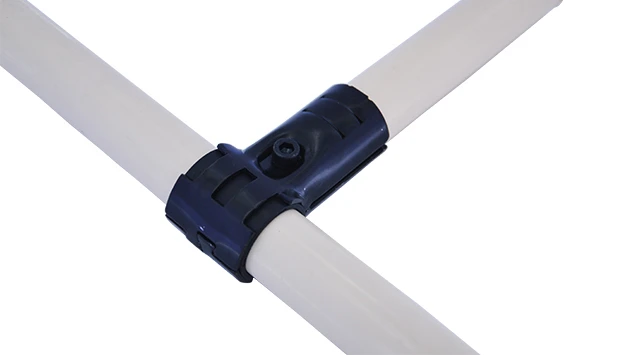
Walk into any modern electronics manufacturing facility, and you'll likely be struck by two things: the precision of the assembly lines and the relentless pace of production. From smartphones to circuit boards, every component demands meticulous handling, and every second of downtime can translate to lost revenue. In this high-stakes environment, manufacturers are constantly seeking ways to streamline workflows, reduce waste, and adapt quickly to changing product designs. Enter lean manufacturing—a philosophy built on the idea of maximizing value while minimizing waste. And at the heart of lean systems lie modular, adaptable tools that turn rigid production lines into flexible, responsive ecosystems. Among these tools, one component stands out for its quiet yet transformative impact: the one way rotatory straight lean pipe joint. Specifically, the chrome-plated variant—known as the one way rotatory straight lean pipe joint chrome —has become a cornerstone in building the next generation of electronics production setups. In this article, we'll explore how this unassuming joint is redefining efficiency, from the lean pipe workbench to the flow rack, and why it's become indispensable for ESD workstation design.
The Electronics Manufacturing Challenge: Why Rigidity Kills Efficiency
Electronics manufacturing is a balancing act. On one hand, you have ultra-sensitive components—microchips, sensors, PCBs—that require stable, controlled environments to avoid damage from static, dust, or mishandling. On the other hand, product lifecycles are shorter than ever. A smartphone model might be updated within a year, and a new circuit board design could render an entire assembly line obsolete if it can't adapt. Traditional production setups, with welded steel frames or bolted workbenches, simply can't keep up. Reconfiguring these systems often means bringing in welders, drilling new holes, or even replacing entire structures—costing time, money, and disrupting production.
Then there's the issue of material flow. In electronics plants, parts move constantly: from storage racks to assembly benches, from testing stations to packaging lines. If these paths aren't optimized, bottlenecks form. A misplaced shelf, a workbench that's too low, or a flow rack with the wrong incline can slow down operators, increase errors, and even damage delicate parts. Add in the need for ESD protection—electrostatic discharge can fry a $100 microchip in an instant—and the stakes get even higher. ESD workstations, with their static-dissipative surfaces and grounded components, must be both secure and adaptable. Rigid setups fail here too: if a new ESD-compliant tool needs to be mounted, or a workstation repositioned to align with a new line layout, rigidity becomes a liability.
Lean Manufacturing: The Solution to Rigidity
Lean manufacturing, pioneered by Toyota, isn't just a buzzword—it's a mindset. At its core, lean is about identifying and eliminating waste (or "muda," as the Japanese term goes) in all forms: wasted time, wasted movement, wasted materials, and even wasted space. To do this, lean systems rely on modularity, flexibility, and continuous improvement. Instead of fixed structures, lean environments use adjustable, reusable components that can be reconfigured on the fly. This is where lean pipe systems—often called "flexible pipe systems"—shine. Made from steel or aluminum pipes and a variety of joints, these systems let manufacturers build everything from workbenches and flow racks to material trolleys and ESD workstations, then tear them down and rebuild them as needs change.
But a lean pipe system is only as good as its joints. The joints are the connectors that hold the pipes together, dictating how the system can be shaped, adjusted, and reconfigured. Fixed joints, for example, lock pipes into rigid angles (like 90° or 45°), which work for static structures but offer no room for adjustment. Multi-directional rotatory joints allow pipes to swivel in multiple axes, offering flexibility but sometimes sacrificing stability. Then there's the one way rotatory straight lean pipe joint—a hybrid that combines controlled movement with reliability. Designed to rotate in one direction (e.g., clockwise) while locking in place when turned the other way, it's the sweet spot between rigidity and adaptability. And when chrome-plated, as in the one way rotatory straight lean pipe joint chrome , it adds durability and corrosion resistance—critical in factory environments where moisture, oils, or chemicals might be present.

Anatomy of a Hero: Inside the One Way Rotatory Straight Lean Pipe Joint Chrome
To understand why the one way rotatory straight lean pipe joint chrome is a game-changer, let's break down its design. At first glance, it looks like a simple metal connector, but its engineering is surprisingly clever. The joint consists of three main parts: the body, the rotating sleeve, and the locking mechanism.
The Body: Typically made from high-grade steel, the body is the "backbone" of the joint. It features two or more hollow ends (depending on the design) that fit over lean pipes, usually 28mm or 30mm in diameter—the standard sizes for lean pipe systems. The body is where the locking mechanism is housed, and it's often reinforced with ribs or thick walls to handle heavy loads (some joints can support up to 50kg per connection, critical for workbenches holding tools or flow racks stacked with components).
The Rotating Sleeve: This is the part that allows movement. The sleeve fits over one end of the body and can rotate around it in a single direction. On the one way rotatory straight lean pipe joint chrome , the sleeve is often coated with chrome, which reduces friction, making rotation smooth and easy. Chrome also resists scratches and corrosion—important because operators might adjust the joint multiple times a day, and factory floors aren't always clean. A scratched or rusted sleeve could seize up, turning a "flexible" joint into a rigid one.
The Locking Mechanism: Here's where the "one way" magic happens. Inside the joint, a spring-loaded pawl or ratchet system engages with teeth on the rotating sleeve. When you turn the sleeve in the allowed direction (say, clockwise), the pawl slides over the teeth, allowing movement. When you try to turn it counterclockwise, the pawl catches on a tooth, locking the sleeve in place. This prevents accidental rotation—imagine a flow rack shelf suddenly tilting because a joint slipped—and gives operators precise control over positioning. Some models even let you disengage the lock entirely (via a small lever or button) for full rotation when reconfiguring, then re-engage it for stability during use.
The result? A joint that lets you adjust angles, heights, or positions with minimal effort, then stays put when you need it to. For electronics manufacturing, where precision and stability are non-negotiable, this balance is invaluable.

Why Chrome? The Benefits of Chrome-Plated Joints
You might wonder: why chrome-plate a lean pipe joint? After all, steel is strong on its own. But in factory settings, "good enough" isn't enough. Chrome plating—applying a thin layer of chromium to the joint's surface—adds a host of benefits that make the one way rotatory straight lean pipe joint chrome worth the investment.
Corrosion Resistance: Electronics factories often use coolants, cleaning agents, or humidity control systems, all of which can expose metal components to moisture. Uncoated steel joints would rust over time, weakening the connection and making rotation stiff. Chrome is highly resistant to rust and corrosion, ensuring the joint lasts longer even in damp environments.
Low Friction: Chrome has a smooth, slippery surface, which reduces friction between the rotating sleeve and the joint body. This makes adjusting the joint easier—no more wrestling with a stuck sleeve when reconfiguring a workbench. For operators who might adjust the joint multiple times a shift, this saves time and frustration.
Scratch Resistance: Tools, components, or even operators' gloves can scratch uncoated steel. Scratches aren't just cosmetic; they create crevices where dirt and bacteria can hide, which is a problem in cleanrooms or environments where contamination risks damaging sensitive electronics. Chrome is hard and scratch-resistant, keeping the joint's surface smooth and easy to clean.
ESD Compatibility (Indirectly): While chrome itself isn't inherently static-dissipative, chrome-plated joints can be paired with ESD-compliant lean pipes (made from steel with a conductive coating) to maintain a grounded path. This is critical for ESD workstations, where even a small static charge can destroy components. The smooth chrome surface also won't generate static as easily as rough, uncoated metal, reducing the risk of ESD events.
In short, chrome plating turns a good joint into a great one—more durable, easier to use, and better suited to the demands of electronics manufacturing.
From Bench to Line: Real-World Applications in Electronics Manufacturing
To truly appreciate the one way rotatory straight lean pipe joint chrome , let's look at how it's used in three key areas: lean pipe workbenches, flow racks, and ESD workstations. These are the backbone of electronics production, and the joint's impact on each is tangible.
1. Lean Pipe Workbenches: Customizable Comfort for Operators
A lean pipe workbench is where the magic happens: operators assemble PCBs, test components, or package finished products here. No two operators are the same, though—heights, reach, and work styles vary. A rigid workbench forces operators to adapt to it; a flexible one adapts to them. This is where the one way rotatory straight lean pipe joint chrome shines.
Imagine a PCB assembly workstation. The operator needs their soldering iron within easy reach, a magnifying lamp at eye level, and a bin for scrap components below the bench. With fixed joints, the workbench's shelves and tool holders are set in stone. If the operator is taller than average, they might hunch over, leading to fatigue or mistakes. With one way rotatory joints, though, the shelves can be tilted (for better visibility of components), the lamp arm adjusted to the perfect angle, and the scrap bin lowered or raised—all with a quick twist, then locked in place. The chrome-plated sleeve ensures these adjustments stay smooth even after months of use, and the locking mechanism prevents the lamp from swinging mid-solder or the shelf from dipping when loaded with tools.
Some workbenches even use the joints to adjust the entire bench height. By mounting the legs on rotatory joints connected to threaded pipes, operators can tweak the height by rotating the legs (in the allowed direction) to match their chair or task, then lock them. For electronics manufacturers, this reduces operator fatigue, cuts down on errors, and makes training easier—new operators can adjust the bench to their needs in minutes, not days.
2. Flow Racks: Controlled Material Movement for Delicate Parts
Flow racks—also called gravity flow racks—are essential for keeping components moving from storage to assembly lines. They use inclined shelves with roller tracks (another key keyword!) to let parts glide forward as the front bin is emptied, reducing the need for operators to bend or reach. But the angle of the incline is critical: too steep, and parts might slide too fast, colliding and damaging sensitive components; too shallow, and they might get stuck, causing bottlenecks.
This is where one way rotatory joints come in. By mounting the roller tracks on brackets connected to the rack's frame via one way rotatory straight lean pipe joint chrome s, manufacturers can fine-tune the incline. An operator can tilt the track slightly (rotating the joint clockwise) to speed up slow-moving parts, then lock it. If a new component—heavier or lighter than the last—is introduced, the joint lets them adjust the angle again without rebuilding the entire rack. The chrome coating ensures the joint doesn't rust from condensation (if the factory uses humidity control) and keeps rotation smooth, so adjustments take seconds, not hours.
Even better, the joints work seamlessly with roller track accessories (like plastic roller track guide rails, another keyword). The guide rails keep parts centered on the track, preventing jams, and can be mounted using the same one way rotatory joints for angled or curved paths. For example, a flow rack feeding a circular assembly line might use curved tracks, with joints adjusting the curve's radius to match the line's layout. The result? A material flow system that's both efficient and gentle on delicate electronics.
3. ESD Workstations: Stability and Static Control in One
For sensitive electronics—think microprocessors or sensor arrays—ESD workstations are non-negotiable. These workstations have static-dissipative surfaces, grounded frames, and sometimes ionizers to neutralize static charges. But they also need to be flexible: as product designs change, the workstation might need to accommodate new tools, larger PCBs, or additional testing equipment.
The one way rotatory straight lean pipe joint chrome plays a dual role here. First, its locking mechanism ensures stability. A static-dissipative mat or grounding strap mounted on a wobbly shelf is useless (and dangerous—static could build up if the connection is loose). The joint's ability to lock in place keeps these critical components secure. Second, its flexibility lets manufacturers reconfigure the workstation without compromising ESD protection. For example, adding a new tool holder might require rotating a shelf arm to a new angle; the joint allows this, and the chrome coating (paired with ESD-compliant lean pipes) ensures the workstation remains grounded.
Some ESD workstations even use the joints to adjust the height of ESD-safe bins or trays. A bin holding static-sensitive ICs can be tilted slightly (using the joint) to make grabbing components easier, then locked to prevent spills. The joint's smooth rotation (thanks to chrome) means operators can make these adjustments without generating static themselves (rough, uncoated joints might create friction static when rotated—chrome eliminates that risk).
Comparing Lean Pipe Joints: Why One Way Rotatory Stands Out
Not all lean pipe joints are created equal. To understand why the one way rotatory straight lean pipe joint chrome is a top choice for electronics manufacturing, let's compare it to other common joint types. The table below breaks down key features, benefits, and best uses.
| Joint Type | Rotation Capability | Locking Mechanism | Best For | Durability (Chrome vs. Uncoated) | ESD Compatibility |
|---|---|---|---|---|---|
| Fixed Joint | None (fixed angles: 90°, 45°, etc.) | Permanent (welded or bolted) | Static structures (e.g., storage racks with unchanging layouts) | High (but uncoated steel prone to rust; chrome adds longevity) | Yes (with ESD pipes) |
| Multi-Directional Rotatory Joint | 360° in multiple axes (e.g., swivel + tilt) | Friction-based or manual clamp | Dynamic setups (e.g., movable tool arms, adjustable lighting) | Medium (friction can wear down uncoated parts; chrome reduces friction) | Yes (but clamps may disrupt grounding if not tight) |
| One Way Rotatory Straight Joint (Uncoated) | Single direction (e.g., clockwise rotation; counterclockwise locks) | Ratchet/pawl system (automatic locking) | Semi-static setups (e.g., workbenches with occasional height adjustments) | Medium (prone to rust and friction wear) | Yes (with ESD pipes) |
| One Way Rotatory Straight Joint Chrome | Single direction (smooth rotation; secure locking) | Ratchet/pawl system + optional full rotation unlock | Precision setups (e.g., ESD workstations, flow racks with controlled incline) | High (chrome resists rust, reduces friction wear, and prevents scratches) | Yes (chrome + ESD pipes = stable grounding) |
As the table shows, the one way rotatory straight lean pipe joint chrome offers the best of both worlds: controlled rotation for adaptability, automatic locking for stability, and chrome plating for durability. For electronics manufacturing, where setups change but precision can't, this makes it the clear winner.
Installation and Maintenance: Keeping Joints (and Lines) Running Smoothly
Even the best joint won't perform well if installed or maintained poorly. Here's how to get the most out of your one way rotatory straight lean pipe joint chrome s.
Installation Tips
Prep the Pipes: Ensure lean pipes are clean and free of burrs before inserting them into the joint. A rough pipe end can scratch the chrome sleeve or damage the locking mechanism. Use a pipe cutter (not a hacksaw) for clean cuts, and deburr the ends with a file or sandpaper.
Don't Over-Tighten: Most lean pipe joints use set screws (small screws that tighten against the pipe) to secure pipes in place. Over-tightening can strip the threads or dent the pipe, weakening the connection. Tighten until the pipe doesn't twist—no more.
Test Rotation Before Finalizing: After assembling a section (e.g., a flow rack shelf), test the joint's rotation. It should turn smoothly in the allowed direction and lock firmly when reversed. If it's stiff, check for debris in the sleeve or misalignment of the pipe. Chrome sleeves should glide without resistance—if they don't, the joint might be defective.
Align ESD Components: For ESD workstations, ensure the joint is grounded by connecting it to ESD-compliant pipes and a grounding strap. Use a multimeter to test continuity between the joint and the ground—no breaks allowed.
Maintenance Best Practices
Clean Regularly: Wipe chrome surfaces with a soft, damp cloth to remove dust, oil, or coolant. Avoid abrasive cleaners (they can scratch the chrome). For stubborn grime, use a mild soap solution, then dry thoroughly to prevent water spots.
Lubricate the Locking Mechanism: Every 3–6 months (or more often if used heavily), apply a drop of lightweight machine oil to the joint's locking mechanism (where the pawl meets the teeth). This keeps the ratchet system working smoothly and prevents seizing.
Inspect for Wear: Check joints monthly for signs of damage: cracked chrome, bent sleeves, or a locking mechanism that slips. replace worn joints immediately—even a small defect can compromise stability or ESD protection.
Re-Tighten Set Screws: Vibration from machinery or frequent adjustments can loosen set screws. Give them a gentle tighten (with a hex key) every few weeks to ensure pipes stay secure.
Choosing the Right Supplier: What to Look For
Not all one way rotatory straight lean pipe joint chrome s are made the same. To ensure you're getting a quality product, look for suppliers who prioritize these key factors:
Material Certifications: The joint's steel body should be made from high-carbon steel (for strength), and the chrome plating should meet industry standards (e.g., ISO 1456 for corrosion resistance). Ask for certificates of compliance—reputable suppliers will have them.
Load Capacity Testing: Suppliers should provide load capacity data (e.g., "supports 50kg per joint"). Avoid vague claims; look for test reports from third-party labs.
Customization Options: Electronics manufacturing setups vary widely. A good supplier should offer different joint sizes (to fit 28mm, 30mm, or aluminum pipes), locking mechanism types (e.g., lever vs. button unlock), and even custom chrome finishes for ESD or cleanroom use.
Customer Support: Lean systems can be complex to design. Choose a supplier with technical support teams who can help you select the right joints for your needs, provide assembly guides, or troubleshoot issues.
Warranty: A warranty (at least 1 year) shows the supplier stands behind their product. Avoid suppliers who offer no warranty—this is a red flag for poor quality.
Future Trends: What's Next for Lean Pipe Joints?
As electronics manufacturing evolves, so too will lean pipe technology. Here are a few trends to watch for in one way rotatory joints:
Lightweight Materials: Aluminum joints (paired with aluminum lean pipes) are gaining popularity for their reduced weight and corrosion resistance. Look for chrome-plated aluminum joints in the future—stronger than steel, lighter than traditional models.
Smart Joints: Imagine a joint with a built-in sensor that alerts you when it's loose or worn out. Some manufacturers are experimenting with IoT-enabled joints that send data to a central dashboard, letting managers track maintenance needs in real time.
Enhanced ESD Features: New chrome alloys with better static-dissipative properties could make joints even more ESD-friendly, reducing the need for separate grounding straps.
No matter what the future holds, the core principle of the one way rotatory straight lean pipe joint chrome —flexibility without sacrificing stability—will remain critical. In an industry where change is the only constant, adaptable tools like these are the foundation of efficient, resilient production lines.
Conclusion: The Joint That Powers Progress
In the fast-paced world of electronics manufacturing, efficiency isn't just about speed—it's about adaptability. Rigid production lines can't keep up with shrinking product cycles, changing operator needs, or the demand for precision. Lean pipe systems, with their modular design and flexible joints, offer a solution. And at the heart of these systems lies the one way rotatory straight lean pipe joint chrome : a small component with a big impact.
From lean pipe workbenches that adjust to operators' heights to flow racks with precisely angled roller tracks, from ESD workstations that protect sensitive components to reconfigurable assembly lines that adapt to new products, this joint bridges the gap between rigidity and flexibility. Its chrome plating ensures durability in harsh factory environments, its locking mechanism guarantees stability when needed, and its smooth rotation makes adjustments a breeze.
For manufacturers looking to reduce waste, boost productivity, and stay ahead of the competition, investing in quality lean pipe joints isn't just a purchase—it's a step toward building a smarter, more efficient future. And in that future, the one way rotatory straight lean pipe joint chrome will continue to be an unsung hero, quietly keeping production lines flowing, operators comfortable, and electronics safe.